George harrison

The problem with Paul McCartney is he wrote too many good songs

Don Bradman, the greatest cricketer of all time, was once asked if he reckoned he could have maintained his batting average of 99.94 against the fearsome West Indian bowling attack of the time. Oh no, he said. Not a chance. He’d probably be hitting in the 50s, like the very best batsmen of the time. But then again, he added, he was in his late 60s so it was unrealistic to expect better. Seeing the Stones is the only thing that compares to the human-jukebox effect of McCartney live That’s the position Paul McCartney occupies in the world of pop. No, at 82 years old he is not going to make a new Revolver or Abbey Road. And no, he can’t do the Little Richard scream like he used to 60 years ago. But he is still, as they say in sport, the Goat. The undisputed champion of the world.

The ethics of posthumous pop albums

‘At the record company meeting/ On their hands – at last! – a dead star!’ Back when Morrissey was more concerned with writing a decent lyric than sour internet tirades, ‘Paint a Vulgar Picture’ by the Smiths summed it all up rather neatly: a living pop star is all well and good, but a dead one is far less troublesome – and considerably more profitable. Some artists only really get going once they’re dead. Commercially speaking, Eva Cassidy’s entire career has been posthumous; the Van Gogh of the lustreless Radio 2 ballad. The motive feels pure: a family’s wish to keep their sibling alive through her art Death has been a boon to the pop industry since the year dot.

More mesmerising than it should be – Disney+’s The Beatles: Get Back reviewed

My late friend Alexander Nekrassov loathed the Beatles, which I used to think was a wantonly contrary position akin to hating kittens or blue skies or Christmas carols. What could there possibly be not to like, love and admire about the band that gave us ‘Eleanor Rigby’, ‘A Day In the Life’ and ‘Strawberry Fields Forever’? Since then I’ve encountered so many Beatles sceptics that it has given me pause for thought.

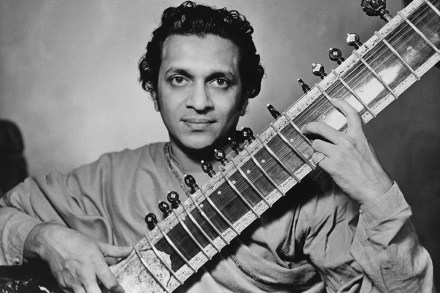
For Ravi Shankar, music was a sort of religion

When musicians from outside the Anglo-American pop mainstream achieve success in the West, there are conflicting reactions. Seun Kuti, the Afrobeat star, once complained to me that most world music celebrities are people who play much the same music as their peers to much the same standard and simply get lucky when a record company stumbles across them. In some cases, musicians from Asia and Africa have to be rocketed into orbit by the boost of an association with a pop giant, even if they then drop away: thus Ladysmith Black Mambazo with Paul Simon, or Buena Vista Social Club with Ry Cooder. Another explanation is offered by the Alchian-Allen theorem, which suggests that goods exported across borders tend to be of higher quality than domestic ones.