Gen z

Why Gen Z is converting to Catholicism

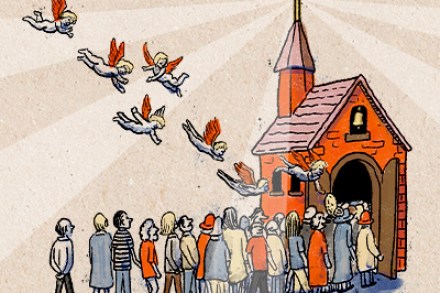
Both of my parents are Jewish, as were theirs, going as far back as anybody remembers – probably to Abraham. As with many secular, Jewish-American families, God was practically non-existent in our house, though we still observed holidays like Rosh Hashanah, Yom Kippur and Passover. There came a point, however, when I had to ask why we partook in any of these traditions if God, who commanded their observance, wasn’t real. I figured that the Greeks had Zeus, the Romans had Jupiter, the Norse had Odin, and now we have God. This one will pass, too.In college, I studied progressive politics and devoured the writings of Marx and Engels, forming a firm foundation for my socialist beliefs.

Gen Z

What was so great about the 1990s?

From our UK edition

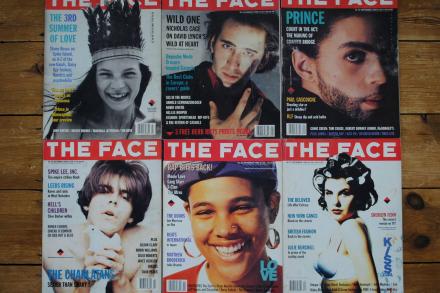
‘They’re selling hippie wigs in Woolworths, man… the greatest decade in the history of mankind is over,’ laments Danny the Dealer of the 1960s at the end of Withnail and I. These days, given the apparently insatiable appetite for all things 1990s, you could be forgiven for assuming that they've pinched that title. Nineties fashion and music are back: Pulp have just released their first album in 24 years, while Oasis are reforming for a series of mega gigs. There’s even been a Labour landslide.

The oyster is your world

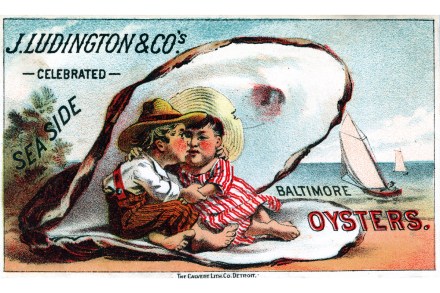
Oysters have recently achieved near-meme status as one of several “pick-me” foods alongside the dirty martini, pickles, tinned fish and other briny staples popularized online by Gen Z. These foods are noted for their slightly polarizing air – expressing a preference for them communicates an evolved palate, a niche preference, a willingness to see past an aesthetically questionable facade (the bumpy pickle, the barnacle-encrusted oyster). However, unlike its fellow “pick-me” travelers or its late, meme-ified millennial predecessor, avocado on toast, the oyster itself cannot be readily dismissed as a passing fad.

oyster

The Gen-Z fliers obsessed with maximising their air miles

From our UK edition

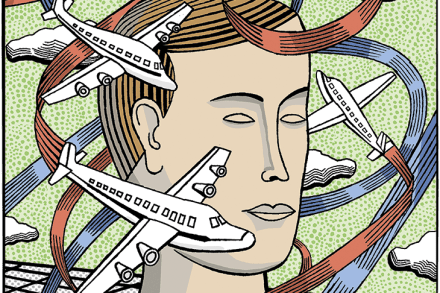
Oscar, 26, joins me on Google Meet from Buenos Aires, having arrived earlier that day from New York – by way of a few hours in Mexico City and Panama. Just five days ago, he was in London. ‘New York was just going to be a weekend trip for a conference, but then I thought while I’m in America, I might as well head south and here I am.’ It’s a far cry from Wales, where his family lives. Yet this itinerary is barely a ripple in Oscar’s relentless travel schedule. His nonstop approach to flying places him firmly within a new tribe of Gen-Z frequent fliers – mostly men – who treat globe-trotting like a real-life computer game. Their obsession? Maximum air miles for minimal money. The destination itself is secondary; the point is simply to keep moving.

Brace for an outbreak of Trumpist investor activism

From our UK edition

If the new Trump era has a theme, it’s one of quixotic disruption with random consequences. In that spirit, stand by for more interventions from activist shareholders seeking to electrify sluggish businesses while making fast bucks on the way through. The first episode over here was the attack by the New York investor Boaz Weinstein on seven London-listed investment trusts, in which he acquired stakes and forced shareholder votes to replace board members, with the aim of taking the trusts’ assets under the management of his own firm, Saba Capital. ‘Go home! You’re selfish and wasteful,’ shouted one headline after Weinstein was emphatically defeated in all seven polls.

Generation Bland: the inevitable rise of ‘Palentine’s Day’

From our UK edition

As we approach with anticipation or dread 14 February, the day we traditionally celebrate love and all things amorous, a certain demographic will instead be observing a rather less passionate and altogether more bland occasion: ‘Palentine’s Day’. Commemorated on 13 February, this is apparently the date upon which to honour platonic friendships instead of romantic engagements – and it’s proving increasingly popular among Generation Z. It all started with ‘Galentine’s Day’, a celebration of female friendship invented by the character Leslie Knope in American political satire mockumentary Parks and Recreation in 2010. As the concept moved from comedy to real life it morphed into the gender-neutral ‘Palentine’s’ – lest anyone should feel left out.

Do Gen Z really want to be ruled by a dictator?

From our UK edition

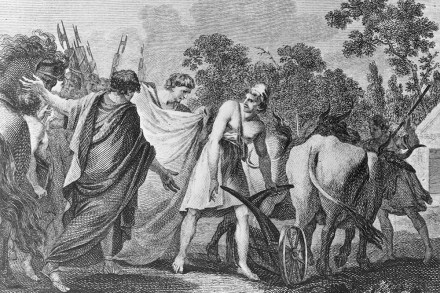
Generation Z(oomer), aged roughly between 13 and 28, have expressed a desire to be ruled by a dictator. That term derives from the Latin dictator, which referred to an official given absolute power (i.e. he was above the law) for a fixed term to do whatever he thought necessary to deal with a clearly identified problem. Take the famous example of Cincinnatus. A soldier of repute and a very able ex-consul, he had been left penniless by paying off a debt incurred by his son, and was living the life of a peasant ‘in a deserted hovel across the Tiber, like a banished man’. In 458 bc he was at his plough when he was asked to put on his toga and attend the Senate.

How Heathrow went from six runways to two

From our UK edition

Chocks away Rachel Reeves backed a third runway for Heathrow, reigniting a debate which has been going on for years. Yet Heathrow, when originally laid out in 1946, had six runways varying in length between 5,300 and 9,200ft: three pairs of parallel runways running east to west, north-west to south-east and north-east to south-west. As aircraft grew larger, there was less need for them to take off and land in alignment with the wind, but there was a need for longer runways. Heathrow gained its current layout in the 1970s when the east to west runways were extended to more than 12,000ft each, and three of the other four runways closed. One of the diagonal runways was retained for emergencies until it was eventually closed in 2002.

Paul Wood, Sean Thomas, Imogen Yates, Books of the Year II, and Alan Steadman

From our UK edition

30 min listen

On this week’s Spectator Out Loud: Paul Wood analyses what a Trump victory could mean for the Middle East (1:16); Sean Thomas gets a glimpse of a childless future while travelling in South Korea (8:39); in search of herself, Imogen Yates takes part in ‘ecstatic dance’ (15:11); a second selection of our books of the year from Peter Parker, Daniel Swift, Andrea Wulf, Claire Lowdon, and Sara Wheeler (20:30); and notes on the speaking clock from the voice himself, Alan Steadman (25:26).  Produced and presented by Patrick Gibbons.

Gen Z love ecstatic dance. Would I?

From our UK edition

Two months ago I moved to London and found it a disorientating experience. Most of my friends were already settled when I got here, and I found myself overwhelmed, isolated and always on the wrong Circle line train. Everyone seemed to have their ‘thing’; something they belonged to. What was mine? I tried a 5 a.m. run club. It was horrendous. I tried the East London conceptual art scene, but couldn’t keep a straight face. Then one Friday night I found myself in church, but not for a prayer service. This church was deconsecrated, converted and the activity that evening was something called ‘ecstatic dance’. Yet the setting was appropriate because, as I discovered, for wellness-obsessed millennials and Gen Zers, ecstatic dance is a sort of religion.

Trump courts Gen Z on the pods

Donald Trump went to Capitol Hill on Thursday, his first visit since some of his supporters stormed the Capitol building on January 6 three years ago.A packed room full of House Republicans sang “Happy Birthday” to the former president, who turns seventy-eight today.Trump pleaded with members for a change in tone on abortion, calling on the issue to be left to the states. This comes after a record number of voters, 32 percent, said in a Gallup poll that they would only vote for candidates in major races who share their views on abortion.

Why are so many young people ‘asexual’?

From our UK edition

Who could have foreseen that half a century after the sexual revolution we’d be facing its exact opposite: an asexual revolution? There’s a crisis of fertility across the West, with birth-rates and sperm counts in free fall. But this isn’t only about microplastics, oestrogen in the water or tight underpants. It’s also that the children of the West are choosing to have less sex – even no sex. A growing proportion actually identify as asexual, and rather than wait to see if the absence of lust is just a reasonable, youthful response to all the porn around in schools, they announce their asexuality solemnly to their friends and family.

Why is Generation Z so undersexed?

There is a girl on TikTok, a bleached-blonde New York transplant who just passed a million followers, whose videos I cannot stop watching. The secret to her rise was “Get Ready with Me” storytimes in which she sat in front of the camera applying mascara and retelling — in painstaking detail — her lurid misadventures. Some highlights: throwing up on a guy’s bed after a wine-fueled hook-up and then realizing he had a girlfriend of two years, battling Montezuma’s revenge at a restaurant in Cabo, getting a UTI so bad she thought it was a kidney infection, inadvertently shipping a ton of “hot girl summer whore clothes” to a guy whose white sheets she bled all over after acquiring a polyp.

mystique
tradwife women

How the tradwife killed the girlboss age

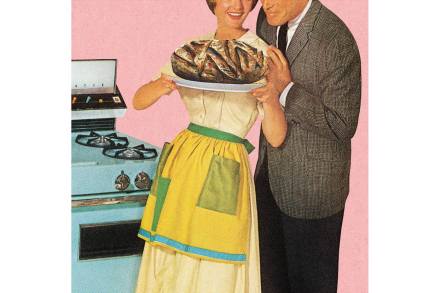
The tradwife smiles as she feeds her sourdough starter, wearing a long dress and a baby and wrangling the occasional toddler underfoot. She beams at her husband as he comes in from a long day on the ranch, or from the hedge-fund trenches. She makes salt-dough modeling clay for the little ones, whether her stove is from Lowe’s or La Cornue. The Cut describes her Instagram account as both “dangerous” and “stupid.” CNN experts lament that too many girls are turning to her as a “Band-Aid with ideological cover,” and fret about the sourdough-starter-to-White-Supremacy pipeline. Tradwives, both self-identified and smacked with admiring or hostile labels, are the latest cultural phenomenon in media crosshairs.

Bowling Alone reads like a nostalgic look at the good ol’ days

In the Phetasy.com book club, we recently read the famous social science tome, Bowling Alone, by Robert Putnam. In it he examines the decline of social capital across various facets of American life. Based on his 1995 essay of the same title, the book was groundbreaking when it appeared in 2000. Putnam had noticed a trend: Americans were spending more and more time alone. His book analyzed the data and contemplated what it meant for our democracy and humanity. Although his observations were a harbinger of the oft-cited “epidemic of loneliness” we are currently living through, in our post-Trump, post-pandemic pre-maggedon reality, Bowling Alone reads like a nostalgic look at the good ol’ days. Days when people still interacted at all.

bowling alone

Are smartphones making us care less about humanity?

From our UK edition

Generation Z were the first to grow up attached to smartphones. They spent their adolescence bathed in screen-light and now they’re depressed and anxious. Should we have seen it coming? Until very recently my parent friends were in determined denial. Z is the best generation that has ever lived, they said, free from prejudice and determined to recycle. I remember a piece by Caitlin Moran in which she insisted that her children were far more noble and caring than her contemporaries. No one picks up their iPhone to grapple with complex ideological truths Well, those optimistic days are over. The stats are now too stark. We daren’t take the kids’ phones away – we fear their rage – but we mothers huddle in the pub and brood. What’s gone wrong? Is it Instagram? TikTok?

The rise of the lazy-girl job

To anyone who’s ever dismissed Gen Z as a cluster of feckless snowflakes, or shunned them as gritless, superficial posers raised on instant gratification and social-media filters; to anyone who thinks this juvenile rabble will never amount to more than bitter complainers about rising house prices and corrupt capitalism — I implore you! Take a moment to consider that these zoomers, these mini millennials, these whiny warriors of wokeland, have just instigated the labor market trend we didn’t know we needed: the rise of the lazy-girl job. If you instinctively recoil at any new phrase with “girl” in it — “hot girl summer,” “girlboss” — I’m right there with you.

Has the influencer bubble burst?

If you ask anybody under twenty about their life plan, social media will likely play some part in the answer. A friend’s nine-year-old son has just launched his own YouTube channel. My prepubescent cousins are telling their parents that TikTok is “the key to financial freedom.” When I was their age, my entrepreneurial skills went as far as selling single cigarettes to my classmates for loose change. The appeal of the influencer life isn’t hard to understand. Over the last decade, it’s been touted as the sexy, well-paid, democratic career of the future. A 2019 Morning Consult survey found that one in ten young people consider themselves “influencers.” But now these micro-celebrities are trading in their tripods and ring-lights for real jobs.

influencer

M3gan is a tale of millennial mothering

If horror films today are largely read as political satires or commentaries, then the “moral” of Gerard Johnstone’s M3gan, about a sentient robot doll unwisely invited into the family home, is clear enough. Playing on our fears of the AI technology increasingly being used as “labor-saving devices,” M3gan is a tale of bad mothering and the price to be paid by career-oriented millennial women if they try to “have it all.” This may make it catnip for trolls and conservative commentators who love to chide women for any parenting style that doesn’t involve frilly aprons and a plastered-on smile. But you need to squint a bit to see this latent message. If you do, you’re missing a more complex (and more horrifying) story.

The fall of the Birkin bag

If you had a spare $100,000, what would you spend it on? The deposit on a decent home, perhaps. Maybe a boat or a luxury car. For her twenty-fifth birthday, Kylie Jenner was given a bag worth that princely sum. The three-toned Birkin was one of just three made. By her own account, Jenner had “never even seen anything like this before.” Kate Moss famously used one as a diaper bag, Kim Kardashian, a gym bag. The Hermès Birkin bag was birthed in 1984, after Jane Birkin, the British-French actress and singer, sat next to Hermès chairman Jean-Louis Dumas on an Air France flight to London. The contents of her bag spilled out onto the floor, prompting Dumas to remark that she needed one with pockets.

birkin