Gas

Is the Biden gas pump sticker arrest 2022’s greatest artwork?

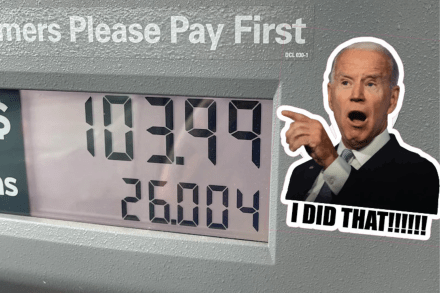
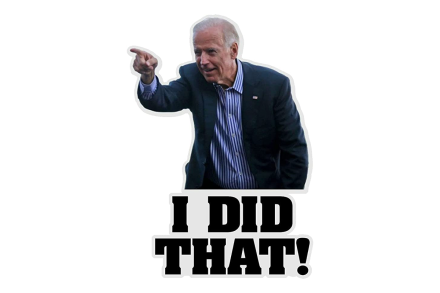
Who is the most intriguing political artist of the Biden era? Cockburn is happy to welcome a new contender to the fray: Thomas Richard Glazewski of Manor Township, Pennsylvania. Glazewski is part of a daring street collective who have been posting stickers of Joe Biden on gas pumps. They show the president pointing with the caption “I did that!” and are placed next to the price of gasoline — which has risen significantly in the past year or so. The vinyl stickers — available on Amazon — are manufactured in China. Just like the Biden presidency, right? But Glazewski took his piece to a whole new level: risking his freedom last month, he turned his sticker protest into performance art by getting himself arrested. A viral video shows the artist’s arrest.

i did that biden sticker

How to avoid heating your house

From our UK edition

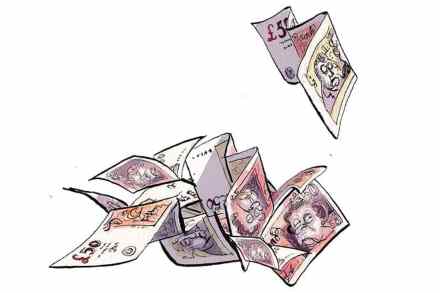
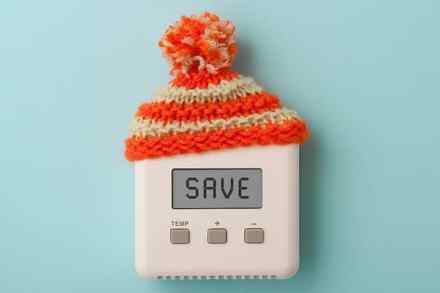
Spring commonly augers a quickening warmth, but for Britons this year the season coincides with a chilling marker: a 54 per cent rise in the energy price cap, bringing the average annual bill to nearly £2,000. By the next increase this autumn, that average will soar to £3,000. Thus what was, until recently, my annoying eccentricity could soon become standard practice: refusal to switch on the heating. Our gas-fired combi boiler functions pretty much as a water heater only. Above our thermometer downstairs I’ve taped a snipped-out Evening Standard headline, ‘Couple die in freezing home’. The joke wore off long ago. My husband is a moderate, civilised person. This perverse policy of turning the thermostat not down but off is all my fault.

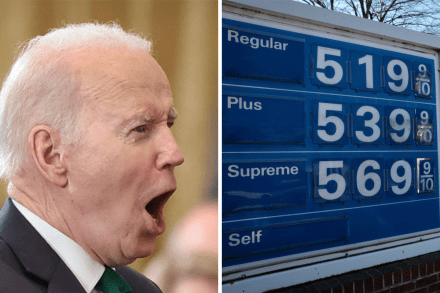
Old man yells at gas prices

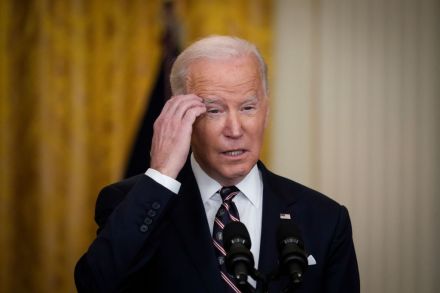
President Joe Biden has lashed out at fossil fuel companies, accusing them of using high gas prices to “pad their profits at the expense of hardworking Americans.” These are the same fossil fuel companies, by the way, that two years ago were charging a measly average of $1.84 a gallon. They’re also the same fossil fuel companies that in 2020 donated $1.6 million to Biden’s presidential campaign. But no matter. If nothing else, Biden’s inveighing against Big Oil takes me back to my more youthful days when progressives were less afraid to run hard against what they called “the polluters.” Back then, every oil derrick was a seething Deepwater Horizon just waiting to explode and blackface the local terns and herons.

How much is Europe (still) paying Putin for oil?

From our UK edition

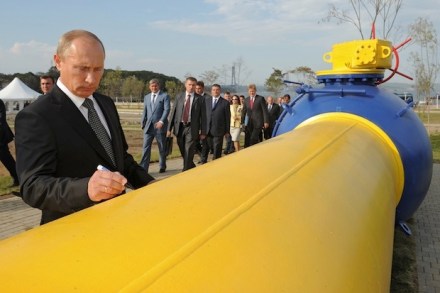
When sanctions were imposed on Russia there was a big exception: Europe was still buying and paying for oil – leading to a bizarre situation. The West was doing everything it could to help Ukraine while still sending Putin hundreds of millions of dollars a day. But how much was that revenue worth to the Kremlin? As sanctions began to hit Russia, the price of Brent crude (the oil benchmark) soared to $130 a barrel, the highest since the 2008 financial crisis: an increase of over 90 per cent. It’s fallen since then but today it's still sitting between $107 and $115 dollars a barrel – well above where it had been weeks ago. But are these price rises making money for the Kremlin?

Turkmenistan may emerge as a global powerbroker

From our UK edition

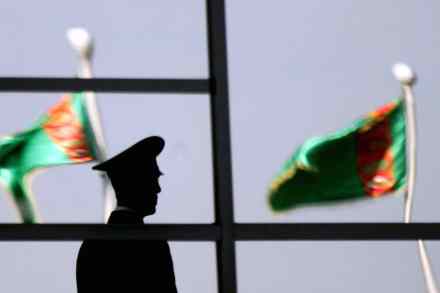
While the world is watching Ukraine, there is another former Soviet republic that has quietly undergone regime change. Turkmenistan’s 65-year-old former president, known, in the manner of a comic book superhero, as ‘The Protector’, stepped down in February. With Gurbanguly Berdymukhamedov's departure, the Mejlis Assembly duly called for elections on 12 March. As regime changes go this one was hardly revolutionary. The Protector's son, having just turned 40 (the minimum age at which a candidate can stand for the presidency) won the election at a canter. The only surprise was that Serdar, 'The Son of the Nation', won just 73 per cent of the vote compared to his father’s 97 per cent winning mandate in 2017.

Did Biden’s energy policy lead to high gas prices?

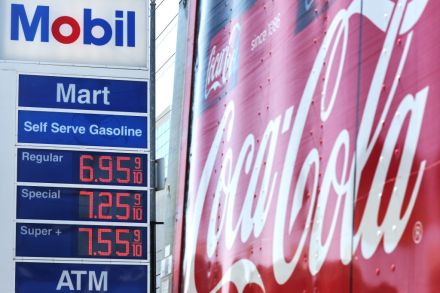
The price of petroleum products is inherently cyclical, rising and falling over time due to natural and ineluctable economic forces. This has been going on since the dawn of the petroleum industry 163 years ago. The reason is that exploration for and development of petroleum resources are extremely capital intensive activities. Thus when prices are low, there is little incentive to increase production by taking the risks inherent in looking for and developing new supplies. But then, as the world economy expands over time, the demand for petroleum products increases, and prices rise. This increases the incentive to go look for more oil and gas, and the rig count goes up. New fields are located and new technologies (such as fracking) come on line.

gas

Britain is paying the price for its fracking panic

From our UK edition

Between 1980 and 2005, the UK produced more energy than it needed. Today, we import more than a third of our energy and over half of our natural gas. Households are facing an increase in their annual tax bills from £1,500 to an eye-watering £3,000. While the Business Secretary may have tweeted this week that the current situation is a matter of high prices rather than security of supply, families already struggling to heat their homes are unlikely to tell the difference as they decide whether to heat their homes or pay for food. This was never a foregone conclusion. A decade ago, the US shale gas revolution was well underway, with fracking creating hundreds of thousands of jobs and driving down gas prices.

The Ukraine debacle showcases Joe Biden’s many failures

Snap quiz: who was president when Vladimir Putin gobbled up Crimea? If you said Barack Obama, go to the head of the class. What countries did Putin invade while Donald Trump was president? If you said “None,” you get to stay at the head of the class. This is a harder one: who was president when Putin once again violated Ukraine’s borders, sending in Russian troops to two breakaway regions in Eastern Ukraine? I say that this is harder because the obvious answer — “Joe Biden” — is not really, or not wholly, correct. Joe Biden is an empty shell. On good days, he looks like a mannequin. Really, though, he is a puppet, a creature controlled by others. I have called those others “The Committee.

biden ukraine

It’s too late to break Europe’s gas reliance on Russia

From our UK edition

So, Nord Stream 2 will not be plugged into Germany’s gas grid. A little surprisingly, Chancellor Olaf Scholz has been first out of the blocks this morning in the western economic response to Putin’s recognition of breakaway states in eastern Ukraine. The block is not total: what Scholz says is that the certification process for the pipeline will be halted — leaving open the possibility that it might, after all, be connected if Putin starts to behave himself, or Germany becomes especially desperate for gas. Nevertheless, it is a significant move which will have an economic impact on Russia. But it is astonishing that the project was ever allowed to come this far in the first place.

Has Macron shot France’s energy industry in the foot?

From our UK edition

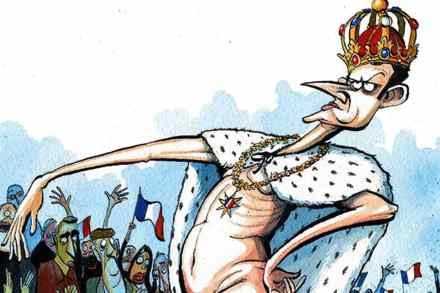
Gas prices are soaring. Europe could be about to witness electricity shortages. Power companies are collapsing by the day, and, on top of all that, the government is set to phase out traditional energy to meet its net zero target.  So might think that a cable to ship in cheap, greener electricity from the other side of the Channel is something of a knight in shining armour. Yet the government blocked the proposal today, and it was absolutely right to do so. Britain may need all the electricity it can get its hands on right now — but the last thing it should do is increase its dependence on Macron and Putin.

Boris and Keir have the energy crisis all wrong

From our UK edition

Because of soaring gas and oil prices, and the regulations that determine the energy price cap, it is almost inevitable most of us will face a rise in energy bills of between 40 per cent and 50 per cent from April. For a typical household, that's an increase in bills of around £600 a year — which would be a painful increase in the cost of living even for those on median (middling) earnings. It would leave the average household spending 6.5 per cent of all their disposable income, after tax and benefits, on heating and power — based on official Office for National Statistics figures. That's one in every £15 earned to keep warm and keep the lights on.

Why Covid means the big state is back

From our UK edition

History suggests that when the state expands in a crisis, it doesn’t go back to its pre-crisis level once the emergency is over. After the first world war, the Lloyd George government extended unemployment insurance to most of the workforce, fixed wages for farm workers and introduced rent controls. The second world war led to Attlee's nationalisations, along with the creation of the NHS and the modern welfare state. In the magazine this week I ask if Covid will lead to a permanently bigger state. There is another danger in all this intervention: can the country afford it? Last year, state spending exceeded 50 per cent of GDP for the first time since the end of the war.

Why didn’t we listen to the free marketeers?

From our UK edition

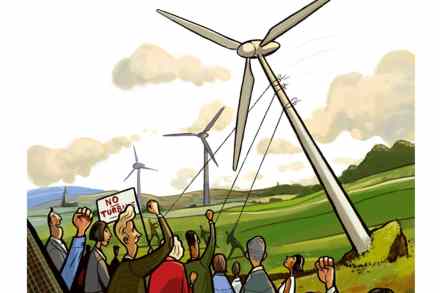
Economic liberals may feel vindicated by events of the past fortnight. It turns out energy price caps, limits on immigration, over reliance on wind power and IR35 – the taxman's crackdown on contractors – are all bad ideas, just as they had forewarned. Those same free marketeers may experience a strong temptation to enjoy the schadenfreude. In 2017, some insisted that the only good argument for energy price caps was the Leninist principle of 'the worse, the better,' as the move would bring forward the day when the entire policy collapsed. But governments bought into the baseless narrative propagated at the time that energy companies were greedy, price gouging profiteers, and since 2019 a cap on unit prices for consumers has been in place.

Is this Boris’s ‘Crisis, what crisis?’ moment?

From our UK edition

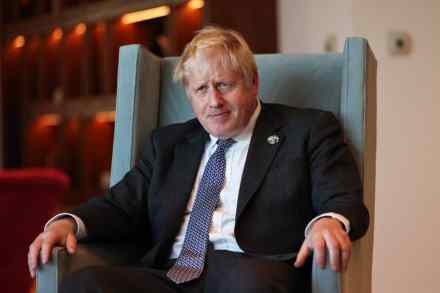
Will it turn out to be Boris Johnson’s Jim Callaghan moment? Briefing reporters on his plane to the US on Sunday, the current PM tried to play down the energy crisis, saying:  'It’s like everybody going back to put the kettle on at the end of a TV programme, you’re seeing huge stresses on the world supply systems.'  The gas price spike would be over just as soon as it occurred, he implied, and was caused by nothing more than the global economy rebounding after many months on the Covid couch.

We’ll all pay the price for reckless energy firms’ gambling

From our UK edition

You know that mate of yours who is always boasting they pay way less for energy than you because they’re constantly surfing for the best deal on price comparison websites? Well they are still going to have the last laugh, even though the energy company that supplied them is going bust. That is because the energy secretary Kwasi Kwarteng promised today that he would protect consumers and keep the official cap on prices, which means that the amount your mate pays for energy will hardly go up at all. And they’ll probably end up paying what you are paying.

Are low wind speeds to blame for Britain’s energy crisis?

From our UK edition

Why has Britain suddenly been plunged into an energy crisis, with day ahead auction prices for electricity rising to over £400 per MWh, ten times what they were this time last year? The spike in global gas prices caused by economic recovery from Covid has been commented on often enough, as has the failure of Britain to maintain sufficient gas storage reserves – we have closed a large gas storage facility as other countries have been building up theirs’. So, too, we have learned of the failure of many smaller energy companies to hedge the prices of their energy, thus putting them at risk of spikes in wholesale prices.

On the frontlines of the Pennsylvania gas station war

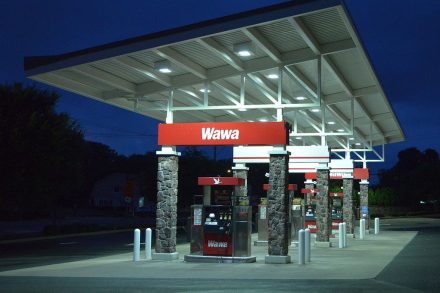
One afternoon towards the end of my first year of high school, as I filed through the crowded halls to my locker, I saw the news ripple as visibly as a breeze through a cornfield in August. A Sheetz was opening that very day, at the summit of Queen Street, off I-83. My little Pennsylvania city was on the map. We’d finally chosen a side in the great gas station wars. Now that the hit HBO show Mare of Easttown has brought the world’s attention to one of America’s greatest shames — Pennsylvania accents — it’s also reminded us of the fierce loyalty residents of the emptier parts of the mid-Atlantic have toward our convenience stores. Mare and her fellows refer to their Wawa hoagies and coffees with a curious, pointed frequency, satirized in a recent SNL skit.

wawa gas station