Fuel

‘People are at breaking point’: on the road with the Irish fuel protestors

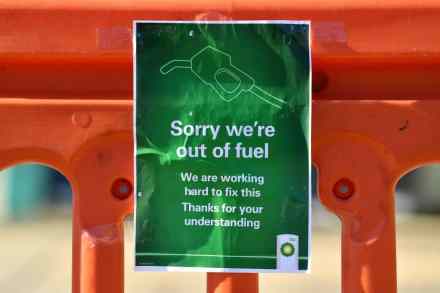
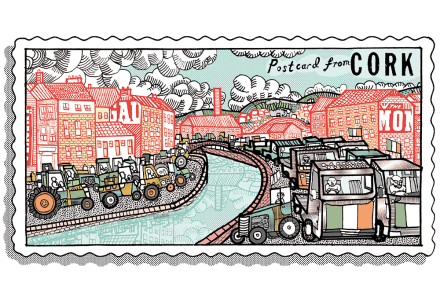
A fuel protestor stood on top of a tractor waving a tricolor. In Ireland, everything is about nationhood and the price of oil is being contested here like a new war of independence. I got into the middle of a scrum of farmers and hauliers blockading Whitegate oil refinery, a kamikaze sort of protest, for it has been stopping tankers getting in and out to supply the country, severely limiting supplies. Here on the windswept coast of Cork, traditionally dubbed the rebel county, working men have been sending out the message that they have nothing left to lose. The oil crisis sent this lot over the edge arguably because they were already on the verge of a collective nervous breakdown over fuel costs, higher than in Britain partly due to EU carbon taxes.
How much do students drink?

Union booze Several universities have renamed freshers’ week ‘welcome week’ in an attempt to dissociate it from heavy drinking. How much do students drink? – A survey last year by the group Students Organising for Sustainability found that 81% regard drinking and getting drunk as part of university culture. – 53% reported drinking more than once a week. – 61% said they drink in their rooms or with other students before going out for the night to a pub or club. – 51% said that they thought getting drunk would ensure they had a good night out. – 13% said they took illegal drugs. Round the houses Councils are to be allowed to charge more council tax for second homes. How many second homes are there in England? – There are 3.

Don’t bet on the EFFing crisis bringing down Boris

Boris Johnson is taking one heck of a risk by making labour shortages a deliberate part of his economic strategy. That, at least, is the conventional wisdom about the Prime Minister in the wake of party conference season.  If things go well, then businesses will raise productivity by investing heavily in new machinery and more training for home-grown workers who currently lack key skills. And then all will be fine for Johnson. But if things go badly, labour shortages will merely fuel rampant inflation, while gaps on shop shelves will become endemic. Key groups of voters will turn on the PM, hastening his demise.

In defence of panic buying

The filling station on the road out of the village was like a scene from Mad Max. People were all but jumping on top of the petrol tanker that had pulled in to unload its bounty. As desperate drivers screamed and shouted, it wasn’t so hard to imagine them swinging from the doors of the cab, attempting to hijack it, while the driver inside beat them away with the end of a sawn-off shotgun. The forecourt was a seething mass of screeching people on the verge of savagery, not so different from the Thunderdome. After a while, I noticed that everyone was fighting over the same four pumps while two at the furthest side stood empty. I leapt out of my car and ran over to the vacant pumps, which turned out to be diesel only. Who was in charge here? Nobody, it seemed.

Is Brexit really to blame for fuel-rationing?

All current ills in the world, of course, can be blamed on two things: climate change and Brexit. So far, there are few people blaming the rationing of petrol and diesel on extreme weather-related to climate change (although give it time), but the usual suspects have certainly been quick out of the blocks to blame it all on Brexit. Lord Adonis, for example, has claimed:  'Brexit is now leading to fuel-rationing' BP has blamed its inability to keep petrol stations stocked on a shortage of lorry-drivers, but can that really be blamed on Brexit?  In July, the Road Haulage Association (RHA) published a survey of 615 haulage firms as to what they thought was the cause of the then already-developing driver shortage.

Should flights be taxed more?

The European Commission is set to propose EU-wide minimum taxes on kerosene, the fuel for planes, as part of their EU energy taxation plans to meet the new eco 2030 targets. However, it remains to be seen if this tax will be agreed by all member states, as taxation issues require unanimity.  A leaked draft from the Commission proposes a minimum tax on flights inside the EU. Freight flights are to be exempted, so as not to give a competitive advantage to non-EU competitors, which could be seen as a muddled approach to satisfy too many objectives at once. And there are alternatives, such as including aviation companies in the CO2 emissions trading. Taxes are the prerogative of member states, though the EU can set minimum rates Why do planes not have to pay taxes on their fuel?