Frank sinatra

A Sinatra musical for hardcore fans

From our UK edition

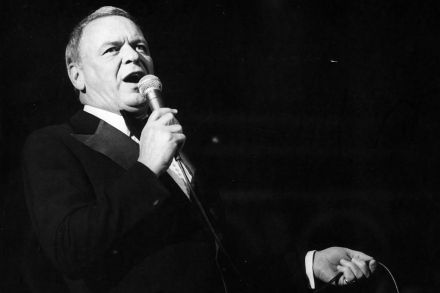
Sinatra: The Musical dramatises the star’s career during a minor wobble in the early 1950s. After falling from grace, Sinatra stages a comeback and becomes an Oscar-winning film actor. Joe DiPietro’s script gives the impression that Sinatra’s world is ruled by wise, powerful and well-connected women. Billie Holiday teaches him how to sing with feeling: ‘Bend the notes at the end of the phrases.’ His mother explains the secret of a happy marriage: ‘One talks, the other doesn’t.’ When Sinatra punches and injures a photographer, his wife tries to restore his image by ordering him to play a priest in The Miracle of the Bells. Sinatra obeys. The film bombs so badly that his press agent, George, severs all contact with him.

The Knicks are New York itself

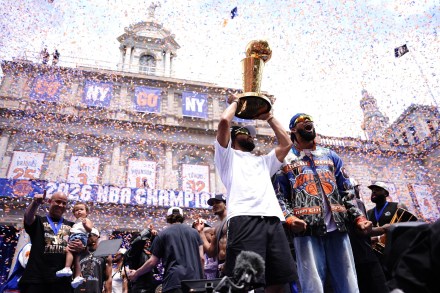
Earlier this year, a poll conducted by the University of Massachusetts and the market research firm YouGov found that 70 percent of Americans have a favorable impression of Dolly Parton, with just 5 percent expressing an unfavorable opinion. That makes the blonde phenom America’s most broadly liked public figure. In other words: old or young, Democrat or Republican, woman or man, black or white – chances are, if you’re American, you like Dolly Parton. Until recently, I was convinced the Knicks were to New York what the 11-time Grammy winner is to the whole country: the last remaining bastion of common ground. Everyone, I thought, had at least a soft spot for the Knicks. But now, though, I’m reconsidering.

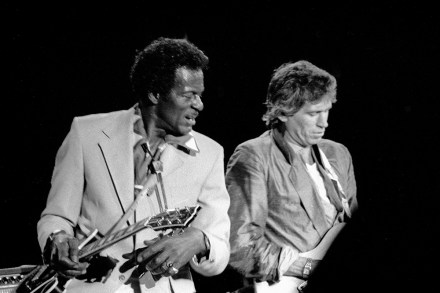
The misery of working with Chuck Berry

In Ian Leslie’s John & Paul, the creative relationship between the titular Beatles is treated as a platonic love story. Matt Thorne widens the paradigm with seven more pairings, variously rivalrous, amorous, respectful, disrespectful and occasionally frankly tenuous. The 11 American and three British musicians here have careers that collectively cover seven decades of popular music. There are three dynamics at play. First, there are the Thucydides tensions, where a waning power tangles with a rising one. Frank Sinatra invites Elvis Presley to join him on a television show; Keith Richards throws a filmed concert with Chuck Berry. (Richards, for once, is the younger partner.) The older player is not always generous.

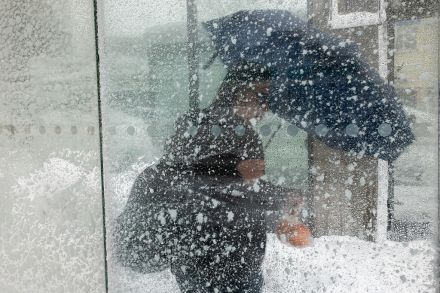
February in New York: where dreams come to die

I probably sound naive, but February always struck me as a month that should be full of hope – brimming with the type of optimism that comes from new beginnings. At least here in New York, though, it was grim. Everything feels more expensive. Everyone’s temper seems as short as the blink-and-you’ll-miss-them daylight hours. And then there’s the weather. The streets are flanked like an Arctic military checkpoint by car-sized mounds of calcified brown snow. The kind of snow that has visible layers, like a geological cross-section of urban neglect. The kind that has already gobbled up who knows how many small dogs. The wind is so ferocious, it makes that chemical skin peel you’ve been targeted for on Instagram look pleasant. New York does sleep. And thank goodness it does.

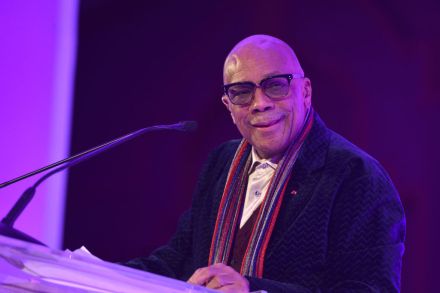
The late Quincy Jones, a man of many talents

The death of Quincy Jones, at the considerable age of ninety-one, represents not just the passing of a great American musical icon, but the departure of a truly remarkable man from the stage. The winner of an astounding twenty-eight Grammy awards, he excelled in so many different areas of music — from record production and film soundtrack composition to big band jazz and multi-instrumental playing — that it would not have been particularly surprising to discover that he had written operas or symphonies on his days off.

quincy jones

There is a little bit of Frank Sinatra in Donald Trump

Unless you are drinking from the cistern that Bill Kristol and his herd top off daily, you will have been impressed by Donald Trump’s long press conference yesterday at his golf course in Bedminster, New Jersey. Kristol’s latest puddles include the charge that Trump and Elon Musk are “mediocre” (“two repulsive and mediocre oligarchs”), a comment that elicited more snickers than your local candy shop stocks.   It turns out that, like the House of the Lord, Donald Trump is a house with many mansions. You go to his rallies, and he is in rah-rah-cheerleading mode. He works the crowd. The enthusiasm among the tens of thousands of people is palpable. He is a master of off-the-cuff paratactic delivery and what the rhetoricians call aposiopesis.

trump

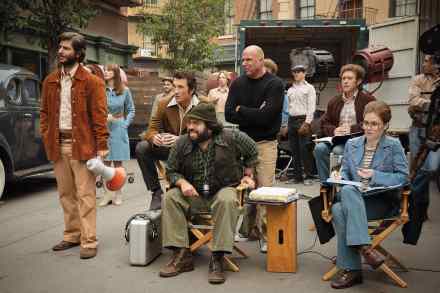
The making of The Godfather was almost as dramatic as the film: Paramount+’s The Offer reviewed

From our UK edition

It’s hard to imagine in the wake of GoodFellas, The Sopranos and Gomorrah but there was a time, not so long ago, when the very existence of the Mafia was widely dismissed as an urban myth. What changed was Mario Puzo’s 1969 bestselling novel The Godfather, which sold nine million copies in two years. You might assume, not unreasonably, that the 1972 movie version – now acknowledged as one of the greatest films of all time – was one of the most obvious commissions in Hollywood history. But it was dogged by so much controversy and plagued by so many disasters that it was very nearly stillborn.

Is this the worst production of all time? Royal Court’s The Glow reviewed

From our UK edition

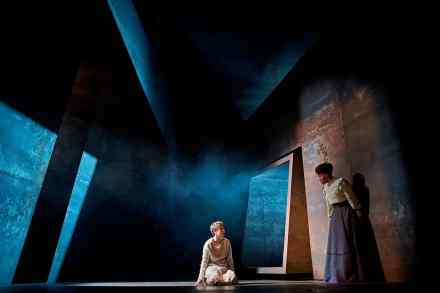
It’s getting silly now. London’s subsidised theatres aren’t just competing to put on the worst play of the year but to create the worst production of all time. The Young Vic’s new effort, Conundrum, is an impenetrable rant which even the Guardian criticised. The Royal Court enters the fray with Alistair McDowall’s The Glow, directed by Vicky Featherstone. Act One is a flatshare sitcom set in the 19th century and features a pompous spiritualist, Mrs Lyall, who forces her chippy son, Mason, to live with a lunatic called Sadie. Mrs Lyall purchased Sadie from an asylum and together they conjure up a host of ancient spirits including an angry Jesus figure who has a sword and an Irish accent.

The Christmas carol canon that could have been

Ah, Christmastime, the season for pheasant dinners, fancy ties, the land of Toyland from which you can never return, the time of year when everyone falls in love, when snowmen fly away to Snowland to become Eskimos, and when kids run around crying “dickory dock!” Right? All of these are bits and pieces from old Christmas songs that have mostly been forgotten, whose imagery and language failed to take hold in the general imagination. It’s quite fascinating how such a small number of songs, from a very narrow moment in American life, have contributed so heavily to defining the mood and feel of our secular Christmases.

Sinatra, Bacon and a YouTube star: Edinburgh Fringe Festival round-up

From our UK edition

Sinatra: Raw (Pleasance, until 15 August) takes us inside the mind of the 20th century’s greatest crooner. The performer, Richard Shelton, catches Sinatra in confessional mode in the 1970s as he looks back on his chequered career. In the early days, a promoter suggested the stage name ‘Frankie Satin’ but his tough-minded mother, Dolly, vetoed the idea. The show’s best sections investigate the harrowing details of his tangled and doomed romance with Ava Gardener. Fame and wealth never sweetened Sinatra’s prickly character. ‘Drink is my worst enemy,’ he quips, necking whisky from a tumbler. ‘But, like the Bible says, you’ve got to love your enemies.