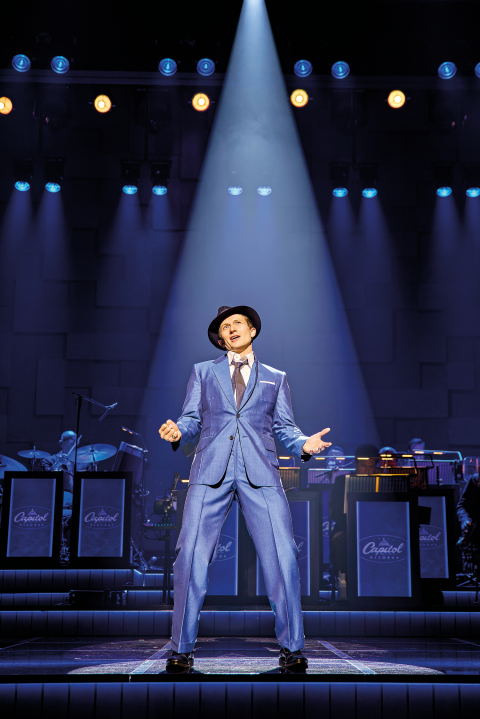


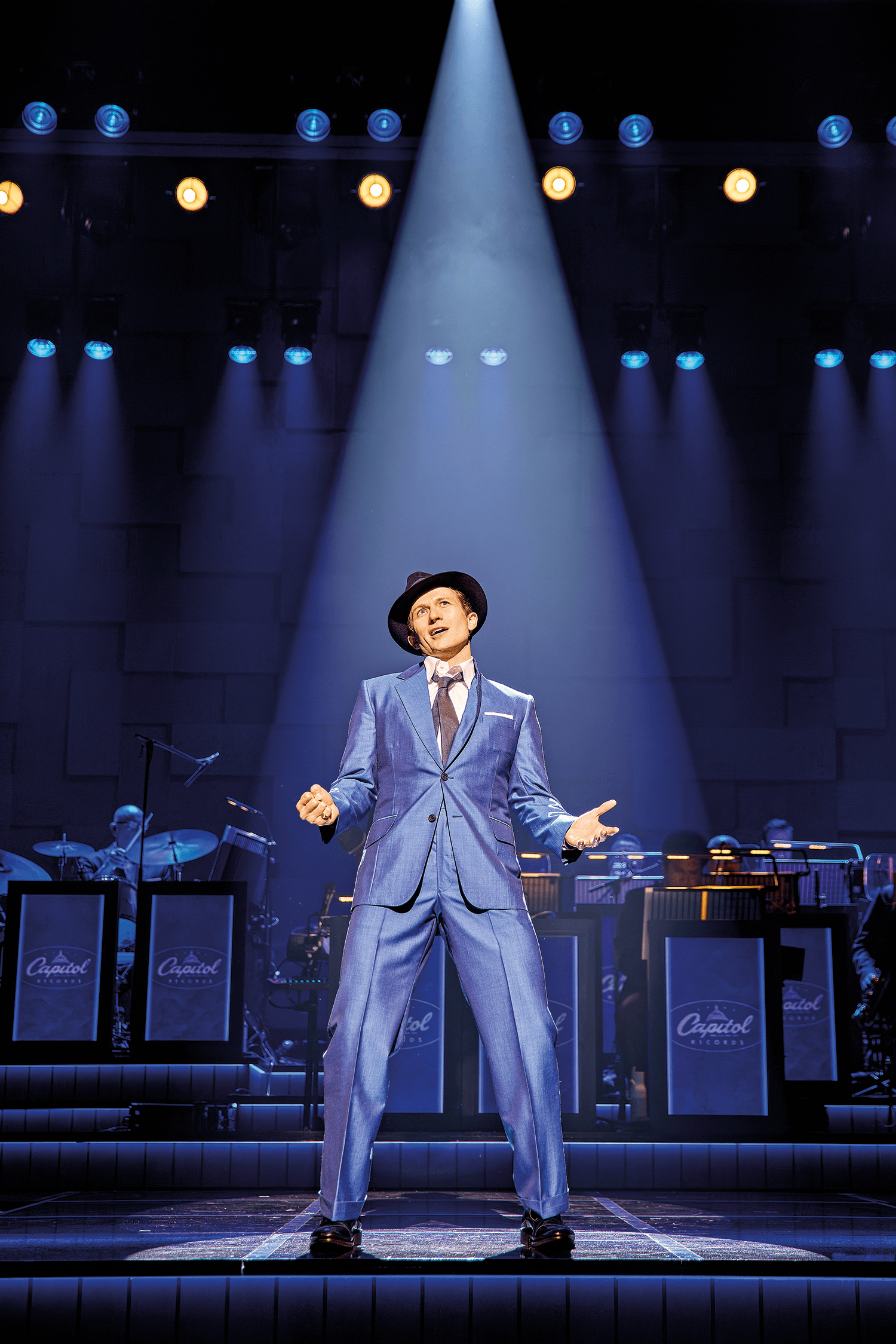
Sinatra: The Musical dramatises the star’s career during a minor wobble in the early 1950s. After falling from grace, Sinatra stages a comeback and becomes an Oscar-winning film actor. Joe DiPietro’s script gives the impression that Sinatra’s world is ruled by wise, powerful and well-connected women. Billie Holiday teaches him how to sing with feeling: ‘Bend the notes at the end of the phrases.’ His mother explains the secret of a happy marriage: ‘One talks, the other doesn’t.’ When Sinatra punches and injures a photographer, his wife tries to restore his image by ordering him to play a priest in The Miracle of the Bells. Sinatra obeys. The film bombs so badly that his press agent, George, severs all contact with him. George wants to keep Sinatra on his books but he admits that his wife – that is George’s wife – won’t allow it. When Sinatra meets Ava Gardner she speaks to him like a janitor. ‘If you don’t bore me, I’ll take you for a test drive and see how good you are in the sack.’ They get married but Ava disregards her vows and spends most of the 1950s touring southern Europe, sleeping with bullfighters. Sinatra is desperate to play Private Maggio in From Here to Eternity but he has to suck up to the influential gossip writer, Hedda Hopper. His grovelling doesn’t work so he asks for help from Ava who knows Harry Cohn, the boss of Columbia Pictures. But Ava ignores Harry himself and persuades Mrs Cohn to lean on her husband and make him award the role to Sinatra. Harry’s wife, according to this script, is the most powerful figure
in Hollywood.
Surrounded by so many combative, dominant women, Sinatra has little room to develop. It’s a two-sided portrait. He’s either beaming with confidence or scowling with anger. Joel Harper-Jackson plays him like a clean-cut ice-cream salesman with a sunny grin and an affable manner. But where’s the snarl? The young Sinatra had an air of troubled menace like a cocky prizefighter. In his later years, with his meaty face and expanding girth, he resembled a broken champ who’d sold his belts to keep himself in whisky. This show erases the dark side and treats him like an all-American charmer whose triumph is inevitable. Not an inviting portrait.

Jenna Russell (as Sinatra’s mother) succeeds in breaking through the bombast and delivering some fun, warmth and mischief. The sets by Peter McKintosh look perfunctory, like cheap backdrops made for daytime TV. At least the dancing is fabulous. And Sinatra’s best tunes never fail to hit the mark. Hardcore fans won’t be disappointed.
Pride at the National Theatre is a musical about gay liberation, the miners’ strike and the Aids epidemic. Stephen Beresford’s script follows a group of intellectual gay activists in London who raise money for the striking miners in 1984. They visit a coal-digging community where the locals offer them accommodation and a night’s entertainment at the pub. A promising start for a clash-of-cultures comedy. But the villagers treat their guests with enthusiasm and humour. Which is nice. But it starves the story of conflict.
The script follows half a dozen narratives at once and gives several members of the cast a chance to sing a heartfelt solo. The result is a mushy, feelgood show with very few rough edges and a lack of focus. It’s all a bit corporate. The set, consisting of bare scaffolding poles, looks like a confected version of industrial neglect. When winter comes, the activists return to the colliery with boxes of tinned beans as if a famine had taken hold. But an angry local tells them that their money is superfluous and the miners don’t need food or emergency fuel. It turns out that the previous donations were spent on a brand new minibus. This lends weight to the suspicion that the hardship of the miners was overstated, and that the strike was simply a year of unpaid leave for workers trapped in a dying industry.
The show includes a compulsory scene in which a troubled gay man comes out to his parents. This is a staple of gay drama and the elements are always the same. The guilty son, the outraged father, the forgiving mother in tears. Writers rarely countenance the likelihood that the parents already know about their child’s sexuality.
At press night, the crowd adored this show because it aligns perfectly with their liberal creed. If the NT is serious about changing people’s attitudes, it should take the production on a tour of countries where gay sex is punishable with death. Such places are easy to find. A lot of them receive foreign aid.






Comments