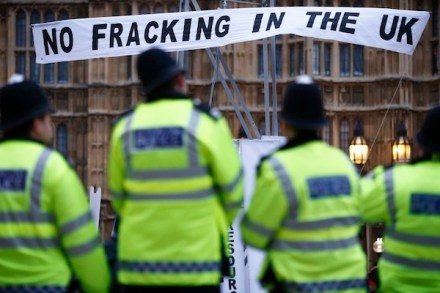
Fracking

Portrait of the week | 16 January 2014

From our UK edition

Home David Cameron, the Prime Minister, said that English local authorities would be allowed to receive all the business rates collected from shale gas schemes, not just the 50 per cent they’d expect. Total, a French company, said it would invest about £30 million in drilling two exploratory wells in Lincolnshire. To head off higher borrowing rates, the government announced that ‘in the event of Scottish independence from the United Kingdom, the continuing UK government would in all circumstances honour the contractual terms of the debt issued by the UK government’. The annual rate of inflation, as measured by the Consumer Prices Index, met the target set by the government for the first time since November 2009, when it fell to 2 per cent (from 2.

David Cameron is dangerously complacent on shale gas regulation

From our UK edition

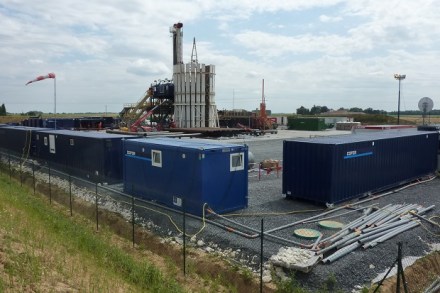
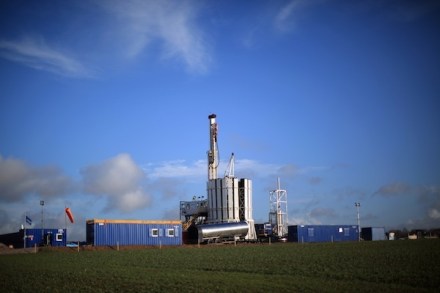
Late on Tuesday afternoon, and within minutes of each other, two separate hearings in the Palace of Westminster examined the prospects for shale gas in the UK. In the upper house, the Economic Affairs Committee was taking evidence from Chris Wright, the straight-talking boss of an American shale gas company. Wright, a boyish forty-something, gave their lordships a crash course in shale gas development, explaining the approach companies like his took in order to get gas out of the ground. Because every shale well is different, he said, shale companies have to experiment a bit, trying out different fracking recipes and techniques until they find one that works for them. There is no straightforward way of doing this – it is simply trial and error until they chance on a way forward.

Fracking incentives ‘pathetic’ and ‘insulting’, Tory MP warns

From our UK edition

Many plaudits this morning for ministers such as Michael Fallon who have catalysed the government's push ahead with fracking. The only question, though, is whether enthusiasm in Whitehall will translate into enthusiasm in local communities. Ministers are pointing to a change in the incentives for communities which means they can now keep 100 per cent of business rates from extraction sites. But it certainly hasn't impressed Ben Wallace, the Tory MP for Wyre and Preston North, who is a vocal spokesman for the group of MPs whose constituencies sit on the Bowland Shale. Wallace tells me: 'What they are offering us today - an extra £850,000 of business rates is pathetic, insulting. The Treasury should take a little less and we could have a little bit more.

Power struggle

From our UK edition

It is ‘immoral’, asserted Michael Fallon at this week’s Spectator energy conference, to force basic-rate taxpayers to subsidise wealthy landowners’ wind turbines and the solar panels of well-off homeowners. It is hard to remember the last time a minister was so frank about something which had been government policy until a few hours earlier. As a result of changes announced by the government this week, consumers will save £50 a year compared with what their bills would have been. The cost of supporting energy bills for the poor will be shifted from energy bills to general taxation, and the obligation on energy companies to subsidise home insulation will be watered down.

Fracking debate: ‘Let’s peek into this pandora’s box’

From our UK edition

At last night's Spectator debate, the audience voted dramatically in favour of the motion Let’s Get Fracking! Despite impassioned speeches from Green party leader Natalie Bennett, Greenpeace’s Joss Garman, and Craig Bennett from Friends of the Earth, the crowd sided with Conservative MPs Peter Lilley and John Redwood and the energy consultant Nick Grealy, who said that it’s time for Britain to ‘peek into this Pandora’s box’ and at least explore the possibilities of shale gas. Peter Lilley opened the debate with a joke at Chris Huhne’s expense: ‘in my view he should have been jailed not for driving too fast but for driving the development of shale gas too slowly’.

While we wait for George Osborne, Grant Shapps takes to Buzzfeed to talk about energy policy

From our UK edition

The energy debate is in stasis. Everything, it seems, hangs on the contents of the Autumn Statement. EDF has announced a price rise; bills will go up by an average 3.9 per cent, which is considerably lower than the rest of the Big Six. Yet the company made clear that maintaining low prices will depend on George Osborne. A spokesman said: ‘If the Government makes bigger changes to the cost of its social and environmental schemes than EDF Energy has anticipated, the company pledges to pass these savings onto customers. However, if changes to social and environmental programmes are less than anticipated, the company may have to review its standard variable prices again.’ That statement is even more nebulous than it first seems.

There mustn’t be a north / south divide when it comes to fracking

From our UK edition

Michael Fallon, who among his many roles is the minister in charge of fracking, has told the Telegraph’s Jame Kirkup that ‘right across the South’ people should prepare for fracking coming to a neighbourhood near them. Considering that fracking will bring with it jobs, growth and cheaper energy this is good news. But it is also good news because it should prevent a north / south fracking divide. There was a danger that fracking would appear to be something that the Tories were happy to have happen in the north but not in their own southern backyards. The former Tory Cabinet Minister Lord Howell’s call for fracking to be concentrated in the ‘desolate’ north was particularly damaging in this regard.

Should you invest in nuclear power companies? 

From our UK edition

Power companies are the new banks as far as the public is concerned — but does that mean they’re not worth putting your money in? In any troubled marketplace there are always stocks to be picked, but current political turbulence makes that an unusually tough challenge in the UK energy sector. Much anger is currently directed at the  ‘big six’ energy groups — Centrica, Scottish & Southern (SSE), Scottish Power, E.on, RWE and EDF — and their pricing power in the domestic market. The recent round of tariff rises, ahead of the winter heating season and in the face of a moderating wholesale market, served to underline the suggestion that they are price-gouging.

MPs still fracked with nerves about shale gas incentives

From our UK edition

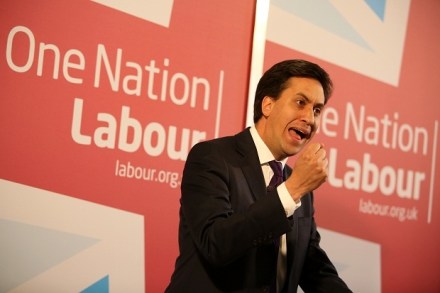
In the days before Ed Miliband went all Marxist/brave on energy (delete as tribally appropriate), the debate around energy was more about fracking than it was about freezes. Shale gas has taken a back seat while ministers wonder what on earth they can do about bills to take the wind out of the Labour leader's sails. But the political problems haven't gone away. The debate is still about whether the incentives on offer are enough for local communities to accept fracking pads in their area. MPs whose constituencies sit atop the Bowland Shale don't think the government is offering enough, and have continued to tell the Prime Minister that. He recently held a meeting with MPs interested in fracking, but those who attended complain that they got little out of it.

What the frack?

From our UK edition

According to the weird and wonderful folk at Greenpeace, the home of the longest running magazine in the English language is sitting on a gold mine. A black gold mine. Using sophisticated web technology, Greenpeace have created mapping software of Britain’s lucrative shale reserves. Simply enter your postcode to find out if you are set to become the next Beverley Hillbillies. Keying in 22 Old Queen Street, SW1H 9HP (the Speccie’s address), creates this stuffy response: ‘Bad news, you live in an area that could get fracked’. Bad news? Bad news? We are ecstatic. Frack baby, frack!

Think fracking’s bad for the countryside? Just look at farming…

From our UK edition

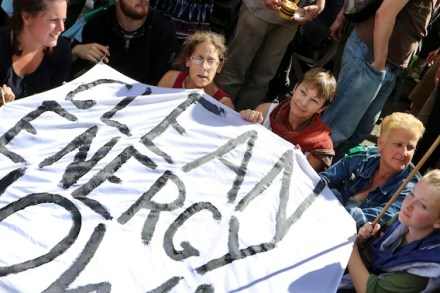
I’m off to Balcombe this weekend. In fact I might even carry a placard and paint my face with a clever pun, like ‘F*** off!’ or ‘Go f*** yourself.’ Because it’s time to add my voice in opposition to a greedy industry which threatens your ground-water, exudes greenhouse gases, leaches chemicals into the earth, destroys the beauty of the landscape and imperils our native fauna and flora wherever its grasping hand is felt. This extractive activity fills the air with noxious smells and clogs the roads with slow-moving vehicles; its safety record is appalling, with a high rate of work-related injuries and famously low worker pay.

How fracking could be sent packing by a poor offer for locals

From our UK edition

After the noisy protests over oil drilling in Balcombe, you might be forgiven for thinking that there are just two groups in the fracking debate: the Caroline Lucases, who oppose the technique outright, and then those who think shale gas is the best thing we ever discovered, better even than sliced bread. But there is a third group, which is quieter than the others, yet yields a great deal of power over how impressive this country's shale gas revolution will really turn out to be. I introduce this group of worried locals, still unconvinced by the incentives currently on offer from the government, in my Telegraph column today.

Letters: GPs reply to J. Merion Thomas

From our UK edition

Some doctors write Sir: Professor Meirion Thomas (‘Dangerous medicine’, 17 August) may be an excellent surgeon but he is uninformed about the nature of GPs’ work. For many older consultants in the NHS, it will have been decades since they last spent any time in a GP setting, if they have at all. He fails to realise that 95 per cent of the work of diagnosing, treating and caring for patients takes place within general practice. Common illnesses range from depression, to diabetes, asthma and hypertension, as well as many others. Dr Meirion Thomas’s idea that nurse specialists are the answer betrays his lack of understanding that most patients present to GP as a complex mix of interrelated symptoms and other factors.

The Guardian’s latest crush: Justin Welby

From our UK edition

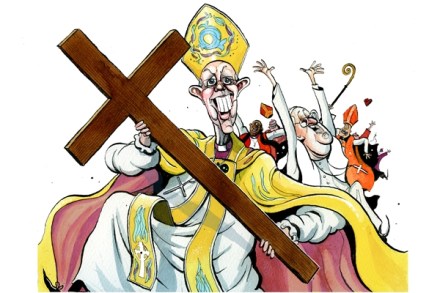
The Church of England has had some surprisingly good press recently. Who knows how these things happen, but the media seems to have decided to stop attacking its homophobia, and to start praising its social vision. The change at Lambeth Palace seems to have prompted this shift, which is a bit ironic, as Justin Welby is far more involved in the sexually illiberal side of Anglicanism than Rowan Williams was, but never mind. It has also been prompted by persistently hard economic times: the Church’s involvement in deprived communities gradually wins it more attention. Maybe it has insights that normal political bodies lack. Would you believe it?

Caroline Lucas’ fracking arrest won’t worry ministers, but here’s what will

From our UK edition

Caroline Lucas' arrest this afternoon at the Balcombe fracking protest might be quite useful for the Green MP, but it's hardly going to give ministers a sleepless night. Lucas' presence is actually rather distracting from a real problem that ministers do need to address: ensuring that communities feel they have a stake in the shale gas exploitation taking place on their doorstep. David Cameron rather got their hopes up recently when he, by a slip of the tongue, promised that communities would get a £1 million incentive for accepting drilling on site when the figure was actually £100,000.

Back off, nimbyists, or fracking will benefit Beijing more than Balcombe

From our UK edition

The fracking debate has been brought to a new heat by David Cameron’s message to Home Counties nimbyists and eco-crusties that he wants ‘all parts of our nation’ to share the shale gas bounty, not just lucky northerners. But the argument is proceeding in almost total ignorance of how the controversial extraction technique works and how soon it’s likely to happen. So I asked one of Britain’s top energy executives this week whether shale is really the game-changer it’s fracked up to be. It certainly looks that way in the US, he said, because gas-based energy costs have been cut by two thirds, energy representing 10 per cent of all production costs.

Is the EU stopping Britain’s shale revolution?

From our UK edition

A few months after the last election, Oliver Letwin warned Cabinet colleagues that a chunk of Britain’s income would be gone for good after the economic crisis. Letwin, who has always been the Cameron project’s in-house intellectual, told them that some of the complex high finance in which Britain had specialised was never coming back. We would have to develop a new form of economic activity to make up for the loss. The good news is that this new form is looming into view. Fracking the Bowland Shale alone will, on a relatively cautious estimate, produce the equivalent of 90 years of North Sea gas production.

Mind your language: Frack vs frag

From our UK edition

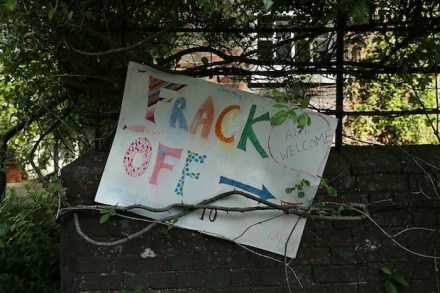
‘Frankly, my dear, I don’t give a frack,’ replied my husband unwittily when I asked how he’d feel if shale gas was discovered at the bottom of our garden. But he did illustrate why the word has proved so good for campaigners. Someone at Balcombe had painted a sign saying: ‘Frack off.’ The word enables the debate. Quibbling about hydraulic fracturing would hardly have had the same impact. In this way, fracking serves the same purpose as did bonking in the 1980s, when it purported to supply a non-moralistic term for the act. I am not sure the illusion lasted, for the parallel case of bunga bunga in Italy soon enough suggested dirty old men. However, fracking positively benefits from its taboo associations.

What does Ed Miliband make of shale?

From our UK edition

‘We are going to see how thick their rectory walls are, whether they like the flaring at the end of the drive!’ Said Michael Fallon in jest at the expense of supporters of fracking in the Home Counties. As it happens, our very own Charles Moore lives in a rectory in East Sussex. He wrote this in the Spectator a few weeks back: ‘Another great advance for the environment is shale gas, though for some reason Greens do not see it that way. It will make us — and has already made America — far less dependent on high carbon-emitting sources of energy. It is lucky for those trying to extract it in this country that it is in places like Ellesmere Port and Blackpool where there are not many spoilt, rich people to complain about damage to the landscape.

Our Fracking Friends in the North

From our UK edition

An old Washington cliche has it that a gaffe is what happens when a politician inadvertently blurts out the truth or, in a variation on the theme, reveals what he really thinks. Enter Lord Howell. In ordinary circumstances Peer Says Something Daft might be thought as newsworthy as Friday Follows Thursday but Lord Howell is not some backwoods eccentric. He's a former cabinet minister and, more pertinently, George Osborne's father-in-law. Perhaps this should not matter but it does just as there's a certain frisson felt when David Cameron's father-in-law criticises government policy.