Fracking

The US is back in charge of the oil industry

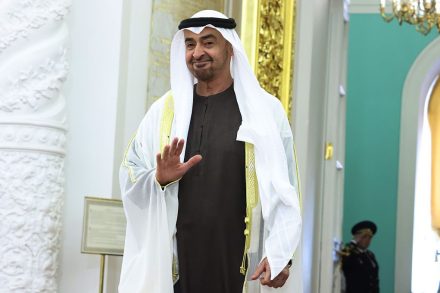
The United States is getting sucked into a conflict in the Middle East, central banks are desperately trying to keep inflation under control and the world is facing an energy shock that may cripple the global economy. There are lots of ways the world looks very similar to the early 1970s. And yet, it is now clear that there is also one significant difference between now and then. Whereas half a century ago, the oil cartel OPEC was rising in power, with Tuesday’s shock decision by the United Arab Emirates to quit the group, it is clear that it is falling apart. In reality, the US is taking back control of the fossil fuel industry – and that is of huge geopolitical significance.
oil

America needs an ‘all-of-the-above’ approach to energy

While the House of Representatives has understandably been quiet during the government shutdown, not everyone has been idle. While most members of Congress were home in their districts, Representative Troy Balderson, an Ohio Republican, quietly introduced a short, potentially consequential piece of energy legislation called “The Affordable, Reliable, Clean Energy Security Act.” “We the People” will celebrate our nation’s 250th birthday next Independence Day. And truth be told, we are crossing this milestone birthday showing our age. We are politically bipolar. We are in debt. Our infrastructure is crumbling and our schools are a mess. We are in need of several new leases on life.

energy

How to Blow Up a Pipeline is an ecoterrorist heist movie

How to Blow Up a Pipeline begins with a land acknowledgement.  For those unfamiliar, this is a lengthy paragraph — often found at progressive meetings or on classroom syllabi — stating that the land upon which an activity is occurring was never formally ceded by the Native American tribe to which it once “belonged.” (Never mind that firstly many Native concepts of land management didn’t track what twenty-first-century Westerners mean by “ownership” and secondly the individuals making such acknowledgements clearly have no intention of actually returning the land they supposedly illicitly occupy.

A still from How to Blow Up a Pipeline (Neon)

Joe Manchin’s thirty pieces of (inflated) silver

I, for one, never thought he would do it. I never thought Joe Manchin, who was elected in West Virginia after running an ad in which he literally shot the 2009 cap-and-trade bill, would sign on to Joe Biden's Build Back Better climate agenda. Yet sign on he has. Last night, Manchin announced that after over a year of logjamming Biden's spending plans, he'd struck a deal. The legislation he agreed to weighs in at a ballpark of $700 billion, a sharp climbdown from the $6 trillion Democrats had initially asked for. But it's still a lot of money, and even more importantly, it's a major psychological boost for the left. Now, barring some let-the-world-burn chaos from goth kid Kyrsten Sinema or revolt from House Dems, Build Back Better will be signed into law.

Biden cracks down even on green energy

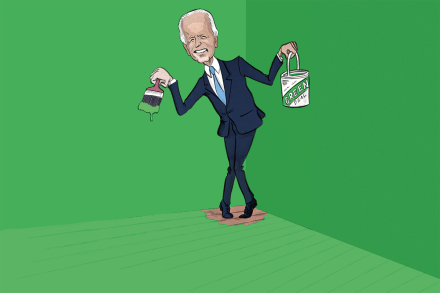
We know that government’s knack for finding something wrong with everything rivals even the most stereotypical mother-in-law. But the relentless fault-finding’s latest victim may surprise you: federal prosecutors have fined a green energy company $8 million and slapped on a five-year probation period after bald and golden eagles died on its wind farms. There is now no such thing as “clean energy.” Even so-called “green energy” is tinged with the blood of birds. Just when you thought the war on energy couldn’t get any more ridiculous, Joe Biden's Department of Justice has sucker-punched one of its own golden boys.

Biden must decide the environment’s price tag

Boris Johnson is considering doing something that should be a duty for every leader. In the wake of sanctions poised to disrupt the 8 percent of domestic oil and 18 percent of diesel the UK imports from Russia, Johnson is reportedly toying with the idea of putting his country first and on the road to self-sufficiency by lifting the UK’s moratorium on fracking. The British government banned hydraulic fracturing, or “fracking,” in 2019. Fracking is a method of extracting oil and natural gas by drilling deep underground and fracturing shale rock with a fluid mixture (99 percent water and sand) that allows fossil fuels to flow out, be captured, processed and used to myriad ends (including gasoline).

Britain is paying the price for its fracking panic

From our UK edition

Between 1980 and 2005, the UK produced more energy than it needed. Today, we import more than a third of our energy and over half of our natural gas. Households are facing an increase in their annual tax bills from £1,500 to an eye-watering £3,000. While the Business Secretary may have tweeted this week that the current situation is a matter of high prices rather than security of supply, families already struggling to heat their homes are unlikely to tell the difference as they decide whether to heat their homes or pay for food. This was never a foregone conclusion. A decade ago, the US shale gas revolution was well underway, with fracking creating hundreds of thousands of jobs and driving down gas prices.

Europe’s ‘green’ transition put it at Russia’s mercy

Germany’s “halt” on the certification of the Nord Stream 2 pipeline on Tuesday is a classic case of too little, too late — a fact made all the more painfully clear in light of Russia’s invasion of Ukraine. Oil and gas still flow through Nord Stream 1 and many other Russian pipelines to Europe, and the continent has no choice but to keep importing the fossil fuels that finance Vladimir Putin’s offensive. We all saw this coming. Europe’s supposed “green” energy transition disregarded energy security and common sense, and Ukraine is now paying the price. The world will never tackle climate change if it's in a constant state of geopolitical energy insecurity, relying on authoritarian regimes like Russia and China to meet its basic needs.

How Britain’s fracking industry was regulated into irrelevance

From our UK edition

This week the fracking company Cuadrilla announced that it was permanently closing its two shale mines in Lancashire, after the Oil and Gas Authority (OGA) declared that shale gas companies must seal up the wells they had drilled and return the land to nature. It is, on the face of it, a very strange step to take at this time. The wells have not been producing any gas for some years, of course, ever since environmentalists launched their scare campaign against the industry. It was a campaign that was astonishing in its brazenness. Tiny earth tremors recorded near the wells, of a scale that is entirely normal in, say, the mining industry or in geothermal energy developments were rebranded by activists ‘earthquakes’.

Energy is the most important issue in the world

One issue more than any other will dominate airtime and influence policy in 2022: energy. Americans are seeing the highest prices at the pump in seven years. Since Biden took office, average gas prices are up by more than $1 a gallon. In November, gas prices in Mono County, California hit more than $6 per gallon, forcing some residents to drive to Nevada (where gas taxes are lower) to buy fuel. The price of natural gas in the US is at its highest in seven years, and up more than 180 percent in the last year alone. In Europe, the situation is even worse. Europe’s gas reserves are at record lows. In Germany, which already had the EU’s highest energy prices, bills are up 30 percent in a year.

energy
energy green biden

Biden’s big energy bust

"For too long, we’ve failed to use the most important word when it comes to meeting the climate crisis,” President Biden declared in his presidential address to Congress in April 2020. “Jobs. Jobs. Jobs.” Investments in jobs and infrastructure, the president pleaded, have often had bipartisan support in the past. In November, he got nineteen Republican senators to vote for his $1 trillion infrastructure bill, but the main planks of Biden’s climate plan were in the $2.2 trillion Build Back Better Act. The House passed it in November, only for it to fail in the Senate, thanks to opposition from the most powerful man in Washington, at least when it comes to passing legislation.

How the Tories have fuelled Britain’s energy crisis

From our UK edition

Britain is caught in an energy crisis of the government’s own making. It is true that gas prices have spiked all over the world — but Britain is suffering more than most. Energy suppliers are going out of business, thanks to the government’s price cap. Even fertiliser companies are going bust, with serious knock-on effects for the food industry: the British Meat Processors Association says shortages could hit within a fortnight. The trigger for this crisis has been the sudden surge in demand for gas as the global economy recovers from the Covid lockdowns. Gas prices have doubled in the United States, for example. In Britain, however, prices are five times higher. Why? Because America exploited fracking technology and capitalised on its huge inland gas reserves.

Trump sealed the deal last night

First, let me pay brief homage to Kristen Welker, moderator of Thursday night’s debate between Donald Trump and Joe Biden. A White House correspondent for NBC, she is pretty clearly not an enthusiast for President Trump. But unlike the wretched Chris Wallace, she did not make the debate a two-versus-one shouting match against the President. And unlike Steve Scully, who was scheduled to moderate the canceled second debate, she did not covertly consult with one of the President’s enemies and then lie about it when exposed.

trump

Why fracking matters

Sigmund Freud famously noted that sometimes a cigar is just a cigar. In the case of fracking, even Freud would have acknowledged that fracking is about so much more than just fracking. That is why the issue is so important to voters beyond those in Ohio, Pennsylvania, and Texas where so much oil and natural gas is produced. That is also why Joe Biden and Kamala Harris have tried to walk back their positions on fracking from the Democratic primary, when they said they’d ban fracking and cease the use of carbon-based energy sources, as well as push for the budget-busting and progressive utopian Green New Deal. Of course, it’s about jobs.

fracking

It’s all about Ohio

Dublin, Ohio Since the presidential election of 1944 when Ohio went with loser Thomas Dewey over winner Franklin Roosevelt, Ohio voters have given majority support to every presidential winner except one. The sole ‘error’ occurred in 1960 when Ohio went with loser Richard Nixon over winner John F. Kennedy. That means Ohio has gone 14 straight elections, or 60 straight years, picking the winner. No other state carries such a distinguished record. With Joe Biden barely campaigning in Ohio and Donald Trump covering the state — signs point to Trump again winning Ohio in 2020, albeit with a smaller margin. Nevertheless, will Ohio be wrong this year? Don’t bet on it. For years, Ohio’s slogan was ‘The Heart of It All!

ohio

The Democrats are fracking insane

This article is in The Spectator’s March 2020 US edition. Subscribe here. What could be more emblematic of the American Dream than fracking, the miracle technology that has created thousands of real jobs, lowered the cost of living, generated wealth and prosperity, boosted competitiveness and helped make the United States not just energy independent, but a net exporter of natural gas and petroleum products for the first time in decades? And what could be more characteristic of the elitist, small-minded, anti-market, anti-blue-collar, anti-growth, green-obsessed liberal-left than that the Democratic party is hell-bent on banning it?

fracking

Drill down and it’s obvious: the fracking debate was lost long ago

From our UK edition

Five years ago this week, George Osborne as chancellor announced a scheme to place tax revenues from shale gas fracking in Lancashire and Cheshire into a ‘sovereign wealth fund for the north of England’. Soon after that, a leaked memo revealed him urging fellow ministers to intervene with planning authorities to fast-track fracking proposals and in particular to help Cuadrilla, the company whose drilling near Blackpool caused a seismic tremor in August big enough to give the current government reason to impose a moratorium on fracking ‘until and unless’ it’s judged completely safe. Jeremy Corbyn probably isn’t wrong when he calls this ban ‘an electoral stunt’.

Barometer | 2 May 2019

From our UK edition

Great shakes Shale gas commissioner Natascha Engel resigned in protest at what she called ‘absurd’ restrictions on fracking — in particular rules which state that fracking operations must cease. Has anyone ever been harmed by a tremor at magnitude 0.5? — The Richter scale was devised by seismologist Charles F. Richter in 1935. It is a logarithmic scale, each ascending number marking an increase of approximately 31 times the amount of released energy. — The largest recorded earthquake, in Chile in 1960, measured 9.5. A tremor less than 4.0 is unlikely to cause damage and one of 2.0 or below unlikely even to be felt. — A tremor of 1.

Thanks to the anti-fracking lobby, Britain can’t avoid Russian gas

From our UK edition

Who stands between the government and a proper, effective sanctions regime against Russia? Not Jeremy Corbyn, though he might wish he could. Putin is going to get away with the Salisbury attack, suffering little more than a token expulsion of diplomats, thanks to anti-fracking protesters. They didn’t mean it, of course. When they stood before the bulldozers in the Sussex village Balcombe, jumped up and down about mini-Earth tremors in Lancashire they thought they were doing the Earth a favour. They saw UK-produced shale gas as a dirty alternative to clean, carbon-free energy. But they were wrong. In the short to medium term at least the alternative to UK-produced shale gas was imported gas, an increasing proportion of which comes from Russia.

More gas, less wind

From our UK edition

The Global Wind Energy Council recently released its latest report, excitedly boasting that ‘the proliferation of wind energy into the global power market continues at a furious pace, after it was revealed that more than 54 gigawatts of clean renewable wind power was installed across the global market last year’. You may have got the impression from announcements like that, and from the obligatory pictures of wind turbines in any BBC story or airport advert about energy, that wind power is making a big contribution to world energy today. You would be wrong. Its contribution is still, after decades — nay centuries — of development, trivial to the point of irrelevance. Here’s a quiz; no conferring.