Food

I have always liked angry food: Ugly Butterfly reviewed

Ugly Butterfly is a zero-waste restaurant and champagne bar on the King’s Road, Chelsea. The ‘champagne bar’ addition is so awful as to be pantomime villainous — I think of zero-waste diamonds and zero-waste wars — but perhaps they need this kind of duplicity to seduce the punters, who move so slowly towards wisdom? ‘Zero-waste’ isn’t an advertising catchphrase designed for Chelsea and its constituent tractors and immaculate blondes, unless they are very drunk. It is from Adam Handling, who has six venues, including the Frog in Hoxton and the sustainable deli Bean & Wheat in Old Street. Ugly Butterfly is pretty, because anything ugly in Chelsea would shrivel through lack of identification.

A Trumpian feast

From our US edition

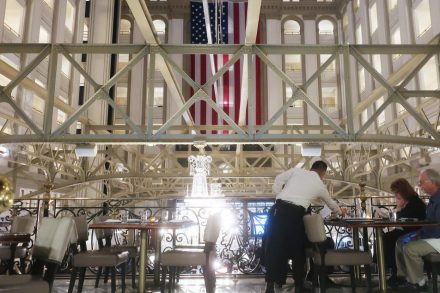
This article is in The Spectator’s February 2020 US edition. Subscribe here. Donald Trump serves the best food in Washington. The residents of DC won’t say so, but it’s true. America’s capital has a lively food scene, with many excellent restaurants. None is better than the two that are in the soon-to-be-sold Trump International Hotel on Pennsylvania Avenue: Sushi Nakazawa and BLT Prime by David Burke. Burke’s joint is absolutely my kind of place. It’s in the hotel lobby. The building used to be a post office before the Trump family converted it. The enormous glass-roofed lobby area is a marvel: put politics to one side and admit that it is an extraordinary achievement.

trump dc

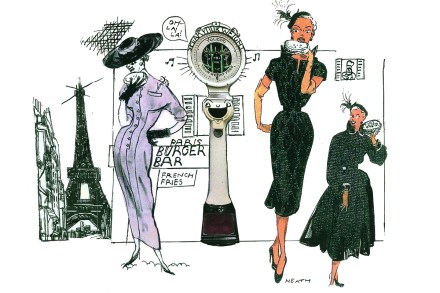
French women do get fat

From our US edition

This article is in The Spectator’s January 2020 US edition. Subscribe here.Paris ‘And please meet Alice, who has brought industrial cheese,’ said our Parisian host as she introduced me to the other dinner guests. Imagine my despair! I had failed her, not to mention her guests, on the sacrosanct fromage. A fate worse than death. Food is a national obsession for the French. The couple throwing the party presented us with a three-course meal, all made from scratch using seasonal produce from the local market. To think that I almost brought a six-pack of beer.

french women

Standing up to eat is the new line in dining in DC

From our US edition

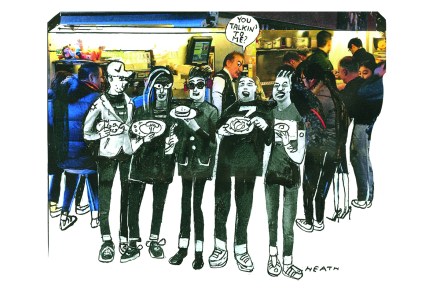
This article is in The Spectator’s January 2020 US edition. Subscribe here. Going into Spoken English, you feel a little like Henry Hill taking the back entrance to the Copa in Goodfellas. Wander into the Line Hotel, past the check-in, take a right past the elevators and enter the kitchen. It works best if you’re with someone you need to impress. Unfortunately, this time I’m with a Spectator editor. The Line is one of DC’s newest and hippest boutique hotels. That’s another way of saying it’s slightly less boring than the Hilton about five blocks away.

standing

Bowl food: childhood memories have inspired a new craze for cookie dough

From our US edition

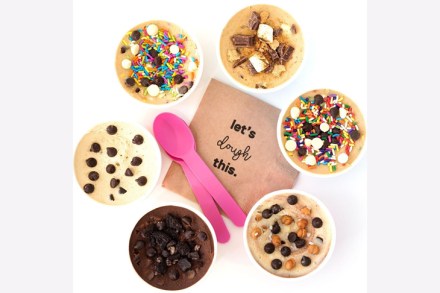
This article is in The Spectator’s December 2019 US edition. Subscribe here. In Greenwich Village, one block south of Washington Square Park, stands the flagship store of DŌ, ‘New York City’s first ever cookie dough scoop shop’. Opened in 2017 by an American designer with fond childhood memories of baking with her mother, DŌ is now so popular that it requires a special line policy, as in: ‘SINGLE FILE so that pedestrians can still use the sidewalk.’ Often, a line of hundreds of customers can be seen snaking around the block, eagerly awaiting tubs and cones of its buttery, sugary (and uncooked) batter.

cookie dough

This food needs a little less grandeur, and a little more love: Simpson’s in the Strand reviewed

Simpson’s in the Strand stopped serving breakfast in 2017, after it had been renovated to stop it smelling of cabbage. Fat men wept, but worse things have happened here. Simpson’s is built on the site of John of Gaunt’s Savoy Palace, in which Geoffrey Chaucer, Gaunt’s brother-in-law, wrote part of The Canterbury Tales. The palace was destroyed during the Peasants’ Revolt of 1381; it is all detailed in Anya Seton’s romance novel Katherine. Of the palace’s successor, Henry VII’s Savoy Hospital, only a small chapel remains. It looks deeply oppressed. Instead we have the Savoy hotel, created by Richard D’Oyly Carte.

‘Cook it like a prayer’: Bip Ling’s Christmas curry

This dish is refreshing and super yummy. It’s a recipe that Didas (my Indian grandmother) taught me. The zesty tomato flavour makes my mouth water. You can’t go wrong with this curry. Everyone loves it and always asks for more! It’s comforting and warm, especially when it’s cold outside during Christmas time. Cook the dish like a prayer. The more you enjoy the process, the better it will taste. You can use the same recipe with different meat, or try it with vegetables. Make sure you taste the sauce as you cook, and add more spices if you desire. It’s even more fun to cook with the song ‘Curry’ by Bip Ling in the background.

Eggs and hard liquor: Spectator writers on their favourite examples of meals in literature

P.J. O’Rourke I love poems but hate poetasters, love wine but detest oenophiles, love food but can’t stand foodies. Therefore my favourite passage about food in fiction is Lionel Shriver’s entire book Big Brother. In her tale of obese totalitarianism and comestible fascists Shriver destroys every pretention and abstract conception about food — starves it to death or fattens it for the kill. And she does so in prose that is poetry: ‘You have to ask yourself if there was ever a time people just ate something and got on with it. Every time I open the refrigerator I feel like I’m staring into a library of self-help books with air-conditioning.

Sumptuous, remote – and forgettable: Locket’s reviewed

Locket’s is a new café from the owners of Wiltons in Jermyn Street. Wiltons is the restaurant that dukes visit when they have fallen out with White’s. It has a sign featuring a lobster that looks like Benjamin Disraeli wearing a top hat. When a bomb fell nearby in 1942, its anxious owner immediately sold it to the banker Olaf Hambro, who was sitting at the bar, by adding the price of the restaurant to his bill. It appeared, thinly disguised, in Jeffrey Archer’s First Among Equals as Walton’s, in which a fictional Tory minister plots the seduction of a woman called Amanda. I like Wiltons, even if the female staff are dressed as Edwardian housemaids, which is the second worst uniform in existence after hessian smocks.

Remarkable and imaginative: Fitzwilliam Museum’s The Art of Food reviewed

Eating makes us anxious. This is a feature of contemporary life: a huge amount of attention is devoted to how much we eat, when we eat it, where it comes from, to toxic foods, organic and inorganic ones, environmentally damaging groceries, those that tot up too much mileage or cause damage to the rainforest. Some of these worries are relatively novel, but preoccupation with the nourishment we consume is not. A remarkable and imaginative exhibition at the Fitzwilliam Museum, Cambridge, Feast & Fast: The Art of Food in Europe, 1500–1800, documents just how obsessed our ancestors were with every aspect of their meals. At its heart are a series of recreations by Ivan Day, a specialist on the subject of what can only be described as edible art.

Nauseating, but I like the garlic bread: Legoland Windsor reviewed

The theme music to Legoland in Berkshire is the theme music to The Exorcist. It appears from speakers hidden in the grass. I hear it as I wander out of some un-enchanted wood filled with Lego: we have lost our ancient woods and need new ones. These ones smell slightly of drains. The Exorcist music is a joke for parents; or perhaps an acknowledgment that there is something demonic at Legoland. You can, from the fake hills — everything is fake here, and that is both bewitching and awful — see Windsor Castle, which probably means that from Windsor Castle you can see Legoland. I wonder if Legoland will outlive the monarchy; if Legoland and the monarchy have a lot in common.

Back in the Babington Triangle: Roth Bar & Grill reviewed

The Roth Bar & Grill exists on an art-farm called Durslade in Bruton, Somerset, which is also the country outpost of the Hauser & Wirth gallery, which is the silliest art gallery in Britain. It specialises in decapitated gnomes. It is only 13 miles from Babington House, Soho House’s monstrous country house with its playrooms for adults and giant fish-finger sandwiches. This is a world of electric Agas, black Range Rovers and pink wellington boots; and it is, almost by itself, the reason why country dwellers despise town dwellers. If people live in homage to what they read in Sunday newspaper supplements, they deserve to be despised. When I visited it three years ago, it was both abuzz and the silliest restaurant I had ever seen.

Stringfellows for the sex robot age: Bob Bob Cité reviewed

Bob Bob Cité is a restaurant dangling like testicles from the underside of the Leadenhall Building in the City of London. It is shaped like a series of yellow train carriages, for a voyage no one will ever make; the building above it manages, in the way of the age, to be both absurd and frightening. People call the Leadenhall Building the cheese--grater, but it does not make me think of kitchens. Kitchens are human and intimate; from the atrium, which is guarded by security men, this building looks like the innards of something vast and inhuman. This is the sequel to Bob Bob Ricard, a Soho restaurant for rich men with anxiety disorders, hollow legs, and nervous thumbs.

Pasta, like all good things, should come to an end

From our US edition

Olive Garden’s ‘Never Ending Pasta’ promotion, I’ve come to believe, is an accelerationist ploy. For about $11, you can engorge yourself with your pasta of choice, paired with your selection of a sauce, many of which catch the American eye with the adjective ‘creamy’ or ‘five cheese.’ Authenticity is an afterthought in the fever dream that is ersatz ethnic dining in endless proportions. And with $100 and a bit of luck, you could have purchased a ‘Never Ending Pasta’ pass — the 24,000 winners of this pass can indulge in the creamiest pasta with the crispiest toppings for nine weeks, unlimited. They can eat their weight in pasta without ever having to see the bottom of their ceramic dish staring back at them.

pasta

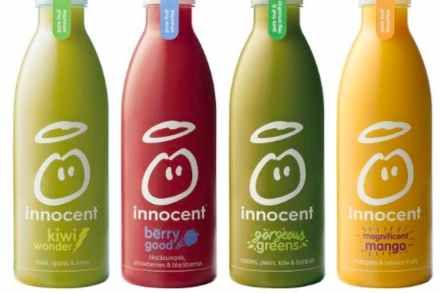
Why I regret inventing the innocent smoothie brand

We all have secrets which, when we remember them, shroud us in shame. I’m afraid I have a particularly dark one that I’m forced to remember almost every day of my life. Twenty years ago, I was a working in a big London ad agency with a smart and ambitious young man named Richard Reed. I liked him a lot and it was clear that he wouldn’t be constrained by the advertising industry forever. Sure enough, he came to me one day and announced that he and some friends were starting a business, making fruit smoothies called ‘Fast Tractor’. Richard explained that they’d chosen Fast Tractor because the tractor that transported the fruit from field to fruit crusher was fast. Or something.

How to spot good quality smoked salmon

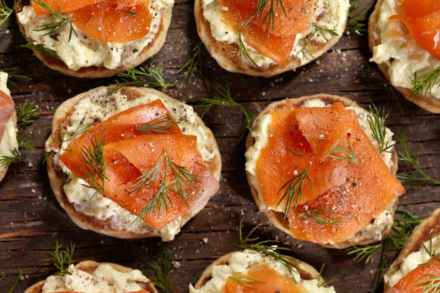
“Try smoked salmon without the lemon – you might just like it!” says Lance Forman, the fourth generation owner of family salmon smoking business H. Forman & Son. Overlooking the Olympic Stadium, Forman’s smokehouse (cum-deli-cum-restaurant-cum-shiny-disco-palace) is the fishtastic Trump Tower of the East End. “In a restaurant,” continues Forman, “the plate arrives, and people often add salt to their food before they’ve tasted it. It’s the same with smoked salmon – people automatically squeeze lemon over it. But actually, that’s a habit that has sprung from eating poor quality smoked salmon which can be quite slimy.

A slice of history: how did Britain’s pizza industry begin?

A slice of history Pizza Express is to undergo financial restructuring, leading to fears that it could go under. How did the pizza industry in Britain begin? — The first record of an Italian restaurant was the Italian Eating House off Leicester Square, opened in 1803, though it is not known whether or not it served pizza. — The Olivelli restaurant in Store Street, Bloomsbury, opened in 1934. Early documents found on the premises included a recipe for margherita pizza. — Pizza Express was the first chain of pizza restaurants in Britain, its first branch opening in Wardour Street in 1965. — Pizzaland opened its first branch in 1970. It was bought out and its branches converted to Pizza Hut in 1996.

I’ve had my fill of brasseries: Moncks reviewed

If you review restaurants professionally you would not think Britain wanted to leave the EU. You would think she wanted to live happily in the twinkling golden stars of Europe like Emily Thornberry’s neck fat, eating, semi-eternally, at a European-style brasserie. British restaurants are a silent acknowledgement that native food is not very good unless you really like cabbage. Please don’t write to me about fungus from Maidenhead. I don’t care. Our cities reflect it; every-where I see European-style brasseries glinting with the promise of European--style bliss. Where is the courage of our seething psychological imperatives? Why don’t we put our madness where our mouths are? I daydream about a new Brexit-themed restaurant in Britain, but I have yet to see it.

It’s so easy to go mad in Oxford: Chiang Mai Kitchen reviewed

Oxford is a pile of medieval buildings filled with maniacs, and is therefore one of the most interesting places on earth. It is easy to go mad in Oxford — it’s the damp — or grow other worlds, like John Tolkien, whose Middle Earth, I suspect, was largely an emotional defence against the conversation at High Table. I found the cognitive dissonance between the landscape and its purpose so alarming, like finding David Cameron riding an Ent, that I went mad, and so know far less about Tudor foreign policy than I should. It was more awful than it sounds — that is youth’s anguish — and I could not, for years, visit Oxford. But I went last week, holding copy of Pevsner’s The Buildings of England: Oxfordshire as a comfort blanket.

I wouldn’t suggest you eat here, but I doubt there’s a better place to drop acid: Camelot Castle reviewed

The Camelot Castle Hotel is a pebble-dashed late-Victorian excrescence on a cliff. It overlooks the ruins of Tintagel Castle. A baby-blue Rolls-Royce Wraith and a floral Aston Martin are parked outside. They are the owners’ cars. Everyone else is in a banger. This hotel played the lunatic asylum in the 1979 Dracula starring Frank Langella, and this is more apt than you can know. Inside there is faded Victorian grandeur mashed with Arthurian legend mashed with Kazakh oil baron chic mashed with three-star hotel in fading south coast resort. There is sinister tiling, dark wood, fraying carpets, staff dressed for serving tea at some ghostly parallel Claridge’s and, from every window, the sea.