Food

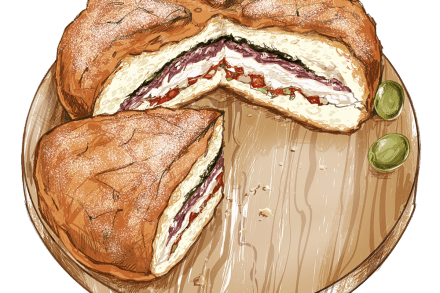
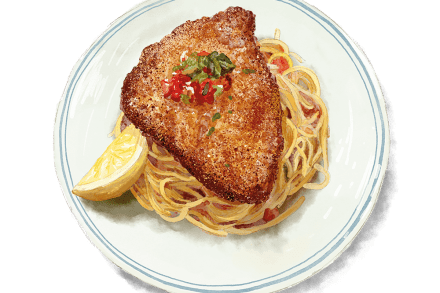
Beef olives – classic comfort food, without an olive in sight 

We all did mad things during the first Covid lockdown. For some it was getting a dog or starting up a microbakery. For me, it was signing up for a NVQ Level 2 in butchery. I’m still not quite sure how it happened, but, once the schools reopened, I spent my Tuesdays in a cold butchery store in east London, socially distanced from my septuagenarian master butchery tutor, who would teach me how to break down whole carcasses, the art of seam butchery and the trick to linking sausages.

‘It feels subversive to eat so much carbohydrate in Mayfair’: Claridge’s ArtSpace Café and Bakery reviewed

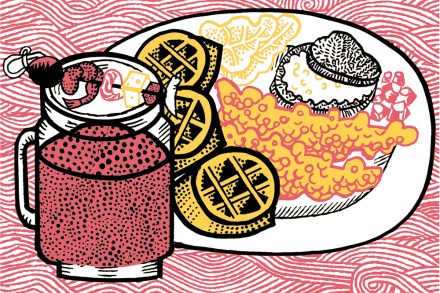
Claridge’s grew nine storeys in the last decade: it’s a metaphor. The ornamental 1897 castle on Brook Street has expanded to fit the available space. Though it grew by half, it never closed, and workmen dug out the basement by hand. In one room, Claridge’s was a building site: in another, a dream world. We are trekking through metaphors now. We are up to our necks. The children eating the Nutella, banana and whipped cream crêpes look deranged Hotels are like buses: they have infinite possibilities. That is what they are for. To not be home. Like Alec Guinness, who lived in the Connaught with his share of the profits of Star Wars, which shamed him (the Connaught is the anti-Tatooine), I would like to live in a hotel.

The joy of iced buns

‘It’s just a hot dog bun with icing!’ the iced-bun detractors will shriek. I’m a lady with a lot of opinions about fairly esoteric foodstuffs, many of them declamatory, immovable, or strident, but I do not understand taking against the iced bun. I’m not sure what awful bakery-based trauma must have happened to you during childhood to make iced buns the target of your ire, but they are undeserving. For anyone not a self-proclaimed detractor, iced buns (also called Swiss buns or iced fingers) prompt reveries: forgotten childhood memories of plump buns in trollies and sticky fingers holding grown-up hands.

‘I wanted to lie face down in the hummus’: Erev reviewed

Erev is an Israeli restaurant in Notting Hill, though Israeli restaurants do not call themselves Israeli nowadays. They have rebranded to Eastern Mediterranean and I don’t blame them. These are bad days for Zionists. I tried to buy an almond croissant at the progressive coffee shop in Newlyn last week while wearing an Israeli flag as a cape. My excuse was: it was election day, and Gaza was on the ballot. I didn’t get the almond croissant. They didn’t have any. Erev, though, is the subject of real protests from real people who think that eating is, under certain circumstances, a genocidal act. They stand outside and shout at diners. If you think genocide and restaurants have nothing to do with each other, meet 2026.

​A charmingly bold food podcast

It takes some gumption to name a podcast History’s Greatest Dishes and proceed to offer episodes on pizza, blancmange, balti, gooseberry fool and Victoria sponge. Where’s the rarebit, the pottage, the pigeon pie? But the boldness of the podcast is one of its charms, and the choice of topics isn’t terribly important. Food historian Annie Gray and podcast host Emily Briffett chew over some fascinating material on each of the dishes they have selected and provoke surprisingly heated debates. Pineapple on pizza ought to be accompanied by Spam instead of ham It was suggested, for example, that pineapple on pizza ought to be accompanied by Spam instead of ham.

Man vs lobster

She was doing a postgrad course in a town by the sea, and a strange thing happened to us one afternoon. On the quayside we saw lobsters being sold from a trestle table. Only one of them remained and I squinted at it, close up. The sharp oval claws, like holsters, had been bound in elastic bands to stop them nipping customers. It seemed a small-minded precaution. These imposing pincers were cumbersome and useless on dry land. But in the sea, with the water’s buoyancy to give them mobility, they would be swift and lethal weapons. Yet the lobster-catcher had neutralised them with a pair of turquoise bands. What for? The beast was already defeated, plucked from its natural habitat by a giant human being, and yet the victor was fearful of the tiniest nip from his prisoner’s claws.

Is your wellness smoothie giving you cancer?

There’s a question I’ve started being asked at work. Given I’m a psychiatrist, it isn’t one I’d ever expected to hear: ‘Do I have cancer?’ A young woman with anxiety wants to know whether the lump on her neck is sinister; she has been watching a great deal of TikTok. A man in his late thirties, in for a routine review, mentions in passing that his sister has been referred for a colonoscopy and wonders whether he should be too. At a dinner party a few weeks ago, a friend leant across halfway through her low-alcohol natural wine and asked me, in a small voice, whether it was true her generation was getting cancer in their thirties. Yes, I said, perhaps a little too bluntly. She looked rather panicked for the rest of her evening.

‘A constant good in this world’: Simpson’s in the Strand reviewed

Simpson’s in the Strand is a dream palace, and its fortunes are as tidal as the river. It is on the site of John of Gaunt’s Savoy Palace, destroyed in the Peasants’ Revolt. It began as a cigar divan and chess club, was subsumed into the Savoy Hotel, built with the profits from The Mikado, and was beloved by Churchill and Wodehouse, who described it as an Elysium where you were ‘at liberty to eat till you were helpless, if you felt so disposed’. It then decayed. I’ve come here for 30 years and, grand as it was, Simpson’s smelt of beef and the 1922 committee by the end. No restaurant can live on that indefinitely, and it closed in 2020. I did not enjoy my last meal here, but I took part of its myth: when it sold off its crockery in 2023 I bought what I think is a milk jug.

Attention, waiters: it’s not about you

‘Something I like to do with all my tables is ask what brings you here today?’ said the young waiter as he sat us down and began to talk. If I’d known he would still be talking nearly two hours later I think I would have got up and walked out. We were in a lovely riverside restaurant in Warwickshire for my mother’s birthday. But we were going to have to run the gauntlet of being served by a smiley young man who was under the impression that everything was about him. He was pale, long-haired, very tall and thin and bendy, as if a gust of wind would blow him over. He didn’t look like he had the strength to serve our lunch, never mind fight a war. That’s something I ask myself whenever I meet a man in his twenties. How would he fight a war?

My shameful confession: I’m not a good baker

Contrary to popular conception, I’m not a great baker. I was hired by Bake Off for my judging experience, not my baking skill. I’m a good cook and I know what’s right and wrong about a cake, but I suspect my own baking efforts would not often get Paul Hollywood’s nod of approval. On the day before Good Friday I decided to make hot cross buns. They were a total disaster. Analysing them, I could hear myself say: ‘No flavour. How old were the spices you used? And when did you buy that yeast? You do know you should chuck out spices every year and that instant yeast does not last for ever?’ So, we went to Tesco and bought new spices and yeast. The second attempt was much better, but still not wonderful. We went late-night shopping and happily the Co-op still had hot cross buns.

How do you make a tart that doesn’t really exist?

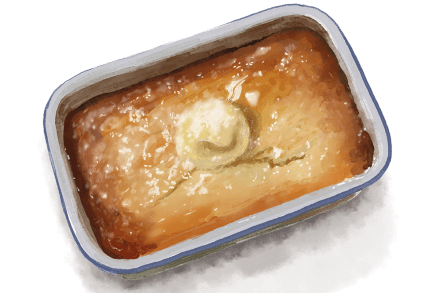
There are few things more delicious than falling down a rabbit hole. No, don’t worry, I’m not serving up a second recipe for rabbit in a row. I mean discovering a recipe or dish which, not only have I not cooked or tried before, but haven’t even heard of. A little while ago, a reader asked me about Hawkshead cake, which Beatrix Potter used to make with her husband at Christmas. Hawkshead is the village Potter grew up in, in the Lake District, and the cake is actually more of a tart, made with puff pastry and filled with currants and syrup. This is where the proverbial rabbit hole came in, because I couldn’t quite stop there.

‘An adequate meal for a Cornish giant’: Brasserie Angelica reviewed

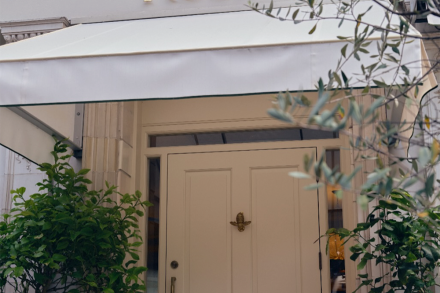
Brasserie Angelica is the – is the word signature? – restaurant inside the Newman, Fitzrovia, a new hotel that has landed in the capital like a spaceship containing aliens who are into menswear. I don’t mind buildings that look like they don’t belong. Fitzrovia is charming because it feels like remnants left by other places. We have too much Edwardiana already: in the Aldwych– formerly the best surviving medieval part of London after the Great Fire – I feel like I am stomping through cakes of stone. The Newman is a wail in glass and brick on a quiet lane near Gower Street. There are pale awnings, brass fittings and uplighting: Manhattan in its last boom. It is attached to a Victorian house renovated to the standards of a grouter with OCD.

Tomorrow belongs to the vegetarians

Can there be any thinking person who has passed a lorry filled with live animals peering out through the slats on their way to slaughter, without a momentary shudder? How many of us would take an opportunity to inspect what happens there? Be honest: you recoil from the thought. ‘Slaughterhouse’. So unpleasant we frenchify it as ‘abattoir’. Hunting leaves me cold yet has an honesty about it: you see and choose your prey, and kill it yourself: morally a million miles from the systematic industrial slaughter of creatures we never look in the eye, couldn’t bear to see killed, and so turn away, pay others to do the killing, and deny our own agency. There are things we’d rather not think about. Take note of them. They’re the first signs of rejection.

Treasure Britain’s last railway dining car while you still can

The 17.48 from Paddington does not, on first sight, seem exceptional. Over-hard seats, over-bright lights and a scrum at the ticket barriers: none of these is special. The modern Hitachi trains are solid but dull. Only Isambard Kingdom Brunel’s great arching iron roof adds splendour to the scene. But pause by coach L on the daily London to Carmarthen express and you might notice a small miracle. This train is one of the very last in Britain to carry a proper dining car. To its immense credit, GWR, the route’s operator, cooks and serves decent meals on six services a day: three at lunchtime and three in the evening, on its lines from London to Wales and the West Country.

School dinners are glorious

I don’t much miss being a teacher. A pathological dislike of teenage boys, a congenital inability to remember historical facts and an unwillingness to spend my spare moments lesson-planning rather than go to the pub meant that a brief career diversion to pay off my overdraft did not become a lifelong vocation. But there is one thing I do hanker for, that makes me briefly wish I was back in the classroom: the daily delight of school dinners. After four hours of trying to wrangle the Year 10s into memorising the membership of the League of Nations, sitting down for a steaming hot plate of fish, chips and jam roly-poly was a godsend. It was a little patch of civilisation between shepherding the droogs and staring at PowerPoints.

Gentleman’s Relish is no more

It is the early hours of the morning and an email drops into my inbox. Lacking any kind of willpower, I open it. Now I’m wide awake. Because this isn’t the usual PR slop that starts my days. It’s a tip-off. A big one. A reader has discovered something about a company and they are urging me – me! – to investigate. Adrenaline surges. This must be what it felt like to be Woodward and Bernstein. Only my informant is pointing me in a slightly different direction. Their intel is on Gentleman’s Relish: the incredibly niche spread is disappearing from our shelves. It has been available in the House of Lords dining rooms but for how much longer? Online supermarkets and delis are showing it as out of stock. What is going on?

This Easter, eat rabbit 

Dissonance is necessary around Easter. Fluffy lambs and chicks are everywhere: on cards and decorations, in countless chocolate forms and adorning every Easter-adjacent craft, toy or activity. But, of course, we also traditionally serve roasted lamb or chicken on Easter Sunday. In some part, this is simply seasonality. We associate gambolling lambs and new chicks with spring. But that apparent seasonality is also something of an untruth: lamb, particularly, is not actually in season at Easter. I know, I know, as soon as the days start to brighten, our green and pleasant lands are filled with sentient woolly fluff wobbling about on little legs. But those cartoon-like lambs are far from ready for market.

Organised crime is targeting artisanal food

Organised crime has a new focus: high-end food production. The latest victim is Wildfarmed, a UK-based, regenerative flour business co--founded by one half of the band Groove Armada. Last month, 50 tons of its flour were stolen, disguised as a wholesale order for the French supermarket E. Leclerc. In an audacious move, the fraudsters asked for the wording on the bags to be translated into French. Wildfarmed obliged. The 1kg bags – all 50,000 of them – were loaded into containers ready for export. Then they vanished. Wildfarmed’s disco-ball neon branding makes it a surprising target. But the real question is not how anyone hides a haul of hard-to-miss flour bags, but whether this theft is a bellwether.

Long live the bottomless brunch

Bottomless brunch: it sounds disreputable, to start with. There’s the suggestion of indecency; that lower garments are optional, perhaps on the part of the poor waiting staff, like those ‘Butlers in the Buff’. And ‘brunch’ is surely the louchest of meals, invented purely so that people could roll into a restaurant after a long lie-in and commence drinking before noon. There is none of the briskness of ‘lunch’ or the cosiness of ‘dinner’. No one’s going to go for a ‘constitutional’ after brunch. No, they’re going to have ‘just one more’… I’ve had some lovely brunches in my time.

Can London’s favourite restaurateur save Simpson’s?

When you think about Simpson’s in the Strand (never Simpson’s on the Strand), it is impossible to consider the 198-year-old restaurant without remembering its literary antecedents. P.G. Wodehouse praised it as ‘a restful temple of food’ in his 1910 novel Psmith in the City. It has popped up in everything from Sherlock Holmes to Howards End and, when that epitome of thespian Britishness David Niven wished, in the 1961 film The Guns of Navarone, to speak wistfully about a golden idyll to a dying friend, Simpson’s was the idyll he chose.  Yet all good things decline at some point. Before Simpson’s closed in 2020, another victim of the pandemic, it had been weakening.