Fiction

Adrift in the world: My Sister and Other Lovers, by Esther Freud, reviewed

From our UK edition

Some people spend years squirming on a leather chaise longue before they come to understand, as Philip Larkin so pithily observed: ‘They fuck you up, your mum and dad.’ Few go on to make peace with the sagacity delivered in his next line: ‘They may not mean to, but they do.’ In My Sister and Other Lovers, Esther Freud’s sequel to her autobiographical novel Hideous Kinky, sisters Lucy and Bea – who spent their early childhood trailing after their hippy mother through 1960s Morocco – slowly edge towards such catharsis. Before that, however, comes a lot more turbulence, and Freud – whose great-grandfather pioneered the couch method – is acutely attentive to its psychological effects.
Collateral damage: Vulture, by Phoebe Greenwood, reviewed

From our UK edition

Sarah Byrne is covering her first war and, after a slow start, things are finally picking up. Sweating in her flak jacket and undersized helmet, the twentysomething British freelancer is aiming for a scoop. One of her contacts might be persuaded to arrange a visit to ‘terror tunnels’, the headquarters of a Palestinian network whose activities Israel cites as justification for bombing Gaza City. Fed up with ‘monkey journalism’, Sarah wants to move on from recycling press releases to proper reporting. At the same time, she keeps asking herself what she is doing here. Do these people dragging bodies from under the rubble of their houses need yet another ‘misery merchant’ pestering them with trite questions?

A double loss: The Möbius Strip, by Catherine Lacey, reviewed

From our UK edition

The Möbius Book has been variously described as ‘a hybrid work that is both fiction and non-fiction’ and a ‘memoir-cum-novel’. Catherine Lacey herself asserts that it is a work of non-fiction, but with a qualifying ‘however’. It comprises two narratives, first- and third-person, and is published to be flipped 180 degrees. Ali Smith’s How to be Both had a similar format, as did Mark Danielewski’s Only Revolutions. All three force the reader into making a choice and living with the consequences. This is not cosmetic, as The Möbius Book is about decisions and repercussions. Lacey writes in the aftermath of two break-ups: a romantic one with a man referred to as ‘the Reason’, and an earlier one with God.

A meeting of misfits: Seascraper, by Benjamin Wood, reviewed

From our UK edition

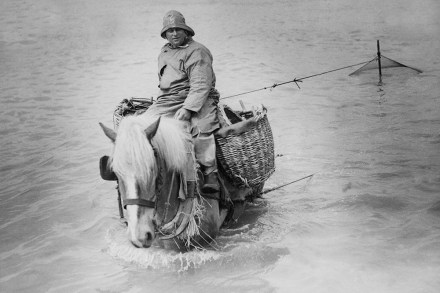
The sea, as you might expect, looms large in Benjamin Wood’s finely tuned novella Seascraper. Thomas Flett – one of the most touching protagonists I’ve encountered in recent years – is barely out of his teens, but he’s already battered by toil. His days are spent shanking – gathering shrimps on the beach – with only a horse and cart for company. The setting, gorgeously evoked, is Longferry, a grim coastal town in 1950s Britain. Tom himself appears as if he’s been transplanted from the 19th century. The sea, though, brings change, when hidebound past comes crashing against thrusting future. Tom has a stifling oedipal relationship with his mother, who gave birth, aged 16, after an affair with her history teacher.

One of the boys: From Scenes Like These, by Gordon M. Williams, reviewed

From our UK edition

Although Gordon M. Williams died as recently as 2017, his heyday was the Wilson/Heath era of the late 1960s and 1970s. During that time he managed to appear on the inaugural Booker shortlist, dash off a ten-day potboiler, The Siege of Trenchard’s Farm, that would be filmed by Sam Peckinpah, and continue to file a series of ghost-written newspaper columns for the England football captain Bobby Moore. As these accomplishments might suggest, Williams was the kind of writer whom the modern publishing world no longer seems to rate. Essentially, he was a literary jack-of-all-trades, alternating straightforward hackwork with more elevated material as the mood took him, and eventually abandoning fiction for a desultory career as a screenwriter.

Highs and lows: The Boys, by Leo Robson, reviewed

From our UK edition

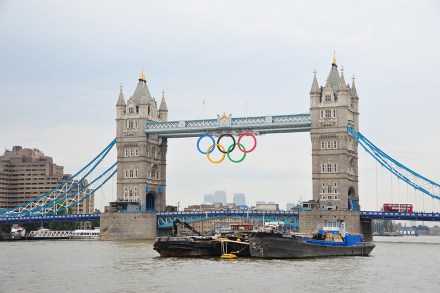
The Boys, the entertaining debut novel by the literary critic Leo Robson, is set in Swiss Cottage during the 2012 London Olympics. Johnny Voghel is ‘methodically lying about’, home on leave from an admin job in the West Midlands and grieving both for his mother, who died the previous year, and – by extension – his father, who died when he was a child. A typical day is spent ‘smoking badly rolled cigarettes, watching the ring-fenced patches of grass suffer in the heat, nodding at passers-by, tweezing grey hairs from my nostrils and popping the spots on my chin’, before walking into the centre to gaze at the BT Tower with its Olympics countdown.

A season of strangeness: The Hounding, by Xenobe Purvis, reviewed

From our UK edition

‘Summer was the season of strangeness,’ muses Temperance, the barmaid at Little Nettlebed’s only alehouse. ‘People behaved peculiarly then.’ Temperance’s aside anchors the dramatic irony at the heart of Xenobe Purvis’s debut novel The Hounding, set in an 18th-century Oxfordshire village in the grip of a drought. In the villagers’ eyes, through which much of the story is told, this strangeness starts with the Mansfield sisters, five orphaned girls leading a reclusive life on a farm across the river, in the sole care of their blind grandfather, John. The girls’ free manners, in flippant disregard of the era’s orthodoxies, fill onlookers with mistrust.

A small world: Shibboleth, by Thomas Peermohamed Lambert, reviewed

From our UK edition

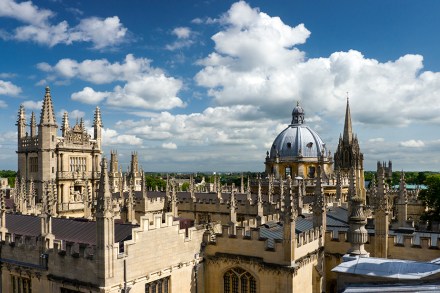
Two shibboleths are treated in Thomas Peermohamed Lambert’s audacious debut novel. The first is the University of Oxford; the second is the Israeli-Palestinian controversy. ‘It is the great issue, isn’t it? The great shibboleth.’ Edward, the protagonist, is a state-educated undergraduate whose connection to Islam is a Muslim grandfather from Zanzibar. He finds himself in a world of wealthy public school boys with ‘a social calendar, rugby fixtures and sexual assault hearings’, and girls from sister schools, ‘fully recovered from eating disorders’. This fictitious world is outdated, but Lambert’s satirical touch still hits the mark about ‘the creatures of the written word [the university] specialised in churning out, as if the country needed more of them’.

The secret child: Love Forms, by Claire Adam, reviewed

From our UK edition

Claire Adam’s compelling first novel Golden Child won the 2009 Desmond Elliot Prize and was also picked as one of the BBC’s ‘100 Novels that Shaped Our World’. It told the story of contrasting twins in Trinidad – one an academic high-flyer, the other a misfit. When the latter is kidnapped, the father must act to rescue the son he has never quite understood. Adam has followed this with an ostensibly quieter novel about a Trinidadian woman called Dawn, divorced with two adult sons, who lives in south London and works for an estate agent, after abandoning her medical career. She decides to search for the baby girl she gave up for adoption more than 40 years earlier, having got pregnant by a tourist at Carnival, aged 16.

No escaping mother: Lili is Crying, bv Hélène Bessette, reviewed

From our UK edition

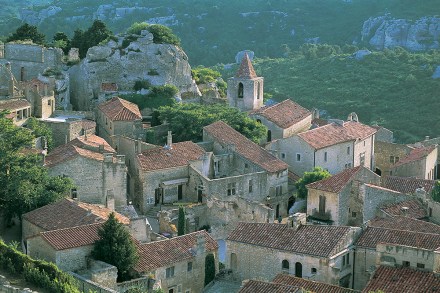
‘Everyone has a mother, but we don’t all smash up our lives for her sake,’ we hear in the first few pages of Lili is Crying. It’s a sensible message, but one which seems suited to an entirely different book. Hélène Bessette’s 1953 debut novel – translated into English for the first time – is a tale of bust-ups, mistakes and life-ruining decisions in a fiery, fickle relationship between a mother and daughter. Charlotte and her daughter Lili live in Provence, and the novel jumps between the 1930s and 1940s, from Lili’s ‘ribbons and Sunday dresses’ to her first freighted dalliances with boys.

Misfits unite: The Emperor of Gladness, by Ocean Vuong, reviewed

From our UK edition

As a poet, Ocean Vuong has won every prize going. Now here’s The Emperor of Gladness, his second novel. His first, On Earth We’re Briefly Gorgeous, a coming-of-age story, is currently being filmed. This latest oneis wild, unwieldy and too long. It is fiction/autofiction mixed with 19th- and 20th-century warfare, plus contemporary angst and craziness. It has one preposterous scene that you wish were true, and never has a title been so misleading. It’s a book of moral, imaginative ideas with gripping stories, wonderful characters and writing that’s poetic and witty. I loved it. It opens with an introduction to the rural town of East Gladness, Connecticut, its citizens ‘not ambivalent to hope’.

The past is another country: Ripeness, by Sarah Moss, reviewed

From our UK edition

Sarah Moss is a prolific and vital novelist whose books encompass an array of subjects from Victorian social reform and 19th-century Japan to broken Brexit Britain and eating disorders. She combines teaching at University College, Dublin with writing in real time: The Fell, set during the second lockdown, came out in the summer of 2021, while My Good Bright Wolf, an experimental memoir about her anorexic breakdown in late 2020, was published last year. A forthcoming Channel 4 adaptation of Summerwater, which explored national identity and isolation against the backdrop of a soggy Scottish holiday park, may catapult her into the sort of gold-foil territory enjoyed by Maggie O’Farrell or Ali Smith. If not, then perhaps Ripeness, her ninth novel, will.

A searching question: Heartwood, by Amity Gaige, reviewed

From our UK edition

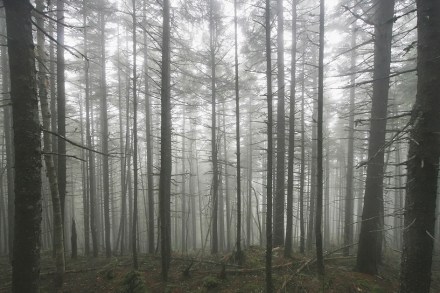
The Appalachian Trail is America’s secular version of the Camino de Santiago but more than twice as long. In Amity Gaige’s Heartwood, Valerie Gillis is a 42-year-old nurse and experienced trail-walker who nonetheless vanishes one day in the northern stretch, in Maine, the wildest of the New England states. Heading the search for her is Beverly Miller, a senior game warden, who stands out among her colleagues because she is 6ft, female and not a native Mainer. As the days go by, and despite the impressive number of volunteers looking for Gillis, the chances of finding her alive diminish. Miller, a veteran of similar searches, has to continue to motivate her teams, even as her own appraisal of the situation grows gloomy.

An ill wind: Poppyland, by D.J. Taylor, reviewed

From our UK edition

As the term refers to the stretch of the north Norfolk coastline between Sheringham and Mundesley, only one of the stories in D.J. Taylor’s engrossing new collection strictly takes place in ‘Poppyland’. However, the others seldom stray far. In ‘At Mr McAllister’s’, one of two stories set in and around Norwich market, the feckless employee of a down-at-heel toyshop decides to change his life, starting with talking to the pretty girl on the fruit and vegetable stall. In ‘Those Big Houses up Newmarket Road’, set nearby, social embarrassment inspires a class-conscious schoolboy to dream big. Such ambitions are unusual in these carefully worked stories of broken homes and precarious employment.

No place is safe: The Brittle Age, by Donatella di Pietrantonio, reviewed

From our UK edition

This slim, unsettling novel opens with Lucia trying to navigate the ‘mess’ of her daughter Amanda’s return home to their apartment near Pescara, in Italy’s Abruzzo. Pieces of torn bread, a heaped-up blanket and other strange ‘traces’ are indications of Amanda’s emotional disarray after hastily leaving Milan on the eve of lockdown. But she’d already abandoned her university studies by the time she’d been violently mugged. Lucia attempts to achieve the difficult balance of caring for, but not suffocating, her daughter, resigning herself to Amanda’s ‘unpredictable comings and goings’ while leaving her ‘something nourishing in the fridge in case she skips breakfast’. But she has already spectacularly misjudged this.

Repetitive strain: On the Calculation of Volume, Books I and II, by Solvej Balle, reviewed

From our UK edition

I have counted the days. It is my 122nd eighteenth of November. I have come a long way from the seventeenth and I do not know whether I will ever see the nineteenth. But the eighteenth arrives again and again. This is life for Tara Selter, the protagonist of On the Calculation of Volume, a mesmerising projected septology by the Danish writer Solvej Balle that will make anyone who has ever longed to pause time rethink their wish list. Book I, published in Denmark in 2020 and on this year’s International Booker Prize longlist, opens on Day 121. Tara, an antiquarian bookseller, is hiding from her husband Thomas in the spare room of their cottage in Clairon-sous-Bois, a fictional town in northern France.

Time travellers’ tales: The Book of Records, by Madeleine Thien, reviewed

From our UK edition

Those who have read Madeleine Thien’s bestselling Do Not Say We Have Nothing will recognise The Book of Records as being the title of the manuscript at its heart – a dangerously dissenting history of China. In her latest novel, Thien uses the title to explore the future rather than the past – or so it seems at first. Extensive flooding has caused Lina and her father to leave Foshan and retreat to ‘the Sea’, a labyrinthine ‘nothing place’ where people usually shelter just for a short while before moving on. It resembles Kowloon Walled City, the immense, densely populated structure that, before being demolished, was close to where Thien’s mother grew up.

The novel that makes Ulysses look positively inviting: The Aesthetics of Resistance, by Peter Weiss, reviewed

From our UK edition

The translator’s preface to the third volume of The Aesthetics of Resistance informs us that ‘Several deadlines came and went on the way to this translation’. That is quite the understatement. The German edition of Peter Weiss’s 1,000-page historical novel appeared in 1975. A full English translation has been in the offing for more than 20 years. In the meantime, Weiss has won just about every literary accolade Germany has to offer, and his play Marat/Sade has become known as the theatrical ‘starting gun’ of the 1960s. Whatever the translator Joel Scott has in store for us, it had better be worth the wait.

Amid the alien corn: Beautyland, by Marie-Helene Bertino

From our UK edition

‘I am an Adina,’ the four-year-old protagonist of Marie-Helene Bertino’s Beautyland writes to her extraterrestrial superiors on Planet Cricket Rice, which is light years away from Earth. ‘Yesterday I saw bunnies on the grass,’ she adds, using the fax machine her mother retrieved from their neighbour’s trash. ‘DESCRIBE BUNNIES,’ they respond, sparking a dialogue that continues well into her adulthood. Adina’s premature birth in September 1977 coincided with the departure of the Voyager 1 probe, which was launched with a phonograph record of sounds intended to explain human life to intelligent extra-terrestrials. The timing is significant because Adina was sent to Earth from Planet Cricket Rice to report on human life.

A psychopath on the loose: Never Flinch, by Stephen King, reviewed

From our UK edition

Stephen King, 77, is a writer of towering brilliance whose fiction appeals to a reading public both popular and serious. His 60th novel, Never Flinch, unfolds in Buckeye City, Ohio, where a serial murderer is on the loose under the alias of Bill Wilson – the name of the man who co-founded Alcoholics Anonymous. Wilson has sworn to kill 14 people in revenge for the death of a friend and former alcoholic who was framed and convicted for child pornography offences. The plot is steeped in AA lore (‘Honesty in all our affairs’) and an awareness of the deleterious effects of drinking to excess. It’s no secret that King is himself a recovering alcoholic.