Fashion

What have they done to The Devil Wears Prada?

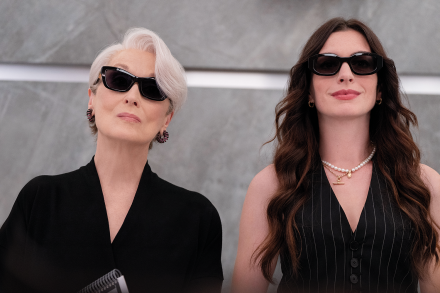
The Devil Wears Prada (2006) is one of those films which, if chanced upon when flicking television channels, I will always stick with for a bit. It has zing. It has bite. It has memorable lines that I can remember without having to look them up. (‘Are we going to a hideous skirt convention?’) But mostly it has Meryl Streep as Miranda Priestly, the wonderfully toxic editor-in-chief of Runway fashion magazine. She is still terrific. But while the landscape has moved on, the characters have remained the same and halfway through I started to drift. Another blow is that it’s become more sentimental and less satirical. In other words –

Whether adored or despised, Princess Diana is never forgotten

What happened to the condolence books? They swiftly multiplied, that mad week in September 1997. The original four at St James’s Palace had to be increased to more than 40. People queued for hours and often spent many minutes composing their contributions. That’s not even to mention the thousands of similar books organised by councils, embassies and private businesses. The official set were ‘offered’ to the Spencer family. Perhaps they are at Althorp. Edward White’s Dianaworld, about the phenomenon of the former Princess of Wales, shows an indefatigable resourcefulness. It is not really about the woman herself but about the effect she had on people who never laid eyes on

The art of Schiaparelli

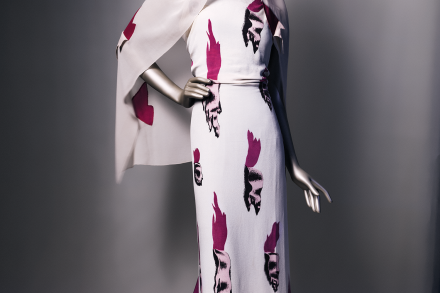
It’s a great shame that Elsa Schiaparelli is less widely known than her rival Chanel. Perhaps that’s down to how difficult her name is to pronounce. Is it ‘shap’, ‘skap’ or ‘skyap’? Tristram Hunt, director of the V&A, answers with a quip from Schiaparelli herself: ‘No one knows how to say it, but everyone knows what it means.’ The V&A’s new exhibition Schiaparelli: Fashion Becomes Art traces the web of influences around one of the great couture houses of the 20th century. Like Coco Chanel (I hate to compare them), Elsa Schiaparelli created clothes for the modern, independent woman – it is now conventional to say so but they ‘pushed

In praise of the gilet

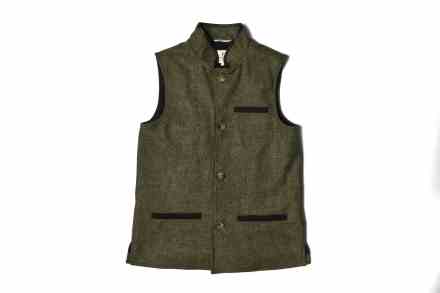
Every self-respecting gent these days is sporting a gilet. Don’t laugh. The gilet has come along leaps and bounds; you can’t tar it with the same brush as the Schöffel ‘Chelsea Life Jacket’ which is worn by the Hooray Henrys who guffaw at dinner parties twinned with their strawberry corduroy trousers.  The gilet is the height of sophistication. It is worn by the finance bros, the best-looking dad on the school run, the recently retired silver fox barrister you met at the ‘locals’ drinks party last Christmas and the gruff farmer who is so rich he really shouldn’t be that dour for goodness’ sake.   It might even be worn by your husband and by the accountant who lives in the next-door village in that house his wife

Why don’t we wear proper shoes any more?

People can seem completely normal, until you look at their shoes. Particularly men. There they are, appearing sane: natty haircut, ironed shirt, non-psychotic trousers. But then: oh, horror! Terrible shoes. Slimy-looking Docksides, or Toms espadrilles, or something shiny and pointy. Or tremendous show-off brogues like Mr Noisy, with those execrable metal tap things, worn only by bounders and con men.  I was once, aged 23, struck silent with horror by the shoes of a boy who accompanied me to a beach: a pair of dusty brown lace-ups it seemed he’d had since Upper Sixth. I now understand this to be tremendously posh but at the time it turned my stomach.

We don’t need Islamo-fashion

When the ghastly Lynda Snell of The Archers ‘did’ fasting last year at Ramadan to suck up to the new Muslim family in town, I thought this kind of thing had got about as silly as it was possible to be. But reading about what happened last week at London Fashion Week took the gluten-free cake.  Non-Muslims either choosing or being compelled to celebrate Muslim holidays has been going on for some time. Understandably if disagreeably, with its Muslim mayor, London splurges on the celebration of Ramadan, decorating Piccadilly – the heart of the city – with 30,000 (sustainable) lights. In the unlikely setting of Carinthia, Austria, an ‘open iftar’ invites all citizens to break the Ramadan fast and eat together – even if, as non-Muslims, they haven’t fasted, which seems

A blast: Leigh Bowery!, at Tate Modern, reviewed

Tate Modern’s latest exhibition is a bizarre proposition on so many levels. Its subject, the Australian designer, performer, provocateur and club scenester Leigh Bowery, was by all accounts inescapable in London for much of the 1980s and early 1990s. Standing at well over 6ft and weighing 17st, he would have been a conspicuous presence on the capital’s streets even had he not adopted the berserk sci-fi drag attire that became his signature aesthetic. He appeared on TV, at Sadler’s Wells and in a ponderous suite of portraits by Lucian Freud. His life could be read as a kind of Gesamtkunstwerk, but he was not an artist in any conventional sense

Bring back hats!

I saw a chap walking down the road the other day looking, unusually for my part of town, the very quintessence of sartorial elegance: polished brogues, tailored pin-striped suit, rolled umbrella. He was a modern-day Beau Brummell. But what really topped off his ensemble – literally and figuratively – was a bowler hat. I haven’t seen anyone wearing one of those for decades. In fact, the last time was about 35 years ago when a girl arrived at a party in one. Cruelly, I pointed and said: ‘Ha! Charlie Chaplin!’ The awkward silence that followed shamed me rather than embarrassed her.  Since the bottom dropped out of the officewear market during Covid, making an effort with daytime dress is unusual enough. To

Strong suit: men are rediscovering how to dress

The demoralising decline in the office dress code is long established. Nowadays, stockbrokers and estate agents are the only workers reliably in a suit and tie. For everyone else it’s chinos and knitwear – on a good day. But welcome news is afoot: among a growing legion of men, especially young men, there’s a revival of interest in dressing smartly. Inevitably, the driving force is social media. Instagram accounts such as @askokeyig, @ignoreatyourperil, @tfchamberlin and many others are extolling the virtues of a sharp silhouette and the perils of collar gap. Most famously, ‘the menswear guy’ (@dieworkwear) has become something of an international name on X by blasting the (usually

This exhibition made my companion gasp

Numerous research academics have contributed to this highly cogent show celebrating the craftspeople of Ancient Egypt. My pre-teen companion, though a big fan of Egypt, was still slightly hesitant about whether this would be the most interesting angle. It began with a 4,000-year-old stele, or tombstone, on loan from the Louvre, praising the sculptural and painterly skills of an artisan called Irtysen, about whom, of course, nothing more is known. The perennial problem. General information, however, came thick and fast. We learned that a cooperative of skilled workers was a hemut, and a singular skilled worker a hemu. We came face-to-face with a cubit (a measuring stick six palms in

Paul Poiret and the fickleness of fashion

Such was Paul Poiret’s influence that he is the only couturier whose clothes are known to have caused several fatal accidents. At a time (1910-11) when fashion was loosening up he persuaded chic women into the hobble skirt, a garment so narrow round the ankles that only tiny, mincing steps were possible, with the result that several tripped over when stepping down from a pavement and one toppled from a bridge into a river where, unable to swim from the constriction around her ankles, she drowned.  In Mary E. Davis’s book, however, this dangerous garment gets only a brief mention. Instead, what we have is not so much a biography

The sheer joy of nighties

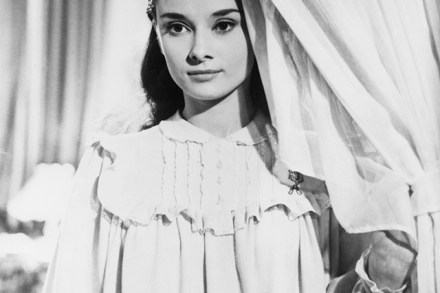
One of the many problems with the internet is that it’s increasingly difficult to know if something has become ubiquitous overnight, or if your algorithm is just serving you the sort of slop it thinks you’re stupid enough to buy. Case in point: nightdresses. Previously the preserve of pioneer women, convalescents and Victorian ghost children, nightdresses suddenly seem to be everywhere. I can’t open my phone without seeing a glamorous woman going about her morning wearing a beautiful and expensive nightgown. ‘Retailers have informed me that sales of nightdresses are higher than ever at present,’ Hannah Banks-Walker, a commissioning editor at Harper’s Bazaar, tells me. Delicious news. I am not

Am I the last man in Europe still wearing a beret?

I first wore a beret for a fancy dress competition at my infant school summer fete in June 1975. My mother had entered me in the ‘topical’ category and tapped into the media furore around the nationwide referendum a week earlier over whether or not the UK should join what would become the EU – an issue that has managed to remain topical. My costume consisted of said beret (borrowed) paired with a stripy top, an extravagant moustache drawn on with charcoal from a burned cork and a string of onions hung around my neck. And I was pushing a bicycle. This was to ape the so-called ‘Onion Johnnies’, the itinerant

The dying art of costume design

At the receptionist’s desk in Cosprop’s studio and costume warehouse, a former Kwik Fit garage, the sloping bleakness of Holloway Road is held at bay by a small chandelier, brassy lighting and a bound guest book. It’s a bit stagey, like a filmset for a cheap foreign hotel or an expensive shrink’s office, quite out of place in the real north London high street. But as the entrance to a costume house that builds worlds and people out of bits of fabric, feathers and jewels, it’s appropriate. Suspend all disbelief, ye who enter here. Cosprop was founded by the costume designer John Bright in 1965. What began as a small

Magnificent: V&A’s Marie Antoinette Style reviewed

This exhibition will be busy. You’ll shuffle behind fellow pilgrims. But it’ll be worthwhile. It’s a tour de force that tells the story of Marie Antoinette’s 17 years on the throne with detail, focus and flair. There are 34 items here that she owned personally – opulent, carefree objects that resonate with impending disaster. These precious items need protecting from light, and in the first room curator Sarah Grant cleverly runs with this, evoking the candlelit ambience of a Versailles ball by hanging silver baubles from the ceiling and covering the walls with smoked mirrors. Here we have a taste of Marie Antoinette’s wardrobe – its annual budget peaking at

The masterpieces of Sussex’s radical Christian commune

Ditchling in East Sussex is a small, picturesque village with all the trappings: medieval church, half-timbered house, tea shops, a common, intrusive new housing developments down the road, a good walk from the nearest train station and the Downs on its doorstep. But the resonance of the place owes much to the remarkable artistic activity that has bloomed since Eric Gill moved his family there in 1907. It was part craft commune, part lay monastery, a living experiment in distributism, the radical Christian political philosophy that held that land should be distributed as widely as possible. It was an attempt to resurrect the medieval guild. Gill’s Catholic community even had

Fascinating royal clutter: The Edwardians, at The King’s Gallery, reviewed

The Royal Collection Trust has had a rummage in the attic and produced a fascinating show. Displayed in the palatial gallery adjacent to Buckingham Palace, and described on headsets in the reassuring tones of Hugh Bonneville, are public tokens and personal treasures of two generations: Edward VII and Queen Alexandra, and George V and Queen Mary. Frocks, clocks and diplomatic gifts; purchases and mementoes that give the illusion that the royal family might be, after all, not so unlike us. There’s an unusual tea set, with odd, red photos: as princess, Alexandra took family snaps and had them printed on to these porcelain teacups in 1892, more than 100 years

The brutality of being a bridesmaid

There stands the bride. Perfect hair, perfect nails, perfect fake tan. She may not have slept the previous night or eaten for six months but, still, she’s beaming. And there behind her stand the bridesmaids. All 95 of them. ‘My sister-in-law asked how much weight I could drop because the dresses only went up to a size 12’ When Kathryn McGowan got married in County Down this month, she couldn’t decide which of her pals should have the honour of holding her train and checking she didn’t have lipstick on her teeth. ‘It was quite stressful,’ she said of the dilemma, ‘and then one day the idea came to me.’

The Alexandra Shulman Edition

29 min listen

Alexandra Shulman is one of the most influential figures in British fashion. She is the longest serving editor-in-chief at British Vogue, having led the magazine for 25 years before stepping down in 2017. Her career in journalism included time at publications such as Tatler and the Sunday Telegraph. She was later editor of the British edition of GQ, before joining British Vogue where she oversaw an increase in circulation to record figures. Alexandra was appointed a CBE for services to fashion journalism, and is now an author, commentator and writes a weekly notebook for the Mail on Sunday. On the podcast, Alexandra talks to Katy Balls about the heyday of print journalism in the late 1980s and 1990s,

Soothing and glorious: Fashion Neurosis reviewed

Sometimes the mind needs to take a break. And I can’t think of a better stopping-off place than the soothing, gloriously bonkers discussions on the Fashion Neurosis podcast, hosted by the British fashion designer Bella Freud. Its premise is that Freud, daughter of Lucian and great-grand-daughter of Sigmund, encourages guests to recline on her couch and talk over any and every aspect of their relationship to fashion. Her mellifluous, affirming manner is much more soft soap than wire wool, but this is not territory that requires a Robin Day, and the concept proves a surprisingly fruitful route into family history, personal stories and high-grade gossip. The pool of guests is