Fascism

Giorgia Meloni is no springtime for Italian fascism

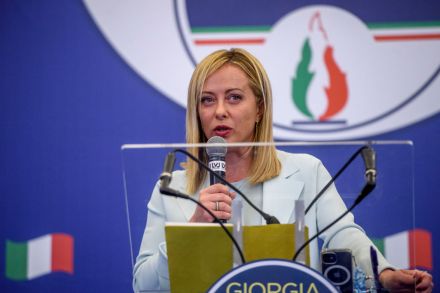
Is it springtime for fascism in Europe? First, it was Sweden. Now, it’s Italy. To judge by the reaction to Giorgia Meloni’s victory in the Italian elections on Sunday, the moment to say arrivederci to democracy has arrived. “Giorgia Meloni will be a minister-president whose political examples will be Viktor Orbàn and Donald Trump,” Katharina Barley, the vice-president of the European Parliament, declared. Maybe so, but will she actually be able to transform her country? Fratelli d’Italia, the Brothers of Italy, is a nationalist party that traces its roots back to Mussolini and is led by the charismatic Meloni. It's about to play a starring role in the Italian political firmament.
Pre-Mussolini, most Italians couldn’t understand each other

From our UK edition

Towards the end of Dandelions, Thea Lenarduzzi’s imaginative and deeply affecting memoir, the author quotes her grandmother’s remark that there are tante Italie – many Italys. ‘Mine is different to hers, which is different to my mother’s, which is different to my father’s, and so on down the queue,’ she writes. These Italys – of fascismo, of Garibaldi, of emigrants living in Sheffield and Manchester, of 31 dialects – are not far-flung historical oddities confined to documentaries or textbooks but are, in Lenarduzzi’s account, the patchwork story of one family.

The rise of the neoclassical reactionaries

From our UK edition

A strange new ideology has been growing over the last few years, you might have noticed — amid the day-to-day chaos — the slow, proto-planet-like formation. Currently, it has no name, nor an obvious leader. Its many thousands of proponents do not even seem, yet, to consider each other fellow-travellers. But to the onlooker, they’re clearly marching the same steps to the same tune. We might call it neoclassical reactionism. The central refrain is a familiar one: the modern world is ugly, decadent, sick. But rather than seeking refuge in religion or racial politics, neoclassical reactionaries hark back to Ancient Greece and Rome — in particular, to supposedly lost values like vitality, beauty and strength. They’re obsessed with bodybuilding and Latin.

The MAGA infiltrator is sad, not brave

Last weekend brought some minor internet drama courtesy of Amanda Moore, a progressive activist who outed herself as having spent the past year “infiltrating” right-wing groups. On Twitter, she posted pictures that she'd taken with various luminaries of Trumpworld such as General Michael Flynn, MyPillow founder Mike Lindell and Representative Marjorie Taylor Greene. She also claimed to have been given a counterfeit vaccination card from a member of a QAnon conspiracy group and to have worn a wire the whole time, recording the details of her meetings and chance encounters held under false pretenses. “We were literally at the same events,” she crowed at a photojournalist who sent a somewhat vulgar tweet mocking her.

maga exposure therapy amanda moore

Was the US involved in neo-fascist Italian terrorism?

From our UK edition

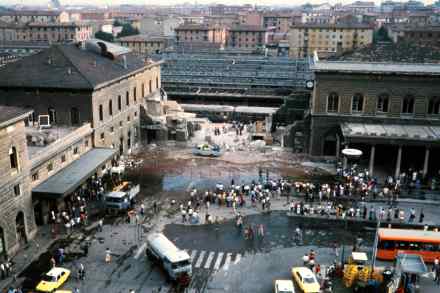
Last month, Italy’s Prime Minister Mario Draghi promised to declassify government documents involving two organisations: Gladio, an anti-communist paramilitary group linked to Nato and the CIA, and a masonic lodge known as P2. These two groups are believed by some to have been involved in the darkest moments of post-war Italian history. For much of the latter half of the 20th century, Italy had the unenviable position of being the epicentre of European terrorism. The blast at the Bologna train station in 1980, which left 76 people dead and more than 200 wounded, was at the time the bloodiest terrorist attack ever suffered by a European country. The bombing was pinned on a small neo-fascist militia called Armed Revolutionary Nucleus.

Churchill did admire Mussolini

From our UK edition

In his ruthless demolition of Geoffrey Wheatcroft's new Churchill biography in last week's Spectator, the historian Andrew Roberts pours scorn on the ‘insinuation that Churchill had fascist leanings in the 1920s’ as it is not supported by ‘any actual evidence (for there is none)’. Well, however justified his hatchet job of Wheatcroft's book is in general, Roberts is deeply mistaken about Churchill and fascism. Like so many in the 1920s and well into the 1930s, from all sides of the political divide, Churchill was a fervent admirer of the former revolutionary socialist Benito Mussolini and the fascist movement which he founded in 1919.

Fascist, anti-Semite and dupe: the dark side of G.K. Chesterton

From our UK edition

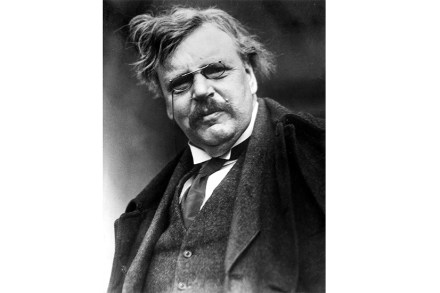
The Sins of G.K. Chesterton demands our attention because, as Richard Ingrams notes in his introduction, the literature on this author is (with a few notable exceptions) horribly flawed — littered with misconstruction, omissions of fact and interpretive errors designed to present him as ‘an innocent, uncomplicated man, blessed with almost permanent happiness and having no experience of suffering — hence an ideal candidate for canonisation’. That flourish, appearing in Ingrams’s third to last paragraph, was a bombshell to me, though I understand there exists a sizeable constituency pressing for Chesterton’s beatification, rebuffed in 2019 when Bishop Peter Doyle of Northampton condemned his anti-Semitism.

Spain’s growing culture war over General Franco

From our UK edition

There are hundreds of mass graves dotted around the Spanish countryside. In roadside ditches, down hillside gullies, dumped in pits and down disused wells lie thousands of bodies: civilians murdered in cold blood by Franco’s death squads during the civil war that convulsed Spain between 1936 and 1939. Over the nearly forty years of Franco’s dictatorship, few spoke of what had happened during the war; silence and selective amnesia were safer. And even when Franco died in 1975, the overriding priority was the transition to democracy. The old Francoist establishment indicated that it would make way for the new era — provided that there was no digging up of the past and no reprisals. Spaniards were happy to look to the future.

A tinpot Caesar

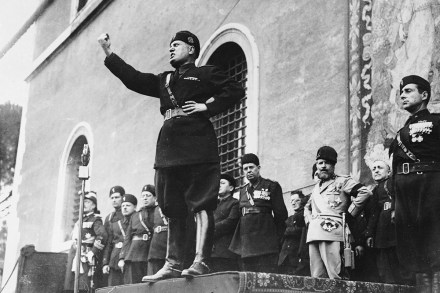
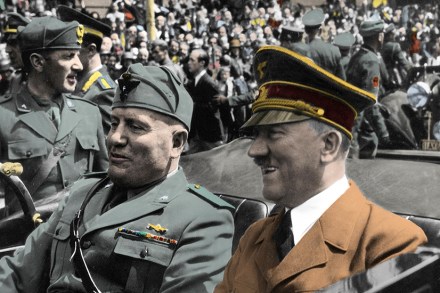
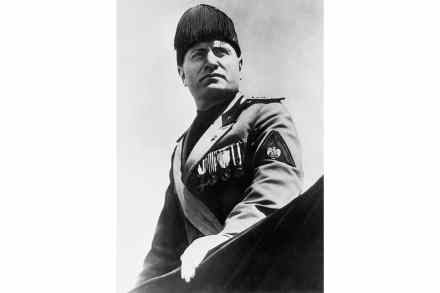
In 1919, an obscure political agitator called Benito Mussolini assembled a ragbag of Blackshirt diehards in the Lombard capital of Milan and launched the movement that was to become, two years later, the National Fascist party. The party took its name from the classical Roman symbol of authority — an ax bound in rods, or fasces. Once in power, Mussolini introduced the stiff armed Roman salute after the handshake was deemed fey and unhygienic. At times he wore a richly tasseled fez and thrust out his chin pugnaciously for the cameras. For all his posturing and demagoguery, Mussolini was widely admired in pre-war Britain, where Lord Rothermere’s Daily Mail routinely carried flattering portraits of him.

mussolini

The forgotten victims of communism

From our UK edition

I just read a piece by Scott McConnell in the American Conservative, a magazine we co-founded 18 years ago. He writes about how the victims of communism are less commemorated than those of fascism. The death toll under communism was 100 million (see the Black Book of Communism). And as the mass murders continued, your Cambridge Joseph Needhams and his fellow apologists insisted that Maoism represented mankind’s best hope. Maoism never received the moral obloquy that Nazism did. The United States Holocaust Memorial Museum, which documents the horrific enormity of the Nazi project, has had 40 million visitors since 1993; the victims of communism are marked by a ten-foot statue in a tiny park near Union Station, tended by private donations.

From ‘divine Caesar’ to Hitler’s lapdog – the rise and fall of Benito Mussolini

From our UK edition

In 1919, an obscure political agitator called Benito Mussolini assembled a ragbag of Blackshirt diehards in the Lombard capital of Milan and launched the movement that was to become, two years later, the National Fascist Party. The party took its name from the classical Roman symbol of authority — an axe bound in rods, or fasces. Once in power, Mussolini introduced the stiff-armed Roman salute after the handshake was considered fey and unhygienic. At times he wore a richly tasselled fez and thrust out his chin pugnaciously for the cameras. For all his posturing and demagoguery, Mussolini was widely admired in pre-war Britain, where Lord Rothermere’s Daily Mail routinely carried flattering portraits of him.

It’s still impossible for Horst Wächter to recognise his father as a Nazi war criminal

From our UK edition

In 1926, while putting in place the repressive laws and decrees that would define his dictatorship, Mussolini appointed a new chief of police. Arturo Bocchini was 36, a lawyer and former prefect of Brescia, a cynical, vengeful, witty and corpulent Neapolitan. Under his 17-year tenure, fascist Italy became one of the most sinister and efficient police states of the years between the wars, with overlapping and rivalrous legal and illegal police bodies, fed by a vast army of informers and spies. Said to number around 10,000 at their peak, these men and women were to be found in every corner of Italian life, from the civil service to the Vatican, from industry to the Royal household, from the army to universities.

Britain can be as prone to fascism as any other nation

From our UK edition

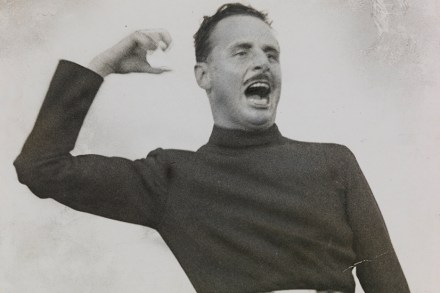
It’s easy to dismiss the fascistic ideologues who populate Graham Macklin’s book as reactionary cranks of no significance. It’s also a mistake. Fascists have edged uncomfortably close to the mainstream of British politics ever since the British Union of Fascists was founded in 1932 by Oswald Mosley, who two years earlier had been a government minister. In 2009, two British National Party candidates were elected to the European Parliament. The seats were lost in 2014 because the BNP votes transferred en masse to Ukip. If you doubt that the spirit of the BNP infused Ukip, you have only to look at what has happened to it since Nigel Farage decamped.

Yellow Vests are copying the French left’s worst traditions

From our UK edition

On Saturday, I visited Chartres and stood in awe inside its cathedral. I was as stunned by its splendour as I was by the knowledge that men once wanted to blow the cathedral sky high. The Revolutionary Committee was only prevented from carrying out its wish in 1793 by a local architect who warned that removing all the rubble would be a complicated task. So instead they stripped the cathedral of its metal and burned the peat wood sculpture of the black Madonna. The cultural sacrilege of the late-eighteenth century has returned to France in the shape of the Yellow Vest mob, many of whom share the Revolutionaries' hatred of their country and its traditions. The real Yellow Vests, the ones who last winter staged peaceful protests throughout France, have deserted the movement this year.

Native wood-notes wild | 20 June 2019

From our UK edition

With public life increasingly a din of personalised ringtones and phone chatter, we crave silence. Acoustic ecologists speak of ‘ear cleaning’ exercises that might attune us beatifically to a hushed environment. Silence itself can be quite noisy, of course. Even in the countryside the thoughts in one’s head and the sound of one’s breathing can disturb the peace. Music, at least, may help to restore a sense of quietude. Vaughan Williams’s 15-minute meditation ‘The Lark Ascending’ conjures a pastoral idyll untouched by the clamour and carnage attendant on the Great War. In 1921, when the music was premiered, the green fields of Europe had been psychologically altered by the bloodiest battles in recorded history.

A milkshake a day keeps the fascists at bay

Yesterday a hero appeared in our midst. A valiant warrior armed only with a cold milk beverage. Not since the Normandy Landings have I seen such bravery against an impending Nazi invasion. Over here in the UK we have our own version of Donald Trump. His name is Nigel Farage. Like Trump he is a hideous Nazi, Hitler incarnate. A walking harbinger of xenophobic hatred, spewing fascism and racism. He is the cause of Britain’s pain and division. He was the one who decided that we should hold a referendum on whether to leave the glorious EU. It’s the mark of a typical fascist authoritarian to inflict democracy upon the ignorant masses. The result of that hateful vote has split our once tolerant and peaceful country in two.

milkshake godfrey elfwick

The might of the far right

From our UK edition

‘Why would anyone write a historical study of it?’ asks Gavriel Rosenfeld about the Fourth Reich at the start of this rather confusing, but at times entertaining, book. His answer is that the phrase has been used as a metaphor since the earliest days of the Third Reich to mean a wide variety of things. It has permeated politics and culture, and seems to be a term susceptible to any meaning a writer or speaker wishes to impose upon it. Some of us — and I plead guilty to this — have used the term simply to describe the present German state in its reunified, Europe-dominating form. While of course such usage is a bit of a tease, it also seems to be a matter of fact.

The witching time

From our UK edition

All Among the Barley, Melissa Harrison’s third ‘nature novel’, centres on Wych Farm in the autumn of 1933, where the corn fields are ‘acres of gold like bullion, strewn with the sapphires of cornflowers and the garnets of corn poppies and watched over from on high by larks’. Our narrator, 14-year-old Edie, has finished school and her older brother Frank tells her: ‘Something will happen next, and you should choose it.’ In Edie’s provincial life, her choices are limited. Essentially, she can stay at home and help on the farm, marry like her older sister and ‘push out a baby a year’, or become a teacher — she is sufficiently clever, but finds children ‘exasperating’.

High life | 26 April 2018

From our UK edition

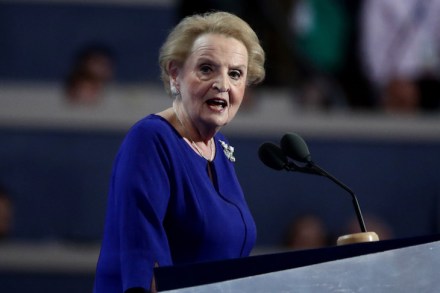
Benito lives! The Blackshirts are here. Fascism is on the march — at least according to Madeleine Albright, secretary of state under Bill Clinton and in my book, having allowed Albanian gangsters to win power in Kosovo, the worst American foreign minister ever. She attacks Hungary and Poland, the left’s newest whipping boys, for preferring their own kind to African migrants, but she’s not alone. The usual suspects are all piling in. Fascism is back, but this time, alas, without the beautiful uniforms. Damn! La Albright was taken to task a long time ago by Barbara Amiel for pretending she did not know she was Jewish — until Washington beckoned. Hasn’t she ever looked in the mirror? wrote Barbara, Lady Black, herself very proud to be Jewish.

The ‘Pope’ must answer to God

From our UK edition

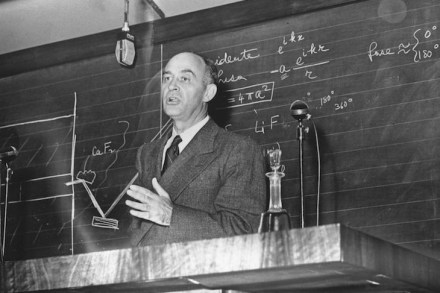
Enrico Fermi may not be a name as familiar as Einstein, Feynman or Hawking, but he was one of the greatest figures of 20th-century physics, with a reputation for infallibility. In Rome, pioneering atomic science under Mussolini, he was nicknamed ‘the Pope’. Escaping to America where he created the world’s first nuclear reactor, he was dubbed ‘the last man who knew everything’. Yet he was no Renaissance man: he knew everything about physics, and didn’t care much about anything else. It is testimony to David N. Schwartz’s excellence as a biographer that he can reveal the workaholic Fermi to have been such a fascinatingly complex figure. He was, we are told, a gifted teacher and natural leader.