Fascism

The coming storm against MAGA

Economist and former New York Times opinion writer Paul Krugman has called for a post-Trump “deMAGAfication” of America, and left no mystery about the comparison he was making. “And I’m not going over the top by using a word that’s very similar to the ‘denazification’ that we pursued successfully after World War Two in Germany.” Krugman remained vague about the nature of this “thorough purging,” but said it should include “not just the MAGA ideology, but the whole structure of hugely unequal power, hugely unequal wealth that made this horrific moment possible.” Today’s left – secular, post-Christian, postmodern and postcolonial, untethered from faith, tradition or national feeling – has few moral intuitions other than “Do not be Hitler.

Can the chaps in chaps smash fascism?

I have spent a small portion of my time lately wondering what I would do if I thought communists were about to take over Britain. At the more civil end of things, I could see myself going on an anti-communist protest, though I would shrink away if I noticed that my fellow marchers were flying swastikas. I don’t exactly know what I would do next. Perhaps I would hope for another election soon, and do what I could to unite other anti-communists. One thing I am fairly sure I would not do would be to dance. In fact, were this country facing the prospect of Stalinism coming at us full force, the last thing I would do would be to get a DJ, book a stage in Trafalgar Square, hire some go-go dancers and rave it up.

fascism

The Venice Ghetto was a landmark in the history of Jewish persecution

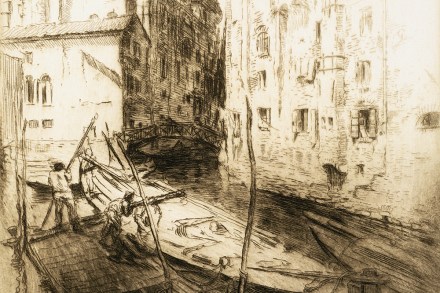
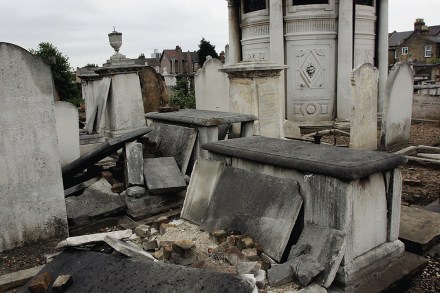
The word ‘ghetto’ is said to derive from the Venetian dialect term for ‘foundry’: ghèto. In the early 16th century, on the orders of the Doge, Jews were herded en masse from the centre of Venice to the Ghetto Nuovo, or New Foundry district, where metal workers had long cast cannon for the Venetian fleet. The Ghetto – the first of its kind on the Italian peninsula and anywhere in the world – became a model for segregated Jewish quarters throughout Europe. It was soon blighted by poverty, malnutrition and disease. The Ghetto Nuovo was a landmark in the history of Jewish persecution. In this fascinating history of the New Foundry and its inhabitants, Alexander Lee conjures the Adriatic seaport in all its strange glory.

Blitz spirits: Nonesuch, by Francis Spufford, reviewed

From our UK edition

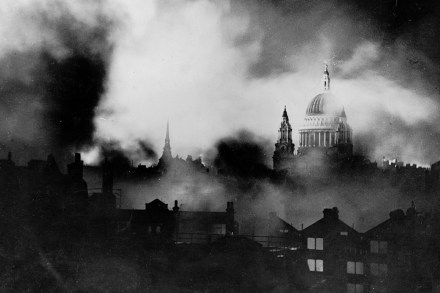
If you read books for a living, the calling probably started with a moment of utter entrancement: a novel you couldn’t bear to set down; a few unforgettable days, as Bleak House, Earthly Powers, The Woman in White or Titus Groan worked its unsuspected magic on its millionth reader. Such books are rarer these days, but they do still happen, and Francis Spufford’s Nonesuch is an absolute corker. Randall Jarrell once wistfully imagined a novel that would ‘bear up under the weight of hundreds of thousands of readers a plot that higher critics could call crude and that bewitched families could pad over in house slippers’. Nonesuch does the trick, and I won’t be the only reader whom it keeps up until 3 a.m. It’s a novel of immense confidence.

Europe

The Europe of American imaginations no longer exists

Since the United Kingdom left the European Union five years ago, the pair have been in battle to prove who has performed better. But the real story of the past five years is not a stagnant UK falling behind a buoyant EU, but of Britain and Europe being trapped in the same cycle of relative decline. It’s America that has quietly raced ahead of Europe this century. Following the pandemic it has become impossible to ignore the gulf in economic vitality between the US and Europe, the former growing by 16.3 percent per capita since 2008. There are very good reasons for America’s success, or rather, Europe’s decline. The EU and the UK increasingly treat their industries as pieces of heritage which must be preserved against disruptors and foreign competition.

Elon

Elon Musk’s critics are more autistic than he ever could be

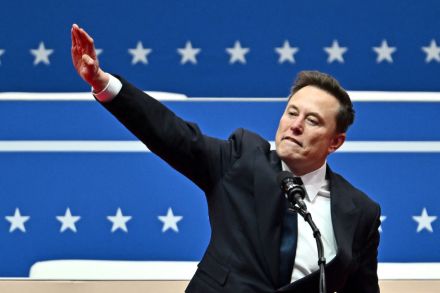
I’ve managed to keep most of my liberal family relationships and friendships intact, even after going public about voting for Trump. Most of them shrugged and applied the principle our grandparents taught us — blood is thicker than politics. That is, until Elon Musk. He has proven to be the straw that broke the liberals’ back. Realizing that they’d rendered calling Trump “literally Hitler” ineffective, many normie Democrats and liberal commentators have redirected this energy toward the “Chief Twit." First there was the hand gesture at the post-inauguration rally.

Marvellously conservative: Cable Street reviewed

From our UK edition

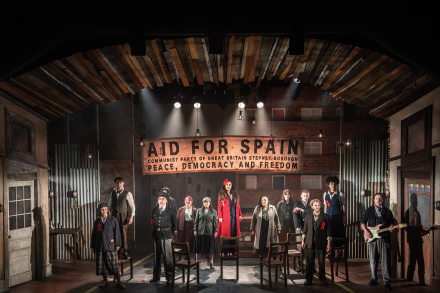
Cable Street is a musical that premièred last year at the Southwark Playhouse and has now migrated to the Marylebone Theatre. Fans of beautiful staging will be instantly smitten by the amazing achievement of the designer, Yoav Segal. The script by Tim Gilvin and Adam Kanefsky tells the story of a violent stand-off in October 1936 between cockney activists and Oswald Mosley’s British Union of Fascists. The authors treat the East End during the depression as a panto or a moral fairy tale. It’s good vs evil. The socialists are hard-working, golden-hearted heroes who rise up against the wicked landlords and their cruel rent hikes. The fascists are angry, misshapen losers led by a waddling baldie in a stick-on moustache. The socioeconomic background is hard to decipher.

When Donald met Zohran

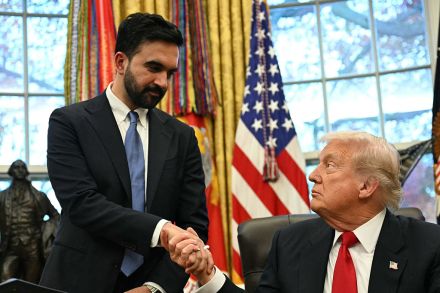
“I’ll tell you,” the President was saying. “The press has eaten this thing up. I had a lot of meetings with world leaders, and the press didn’t care. The biggest people in the world come over and nobody cares. This one, they care about.”   President Trump sat at the Resolute Desk, wearing a red tie. Standing next to him was the Boy Wonder, Mayor-elect Zohran Mamdani of New York City, wearing a blue tie. Their hour-long meeting at the White House had just concluded. In recent weeks, Mamdani had called Trump a fascist. Trump had called Mamdani a communist and a “lunatic.”  Anyone expecting acrimony or fireworks, though, would have been disappointed by this joint press appearance. Cats and dogs, living together.

zohran mamdani

The left’s favorite F-word

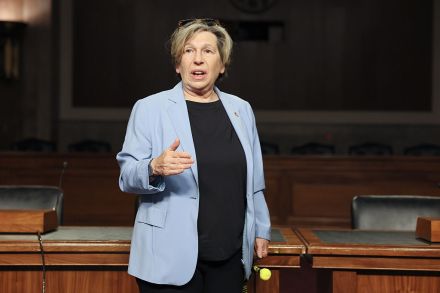
Randi Weingarten, the US teachers’ union boss, has screeched out a new book: Why Fascists Fear Teachers. That’s right. If you thought the problem in our schools was cratering test scores or chronic absenteeism, you’re misinformed. The real menace stalking America is jackbooted conservative parents goose-stepping through PTA meetings. The left’s unhealthy obsession with the word “fascist” has become less of a warning than a tic, a nervous verbal cough. Every time a Weingarten-style progressive spots a parent questioning the school board, a voter challenging an irregular ballot, or a grief-stricken mourner at a Charlie Kirk vigil, the F-word erupts. Before we let this tic define the debate, a little perspective: If words matter, so should history.

The boorishness of Ellen DeGeneres

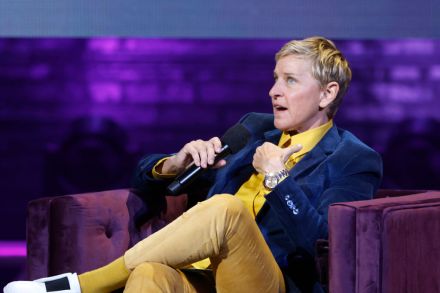
Ellen DeGeneres, the former queen of American daytime television, says she escaped the social turmoil of the United States by finding a $29 million farmhouse in the English countryside. And she would very much like the rest of us to take note. She and her wife, Portia de Rossi, reportedly arrived in Britain the day before the 2024 US election. When the results came in, accompanied, she says, by a flood of sad-face-emoji-laden texts from anxious friends, the couple made their decision: they wouldn’t be going back. Now they’re happily settled in the Cotswolds, that beautiful part of southern England where celebrities, rockstars and former politicians play out their fantasies of rural living.

The key to Giorgia Meloni’s resounding success

From our UK edition

Giorgia Meloni has emerged as one of the most significant politicians in Europe since she became Italy’s first female prime minister in October 2022. I Am Giorgia, already a bestseller in Italy, is her account of how a short, fat, sullen, bullied girl – as she describes her young self – from a poor, single-parent family in Rome managed to do it. Her explanation is that she refused to play the victim, and found iron in her soul – even if, as she admits, she has never found happiness. It is an amazing story: how she transformed from an ugly duckling into the swan who is now a familiar figure on the largely male-dominated world stage, and whose humour, charm, friendliness and no-nonsense talk make her such a refreshing change.

Jonathan Bowden: my eccentric school friend who became a far-right hero

From our UK edition

When my old school, Presentation College, Reading, was demolished a decade ago, the Labour council desperately searched for famous old boys after whom they could name streets on the housing estate that replaced it. This was a challenge. According to the local newspaper, ‘names rejected include one in recognition of Mike Oldfield, the musician behind ground-breaking prog rock album Tubular Bells’ – rejected by Oldfield, I assume, since he hated the school. They settled on Bowden Row, ‘in honour of political philosopher and Presentation alumnus Jonathan Bowden’. I wonder if the residents of the handsome semi-detached houses know anything about Bowden. The council didn’t.

The great Nazi moral panic

We’re in the throes of a full-blown moral panic, but this time it’s Nazis instead of Dungeons & Dragons. Nazis are everywhere in the United States. There are signs of them everywhere. Their influence is unmistakable, from beverages to hobbies to views on the nuclear family. It’s eleven o’clock. Do you know where your Nazis are? At least, that's the current state of America, according to the same industry that attempts every year to convince you that someone may sneak high-grade narcotics into your child’s Halloween candy. This week, our brilliant commentariat convinced itself that billionaire tech tycoon Elon Musk had performed two "Sieg Heils" during President Trump’s inauguration festivities.

Has the term ‘racist’ become devalued through overuse?

From our UK edition

One of the key charges made by the hard of thinking is that because the devastating accusation ‘racist’ has been thrown around so casually in these days of febrile public discourse, it no longer has meaning. Similarly, ever since Rik called Vyv (and a bank manager and the BBC) a fascist in The Young Ones, that insult has been devalued to the point of meaninglessness. Or has it? One can never truly know the heart of another person, so short of them lighting a crucifix on their front lawn and perpetrating violence exclusively against one racially designated group over another, we are compelled to only assume that if you often say things that sound a bit racist you might be legitimately given the identity of ‘a racist’.

What do we mean when we talk about freedom?

From our UK edition

When the Yale historian and bestselling author Timothy Snyder was 14, his parents took him to Costa Rica, a country lauded for its conservation of natural resources that is rated freer and happier than the United States. He recalls feeling liberated and unfettered as he hiked in cloud forests with his brothers, seeing monkeys, sloths and spectacular birds. One day, a local friend led the boys on a mysterious quest to view something special; after walking for three hours through a maze of paths, they arrived at a cascade hiding a cave, where they could gaze out at the green world through curtains of falling water.

Nietzsche’s thinking seems destined to be mangled and misunderstood

From our UK edition

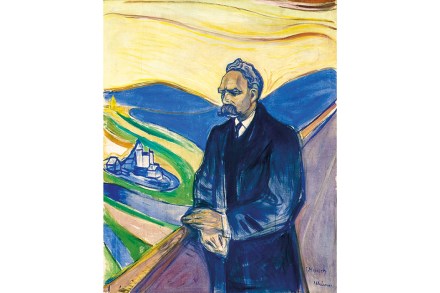
For Mussolini’s 60th birthday, Hitler gave him a de luxe edition of Friedrich Nietzsche’s complete works, bound in blue pigskin. After the war, writers vied to revile the philosopher. Then, in the 1960s, he suddenly became philosophy’s darling. How come? Enter two erotically entangled Italians: Georgio Colli, a philosophy teacher at Lucca from 1942, and his pupil Mazzino Montinari, who in 1943-4 was beaten, interrogated and imprisoned for anti-fascist activism. Both found Nietzsche’s philosophy irreconcilable with fascism. Rumours had been swirling that the Nazifying of Nietzsche emerged from the Nachlass, a mysterious hoard of Nietzsche’s manuscripts suspected to contain forgeries that were the work of his sister Elisabeth and her Nazi minions.

Four dangerous visionary writers

From our UK edition

‘The production of souls is more important than the production of tanks... And therefore I raise my glass to you, writers, the engineers of the human soul.’ The quote is usually attributed to Stalin, though the phrase ‘engineers of human souls’ most likely came from someone else. Who’s to argue? Purges, executions, deportations – what’s a little light plagiarism in comparison? Whoever coined the phrase, it certainly struck a chord and indeed continues to ring various alarm bells whenever one comes across writers who deliberately set out to influence politics and ideas – and not just the big beasts, the Nobel Prize winners, say, or the shopfront-filling non-fiction authors hawking their wares, or the endless novelists with their little axes to grind.

Remembering Mussolini’s March on Rome

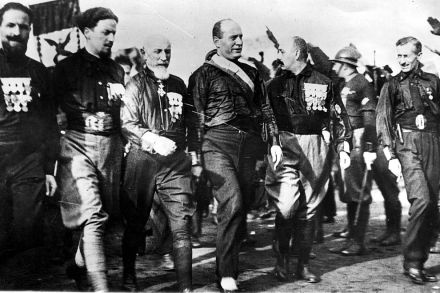
Shortly after 11 on the unseasonably warm Monday morning of October 30, 1922, a 39-year-old, one-time schoolteacher-turned-political journalist — and former Socialist Party activist — named Benito Mussolini stepped down from a train arriving at Rome’s Termini station. He had traveled in overnight from his home in Milan, and before embarking he told the local station master, pausing to cast his black eyes up and down the empty platform, “I need to be punctual. From now on there must be no more delays.” This was the source of the sardonic joke that at least under Mussolini the trains always ran on time.

Was Mussolini’s wilful daughter his éminence grise?

From our UK edition

In 1930, when she was 19 years old, Edda Mussolini married Galeazzo Ciano. His father was a loyal minister in her father’s government: it was a suitable match. Five hundred wedding invitations went out to the Roman nobility, to diplomats from more than 30 countries and to all the senior fascists, the gerarchi. After the ceremony the newlyweds left for Capri, Edda driving her own white Alfa Romeo, with servants and luggage following in another car and bodyguards in a third. They set off at top speed. Then Edda came to a sudden halt. She had noticed a fourth car behind them. She might have supposed that as a married woman she was about to get out from under the massive shadow of her father – but no.

What does it mean when Giorgia Meloni quotes G.K. Chesterton?

From our UK edition

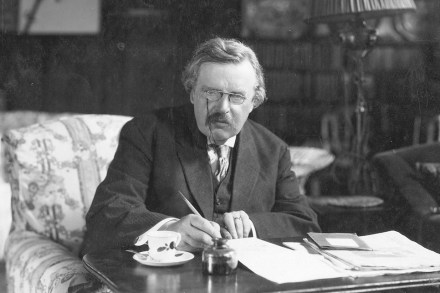
For a UK audience, the most striking moment in the new Italian PM Giorgia Meloni’s victory speech will have been that she anchored its peroration to a quote from G.K. Chesterton. ‘Chesterton wrote, more than a century ago,’ she said, ‘“Fires will be kindled to testify that two and two make four. Swords will be drawn to prove that leaves are green in summer.” That time has arrived. We are ready.’ G.K. Chesterton? The creator of the excellently herbivorous Father Brown mysteries, the Isaac Newton of what we now call ‘cosy crime’? That G.K. Chesterton? The author of a poem, memorised by many a previous generation of English schoolboys, about how ‘the rolling English drunkard made the rolling English road’? That one?