Fantasy

George ‘R&R’ Martin takes it easy

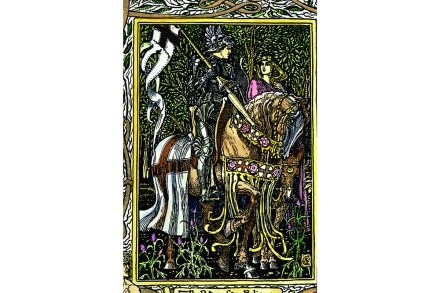
Now that the Stranger Things disappointment has died down – slightly – George R.R. Martin and his merry band of Game of Thrones cohorts have recaptured attention in what we must call the Thrones universe. After the warily positive but underwhelming reception that the major spin-off House of the Dragon received, A Knight of the Seven Kingdoms’s six-episode offering is in a lower key than either of its forbears. No dragons, no enormous battles, no big stars, just a small-scale relationship drama focusing on the hapless “hedge knight” Ser Duncan the Tall, aka “Dunk” and his child squire, Egg, whose origins are rather less lowly.

george r.r. martin knight seven kingdoms

Romantasy, the hot new literary genre du jour

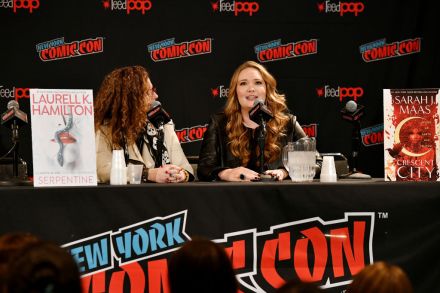
A friend recently found himself trapped on a plane next to a young woman reading a Kindle bedecked with stickers of dragons and pointy-eared, hunky men. The font size was so large it was impossible not to see the sexually explicit text. He observed, “I was reading The Lord of the Rings; her book was more along the lines of I’m the Lord of Your Ring. I’ve never felt so uncomfortable.” Welcome to the cultural phenomenon of romantasy — a newly mainstreamed trend fueled by TikTok, or rather BookTok. It’s a shame there isn’t room in the portmanteau name for “sex,” which is a crucial ingredient in the genre, made clearer in the alternative informal term “fairy porn.

romantasy

The magnetism of His Dark Materials

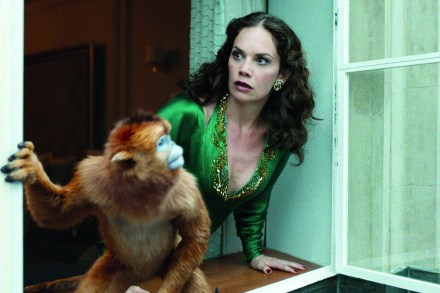
When I was in middle school back in the 1990s, there were two sets of books every boy seemed to have in his backpack. One was the Redwall series, Brian Jacques’s swashbuckling tales of heroic mice and tyrannical wildcats. The other was the His Dark Materials trilogy by Philip Pullman. It’s no coincidence, I think, that both Jacques and Pullman are British. What made these books intriguing, beyond their carefully wound plots, was that they were marketed to children yet addressed subject matter that was very much adult. In Redwall, it was the brutal violence. His Dark Materials had some of that too (in the first chapter of the first book, we witness an attempted killing; in the first chapter of the second book, we witness an accidental fatality).

his dark materials

The heart of The Rings of Power

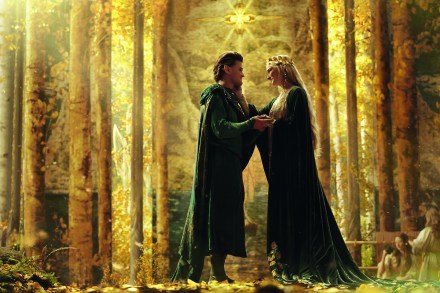
“Ours was no chance meeting. Not fate, nor destiny,” Galadriel says. “Nor any other words Men use to speak of the forces they lack the conviction to name.” The line is a bit pompous, but then so is the hotheaded elven warrior (Morfydd Clark) who speaks it in Amazon’s Lord of the Rings: The Rings of Power. Pomposity aside, Galadriel’s words reveal why the work of J.R.R. Tolkien is unique in a crowd of fantasy competitors. Anyone can give us elves and dragons and wizards. But few can match the anguished, longing note of hidden Providence in Tolkien’s Middle-earth. The Rings of Power has not yet achieved such depths of feeling — perhaps it will not be capable of doing so — but it has shown prudence in its stewardship of the story’s heart, which is encouraging.

lord of the rings of power

A visit to the Renaissance Faire

There exists a magical place where not only are you free to identify as who or whatever you wish, but you’re also encouraged to adopt a persona that defies reality. You aren’t restricted to the narrow LGBQTIA+ choices our unimaginative liberal elites have imposed, either. Nay, in this ultra-diverse, inclusive land, you’re expected to dream beyond this century — this planet even — and transition uninhibited into whatever strikes your fantasy. No, not the “metaverse”; I’m referring to the time-honored American tradition of the Renaissance Faire, where history buffs, fantasy nerds, down-and-out actors, and normal suburban families converge to create a giant freakshow that is innocent fun at its best.

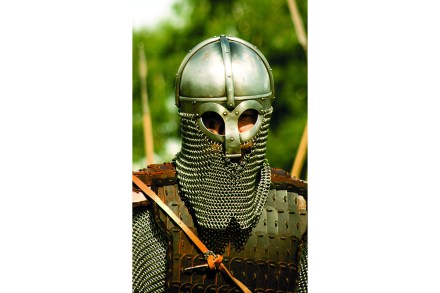
renaissance

Faeries and queens

Flint and Mirror, John Crowley’s engrossing and elegant latest book, is set in a sixteenth century where angels and demons watch over human quarrels and sometimes even intervene. History and magic entwine, and yet are opposed. There is the ongoing conflict between Catholicism and Protestantism, as the Catholic Spaniards eye up invading England. The novel is also about the beginnings of modernity. As the reign of Queen Elizabeth I of England comes to an end, we progress gradually toward exploration of the globe and the Enlightenment. Farewell rewards and fairies, indeed. Elizabeth, serpentlike, broods in her English fastness, sending spies both physical and metaphysical throughout the land. Her personal magician, Dr.

crowley

Time to slay J.K. Rowling’s ‘Fantastic Beasts’

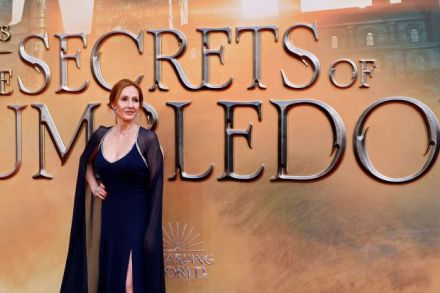
Next week marks the release of the third J.K. Rowling-scripted Fantastic Beasts film, a series that has overstayed its welcome. This latest iteration is subtitled The Secrets of Dumbledore. As if to wrong-foot those who would smirkingly speculate that one of Dumbledore’s secrets is his sexuality, the film opens with the old wizard and his former lover-turned-nemesis Grindelwald (now played by Mads Mikkelsen, replacing a disgraced Johnny Depp) mourning the end of their love affair, which at least makes the homosexual subtext hinted at in previous films explicit. But that, alas, is about it for any kind of coherence, or interest, or originality.

Dungeons and Dragons goes woke

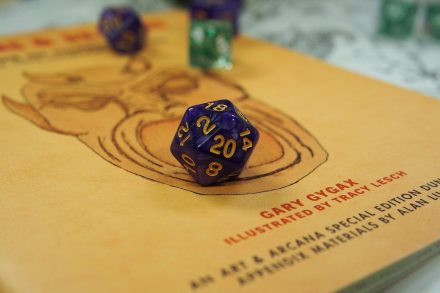
East Lansing, Michigan, August 15, 1979 — James Dallas Egbert III, 16, disappears. The child prodigy went missing at Michigan State University, where he studied computer science and played the fantasy roleplay game Dungeons & Dragons. Egbert was shy and especially small for his age. The young boy faced intense academic pressure, battled drug addiction and was a latent homosexual. He entered the steam tunnels underneath his college, intending to commit suicide by consuming methaqualone but failed. Egbert woke up the next day and fled. His parents hired private investigator William Dear to track him down. Dear discovered Egbert’s fascination with D&D after scoping through his dormitory, where he found evidence suggesting Egbert hosted games in the tunnels with other students.

dungeons and dragons

A time for Ice and Fire

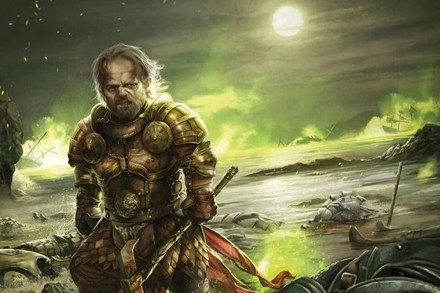
No one likes to watch television with me, because I am that sick pedant who delights in pointing out anomalies and plot-line errors, never more so than when the show in question is connected in some way to a cherished book. That’s when my pedantry enters an almost superhuman phase, as I educate the room about literally every single deviation from the original literary source. HBO’s Game of Thrones series was an absolute gold mine in this respect, because it came out just after I’d finished devouring the books in George R.R. Martin’s epic series. If you haven’t read those books, you should do so now — as you may never again have this much spare time on your hands.

a song of ice and fire