Faith

A tower of nonsense

From our US edition

Western civilization believes in increasingly few Big Things, as the Greek poet Archilochus and the 20th-century philosopher Isaiah Berlin called them. This includes the One Big Thing, God, the numerous philosophical proofs of whose existence many claim to find insufficient and unbelievable. Among those things the West does believe in are the numerous discoveries that scientists have claimed for themselves, such as the recent discovery that the universe is expanding at its edges – that is to say, it is receding from us – faster than the speed of light, owing to the cumulative stretching of space: a thing that seems to me to be far more unimaginable and unbelievable than the existence of a single triune God who created that universe and everything in it.
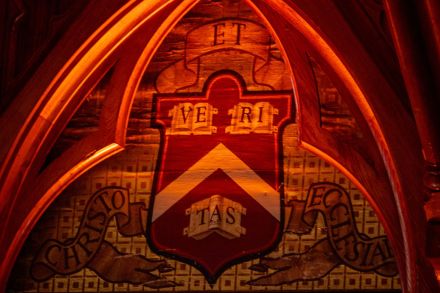
Save us from the Gospel according to Grok

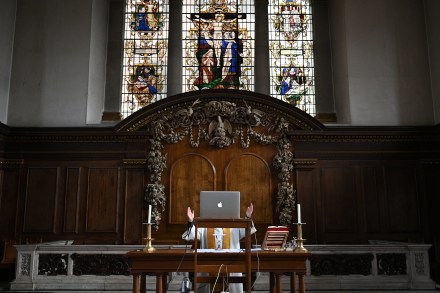
The Rt. Revd. Martyn Snow, the handsome and up-to-date Bishop of Leicester, has decided that it’s OK, even admirable, for clergy to use AI to write their sermons. Bishop Snow was on the radio the other day, proud to share with listeners that in his diocese, they’ve even had an AI expert come to give pointers to the priests. No more painful head-scratching on a Saturday afternoon for the lucky clerics of Leicester. ChatGPT will sort it. Just plug in a Bible verse and a few well-crafted prompts, and you’re off to the cricket, or to Pride, whichever way you swing. It’s one of those many times I wish Michael Wharton was still alive and writing.

gospel

How Paula White-Cain guides Trump through evangelical America

From our US edition

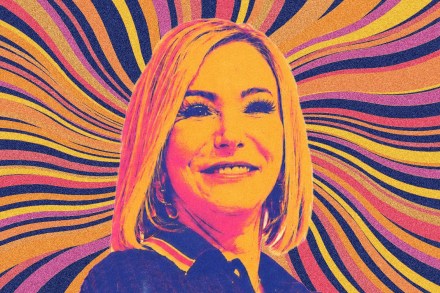
“I don’t think there’s anything that’s going to get me into heaven,” Donald Trump told a group of journalists aboard Air Force One in October. “I think I’m not, maybe, heaven-bound.” “My phone started blowing up,” says Paula White-Cain, Trump’s senior advisor to the White House Faith Office. “I went and looked at it because I didn’t see it live and I knew he was joking. People critique him if he’s too prideful. And then if there’s a part of humility in him, they’re critiquing him for that.” Trump first called her in the early 2000s after seeing her preach on a Christian broadcast in Palm Beach. He thought she had the “It” factor. “It’s interesting because that’s what he called it,” she tells me.

paula white-cain

This Christmas, listen to Mary Did You Know?

From our US edition

A popular and poignant Christmas song, written late in the previous century for a church’s holiday program, incites passionate criticism from those who disagree with the way it phrases its message. Since first being recorded in 1991, “Mary, Did You Know?” has been performed by soloists and groups ranging from Carrie Underwood and Dolly Parton to Pentatonix, CeeLo Greene and Kathleen Battle. The lyrics are a series of questions to Mary, Jesus’s mother, asking whether she knew during his infancy about the profound impact he would make as an adult. Yet that powerful literary device annoys those who believe the song demeans its subject.

How Pope Francis kept the faith

As timing goes, a pope simply can’t do better than to die just after Easter Sunday. The moral of the thing hardly needs saying. Francis died in Christ and will share His Resurrection. In fact, that’s exactly what several bishops have been observing today. But Francis also had his Good Friday. He was desperately ill in the Gemelli hospital in February, being very close to death in particular on 28 February. But he pulled through with all the drugs and therapies possible, and went triumphantly on. For that’s what he did. That popemobile trip round St Peter’s Square yesterday, the meeting with J.D.

How should Christians embrace ‘faithful dissent’ today?

This is an excerpt from the latest episode of the Holy Smoke podcast with Damian Thompson, which you can find at the bottom of this page: The Easter issue of the Spectator includes two provocative articles exploring aspects of Christianity. Nigel Biggar, Regius professor emeritus of moral theology at Oxford University, now a Conservative peer, celebrates the heroic ‘faithful dissent’ of Christian heroes such as Thomas More and Helmuth von Moltke, who lost their lives rather than defend injustice.  Meanwhile Spectator columnist Mary Wakefield interviews Roman Williams, former Archbishop of Canterbury. She’s inspired by his holiness but depressed by his use of ‘C of E bureaucratese’ to uphold liberal orthodoxy on subjects such as gender ideology.

Easter special: in praise of faithful dissent, a conversation with Nigel Biggar and Mary Wakefield

24 min listen

The Easter issue of the Spectator includes two provocative articles exploring aspects of Christianity.  Nigel Biggar, Regius professor emeritus of moral theology at Oxford University, now a Conservative peer, celebrates the heroic ‘faithful dissent’ of Christian heroes such as Thomas More and Helmuth von Moltke, who lost their lives rather than defend injustice.  Meanwhile Spectator columnist Mary Wakefield interviews Roman Williams, former Archbishop of Canterbury. She’s inspired by his holiness but depressed by his use of ‘C of E bureaucratese’ to uphold liberal orthodoxy on subjects such as gender ideology. But, she says they can share an uncomfortable space together within faith.

We are all people of faith, whether we realise it or not

A.J. Ayer and other thinkers linked to the Vienna Circle famously contradicted themselves. A claim such as ‘all truths are scientific truths’ cannot itself be verified scientifically. So whether the assertion is true or false, it follows that there is at least one fact which isn’t a physical fact. Thus metaphysics buries its own undertakers. Yet Ayer’s ideas survive today in mutated form and influence other subjects besides philosophy. Though partly infected by relativism, the humanities have witnessed a growing impulse to redescribe everything in material and supposedly objective terms. The move is reductive. It involves restricting us to a world of causes rather than reasons, sounds rather than music.

What’s missing in America

From our US edition

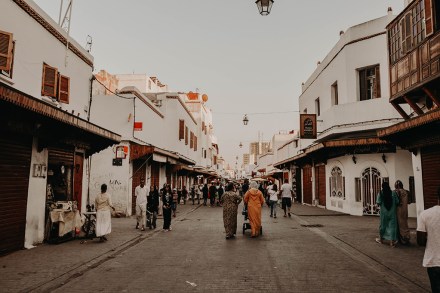
I’m back! As I mentioned in my last newsletter, my husband and I recently set off on our ten-day honeymoon to Morocco. We went to Casablanca, Meknes, Fez, Marrakesh, the Agafay Desert and Essaouira. I didn’t travel much growing up and so this trip was really special for me. We toured one of the largest mosques in the world and a fifteenth-century synagogue that is still active today, visited the Roman ruins of Volubilis, trekked through the Medinas, haggled in the souk, watched artisans create their handmade crafts with techniques handed down for centuries, rode camels and enjoyed traditional Berber food and music. Before we left for our trip, we fielded a lot of safety concerns.

Ukraine’s vitality is its greatest strength

From our US edition

Lviv, Ukraine Deep in a forested park, hundreds of people — men, women, children — in traditional embroidered clothes danced, clapped, and sang in a wild circle around fiddle-playing musicians. It was war, but it was also Easter, celebrated then according to the old calendar by the Greek Catholics of Lviv.  In that forest grove on a chilly afternoon, I stood next to Linda Netsch, a professor at Harvard Law, who had just arrived by train to give wartime guest lectures at Lviv’s Ukrainian Catholic University.  “Now I know why Russia cannot defeat Ukraine,” she told me as she pointed at the crowd of people dancing on the chilly grey afternoon while a friend poured me a whiskey. “It’s this. This is real power.

ukraine

Nick Cave’s musings on life, death and creativity

From our US edition

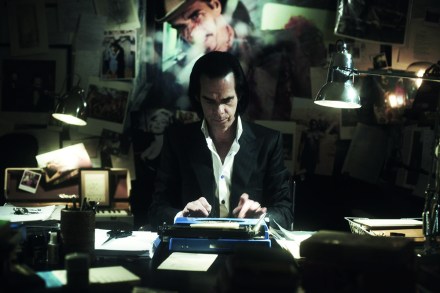
The musician, novelist and occasional ceramicist Nick Cave is the most literate of that often-decried breed, the rock star. Over the course of a forty-year career that began with the raucous punk act the Birthday Party and continues to this day with the Bad Seeds, in addition to eclectic solo and film-scoring work, he is restlessly innovative. Not only has he written countless lyrics that approach Dylan or Cohen-esque levels of profundity, but he has written film screenplays, novels and even a loose collection of musings about life on tour, The Sick Bag Song. Yet he shows no interest in writing the autobiography that many might have expected from him.

cave

Is losing God making America miserable?

From our US edition

The number of Americans who believe in God has reached an all-time low, according to a Gallup survey that’s been tracking our nation’s “values and beliefs” since 1944. For a God fearin’ woman such as myself, it’s a disheartening statistic. But we are told never to abandon hope, and recent events — the Supreme Court rulings against abortion and in favor of prayer, a million swing voters switching their registrations to Republican, Keeping Up with the Kardashians finally airing its last season — betoken a more God-centered future. Gallup reports: The vast majority of US adults believe in God, but the 81 percent who do so is down six percentage points from 2017 and is the lowest in Gallup’s trend.

god

A brief history of the death of God

A few weeks after Friedrich Nietzsche bragged to an admirer that he had completed a ruthless attack on our Lord, he collapsed, had convulsions, shouted like a madman and never recovered his faculties again. It was early 1889. He was 44 years old, his books had just begun to be noticed, and he lived for a decade longer, empty-eyed, silent and entirely unaware of the fame that was about to engulf him. Was his tragic end divine punishment for his sacrilege? My devout Catholic wife begs to differ. Our Lord is not vengeful, she insists. That’s the only thing wrong with him, I reply.

Liberals should stop patronising believers

An editorial in the Guardian on Friday suggests that this year may be a good one for liberal Christians, and gives them a little pat on the back.  Liberalism thinks itself the wiser, cooler sibling of religion The suggestion is based on four things: the churches have shown their social relevance during the pandemic; the incoming American president is a liberal Catholic; in his latest book Pope Francis has called for a ‘new humanism’; the leader of the Orthodox Church, Bartholomew I, has spoken in favour of social justice.

American Catholicism is going back to the future

From our US edition

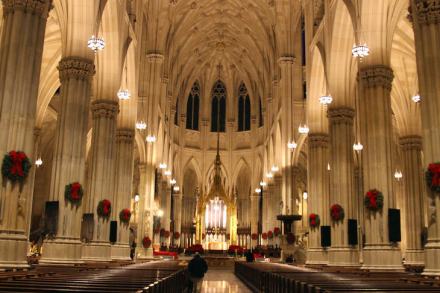
A couple of years ago, in high summer, my wife and I attended Mass in St Patrick’s Cathedral, as we do every time we visit New York. It is, in general, a bracing experience for Catholics who have been paddling in the tepid pools of Irish Catholicism. The celebrant, a middle-aged man with the physique and personality of a matinee idol, gave a startling sermon about the gospel of the day, Matthew 10:34, in which Jesus declares, ‘I have come to bring not peace but a sword.’ In his homily, the priest tore into sentimental notions of Christianity and the corruptions of concepts such as compassion and mercy.

catholicism

Why I’m a Muslim

When Muslims make headlines, it’s invariably for the wrong reasons. The fuss over Boris Johnson’s burka joke is a case in point: he was making an argument in defence of Muslims, but was instead condemned for attacking us. Why the confusion? Because of how little our faith is understood. Let’s start with the burka. Islam makes various demands of its followers, but — despite what you might think from the headlines — covering our faces isn’t one of them. Based on the media’s fascination with these strange and oppressive garments, you might wonder why any modern woman would ever choose Islam. So here’s my answer. I’m a London-born doctor, raised in a Muslim family and now working in America.

muslim woman