Exploration

The clear and present danger of exploring the Gulag

On 21 February 2022, 35-year-old Charlie Walker flew into Yakutsk in the Russian Far East, ready to ski hundreds of miles up the frozen River Lena, pulling his gear on a sledge. He was heading to the Laptev Sea, a large peripheral bay of the Arctic Ocean. A neighbour at home in London had wished him luck. ‘Frostbite I can handle,’ Walker replied. ‘Let’s just hope Russia doesn’t start a war while I’m there.’ But it did. Walker writes: ‘That Special Military Operation changed everything: for me, for Ukraine and for the world.’ Obliged to change plans, he flew north-east to Batagay over the Verkhoyansk Mountains, and from there set out over the Yana and Omoloy rivers.
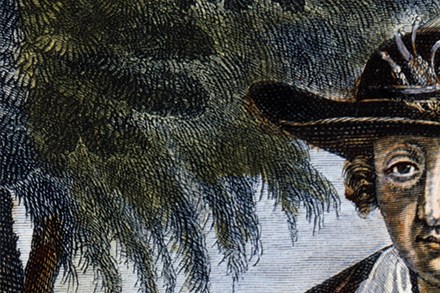
The short, eventful life of George Forster – explorer, naturalist and revolutionary

George Forster (1754-94), the German-Polish polymath, was in every sense a late Enlightenment prodigy. He was just ten years old when he accompanied his father, Johann Reinhold, on a scientific expedition to Russia and still in his teens when he sailed with him on Captain Cook’s epic three-year voyage to Antarctica and the Pacific islands. The ensuing book, A Voyage Round the World (1777), largely written by George, became a classic. It established him as one of the most significant naturalists and travel writers of the age, leading to him being elected a Fellow of the Royal Society aged just 22. He was also a very young polyglot, having learnt German, French, English and Russian by the age of 12. (He later added Dutch, Italian, Spanish, Portuguese and Swedish, as well as Latin.

The first woman to climb Mt Blanc took 18 bottles of wine and 24 roast chickens 

The dark side of the Moon, a broken loo and a floating jar of Nutella: such was Artemis II. When Helen Sharman joined the Mir space station in 1991, becoming the first Briton to visit space, the appetite was rather for oranges. Not only were they ‘rare in the Soviet Union then’, Sharman recalls on a new podcast, but they lent the cramped space a reassuringly fresh aroma. The Art of Adventure hosts an interview about a different exploration each week, from George Mallory’s expedition to Everest in 1924, to Ernest Shackleton’s ill-fated Endurance, and Sharman’s space flight. It has been steadily climbing the charts, which is a feat in itself, given that it’s hosted by a shop, rather than the likes of Goalhanger.

The mystery of Rapa Nui’s moai may be solved

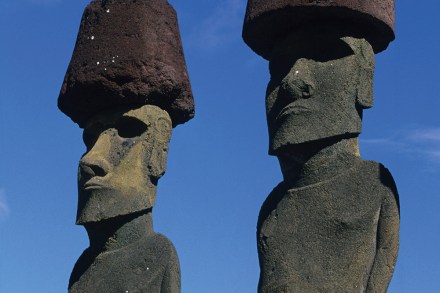
Boris Johnson claims that in his first year at Oxford he attended just one lecture. Delivered in the crepuscular gloom of the Pitt Rivers Museum, it was about Rapa Nui, the tiny Pacific island 2,200 miles from mainland Chile. As a boy, Johnson had read the Norwegian adventurer Thor Heyerdahl’s Aku-Aku: The Secret of Easter Island and had become obsessed. No wonder. For although Rapa Nui – or Easter Island – is only half the size of the Isle of Wight, it has a haunting history teeming with questions. Who first discovered this speck in the Pacific? How did they get there? How did they manage to settle in this place battered by subtropical seas, rat-infested, with no permanent freshwater streams and whose only abundant resource was stone? Were they cannibals?

The enduring lure of Atlantis

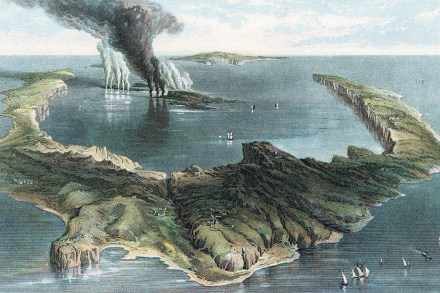
When you picture Atlantis, what do you see? For most people, this mythic city is a classical arcadia sunk beneath the sea – fallen columns, shattered arches and perhaps even an aqueduct. But that is not the place described by Plato, the original source of the Atlantis myth. His version consists of an immense Atlantic island, many millennia older than the Egyptian and Babylonian empires. The popular image of Atlantis was created by Jules Verne in Twenty Thousand Leagues Under the Sea. When that novel’s narrator, Professor Pierre Aronnax, joins Captain Nemo on his underwater exploration, they encounter a ruined city. He notices temples and even ‘the floating outline of a Parthenon’.

Paul Wood, Katy Balls, Olivia Potts, Benedict Allen, Cosmo Landesman and Aidan Hartley

40 min listen

On this week’s Spectator Out Loud: Would Trump really bomb Iran, asks Paul Wood (1:38); Katy Balls interviews Health Secretary Wes Streeting on NHS reform, Blairism and Game of Thrones (8:38); Olivia Potts examines the history – and decline – of the Easter staple, roast lamb (18:25); the explorer Benedict Allen says Erling Kagge and Neil Shubin were both dicing with death, as he reviews both their books on exploration to earth’s poles (22:13); Cosmo Landesman reflects on what turning 70 has meant for his sex life (28:46); and, Aidan Hartley takes us on an anthropomorphic journey across Africa (33:55).  Produced and presented by Patrick Gibbons.

The great explorers of the past dismissed as mercenary opportunists

Ceremonial cannibalism was not a European invention but a regular feature of South American societies Simon Park, who teaches Portuguese history and literature at Oxford University, aims to recast the early period of European exploration as a story of disasters rather than successes. His target is the notion that those who led the first European expeditions across the Atlantic or into the Indian Ocean were ‘heroes who pushed forward boundaries of knowledge’. An obvious case is Christopher Columbus, who refused to his dying day to recognise that he had failed to reach the outlying islands of China. He was already the butt of bitter criticism during his lifetime.

Globalisation is scarcely new: it dates back to the year 1000

In Japan, people thought the world would end in 1052. In the decades leading up to judgment day, Kyoto was rocked by a series of epidemics. It seemed the end was truly nigh. Of course they were wrong, but they were hardly the only people to predict the end of humanity on a specific date. For many tenth-century Christians, the year of the expected doom was 1000 AD. Valerie Hansen’s book focuses on this non-apocalyptic but significant year as the beginning of what we would think of as globalisation. Obviously with our European perspective we’re familiar with such major events of the 11th century as the Norman Conquest and the First Crusade. But this book draws us to what was going on in the Americas and Asia as well.

The adventures of the indomitable Dorothy Mills

When Dorothy Mills disappeared to Haiti to research a travel book, the British press led with the headline: EARL’S DAUGHTER GOES TO SEE BABIES EATEN IN BUSH. Mills was never out of the news in the interwar years. She wrote nine novels as well as six travel books, all of which sold briskly, and in 1928 she was the only woman in the starry line-up at London’s Explorer’s Week (Ernest Shackleton’s skipper, Frank Worsley, spoke alongside her). She was born Dorothy Walpole, in 1889.Her father, Robert, became the fifth Earl of Orford when she was five. Her ancestors included Britain’s first prime minister, another Robert. The young Dolly travelled widely with her parents; her mother was one of the American heiresses who enriched the aristocracy in the 1890s.

Why are the sailors who first braved the Atlantic so often ignored?

It is easy to assume that there is not much to be said about the history of the Atlantic before 12 October 1492, when Christopher Columbus reached the Bahamas. In 2005, the Harvard historian Bernard Bailyn published a little book entitled Atlantic History: Concept and Contours which said absolutely nothing about what happened before Columbus, whom he barely mentioned. Atlantic history meant for Bailyn, and the growing mass of Atlantic historians, the story of modern contacts between the four continents that face the Atlantic, especially the nefarious slave trade linking Africa to the Americas.

Robyn Davidson explores yet another foreign country – the past

Robyn Davidson never set out to become a writer. ‘It did not form my identity,’ she tells us early on in her memoir Unfinished Woman. ‘In my own mind I had simply pulled another rabbit out of a hat. As I had done all my life with everything.’ The rabbit, in this case, is the ability to capture an exciting and complex life with insight and humour. When she decided to leave the underworld, she was sexually assaulted at knifepoint Born in 1950 on a cattle station in Queensland, Australia, Davidson was the second daughter of a handsome war hero from a privileged background. Home was a place full of ‘dust and wide verandas, comfortable old chairs and good horses, though never adequate cash’.

Explorer, author, soldier, lover: The Romantic, by William Boyd, reviewed

William Boyd taps into the classical novel tradition with this sweeping tale of one man’s century-spanning life, even to the extent of providing the accustomed framing device: the chance discovery of a cache of papers and mementoes. The items listed by ‘WB’ in his ‘Author’s Note’ – a musket ball, a fragment of a Greek amphora, a crinkly lock of hair – all find their place in the tale of this 19th-century adventurer, lover, traveller and author. Cashel Greville Ross (his name turns out to be as mutable as his identity and nationality) is born in Ireland in irregular circumstances – so irregular that a swift flight to England as a boy is effected, the first of his many transitions.

Finally, the Sherpas are heroes of their own story

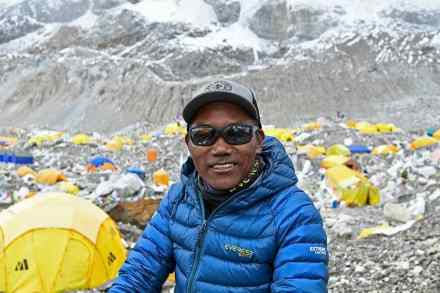
John Keay has for many years been a key historian and prolific contributor to the romance attaching to the highest mountains on Earth. His latest book is described as a summation of that lifetime’s contribution, offering an overview of the Himālaya – the Sanskrit version (‘Abode of Snow’) that Keay bids us use – both as a physical place and as a realm of intellectual inquiry. The book opens with a bang. Its first theme is the astonishing mountain-making forces that created the region. Specifically, Keay gives us the prolonged intellectual skirmishes among geologists as they tried to piece together the formative processes.

The poet and the polymath: two 16th-century Portuguese travellers

In 1866, Dante Gabriel Rossetti visited a London print shop to buy a large canvas of a Renaissance street. He recognised that the bustling scene – black-robed clerics, bargaining merchants, black porters and children teasing a monkey, played out on a wide boulevard in front of a colonnaded row of slightly rickety houses – was Iberian, but could be no more precise. Only in 2009 did scholars identify the street as Lisbon’s Rua Nova dos Mercadores, painted in the late 16th century, and lost like so much of the city in the great earthquake of 1755. One of the many virtues of Edward Wilson-Lee’s fascinating, elegantly written book is to plunge us into that scene, and to follow a trail outward from this global city across Europe, to Africa, India and beyond.

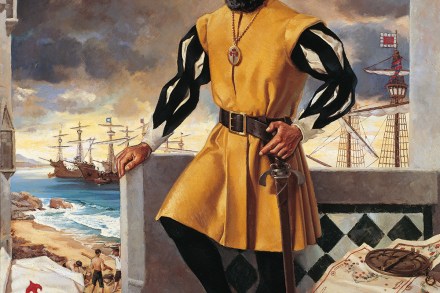
Another fallen idol: the myth of Ferdinand Magellan debunked

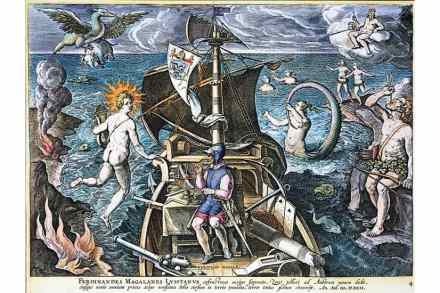
Who would you choose to judge you long after your death? How about a professional historian? How about Felipe Fernández-Armesto? Much lauded and read, this professor of history at Notre Dame, Indiana is the author of many books including short histories of humankind and the world and longer ones of exploration, Hispanic America and the year 1492. As you begin Straits, his account of the life and voyages of Fernando de Magallanes, known in English as Ferdinand Magellan, the explorer credited with the first European navigation from the Atlantic to the Pacific via the straits at the tip of South America in 1520, you may quail at the thought of his searing judgments. He can be waspish, uncompromising and cutting.

Do we still need explorers today?

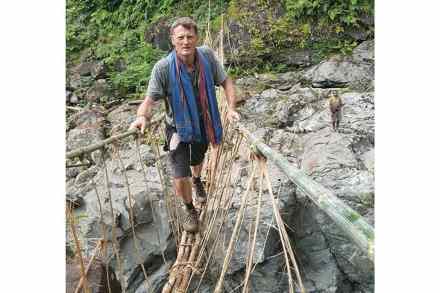
In November 2017 Benedict Allen found himself at the centre of a media frenzy. He’d been in Papua New Guinea (PNG) on a one-man expedition and hadn’t been heard of for weeks. Declaring him ‘lost’, several papers turned on him, accusing him of being overprivileged and imperialistic. One even suggested the whole thing was a stunt. It didn’t help that he was picked up by a helicopter, sent by the Daily Mail. This was a story the paper’s rivals wanted to spoil. Explorer is Allen’s account of that journey and how it all began. It’s no excuse or apology, but is written with anger and passion. The story begins in adolescence, with a boy who was idealistic, stubborn and determined to travel the world alone and in his own way.

Journey to the end of the world: the full horror of the Belgica’s Antarctic expedition

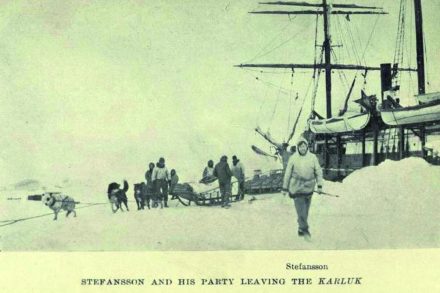
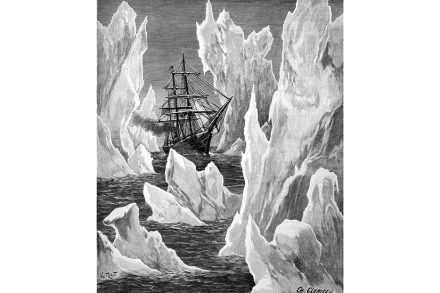
The epic story of the Antarctic voyage of the Belgica (1897-9) has all the ingredients of a truly glorious misadventure: an aristocratic expedition commander who carries the pride of a small nation on his shoulders; an eccentric American surgeon who was to become known as one of the greatest frauds in the history of polar exploration; a cantankerous crew, racked by madness, scurvy and mutiny; a desperate sunless polar winter stuck in shifting sea ice that threatens to crush the ship; and finally an escape plan that involves half a ton of explosives and hand-sawing through a mile and a half of sea ice.

Does William Barents deserve to have a sea named after him?

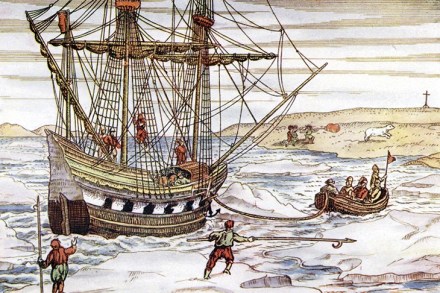
Narratives of frozen beards in polar hinterlands never lose their appeal. Most of the good stories have been told, but in Icebound Andrea Pitzer fills a gap, at least for the popular reader in English, with the story of the 16th-century Dutch mariner William Barents. He sailed further north than any man before him and lives still, on the map, with an eponymous sea off the northern coasts of Norway and Russia. In 1594, during the third decade of his country’s war with Spain, Barents voyaged to the unknown Nova Zembla (‘New Land’ in Dutch), planning to find a route to the fabled riches of Cathay. The notion of a navigable northern ocean had tantalised explorers since the Ancient Greeks, and geographers in Amsterdam thought the North Pole would be warm.

Heated debate over Franklin’s doomed Arctic expedition

How refreshing in a time of general sensitivity to find a book intended to infuriate and debunk. Welcome to the desolate Canadian Arctic, to the mystery of the Franklin expedition, which disappeared in 1845 seeking the North-West Passage, and to a world of disagreement about what happened to it. Ernest Coleman’s story of his search for clues to Franklin’s fate is delightfully prejudiced and pugnacious. The purpose of No Earthly Pole is, he writes, ‘to speak out in opposition to the clustering together of some academics and experts who have closed their minds’. Middle-aged lieutenant goes to the ends of the earth to defend the reputation of Queen Victoria’s Navy would make a lovely film.