Exhibitions

The greatest paintings are always full of important unimportant things

From our UK edition

Goya to Impressionism: Masterpieces from the Oskar Reinhart Collection, at the Courtauld, consists of a selection of 25 absorbing paintings chosen from 207. I was disappointed but not surprised that one of the greatest paintings in the world, Pieter Bruegel the Elder’s ‘Die Anbetung der Könige im Schnee’ (The Adoration of the Kings in the Snow, 1563), didn’t make the journey from Winterthur in Switzerland. Too precious to put at risk. There is no requirement for a collector to accumulate thematically consistent paintings. Whim, availability, opportunism, taste, connoisseurship, pleasure, accident, catholicity all play their part. The Oskar Reinhart collection is gloriously heterogeneous, a series of bonnes bouches.
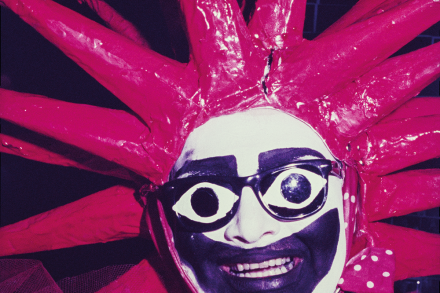
A blast: Leigh Bowery!, at Tate Modern, reviewed

From our UK edition

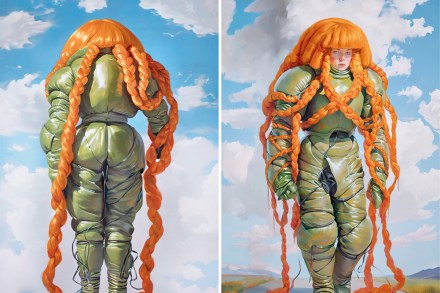
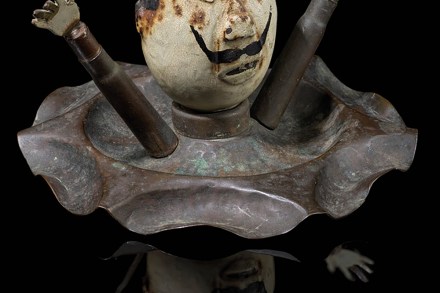
Tate Modern’s latest exhibition is a bizarre proposition on so many levels. Its subject, the Australian designer, performer, provocateur and club scenester Leigh Bowery, was by all accounts inescapable in London for much of the 1980s and early 1990s. Standing at well over 6ft and weighing 17st, he would have been a conspicuous presence on the capital’s streets even had he not adopted the berserk sci-fi drag attire that became his signature aesthetic. He appeared on TV, at Sadler’s Wells and in a ponderous suite of portraits by Lucian Freud. His life could be read as a kind of Gesamtkunstwerk, but he was not an artist in any conventional sense and there’s no explicit evidence here to suggest he ever identified as such.

Real artists have nothing to fear from AI

From our UK edition

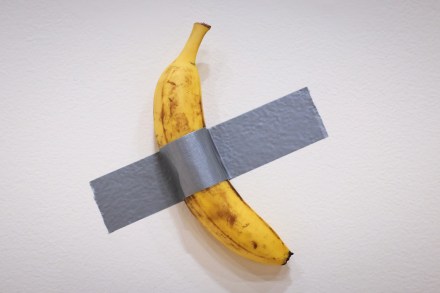
Christie’s is making digital-art history again – or at least trying to. Between 20 February and 5 March, it is hosting Augmented Intelligence, the first major auction dedicated solely to AI-generated art. This follows a series of headline-grabbing stunts, including the first major sale of an AI-generated artwork in 2018 – ‘Portrait of Edmond de Belamy’ ($432,500) by the Paris-based collective Obvious – and the first NFT sale by a major auction house,  Beeple’s ‘Everydays: The First 5,000 Days’, which shattered expectations (and good taste) by selling for $69 million in 2021.

An exhilarating, uneven survey of an outstandingly eccentric British surrealist

From our UK edition

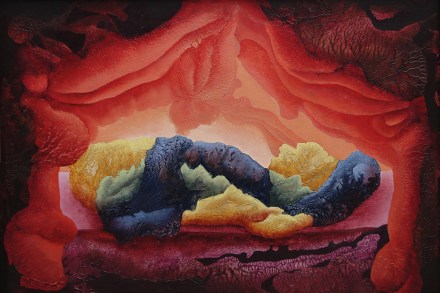
Ithell Colquhoun was always a bit of a mystery surrealist. Her greatest hit is the unsettling, dream-like ‘Scylla’ (1938), a painting of two towering cliffs, which could equally be thighs in the bath. The prow of Odysseus’s Argo peeps through them. The pubic hair is seaweed, and there are shells, but, as far as discernible, no crabs. The point of view of the painting is that of the titular monster Scylla, lying in wait. It’s witty and disturbing; mythic and domestic. A British surrealist high point, frequently anthologised. This aside, her name was relegated to lists.

In defence of deaccessioning

From our UK edition

There’s more than a grain of truth in the popular caricature of a curator as a mother hen clucking frantically if anyone gets too near her nest – not that her eggs are about to hatch, let alone run. The recent threat of the British Council to ‘deaccession’ – to put it more bluntly, sell – its 9,000-strong collection of British art has caused a predictable flurry in the curatorial world. Doesn’t the British Council know that public art collections are sacrosanct and must be preserved for all time? When I was director of Glasgow’s museums and art galleries, I remember talking to my committee about my long-term plans for the city’s great permanent collection when the leader of the council, Pat Lally, commented drily that there was no such thing as ‘permanent’.

Tarot isn’t very old or esoteric – but it does work

From our UK edition

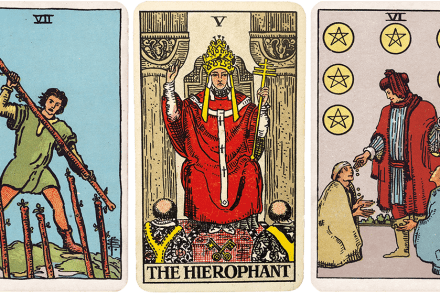
Among my many fake and useless skills, I’m a reasonably decent tarot reader. I can do one for you now if you like. A very simple three-card spread: your cards are the Seven of Wands, the Hierophant and the Six of Pentacles. There are lots of vaguely drippy ways of interpreting a three-card spread: past-present-future, or mind-body-spirit; I usually prefer to think of the cards as representing first, the mess you’re in; second, how you got there; and third, how you might plausibly manage to get your way out. And you, reader, are in a bit of a mess.

The art of war

From our UK edition

On his deathbed, the Austrian writer Karl Kraus remarked of the Japanese attack on Manchuria: ‘None of this would have happened if people had only been more strict about the use of the comma.’ The implication being that by channelling rage into the ordering of small things, we might stay away from violence on a colossal scale. Unable to restrict ourselves to matters of punctuation, alas, humanity is often at war: with itself, and others, however hallucinatory. Two current exhibitions come at rage from very different starting points. War and the Mind demonstrates the devastating psychological impact of war on those who fight it and those who have no choice but to suffer it.

The rediscovery of the art of Simone de Beauvoir’s sister

From our UK edition

An exhibition of the art of Hélène de Beauvoir (1910-2001), sister of the great Simone, opened in a private gallery near Goodge Street last week. It was the first time Hélène’s work had been shown or received any attention in London, and young people in alternative clothing gathered to sip orange wine and listen, rapt, to the 75-year-old biographer and friend of the de Beauvoir sisters, Claudine Monteil, as her recollections helped elucidate Hélène’s abstract paintings. The reclamation of a new ‘lost’ artist was under way. De Beauvoir’s cubist self-portrait is quite good – but ‘Simone in red jacket’ must never be seen It is possible, these days, for gallerists to do good work – self-defining as allies and activists – while making a good fortune.

I’m becoming too old to hold a Les Paul

From our UK edition

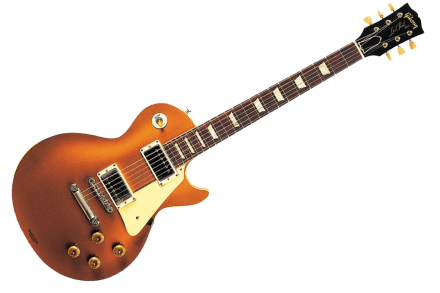
My beloved 1967 Gibson Les Paul Goldtop guitar is now locked away until December at the earliest. For the past eight years, I have had the terrifying privilege of dragging my axe (as we guitarists call our instruments) on stage to perform in a series of Christmas gigs (as we musicians call such performances) with the celebrated prog rock band Jethro Tull. Ian Anderson, who leads the band, has for years generously staged a series of pre-Christmas concerts to raise funds for English cathedrals. Our 42 cathedrals are some of the greatest expressions of creativity, imagination and hope (more on that later) which our nation has ever produced. They are also mostly bloody freezing, although this year the magnificent, but sadly underrated, Bristol cathedral approached cosy conditions.

Was Brazil the real birthplace of modernism?

From our UK edition

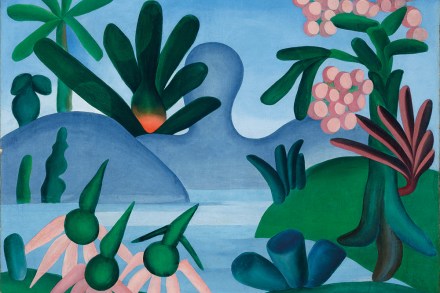
A paradox of art history: to understand the artists of the past, it helps to study how, and where, they conceived of the future. If today we foresee the future in the East, previous generations looked westward. In the last century, Europeans, having inherited a seemingly aged and decrepit civilisation, determined that the future of art was to be found in the New World. That much is well known. But this did not always mean America. Indeed, the true cognoscenti had a different country in mind: Brazil.

The brilliance of Cicely Mary Barker

From our UK edition

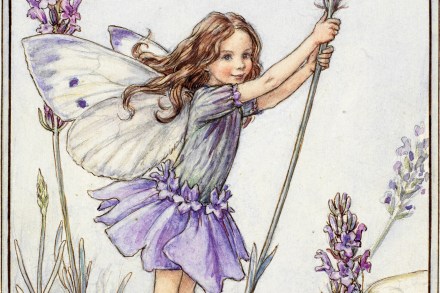
When Cicely Mary Barker’s Flower Fairies of the Spring was published in 1923, a post-first world war mass wishful belief in fairies was at its height in Britain. Just over two years previously, Sir Arthur Conan Doyle, writing in the 1920 Christmas issue of the Strand Magazine, had stated that the ‘Cottingley Fairies’ (tiny winged figures visible in photographs taken near Bradford by Elsie Wright and Frances Griffiths) were almost certainly genuine and were clear evidence of the existence of psychic phenomena. Barker remained unmarried, and lived a quiet life of flowers and innocence The public – 21 years on from the birth of Peter Pan – were hungrier than ever for fairies: their innocence, their delicate beauty, and their hint of benign mischief.

The architectural provocations of I.M. Pei

From our UK edition

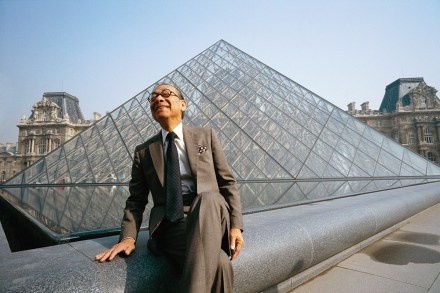
When first considering architects for the new Louvre in 1981, Emile Biasini, the project’s head, liked that I.M. Pei was both ‘Chinese as well as American: Chinese in his respect of the past, and American in the way of radical solutions’. His controversial glass pyramid ignited much debate about which side won out. These entanglements, between traditionalism and modernity, East and West, would come to characterise both Pei’s Louvre and his six-decade career. After a seven-year gestation, the first comprehensive retrospective of the architect, at Hong Kong’s M+ museum, finally offered a longer view. Despite calling America home, Pei felt a duty to help China find its own architectural language Pei’s prolific career had a head start.

A dreamy, if overly ambitious show: Silk Roads, at the British Museum, reviewed

From our UK edition

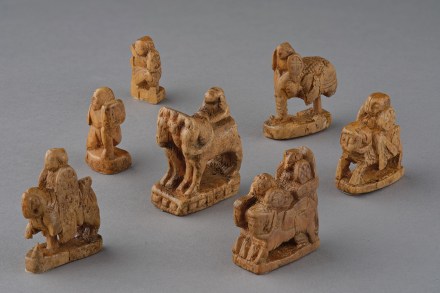
Towards the end of the British Museum’s Silk Roads show, there is a selection of treasures found in England. Among them is a copper flagon made in Syria and buried in Essex in the late 500s. It is believed that the flagon belonged to an English mercenary who went to fight for the Byzantines against the Sassanians in the 570s. The flagon’s looping handle would have held it tight to a saddle, so perhaps it came to England attached to the warrior’s horse as he rode home from his adventures in the East. There are many spectacular objects in this exhibition. Very many If objects are to inspire more than awe in us, we also need a handle.

How French absolutism powered a techno-progressive revolution

From our UK edition

The Enlightenment is back. Despite the best efforts of the past decade of handwringing about cultural imperialism and wailing over machismo, money and majesty, the future keeps crashing in. The Science Museum has now laid its cards on the table with Versailles: Science and Splendour. Think gilt, not guilt. Is there anything in our lives that could compare to witnessing the first successfully grown pineapple? It’s marvellous, and unusual these days, to visit an exhibition and feel the colossal force of history without anyone bashing you over the head with infantile morality tales. Expanding on a 2010 display at the Palace itself, lead curator Anna Ferrari ought to be saluted for this unabashed celebration of genius – perhaps with a three-hour firework display.

Tirzah Garwood just isn’t as good as her husband

From our UK edition

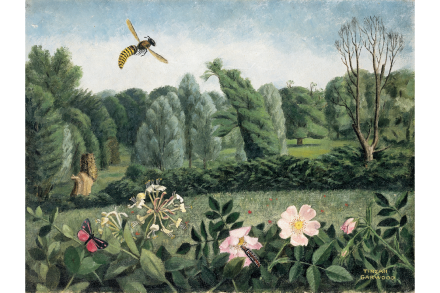
Tirzah Garwood, wife of the more famous Eric Ravilious, is having a well-deserved moment in the sun, benefiting from this era of equality in which artists’ and composers’ wives and sisters (such as Clara Schumann, Fanny Mendelssohn and Elizabeth Siddal) are having the spotlight shone on their under-appreciated works.

Warhol, Rauschenberg, Johns and Tinguely all started out as window dressers

From our UK edition

Christmas, and in every city already crowds congregate around the festive department store displays in defiance of the apparent disappearance of the ‘high street’. For despite digital merchandising and online delivery, adults as much as children delight in this annual extravaganza, and such windows prove more popular than ever precisely because they cannot be enjoyed other than physically, in person. For many, these windows remain an indelible early metropolitan memory and perhaps the first experience of a work of visual art, something specifically conjured to arrest the attention, intrigue and entertain.

William Morris’s debt to Islam

From our UK edition

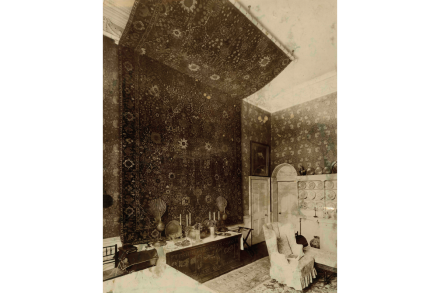
When William Morris was born in Walthamstow, in 1834, it was little more than a clump of marshland at the edge of the Epping Forest. This was the terrain of his free, frolicsome childhood, and it would forever form his image of humble, Edenic England, uncorrupted by the industrialist’s yoke. About the only thing that remains of this prelapsarian Walthamstow, amid its railway lines and brownfield sites, is the family home where Morris grew up, in some splendour – now a gallery dedicated to his artistic legacy. ‘To us pattern designers, Persia has become a holy land, for there our art was perfected’ The landscape has been supplanted, and much of the population transplanted.

Sad but beautiful exhibition of Afghanistan’s war rugs

From our UK edition

Decades after its inclusion in the Hippie Trail, Afghanistan is again open to tourism, according to the Taliban’s spokesman Zabihullah Mujahid. It is perhaps a source of regret for the group that the 6th-century Buddhas of Bamiyan are missing in action. They were blown up in 2001 either, depending on who you ask, because of Islam’s strict beliefs on anti-idolatry or to punish the West for offering money to preserve them rather than give aid to starving children. The war rugs, depicting camels and flowers alongside rocket launchers, are striking and jarring While the country continues to export fruit, nuts and insect resins – opium production was massively scaled back by the Taliban – Afghanistan is justly famous for its woven rugs.

How a single year in Florence changed art forever

From our UK edition

The story goes that one day early in the 16th century Leonardo da Vinci was strolling through Florence with a friend. Near the Ponte Santa Trinita they came across a group of gentlemen disputing a point in Dante’s Divine Comedy. Seeing Leonardo, they asked him to explain the passage. At that same moment, Michelangelo Buonarroti also happened to hurry by, and Leonardo beckoned the sculptor over to interpret it for them. But Michelangelo, feeling he was being mocked, rounded on Leonardo: ‘Explain it yourself, you who tried to cast a horse in bronze, and couldn’t do it, and had to abandon the project in shame!’ With that he turned on his heels and stalked off, leaving Leonardo standing in the street embarrassed and furious.

At Japan House humanity has arrived at the perfect future: food for ogling, not eating

From our UK edition

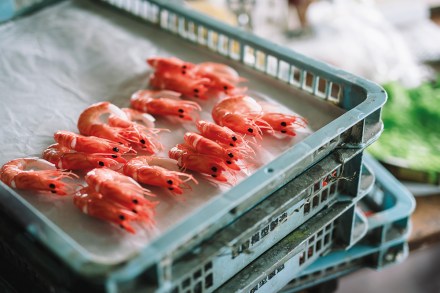
There is a popular Japanese television show that features a segment called ‘Candy Or Not Candy?’. Contestants are presented with objects and must guess if they’re edible or not. Is that a dish sponge – or a steamed sponge cake? I might not consider afternoon tea to be art, but the confectionery artifice required to dupe contestants into mistaking the replica for reality is impressive – or at least entertaining. The lacquered steaks, fruits, vegetables and sliced bread feel wrong. They surely ought to be matte The inverse – using inedible materials to create replicas of food – is also a Japanese art form, and the subject of Looks Delicious! at Kensington’s Japan House.