Exhibitions

Magnificent: V&A’s Marie Antoinette Style reviewed

From our UK edition

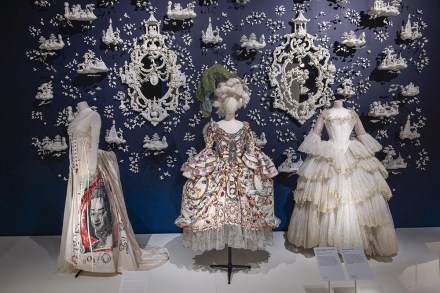
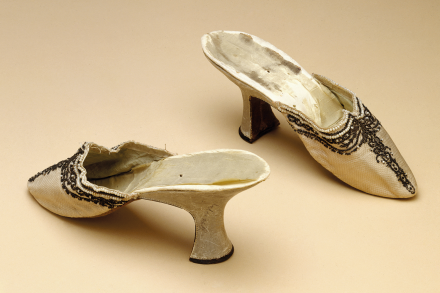
This exhibition will be busy. You’ll shuffle behind fellow pilgrims. But it’ll be worthwhile. It’s a tour de force that tells the story of Marie Antoinette’s 17 years on the throne with detail, focus and flair. There are 34 items here that she owned personally – opulent, carefree objects that resonate with impending disaster. These precious items need protecting from light, and in the first room curator Sarah Grant cleverly runs with this, evoking the candlelit ambience of a Versailles ball by hanging silver baubles from the ceiling and covering the walls with smoked mirrors. Here we have a taste of Marie Antoinette’s wardrobe – its annual budget peaking at £1.

Sondheim understood Seurat better than the National Gallery

From our UK edition

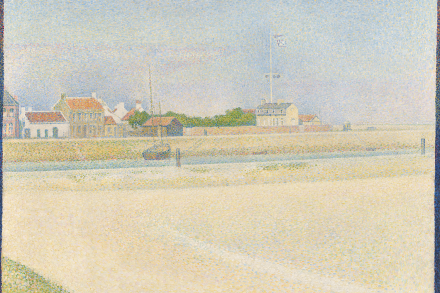
In Sunday in the Park with George, Stephen Sondheim catches something of what makes Georges Seurat so brilliant – not just his technical flair, but his engagement with ordinary life. Sondheim has Seurat sing, or rather woof, a little duet between two dogs meeting on the island of La Grande Jatte; later, Sondheim gives Seurat a pointillist melody as he works, crotchet-dabs of blue, blue, blue, red, red… Seurat’s muse, meanwhile, is called Dot. Seeing the National Gallery’s somewhat overloaded presentation made me long for the light touch of Sondheim.

Vermeer’s Love Letters is something of a riddle

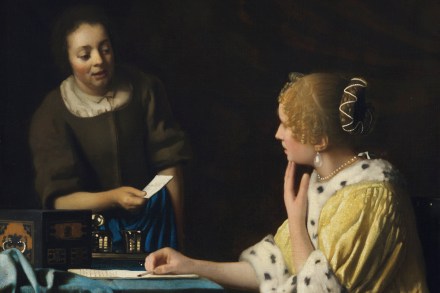
Johannes Vermeer (1632-75) is doubtless a blockbuster artist, but the Frick’s exhibition, Vermeer’s Love Letters, is the size of a postage stamp – or, maybe more fittingly, a wax seal. The Frick has three Vermeers of its own, but only one made the cut: “Mistress and Maid” (c. 1664-67). From the 37 known works by the artist, the museum has only borrowed two to bolster the show: “Woman Writing a Letter with her Maid” (c. 1670-72) and “The Love Letter” (c. 1669-70). Each depicts a woman, her maid and at least one letter somewhere in the mix. Though we don’t know exactly what’s written in those papers, it’s fair to say that these discreet works have an air of romance. The show’s effect is something of a riddle. Why has the Frick picked these three?

Vermeer
Esther

How Esther inspired the imagination of Rembrandt

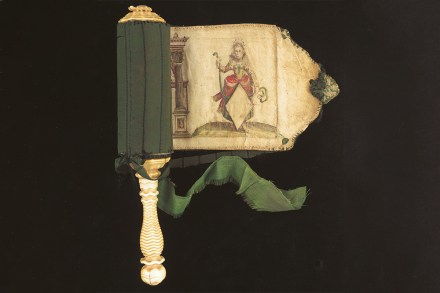
If you attended Sunday or Hebrew school, you know the story. There once lived in the ancient Persian city of Susa a King Ahasuerus and his Jewish wife, Queen Esther. At first she hid her Jewish identity from the king, only revealing it in order to foil the plot hatched by Haman, her husband’s Jew-hating second-in-command, to exterminate all who shared her faith. In doing so, Esther saved her people from destruction – and earned a volume in the Hebrew Bible named for her. Less well-known is that centuries later, in the Amsterdam of Rembrandt van Rijn (1606-69), Esther’s valor also made her a heroine to the citizens of the predominantly Protestant Dutch Republic.

Modest, interesting – no masterpieces: Millet at the National Gallery reviewed

From our UK edition

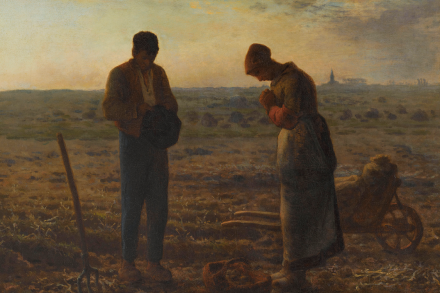
Jean-François Millet (1814-75). One Room. 14 items. Eight paintings. Six drawings and sketches. Modest, interesting. No masterpieces. The show appeals to the contemporary English preference for the unassuming, the humble, the unpretentious. Take ‘The Wood Sawyers’ (oil on canvas, 1850-2). Two figures are sawing a tree trunk with a long two-man bucking saw. Two thick sections have already been cut and the sawyers are busy with a third. The simplified trunk is like a salami, the bark corresponding to the floury skin. The main foreground figure with his blue rump has his foot braced against the trunk and commands our immediate attention. You can see the folds of flesh gathered at the back of his neck as he looks up from the task towards his fellow worker.

Wittily wild visions: Abstract Erotic, at the Courtauld, reviewed

From our UK edition

If you came to this show accidentally, or as a layperson, it could confirm any prejudices you might have about avant-garde sculpture. Pretentious, ugly and resorting to kink. Those pendulous string bags, that enormous turd – gimme a break. Except that would be a mistake. Because the work here is the real thing: the 1960s originals that spawned a million imitations and parodies. The exhibition is perhaps a little cool about selling itself, so allow me. This is a snapshot of the work of three artists around the time they all took part in a 1966 New York show called Eccentric Abstraction. Two of the artists, Louise Bourgeois and Eva Hesse, were nascent superstars.

The future of gardening looks bleak

From our UK edition

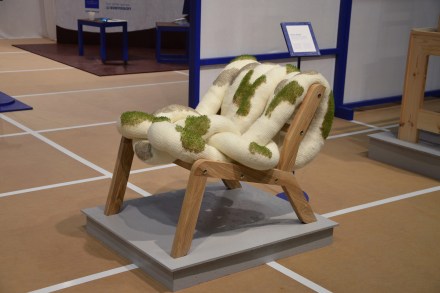
Since 2005, a Chinese man called Zheng Guogu has been creating a garden inspired by the strategy game Age of Empires. The project is ongoing, so the garden is expanding. It currently covers 20,000 square metres but it may yet become larger, spreading over more of Yangjiang, where Guogu lives. It’s not clear how he came by all this space. Nor is it immediately obvious how a garden can be inspired by a game in which you go to war with others. Perhaps he’s particularly fond of invasive species. This is all quite intriguing and unusual, and most visitors to Garden Futures: Designing with Nature will have questions. Who is this guy? How does he handle his borders? Is his preference for perennials or annuals? Does he watch Gardener’s World? Where does empire-building come in?

Should we look forward to such things as the ‘Chia Chair’, which ‘is designed to entice us to take a seat but it is actually a bed for chia seeds’

The masterpieces of Sussex’s radical Christian commune

From our UK edition

Ditchling in East Sussex is a small, picturesque village with all the trappings: medieval church, half-timbered house, tea shops, a common, intrusive new housing developments down the road, a good walk from the nearest train station and the Downs on its doorstep. But the resonance of the place owes much to the remarkable artistic activity that has bloomed since Eric Gill moved his family there in 1907. It was part craft commune, part lay monastery, a living experiment in distributism, the radical Christian political philosophy that held that land should be distributed as widely as possible. It was an attempt to resurrect the medieval guild.

Beguiling grot, TfL surrealism and Insta-art: contemporary art roundup

From our UK edition

Last month, I got the train down to Margate to interview the Egyptian-Armenian artist Anna Boghiguian (b. 1946), whose exhibition The Sunken Boat: A glimpse into past histories was about to open at the Turner Contemporary. Long story short, the conversation did not go well: Anna reacted to my questions with some irritation, swatting them away like low-flying bluebottles. I got flustered, she got bored, and eventually so did I. We wrapped things up around the 20-minute mark and I ran away to stare into the abyss. It was a shame, because the show was, for the most part, really good.

The greatest decade for British painting since Turner and Constable? The 1970s

From our UK edition

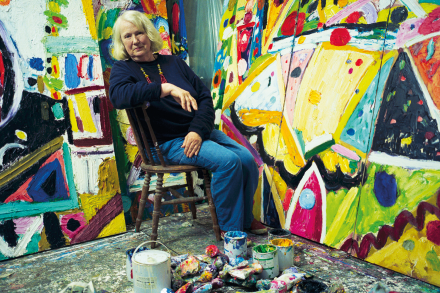
Slowly the canvas was unfurled across the concrete floor of a warehouse on an industrial estate in Suffolk. On and on it went, a flurry of paint marks and brush strokes, yellow, green and occasionally blue, like a cornfield at harvest time. By the time we got to the end some seven metres of it lay stretched out at our feet. It was the first time anyone had seen this unknown magnum opus by Gillian Ayres since it was rolled up in 1974 – and it looked sensational. Recently I’ve been reflecting on the 1970s for a couple of reasons. One is that I’m working on a book about art in London at that time, the other is that I’ve been helping to organise an exhibition of Ayres’s work from that era at the Heong Gallery, Downing College, Cambridge. Of course, as L.P.

The cheering fantasies of Oliver Messel

From our UK edition

Through the grey downbeat years of postwar austerity, we nursed cheering fantasies of a life more lavishly colourful and hedonistic. Oliver Messel fed them: born into Edwardian privilege, the epitome of well-connected metropolitan sophistication, he doubled up as interior decorator and stage designer, creating in both roles a unique style of rococo elegance and light-touch whimsy that sweetened and consoled – ‘a gossamer world of gilded enchantment’ as Roy Strong soupily put it. ‘Marie Antoinette would have felt at home in any of his settings.’ Like his rival Cecil Beaton, Oliver Messel sums up an era Posterity has not been kind to Messel.

London’s best contemporary art show is in Penge

From our UK edition

If you’ve been reading the more excitable pages of the arts press lately, you might be aware that the London gallery scene is having one of its periodic ‘moments’. A fair few spaces, mostly concentrated around Fitzrovia, have sprouted up since the pandemic, notable for their bacchanalian openings and tantalisingly gnomic Instagram posts. Their online presence is at best spectral: the most hyped of the bunch, a Smithfield gallery called Ginny on Frederick, has a holding page in place of a website. Still, I like a scene, and London Gallery Weekend, an annual June event, presented a good opportunity to investigate. Niso gallery, on New Cavendish Street, has put on a seductive showing of the Argentinian conceptualist Martina Quesada (open until 28 June).

The blossoming career of Cedric Morris

From our UK edition

In the winner-takes-all world of modern art, there’s every chance you might not have heard of Cedric Morris. Why should you? No matter how much you sweeten the tea, the Welshman, born in 1889, was no Pablo Picasso, Mark Rothko or Salvador Dali. Nor from our 21st-century outlook can it be said that the name itself inspires much confidence: ‘Cedric’ sounds about as on-trend as a character from a short story by Saki, and when paired with Morris, the combination offers up all the avant-garde promise of a baked camembert starter at an Aberdeen Angus steakhouse.

How do you exhibit living deities?

From our UK edition

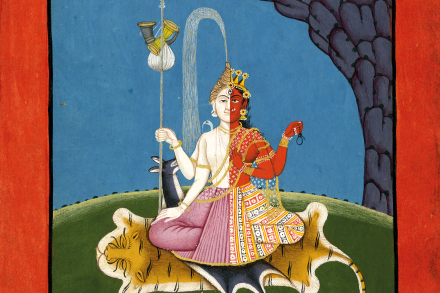
The most-watched TV programme in human history isn’t the Moon landings, and it isn’t M*A*S*H; chances are it’s Ramayan, a magnificently cheesy 1980s adaptation of India’s national epic. The show has a status in India that’s hard to overstate. Something like 80 per cent of the entire population watched its original run; in rural areas entire villages would crowd around a single television hooked up to a car battery. When the show ended, omitting the ‘Uttara Kanda’, the fairly controversial last book of the original poem, street sweepers across the country went on strike, demanding the government fund more episodes. The government caved. But while every country has its pieces of cult media, in India the cult is literal. Some viewers would take a ritual bath before tuning in.

The gloriously impure world of Edward Burra

From our UK edition

Every few years the shade of Edward Burra is treated to a Major Retrospective. The pattern is long established: Edward who? Forgotten genius, sui generis, well known for being unknown save by beardy centenarians and art tarts with ginny voices. Why have I never heard of this man? LGBT-ish avant la lettre, Polari-ish. After the show inhumation beckons again and he will disappear into an obscurity that cannot be relieved until the curatocracy once more lets loose the dogs of hype. George Melly and Dan Farson are no longer around to peal his name and Jane Stevenson’s impeccable and often funny biography suffers from its subject’s being a forgotten genius, sui generis, unknown save… etc. In later years Burra was the very picture of a different neglect: physical.

Why you didn’t want to get on the wrong side of Cecil Beaton

From our UK edition

‘Remember, Roy, white flowers are the only chic ones.’ So Cecil Beaton remarked to Roy Strong, possibly as a mild put-down to the young curator. But it was a curious put-down to make because Beaton broke his own rule happily, buying mountainous armfuls of speckled yellow, pink and scarlet carnations at Covent Garden and longing to fill his borders with Korean chrysanthemums and purple salvias. This small exhibition at the Garden Museum enjoys the sweet-pea surface of Beaton’s creations, while giving a flash of the glinting secateur that also made up such an important part of his personality. Beaton’s ability as an image-maker was astounding. Those famous photos of his Cambridge days with the Bright Young Things are still outrageous, a mad foray into camp pastoral.

V&A’s new museum is a defiant stand against the vandals

From our UK edition

In last week’s Spectator, Richard Morris lamented museum collections languishing in storage, pleading to ‘get these works out’. There’s an alternative solution: bring the public in. V&A East Storehouse, which opened last weekend, was designed by New York architects Diller Scofidio + Renfro to do just that. The museum’s collections were previously holed up in the creaking, late-Victorian Blythe House. The government decided to sell it in 2015, leading the V&A to find a new home in the Olympics’s former Broadcasting Centre in Hackney Wick, a big box since rebadged as Here East, an ‘innovation campus’. The Storehouse’s entrance indeed blends in with the startups and students sharing the building.

Museums: open up your vaults!

From our UK edition

At any one time eighty per cent of the art owned by Britain’s many museums and public art galleries will find itself hidden away in storage. And once it is, it can stay there for years. Yet in these vaults are a wealth of treasures. It’s why I recently launched ‘Everyone’s Art’, which has a simple premise: to get these works out of the storeroom and into community centres, libraries, churches, village halls and schools, so their makers, and what they made, can finally be celebrated. Consider Henry Bright, a friend of the critic, writer and painter John Ruskin. Ruskin paid for Bright to accompany Turner on many of his sketching expeditions, where he was encouraged to paint what he saw.

Fascinating royal clutter: The Edwardians, at The King’s Gallery, reviewed

From our UK edition

The Royal Collection Trust has had a rummage in the attic and produced a fascinating show. Displayed in the palatial gallery adjacent to Buckingham Palace, and described on headsets in the reassuring tones of Hugh Bonneville, are public tokens and personal treasures of two generations: Edward VII and Queen Alexandra, and George V and Queen Mary. Frocks, clocks and diplomatic gifts; purchases and mementoes that give the illusion that the royal family might be, after all, not so unlike us. There’s an unusual tea set, with odd, red photos: as princess, Alexandra took family snaps and had them printed on to these porcelain teacups in 1892, more than 100 years before Moonpig.

Architecture has hit a nadir at the Venice Biennale

From our UK edition

Much of Venice’s Giardini this year was as boarded up as a British high street. The Israeli pavilion was empty, apparently awaiting refurbishment. (At the 2024 art biennale, the curators had closed it in the face of pro-Palestinian protests, prompting the latter to demand it should be opened, presumably so they could protest its closure.) The Russian pavilion has been shut, by order of the Biennale, because of the Ukraine war. The Venezuelan pavilion was closed (‘Go look at nature instead,’ said the workman when I approached it.) The Czechoslovakian was shut, the turns taken by the two independent nations faltering during Covid.