Exhibitions

It’s time to free art from being ‘interactive’ and ‘immersive’

From our UK edition

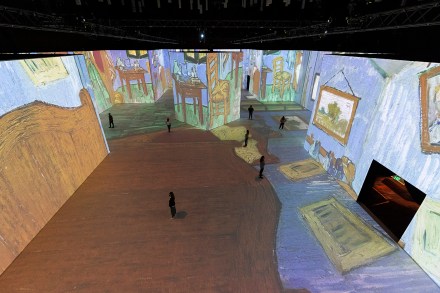
The American artist and critic Brad Troemel once pointed out that art galleries have all turned into a kind of adult daycare, and ever since then I haven’t been able to visit a gallery without noticing it. Nearly two decades ago, Carsten Höller installed a set of big aluminium slides in the Turbine Hall at Tate Modern, and they were undeniably good fun because going down slides is fun. It’s also fun, although maybe for a different type of person, to ask if going down slides counts as art. These days, though, you can hardly move for this stuff. The world is already interactive. You walk around in it. You can steal things from shops Last summer the Turbine Hall hosted a set of giant building blocks by Rasheed Araeen.

Kandinsky is the star of Tate’s expressionist show

From our UK edition

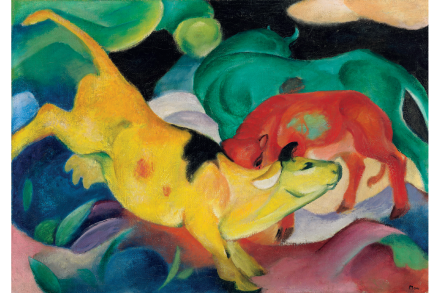
‘We invented the name Blaue Reiter whilst sitting around a coffee table in Marc’s garden at Sindelsdorf… we both loved blue, Marc liked horses and I liked riders, so the name came of its own accord.’ Christened so casually by Wassily Kandinsky and Franz Marc in 1911, the Blue Rider was always more of an idea than an art society, but the Tate Modern’s new exhibition – the first in the UK since 1960 – makes it sound more contemporary by describing it as a transnational collective.

The latest Venice Biennale is ideologically and aesthetically bankrupt 

From our UK edition

Last week’s opening of the 60th edition of the Venice Biennale marks a watershed for the art world. In much of the festival’s gigantic central exhibition, curated by the Brazilian museum director Adriano Pedrosa, as well as in many of the dozens of independently organised national pavilions and countless collateral events, it more obviously than ever before didn’t so much matter what was on show, but why. The politics of visibility and representation has been eating away at the arts for at least a decade, most recently under the banner of ‘decolonisation’. The now nearly complete abdication of aesthetic criteria in favour of a decolonial organising principle is here finally exposed as a wholly inadequate rationale for presenting contemporary art.

How flabby our ideas of draughtsmanship have become

From our UK edition

The term drawing is a broad umbrella, so in an exhibition of 120 works it helps to outline some distinctions. A good place to start is to ask what drawings are for, and that is what Oxford’s Ashmolean Museum has done with its current show of sketches by Flemish masters – staged in collaboration with Antwerp’s Museum Plantin-Moretus – dividing them into studies, designs and stand-alone finished works. Van Dyck’s teenage studies are a measure of how flabby our ideas of draughtsmanship have become If you’ve ever had the chance to visit it, you’ll know what a special place the Plantin-Moretus is.

A cultural summer in the city

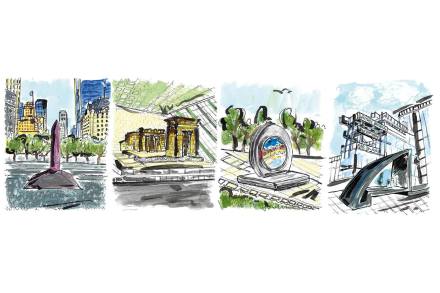
New York is gilded in beguiling art. It has an excess of riches and though summer is one of the best times to visit, quenching your cultural thirst can be difficult, as the arts patrons decamp to the Hamptons and watering holes ending in -an. From museums to galleries to street art at subway stations or parks, each borough is a canvas, so much so that it is often an afterthought against a landscape of pavement and honking cars. Will you be uptown for the first Monday in May? While the performances on the Met Gala’s red carpet are an art form in themselves, the exhibit the gala underwrites offers plenty to check out uptown as the tulips bloom on Park Avenue.

New York

The quiet brilliance of street photographer Saul Leiter

From our UK edition

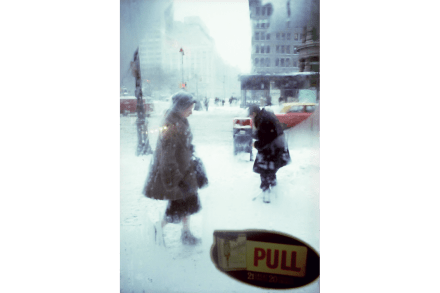
This is the second exhibition of mid-century New York street photography at the MK Gallery in Milton Keynes. The first, in 2022, surveyed the work of Vivian Maier, who at her death left behind a vast quantity of prints and negatives: evidence of a hidden life unsuspected even by those in whose household she lived and worked for four decades. There are continuities between Maier and the subject of the current show, Saul Leiter. They were contemporaries, loners who lived into their eighties (Leiter died four years after Maier, in 2013), prolific but uninterested in recognition, their reputations largely posthumous. Leiter was born in 1923 in Pittsburgh, like Andy Warhol and, like Warhol, he got out.

Impressionism is 150 years old – this is the anniversary show to see

From our UK edition

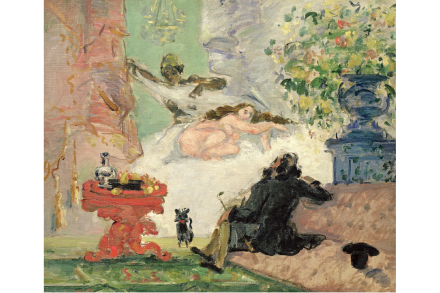
The time that elapsed between the fall of the Paris Commune and the opening of the first proper impressionist exhibition amounted to less than three years. Over the course of that period, the city had witnessed the collapse of the Second Empire, suffered a siege at the hands of the Prussian army and seen vicious house-to-house fighting between the troops of the Versailles government and thescrappy citizen-army of Paris proper. All Parisians would recall the rivers of blood running down the city’s ritziest shopping streets, zoo animals being butchered for restaurant fodder, and the mass slaughter of rebel prisoners across the public squares of the city’s eastern faubourgs.

The ghostly charcoals of Frank Auerbach

From our UK edition

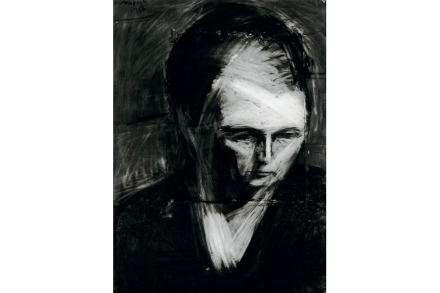
‘In some curious way, the practice of art and the awareness of the imminence of death are connected,’ Frank Auerbach said in 2012. ‘Otherwise, we would not find it necessary to do the work art finally does – to pin something down and take it out of time.’ There’s no sense of the imminence of death in Auerbach’s postwar landscapes of London building sites stirring with new life, but there is in his contemporary charcoal portraits, as scarred and sooty as the Blitzed city in which they were made. Auerbach started making large charcoal drawings from life as a student in David Bomberg’s evening classes at Borough Polytechnic, and carried on because the medium was cheap and allowed the endless revisions he found necessary to pin things down.

Why art biennales are (mostly) rubbish

From our UK edition

Should you visit Malta this spring, you may notice something decidedly weird is afoot. Across the public squares of its capital, Valletta, performance artists are blocking busy thoroughfares and causing havoc on packed café terraces. The Hospitaller and British military forts that dominate the capital’s famous harbour, meanwhile, are full of dysfunctional installation work, while the curio-filled vitrines of local museums are forced to compete with video art. Even the Grandmaster’s Palace – for centuries the country’s seat of power – has accommodated several dozen mini-exhibitions on the theme of ‘the Matri-archive of the Mediterranean’.

Insipid show of a weak painter: Angelica Kauffman, at the Royal Academy, reviewed

From our UK edition

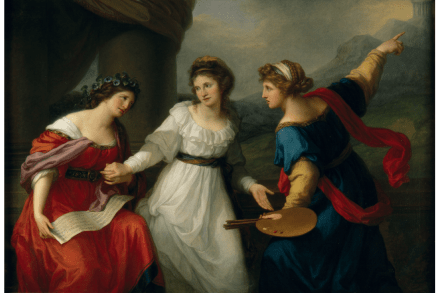
Angelica Kauffman’s funeral in Rome in 1807 was designed by her friend Canova on the model of Raphael’s. The corpse of ‘the great Woman, the always illustrious holy and most pious… was accompanied to the Church by two very numerous Brotherhoods… followed by the rest of the Academicians & Virtuosi who carried in triumph two of her Pictures’. At the Royal Academy in London, the account of her obsequies was read out at the general assembly and entered in the minutes; as a founding member of the institution – one of only two women so honoured, with Mary Moser – Kauffman was gone, but not forgotten. Kauffman was a decorative artist at heart.

The divine Dalí and his ‘Christ’

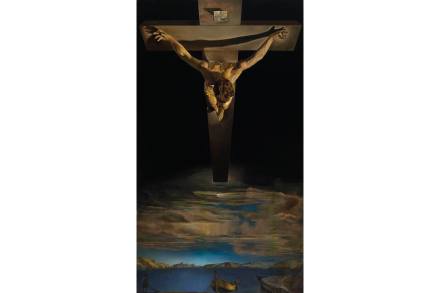
I arrived in the city of Figueres early one January morning to visit one of the most popular, and bizarre, art museums in the world, the Teatre-Museu Gala Salvador Dalí. It houses a dreamlike picture that, for the first time since it left over seventy years ago, has made a temporary return journey to Spain. Originally simply titled “The Christ,” the 1951 canvas depicting the giant figure of a man on a cross, shown at an overhead angle hovering over a moody seascape, was painted by the most famous son of Figueres, Salvador Dalí. Through April 30, it forms the centerpiece of a show exploring its creation, history, local connections and symbolism.

Dalí

Winning: When Forms Come Alive, at the Hayward, reviewed

From our UK edition

In case you didn’t know, we live in a ‘post-minimalist’ age, sculpturally speaking. Not a maximalist age, though some of the works in the Hayward’s new sculpture show are huge – an age of revolution against neatness. Who’s to blame for this call to disorder? Women. The two prime movers of this movement, if you can call it that, could not be more different, but both rebelled against minimalist geometry. As a student at Black Mountain College in the late 1940s, Ruth Asawa travelled to Toluca, Mexico, and saw villagers looping wire to make baskets for eggs. It struck her as a way of drawing in three dimensions and later, after becoming a mother of six, of working from home.

I was dreading this show – how wrong could I be: Entangled Pasts, at the Royal Academy, reviewed

From our UK edition

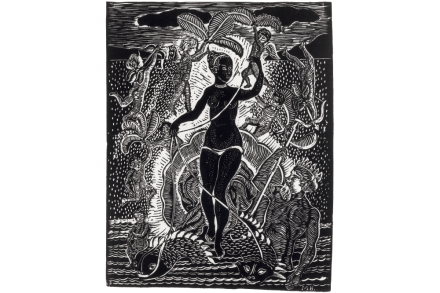
In the wake of the Fitzwilliam Museum’s exhibition Black Atlantic about its founder’s ties to the slave trade comes the Royal Academy’s Entangled Pasts, less of a mea culpa than an examination of conscience by an institution which, although hailed by its first president Sir Joshua Reynolds as an ‘ornament’ of Empire, was innocent of direct links to slavery.

The spare, graceful, revelatory sculptures of Kim Lim

From our UK edition

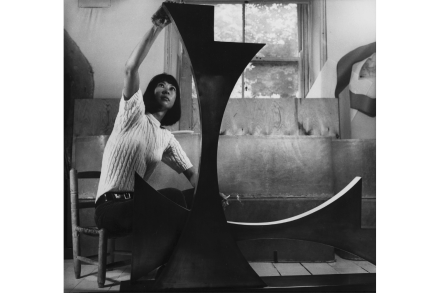
In 1989, the sculptor Lorna Green circulated a questionnaire among 320 of her female peers about their experiences as women in a male-dominated field; three years ago she sent a follow-up survey. The work of 29 respondents to both is currently on show in an instructive exhibition, If Not Now, When? Generations of Women in Sculpture in Britain 1960-2023 at the Saatchi Gallery (until 22 January). They include Kim Lim (1936-97), who is the subject of an overdue retrospective at the Hepworth Wakefield.

Masterclass of an exhibition: Impressionists on Paper, at the RA, reviewed

From our UK edition

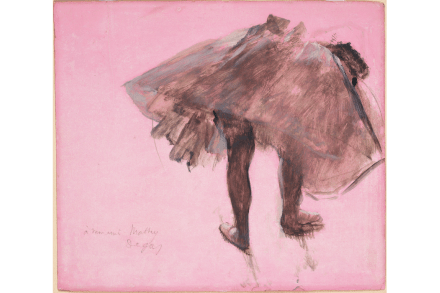
Viewers have different relationships with small pictures, or perhaps it’s the other way round: small pictures have different relationships with them. A big picture clamours for attention; a small picture you have to lean in to hear. No picture is more intimate than a drawing, and none brings you closer to the artist’s hand. A drawing can’t lie; it wears its facture on its sleeve. If you look closely, you can work out how it was made and even track the artist’s changes of direction. You can see, for instance, how Van Gogh launched into ‘The Fortifications of Paris with Houses’ (1887) in watercolour, then fortified the fortifications with gouache and chalk. A graphic artist by nature, he was at sea with watercolour washes.

‘You cannot begin by calling me France’s most famous living artist!’: Sophie Calle interviewed

From our UK edition

‘You cannot begin by calling me France’s most famous living artist!’ Thus Sophie Calle objected to the first line of the obituary I wrote for her, commissioned for the enormous exhibition, À toi de faire, ma mignonne (‘Over to you, sweetie’), that currently occupies the whole Musée National Picasso-Paris. But modesty aside, it is a fact that no other French artist alive today is so celebrated, loved, debated, denounced and, indeed, imitated, around the world as Calle. Having long mined her own life for her work, Calle now happily mines her death This year is the 50th anniversary of Picasso’s death and that his most important museum should officially mark this by inviting Calle to take over its institution, replacing all his work with her own, is a brilliant provocation.

The importance of lesbianism to British modernism: Double Weave, at Ditchling Museum, reviewed

From our UK edition

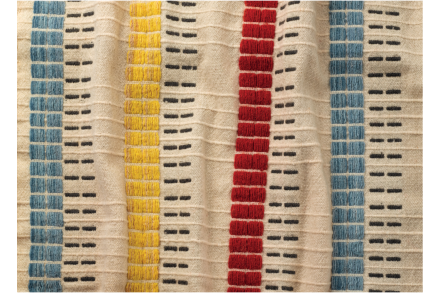
The name of Ditchling used to be synonymous with Eric Gill, but since he was outed as an abuser of his own daughters the association has become an embarrassment. Obliged to quietly drop its most famous name, Ditchling Museum of Art + Craft has been exploring less controversial connections. Its latest show, about Bourne and Allen, is a tribute to a forgotten creative partnership that casts a fascinating sidelight on the contribution of women’s traditional crafts – and lesbianism – to British modernism. After the Festival Hall put them on the map, they were approached to weave the fabrics for Ben-Hur Hilary Bourne was a Ditchling girl.

How the Georgians invented nightlife

From our UK edition

Modern nightlife was invented in London around 1700. So argued the historian Wolfgang Schivelbusch, who traced this revolution in city life to its origins in court culture. Medieval and Renaissance courts held their festivities while it was still light outside, but by the late 17th century, aristocrats preferred to party after dark. The trend was rapidly commercialised: a new kind of conspicuous consumer descended on pleasure gardens like Vauxhall and Ranelagh, to eat, drink, stroll and listen to music by the many-coloured light of thousands of oil lamps.

Proof that Rubens really was a champion of the female sex: Rubens & Women, at the Dulwich Picture Gallery reviewed

From our UK edition

‘She is a princess endowed with all the virtues of sex; long experience has taught her how to govern these people… I think that if Her Highness could govern in her own way, everything would turn out very happily.’ The ‘princess’ in question was Isabel Clara Eugenia, Infanta of Spain and regent of the Spanish Netherlands; ‘these people’ were the pesky, ungovernable Flemings and the author of the glowing testimonial was Peter Paul Rubens who, since the death of Isabel’s husband the Archduke Albert in 1621, had become her trusted diplomatic adviser. It was quite a step up for a mere court painter, especially one with a skeleton in the family closet.

Has VR finally come of age?

From our UK edition

A heavily made-up Iranian woman in bra and knickers is dancing seductively before me. We’re in some vast warehouse, and she’s swaying barefoot. But then I look around. All the other men here are in military uniforms and leaning against walls or sitting at desks, smoking and looking at her impassively. I slowly realise we are in a torture chamber and this lithe, writhing woman is dancing, quite possibly, for her life. Me? I have become one of her tormentors. You can immerse yourself in war-ruined Ukraine, go on the run from the Holocaust, become a mushroom Welcome to The Fury, a bravura attempt by Iranian artist Shirin Neshat to use virtual technology in her art. ‘Have you ever experienced VR before?