Europe

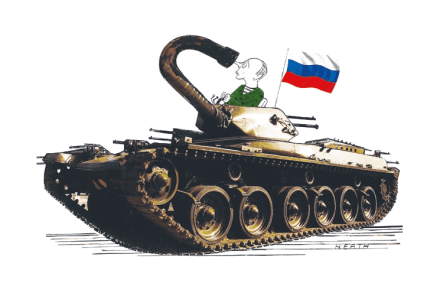
Will Putin now roll on to Kiev?

From our UK edition

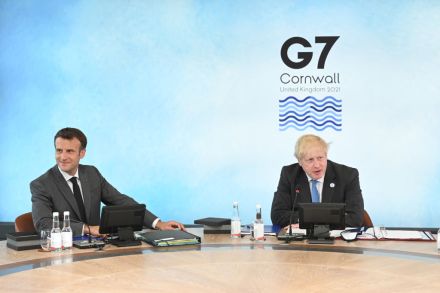
The White House told us with absolute certainty that there would be an invasion of Ukraine this week — instead Vladimir Putin bit off a chunk of Ukraine without firing a shot. Perhaps it seemed to him that recognising the two breakaway territories of Luhansk and Donetsk was a clever move: he had not, after all, ignored the warning that — in Boris Johnson’s phrase — one Russian soldier putting a toe-cap over the border would make sanctions inevitable. But sanctions will come anyway — the issue is only about how severe they will be — imposed because, as Johnson says, there has been a clear breach of international law.

The seismic importance of Putin’s latest move

From our UK edition

Vladimir Putin has tonight unilaterally recognised the two breakaway republics in Ukraine. In doing so, he has effectively ended the Minsk peace process. The move also begs the question of whether Putin is recognising the territory that these so-called republics actually hold, or the much larger territory that they claim. If the latter, then that raises the question of whether Russian troops will be used to take that land given that Putin immediately signed ‘friendship and mutual assistance’ treaties with them at the end of his speech this afternoon. The speech, though, went even further than recognising the break-away republics, carving off another chunk off Ukraine after the annexation of Crimea in 2014.

Kudos to Macron for going to Moscow

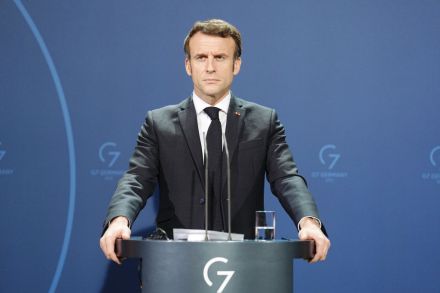
Landing in Moscow on February 7, French President Emmanuel Macron had a twinkle in his eye and a spring in his step. There he was, taking it upon himself to be the first European head-of-state to meet Russian President Vladimir Putin since over 130,000 Russian troops massed on Ukraine’s border from three sides. Macron's mission was to explore whether a de-escalation with Russia was possible. “I believe that our continent is today in an eminently critical situation, which requires us all to be extremely responsible,” he told reporters before his five-hour session with Putin began. The other option, what could be the largest land war in Europe since World War II, would be far worse.

Viktor Orbán or: How I Learned to Stop Worrying and Love Putin

From our UK edition

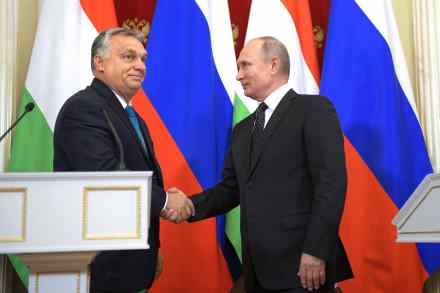
Viktor Orbán first came to prominence when in 1989 he declared on live TV that Hungary must put an end to the ‘Russian occupation’. On the first day of February this year, he held his thirteenth meeting with Vladimir Putin. What’s changed? Like much of his generation, Orbán initially believed that the fall of communism would mean a ‘return to Europe’ — with not only western democracy but also a western standard of living. Yet after a brief and unpleasant stint studying in Oxford, the student politician discovered that Britain’s future elites were ignorant and decadent.

Europe: the little kids’ table at the Ukraine talks

While American and Russian officials are yelling at one another in the UN Security Council chamber, another international actor has found itself at the little kids’ table: Europe. It's possible the phrase “little kids’ table” is too harsh. To be fair, French president Emmanuel Macron is at least in direct communication with Russian president Vladimir Putin and urging his European colleagues to formulate a joint European negotiating position on the Ukraine question. France is also a chief mediator of the Normandy Format, which seeks to resolve the eight-year conflict in Ukraine’s Donbas region. But Macron is largely an outlier on his own continent.

Will the old world order end in Ukraine?

As Russian troops encircling eastern Ukraine are preparing to attack, western leaders are bracing for a Russian invasion while struggling to maintain a united front. Following the fallout of peace negotiations and numerous deterrence measures that appear to be inconsequential, French President Emmanuel Macron has called on the EU to conduct its own dialogue with Russia and forge its own plan for security and stability. It’s an indication that most European nations are tired of being sidelined during negotiations and reluctant to impose harsh sanctions against Russia, especially since it could risk a gas shortage that would impact recovering European economies.

chinese meddling

Europeans are still free-riding off American security

Remember how Washington’s foreign policy establishment and their media echo chamber bashed the “isolationist” President Donald Trump for abusing, humiliating and making life miserable for our close European allies, in the process obliterating the “liberal international order”? Remember how some of the Europeans responded? Germany’s Angela Merkel declared “a new chapter” in US-European relations, saying that Europe “really must take our fate into our own hands.” France’s Emanuel Macron stated that Europeans need to stop “being naïve,” and assert their strategic independence from the US. What happened? Nothing. Here we are, three decades after the end of the Cold War, and it is déjà vu all over again between Washington and Moscow.

angela merkel

The crowd-free European city breaks to try this year

From our UK edition

Finally, it looks like we might actually be able to go on holiday in Europe again. I’ve been overseas a few times since this pesky covid business began, but it’s always been for work, not leisure, and it’s always been a nuisance: tests on the way out, tests on the way back and yet more tests when you get home… However now travel restrictions are loosening up, a trip to the Continent no longer feels quite so fraught, and that magnificent indulgence – a short-haul city-break – seems like a practical option once more. So where to go? Well, you’re bound to have your own favourite destinations - but if you fancy trying somewhere new, here are a few of mine. They’re all popular with locals, but they’re not overrun with sightseers.

America still won’t risk a war with Russia over Ukraine

Anybody who thought this week’s intense diplomacy between American, European, and Russian officials would magically resolve the ongoing crisis in Ukraine should lie down until the feeling passes. Crisis diplomacy isn’t a walk in the park; if anything, it’s a slow-moving car ride through rush-hour traffic, with plenty of speed bumps along the way. On Monday, January 10, Washington and Moscow met for a round of discussions in Vienna to sound each other out and present their list of seemingly endless grievances. After eight hours of talks, both delegations left the room with, coincidently, similar assessments as to how it all went.

Have we reached peak human rights?

From our UK edition

After the Colston debacle, you might be forgiven for having missed the other legal story that broke this week. The European Court of Human Rights has dismissed the complaint in the Ulster 'gay cake' case, so the decision in favour of the baker will stand. In case you need reminding, seven years ago a Belfast gay rights activist called Gareth Lee asked Ashers, a high-class bakery, to produce a cake inscribed with the phrase 'Support Gay Marriage' for an event he was organising. The bakery owners refused, citing Presbyterian religious scruples, whereupon Lee sued for discrimination. He lost.

The problem with ‘vaccine equity’

From our UK edition

'A stain on our soul'. That was how Gordon Brown, in his latest missive on the subject, described the failure of the west to ensure that the whole world is vaccinated. In a previous attack on western policy — at the end of November, just as Omicron was emerging — he wrote of “hoarding” and 'vaccine nationalism'. Take Africa: it is certainly true that vaccination rates in many countries are very low. While the UK has managed to deliver 195 doses per 100 people, Nigeria has only managed seven, Ethiopia and Somalia nine, and Chad and South Sudan two. Can all this be blamed on the failure of western nations to donate vaccines?

France has the most to lose from Britain’s turn away from Europe

From our UK edition

It was Napoleon who declared that ‘a state has the politics of its geography’. We do well to remember that in taking stock of European international relations as we speculate on a new year and beyond. By Europe is meant the European continent, ‘from the Atlantic to the Urals’, in de Gaulle’s words. Not the 27-member European Union, which Brussels linguistically and imperialistically conflates with the 44 sovereign states that the UN defines as Europe. Of those 44 states, four are still the European great powers, as they have been since at least 1870: Britain, Germany, France, and Russia. They are still the continent’s most populous, wealthiest (except Russia), and militarily prepared (except Germany).

Europe’s secret beaches: from Constanta to De Haan

From our UK edition

As winter drags on and on, and warm sunny days become distant memories, discussions in our family always turn to summer holidays. We only go away together once a year so our trip has to tick all the boxes. My daughter won’t fly long haul, my son craves excitement, I like exploring places that are off the beaten track and my wife just wants to drop and flop. It’s a tricky combination but, as we’ve found out down the years, there are plenty of European seaside towns in unexpected places – places where you can do all the usual seaside stuff and still have a few adventures while you’re there. Here are our family favourites, plus a couple of offbeat resorts I’ve ended up in on my travels for The Spectator.

Make History Great Again!

From our UK edition

Why don’t today’s children know more about history? In an age when information has never been easier to access, it’s alarming how many youngsters are ignorant about the past. In July, a survey of 1,000 schoolchildren found that four out of ten had no idea what the Battle of Britain was, while another four out of ten had never heard of Cleopatra. More than half didn’t know the Romans spoke Latin. Of course every generation complains that children are ignorant of facts that we used to take for granted. Often it’s simply a question of changing priorities: where children once learned about Walpole and Gladstone, they now learn about the suffragettes and American civil rights.

Poland steps up its legal fight against Europe

From our UK edition

Poland's legal wrangles with Europe show no sign of ending. Back in September, the Polish Constitutional Tribunal determined that some parts of EU law might be contrary to the country's constitution. Now the tribunal has lit another firework: doing the same in respect of the European Convention on Human Rights (the ECHR). Is this just another round in the war between the European elite and the ruling political party, the PiS (which is cordially detested in both Brussels and Strasbourg)? You'd be forgiven for thinking so. Yet this latest wrangle is much more significant, since it opens up an entirely new front.

The fifth wave could break Macron

From our UK edition

The fifth Covid wave has started in Europe. Some governments are already imposing lockdowns and wage cuts for the unvaccinated as hospitals are filling up. Mass protests against restrictions are popping up, some peaceful like in Austria, others turning violent like in the Netherlands and Belgium. A nationwide lockdown in Germany is unlikely, but local lockdowns may happen if hospitalisation rates continue to shoot up. Some patients in Bavaria have already been sent to Italian hospitals due to under-capacity, a reversal of what happened in the first wave. France is still counting on getting through the fifth wave with no restrictions. With only five months to go before the presidential elections, these decisions will decide the fate of Emmanuel Macron.

Europe gripped by a fifth wave

From our UK edition

How quickly things change. Just a month ago many EU countries were being praised for keeping some Covid restrictions in place, in many cases operating vaccine passport systems. By contrast, Britain was being attacked for removing most Covid restrictions in July. The UK suffering elevated infection rates ever since, leading to predictions that we could be back in lockdown by Christmas. Now, many EU governments are panicking as infection rates soar — and protesters have taken to the streets to oppose new lockdowns and, in the case of Austria, compulsory vaccinations from next February. What is the situation in the worst-affected countries?

How Turkey is fuelling the Belarus-Poland migrant crisis

From our UK edition

In the cold, damp forest lining the border between Poland and Belarus, thousands of refugees flown over from the Middle East have waiting to cross into the EU for days. Belarusian riot police are shoving them away from their gates and towards Poland, where only more forces await. The Belarusian dictator Alexander Lukashenko has recently been in conflict with the EU, which has imposed sanctions on his regime after last year’s contested elections which many believe to have been rigged. Lukashenko is pushing refugees towards Poland to be pawns in a fight, with the backing of Putin. The refugees find themselves between a rock and a hard place: in front of them, a Polish government who looks good appearing tough against migration and Lukashenko.

Poland’s Belarusian border conflict is becoming violent

From our UK edition

The EU’s conflict with Belarus is heating up. The simmering migrant crisis on the Polish border with Belarus exploded into a new level of intensity on Monday, as large groups of migrants marched through Belarus towards Poland before attempting to storm barbed wire fences and force their way into the Schengen zone. https://www.youtube.com/watch?v=Azz6sbIM5lA The Polish government responded to the violation of its border with military force. Twelve thousand troops are now being deployed along the border. When migrants managed to break a section of the fence near Kuznica on Monday, a rank of Polish soldiers filled the gap as a military helicopter flew low overhead in an attempt to deter the febrile group, which was chanting ‘Germany!

Why did neo-Nazis patrol the German border?

From our UK edition

Just after midnight last Sunday, around 50 vigilantes gathered in east Germany to ‘patrol’ the country’s border with Poland. They were there to stop illegal immigrants, armed as they did so with batons, a machete, a bayonet and pepper spray. They were discovered by local police forces, but a certain nervousness from the authorities was palpable as they pleaded with residents in the eastern border regions to not take the law into their own hands. While the array of confiscated weapons suggests a well thought out plan, these ‘patrols’ are by no means coherent. The largest single group was reportedly stopped by the police in the border village of Groß Gastrose and contained just 30 people.