Europe

Don’t blame the West for its Ukraine hesitance

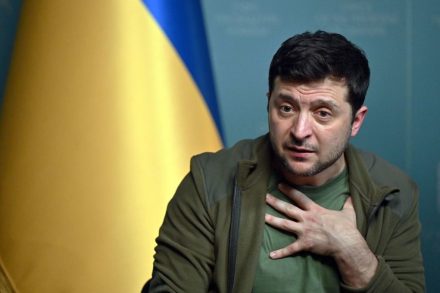
As Ukrainian President Volodymyr Zelensky addressed the UN Security Council today with all the anguish you would expect from a wartime commander-in-chief, he could nonetheless be relatively pleased about several things. Sure, Zelensky and his advisers are constantly making the point that Ukraine needs bigger and better weapons to resist Russia’s invasion, but the West has been quite responsive to Kyiv’s requests. The Biden administration’s latest weapons shipment, announced last week, adds to the $1.6 billion in military aid the US has sent to the Ukrainian military since the war broke out on February 24.

Why Hungary’s opposition failed

From our UK edition

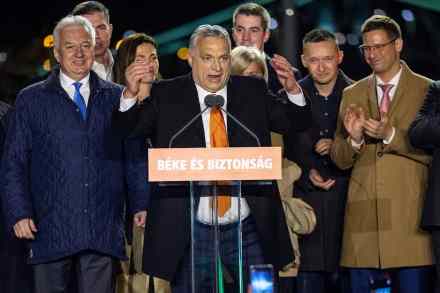
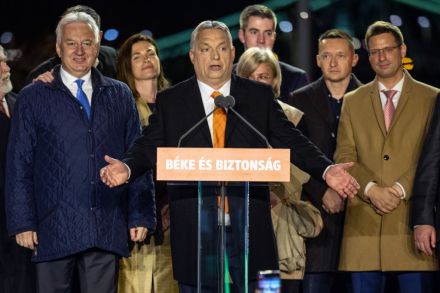
Viktor Orbán has now spent a total of 16 years as Hungary’s Prime Minister but he has not lost his hunger for power. Energetically campaigning across the country, exploiting every advantage of incumbency, and excoriating the incompetent opposition, on Sunday he notched up his fourth landslide victory in a row. Crucially, he maintains the two-thirds majority in parliament that he has held since 2010, allowing him him to amend the constitution whenever he chooses. Predictably, the opposition challenged the legitimacy of the election process even before the votes had been counted. They note that the lion’s share of the media supports Orbán. But this is an excuse, not an explanation.

Hungary’s Orbán remains a thorn in everyone’s side

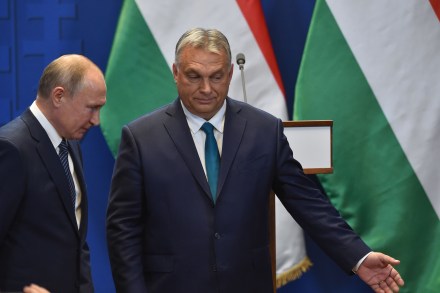
Viktor Orbán has just won another election. The Hungarian prime minister has secured a hefty majority in his country’s legislative elections, and in his victory speech, Orbán revealed once again that he is a thorn: in the side of Europe most obviously but, if need be, in the side of all. I’ll leave for others the discussion of Hungarian democracy — whether Orbán has so manipulated national life that his continued electoral successes are unimpressive, even fraudulent. But Orbán, in his own mind, thought an “overwhelming force” ranged against him. “We never had so many opponents,” Orbán said.

Germany’s progressives have a Putin problem

From our UK edition

Eighty-nine years ago this week, the German Social Democrats in the Reichstag cast the only votes opposing Adolf Hitler’s dictatorial power grab, the Enabling Act. Today’s SPD members often cite that moment as the proudest in their party’s 146-year history. With a memory like that, there is something awkward about the current SPD Chancellor’s position. Olaf Scholz is now having to come to terms with decades of SPD appeasement towards the dictator in Moscow. Before Putin’s invasion, Russian doves could be found across the German political spectrum, but Scholz's now-ruling SPD has an especially long and developed history of Kremlin cosiness.

The last American tourist

I was driving along a curvy English road outside a village in Gloucestershire a few weeks ago when a sign loomed on our left. It said: CATS EYES REMOVED My first thought was: What a horrible way to make a living in this day and age, even out here in the countryside. So much for All Things Bright and Beautiful... Maybe those people who said that Brexit would turn the English into depraved monsters were right. I was jumping to conclusions. It hadn’t been put up by an entrepreneur or veterinarian but by the highway authority. Cat’s eyes are what the English call those super-reflective bumps embedded in the stripes on minor highways to keep drivers from drifting across lanes. The sign was a warning that this curvy road had recently become much more dangerous.

tourist

David Frost’s solution to cool UK-EU relations

From our UK edition

Since David Frost quit the government in December over its political direction, he has not said that much about the future of UK-EU affairs. But in the Churchill lecture at the University of Zurich tonight, he sets out a potential new basis for relations. His tone is warm and marks a deliberate attempt to move on from the scratchy relations of the last few years: he argues that there is a ‘need to recognise that the EU is a natural ally of the United Kingdom, and that we should seek – as sovereign equals – ways to cooperate and work together more.

Chernobyl Two?

From our UK edition

The electricity supply to the ruined nuclear plant at Chernobyl in Ukraine has been cut off. According to one knowledgeable source I spoke to, this is a serious problem as power is needed to pump water around spent nuclear fuel rods stored there. There is a back-up diesel generator, but it has just one day’s supply of fuel left and once that runs out, the temperature could start to climb. If the water evaporates, the zirconium metal ‘fuel assemblies’ could start to melt – with radioactive material released into the atmosphere. This would not be anywhere near as bad as the original Chernobyl disaster, in 1986, when a reactor had a power surge and exploded – but still bad enough.

Sanctions on Russia will shake the world economy for years

The war in Ukraine will dominate the news for the foreseeable future. But while the bombings will eventually cease, the economic consequences for the world have just begun. That’s because in an era of increasing interconnectedness, economic impacts don’t stop at borders. Most attention has been focused on the immediate impacts of sanctions on Russia, and they are significant. In the past, sanctions have proven largely ineffective at punishing foreign enemies. President Barack Obama, for example, failed to use them effectively in 2014 during the last Ukrainian-Russian dispute. But this time, the actions taken against Russia were largely unprecedented, with even traditionally neutral countries like Switzerland and Sweden calling for restrictions that are “as big as they can be.

economy

Putin the reckless gambler

Vladimir Putin’s two-week-long war in Ukraine is not going as planned. What the Russian strongman thought would be a romp of the Ukrainian army in a matter of days has turned into a slow-motion train-wreck, with thousands of Russian soldiers killed in battle, images of burned-out tank husks littering the roads and Russia’s economy circling the drain. CIA director William Burns told the House Intelligence Committee today that Putin is increasingly frustrated about the level of progress achieved thus far in the campaign. "He was confident that he had modernized his military and they were capable of quick, decisive victory at minimum cost,” Burns said during his testimony. “He’s been proven wrong on every count.

vladimir putin alexei navalny

Is Europe a continent? Does it matter? 

Nikole Hannah-Jones, who is never at a loss for a tweet, ridiculed Americans who are expressing alarm over the threat to Europe implicit in Putin’s invasion of Ukraine. She put down those spoilsports for their referring to Europe as a “continent.”  Quoth Hannah-Jones, under her nom-de-plume Ida Bae Wells: What if I told you Europe is not a continent by definition, but a geopolitical fiction to separate it from Asia and so the alarm about a European, or civilized, or First World nation being invaded is a dog whistle to tell us we should care because they are like us. The triumphant silliness of the author of the 1619 Project always comes down to her desire to find racism at the root of whatever happens.

europe nikole hannah-jones

‘Staying Switzerland’ on Ukraine is impossible

From our UK edition

The striking thing about the financial sanctions on Russia is not their severity, but just how many countries are joining in the effort. Switzerland has today announced that it will adopt the EU sanctions on Russia, particularly significant because it has been the biggest recipient of private transfers by Russians in recent years. The fact that such a traditionally neutral country is imposing sanctions will deepen the wedge between Putin and the rest of the ruling elite. Meanwhile in Asia, Japan, South Korea and Singapore have signed on to the economic measures on Russia.

Viktor Orbán has played a perfect game with Putin

From our UK edition

On 3 April Hungarians will have their ninth set of free parliamentary elections since the collapse of the communist dictatorship in 1989. The winner is likely to be Viktor Orbán and his Fidesz-KDNP coalition, which is leading in five of the six major polls. Russia’s invasion of Ukraine will not change that dynamic even though the opposition leader, Péter Márki-Zay has called Orbán a ‘traitor’ for his long-standing friendship with Vladimir Putin. Ever since Viktor Orbán began his second stint as Hungary’s prime minister in 2010, he has repeatedly played the provocateur within the EU, tweaking the eurocrats’ noses with his cultural conservatism and hostility to mass immigration.

A new Europe is emerging from this crisis

From our UK edition

With every hour that Kiev holds out, the geopolitics of Europe changes more. Germany, which so values its prohibition on sending weapons into warzones, has just announced that it is sending 1,000 anti-tank weapons and 500 Stinger missiles to support the Ukrainian forces. I expect that defence spending will rise considerably in the coming years Germany is also allowing other Nato members to export arms with German-made parts to Ukraine — which will make a material difference to the supplies that the Ukrainian government receives. Yesterday evening, it was announced that Russian banks are going to be cut off from Swift.

It’s time for Germany to stand up to Russia

From our UK edition

In his novel The Loyal Subject, which appeared on the eve of the first world war, Heinrich Mann, the brother of Thomas, satirised Wilhelmine Germany as a hotbed of chauvinistic nationalism. The servile nationalism that Mann mocked could not be further from the ethos of the Federal Republic of Germany today. So pervasive is Germany’s eirenic disposition that on Thursday, as Russian president Vladimir Putin ravaged Ukraine, Lieutenant General Alfons Mais, the head of the German army, took the unusual step of turning to LinkedIn to ventilate his exasperation at the impotence of his own fighting forces. ‘In my 41st year of peace-time service, I would not have thought that I would have to experience a war,’ Mais stated on Thursday.

Putin’s invasion has exposed the frailty of Europe’s armies

From our UK edition

Putin’s forces are currently steamrolling Ukraine’s defences, with Russian troops circling the capital and invading from the south and east of the country. Meanwhile European leaders, neutered by their military weakness, have been unable to do little more than offer pointless sanctions and statements of solidarity. As Russian troops streamed across the border, European Commission President Ursula von der Leyen condemned the ‘unprecedented military aggression.’ When the Kremlin moved to recognise the Donetsk and Luhansk oblasts as independent states, the response in Brussels was to pass a fresh package of sanctions.

Europe’s ‘green’ transition put it at Russia’s mercy

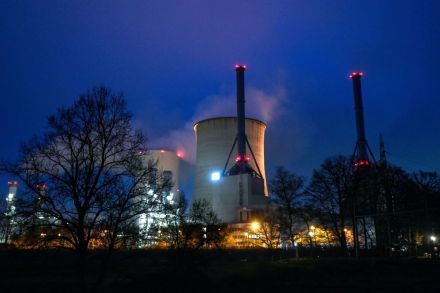
Germany’s “halt” on the certification of the Nord Stream 2 pipeline on Tuesday is a classic case of too little, too late — a fact made all the more painfully clear in light of Russia’s invasion of Ukraine. Oil and gas still flow through Nord Stream 1 and many other Russian pipelines to Europe, and the continent has no choice but to keep importing the fossil fuels that finance Vladimir Putin’s offensive. We all saw this coming. Europe’s supposed “green” energy transition disregarded energy security and common sense, and Ukraine is now paying the price. The world will never tackle climate change if it's in a constant state of geopolitical energy insecurity, relying on authoritarian regimes like Russia and China to meet its basic needs.

The stakes for Europe are even higher than in 1938

Any analysis of the Ukraine situation risks lagging behind the news. As of the time this article was published, Russia had conquered the former Chernobyl nuclear power plant. Its forces are only about sixty miles away from Ukraine’s capital, Kyiv, which has already experienced shelling. Russians have also attempted to capture Antonov International Airport, just fifteen minutes away from the capital’s ring road. Meanwhile, European leaders are resorting to the usual responses: “concerned,” “strongly condemning." There is even a Twitter account mocking the EU’s approach to all major crises, called “Is EU Concerned?” The response to the invasion of Ukraine is not spared from similar mockery. Here in Europe, it feels like 1938 all over again.

Europe is painfully reliant on Putin

From our UK edition

Vladimir Putin declared war on Ukraine in the early hours of this morning, starting with a massive air attack from the north, south and east, targeting military and civilian infrastructure. This is the worst-case scenario. Putin's speech on Monday set the ideological groundwork. This morning he spoke again, calling Ukraine ‘our historic lands’. He said he was launching what he called a ‘special military operation’ with the goal, not of occupying the country, but of ‘demilitarising and de-Nazifying’ Ukraine. And Putin spoke too to us here in the West: To anyone who would consider interfering from the outside: if you do, you will face consequences greater than any of you have faced in history. All relevant decisions have been taken. I hope you hear me.

Are the lights about to go out across Europe?

From our UK edition

Impact-Site-Verification: de2f122d-4b66-49e8-911d-d4d5628b0063 Today’s snap decision by German Chancellor Olaf Scholz to halt Nord Stream 2 — the new pipeline intended to export vast amounts of Russian gas into the EU — will make precisely no difference to European energy security, at least in the short to medium term. It could force a rethink of Berlin’s longer-term energy strategy, but the bigger question facing energy markets is whether Russia will curtail existing gas flows into Europe. Scholz on Tuesday instructed Germany’s Federal Ministry for Economic Affairs and Climate Action not to allow the Baltic Sea pipeline to start pumping gas 'for now'.

It’s too late to break Europe’s gas reliance on Russia

From our UK edition

So, Nord Stream 2 will not be plugged into Germany’s gas grid. A little surprisingly, Chancellor Olaf Scholz has been first out of the blocks this morning in the western economic response to Putin’s recognition of breakaway states in eastern Ukraine. The block is not total: what Scholz says is that the certification process for the pipeline will be halted — leaving open the possibility that it might, after all, be connected if Putin starts to behave himself, or Germany becomes especially desperate for gas. Nevertheless, it is a significant move which will have an economic impact on Russia. But it is astonishing that the project was ever allowed to come this far in the first place.