Europe

Trump’s brave new world

No one ever tucked themselves up in bed to read a government document – at least not in the expectation of enjoying it. The standard format is one of hundreds of pages of impenetrable jargon yielding no more than nuggets of significant ideas. The Trump administration has admirably cut through that tendency to produce a National Security Strategy (NSS) that is worth reading: a coherent outlining of America’s strategic intentions on the world stage. Originally composed by Michael Anton, a brilliant mind who is sadly leaving the State Department, the document concisely lays out a Trumpian vision of America’s role in the 21st century.

Yes, Europe’s civilization is being erased

Last week the Trump administration expressed its fear that Europe faces "civilizational erasure." Its concern was articulated in a 33-page National Security Strategy that outlined Donald Trump’s world view and how America will respond economically and militarily. The sentence that caused the most reaction on the other side of the pond was the assertion that, if current trends continue, Europe will be "unrecognizable in 20 years or less." Those trends are mass immigration and what conservative French commentators call the "Islamification" of Europe. If Europe doesn’t address these trends, the Trump administration predicts the continent’s "civilizational erasure.

Meet the e-girls selling European decline to America

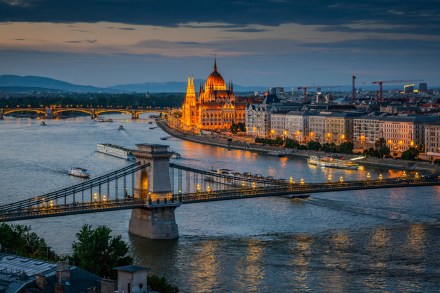
Earlier this year, a striking 28-year-old woman, dressed head to toe in a vivid shade of crimson, stepped up to the podium at a conference in Hungary. “Ladies and gentlemen: hello Budapest. I’m so thrilled to be here again,” she began, adjusting the twin microphones and gently swiping a strand of long blonde hair from her forehead. “As some of you might remember, last year I gave here a speech as well, about the ‘great replacement,’” she continued, confidently glancing around the assembled audience. “I wanted the whole world to know that the ‘great replacement theory’ was, in fact, not a theory, but reality. White people are becoming a minority in their own homelands at an exceptionally fast rate.

e-
copper

The world needs more copper, but there’s a catch

Copper has a nickname in the commodities market. It’s known as “Doctor Copper” because it’s so deeply integrated into the physical fabric of our lives and all the technology we depend on that its price reflects the health of the economy. “Gold is money, everything else is credit,” said J.P. Morgan more than a century ago. But copper is more than money. It’s modern human life. It is used in every corner of our technology, from houses to windfarms to warehouses. Which is why I think, while everyone’s still obsessing about gold, it’s worth taking a look at copper. Since the global financial crisis in 2008, stock markets may have reached new highs but the physical world of construction, infrastructure and manufacturing has never quite regained its old growth rate.

Why Europe can’t go it alone on Ukraine

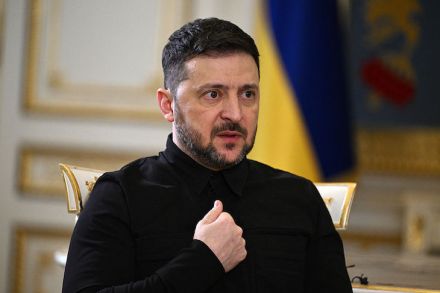
Who will pay for Ukraine’s war effort now the Trump administration has turned off the financial taps? European leaders have expressed themselves ready and willing to take up the burden, with European Commission President Ursula von der Leyen affirming that “if we continue to believe that Ukraine is our first line of defense, we need to step up our assistance.” Individual countries have come up with generous funding packages – most open-handed of all being Germany, which has recently pledged more than €3 billion in direct funding. But that’s just a drop in the ocean compared to what Ukraine says it needs.

zelensky ukraine
azov enemy ukrainian

How the Ukrainian far right is preventing peace

Since the start of the Russian invasion of Ukraine in February 2022, discussion of the Ukrainian far right has been verboten in western media, largely because one of Vladimir Putin’s stated war aims is the “denazification” of Ukraine. Putin’s claim that Ukraine is a Nazi state has been recycled by Russian propagandists and the western party line has consistently been that while the Ukrainian military does have far-right strains, they are marginal and inconsequential. This may have been true in 2022, but things have changed significantly after almost four years of war. Today, far-right figures control some of Ukraine’s strongest military units, and neo-Nazi ideology is displayed openly in the Ukrainian ranks.

g&t

How America fell in love with the G&T

The gin and tonic has had quite the journey. From humble beginnings protecting British explorers against malaria, it has become the country’s favorite cocktail. Abroad, Italians grown tired of spritzes now opt for it come aperitivo hour. The Japanese bow before it. The world stumbles after it. Yet there is one land the G&T has been slow to conquer: America, the land of vodka sodas and zero-calorie seltzers. In recent years that has begun to change. While overall consumption of spirits is down, sales of gin in the US are on the rise and expected to grow some 6.5 percent a year for the rest of this decade. Craft distilleries are in the vanguard: in California, gin is infused with citrus and coastal herbs. In the South, it might be perfumed with watermelon rind or magnolia blossoms.

The sinister rise of Churchill revisionism

Winston Churchill is one of Britain’s enduring symbols. His relentless drive, deep conviction and steadfast leadership means that he remains admired by millions around the globe. Yet for years, the political mainstream has been compelled to defend his memory from spurious attacks from the left, such as the British politician John McDonnell calling him a “villain.” Depressingly that threat – and the same pernicious desire to denigrate one of the West’s greatest heroes – can now be found on the right. Spawned from a sinister fringe of the ultra-MAGA movement, these views have been propagated to millions. Tucker Carlson hosted the pseudo-historian Darryl Cooper on his podcast in an episode that has attracted over 33 million downloads.

winston churchill

Macron has declared war on free speech

Emmanuel Macron says Europeans should stop relying on social media for their news and turn back to traditional public media. Speaking in Paris on Wednesday, he said people were “completely wrong” to use social networks for information and should instead depend on journalists and established outlets. Social platforms, he argued, are driven by a ‘process of maximum excitement” designed to “maximize advertising revenue,” a system he said is “destroying the foundations of democratic debate.” He accused X of being “dominated by far-right content” and added that the platform was no longer neutral because its owner had “decided to take part in the democratic struggle and in the international reactionary movement.” TikTok, he warned, was no less dangerous.

Why the French are dreaming of a Donald Trump à la française

A year ago Donald J Trump was still roundly disliked by the French commentariat. Even the conservative Le Figaro newspaper held its Gallic nose in disdain, running a haughty article headlined "Trump, vulgarity runs rampant." The left still loathe the president of the United States but for the right in France he has become a role model. The same Le Figaro now writes approvingly of Trump and admits it got him wrong. "We expected an isolationist Trump, focused solely on American interests," it declared on Friday. "But in nine months, the president has established himself as a peacemaker in multiple international crises." The French perhaps more than any European nation have never got The Donald.

Trump France

Trump admonishes the United Nations

Was there a plot against President Trump at the United Nations? Upon his arrival, the escalator apparently stopped working. Next his teleprompter failed. Small wonder that Trump was in less than a concessive mood as he delivered his speech denouncing the UN itself as a colossal failure. The result was the kind of talk he would give to a political rally – except it was to an unreceptive, if not hostile, audience. Throughout, Trump made it clear that his estimation of his abilities is very different from his view of the UN. “I’m really good at this stuff,” he declared. “I’ve been right about everything.” As for everyone else: “Your countries are going to hell.

Donald Trump

Poland’s Nawrocki heralds a more mature populism

Yesterday, September 3, President Trump welcomed Karol Nawrocki, the newly inaugurated president of Poland to the White House. It was a stirring occasion, replete with a surprise military fly-over of F-16 and F-35 fighter jets flying in “missing man” formation to honor  Major Maciej “Slab” Krakowian, the Polish pilot who died in a crash in Radom, Poland, last Thursday.  Nawrocki, who narrowly won the presidency in June, is often described as “the Polish Trump.” It’s an accurate epithet. Nawrocki is as much a “Poland First” president as Trump is an “America First” president. The 42-year-old historian (Nawrocki holds a PhD in history) supports a list of policy initiatives that could have come right out of the MAGA playbook.

Nawrocki Trump

RFK Jr. faces down M&M’s

Robert F. Kennedy Jr. may have finally met his match: the green M&M. Mars, which manufactures various popular candies including M&M’s recently announced it will be changing direction from its 2016 goal of removing "all artificial colors from its human food portfolio globally"... because Americans like their candy Red 40 red, rather than beet-red. The Health and Human Services Secretary has a plan to remove American children's spoons from their "toxic soups of synthetic chemicals." It's contingent on an "understanding" he has with major food companies that Americans don't want to be poisoned. Yet it seems his and the candy industry's mutual "understanding" is breaking down.

M&Ms rfk
roundabout turning circle

Europe’s favorite novelty is causing pile-ups in the US

Talk to a Brit about their preference in social structures, and the first thing they'll likely tell you, as an American, is that you’re wrong. Whether it’s healthcare or guns, public transport or urban walkability, the American way of being is often at odds with our English cousins, and indeed the rest of the Europe. While we mostly resist conforming, the quietly irksome traffic circle – or, yeesh, “roundabout” – is quickly taking root in America’s vast suburban sprawl. And you could soon find yourself in a pile-up before you even know it. Europe’s favorite novelty is still relatively rare in America, but they are springing up fast. The UK has over 25,000 roundabouts, while the entire US has only about 11,000. Yet that figure has doubled over the last ten years.

The real battle for Europe

Donald Trump hates Europe – that suspicion had grown so widespread by mid-April that J.D. Vance was moved to declare in an interview: “I love Europe.” Even its people, he claims. Of course, Americans have taken sides in European rivalries from the outset: Thomas Jefferson was a France man after the French Revolution, while John Adams preferred England. FDR preferred Pétain, while Eisenhower preferred de Gaulle. But hate Europe outright? The idea is absurd. Though our ancestors are not 100 percent European, our country is. You can imagine President Trump calling for a Wienerschnitzel and a tub of mayonnaise more easily than you can imagine him calling for a bowl of hủ tiều nam vang and a bottle of nưởc mắm.

Europe

Why are Europeans so untroubled by their ignorance of America?

Laramie, Wyoming Americans are infamous on the eastern side of the Atlantic for knowing little or nothing about European culture, history and politics – and for being proud of the fact, as Richard Hofstadter, the late Columbia historian, described in them in Anti-intellectualism in American Life, the winner of the Pulitzer Prize for non-fiction in 1964. Much less widely recognized is how little Europeans know about America, Americans and their own civilization – an ignorance that troubles them not at all, perhaps because they seem to be unaware of the fact.

prodi italian europeans

Europe is its own worst enemy

Vice President J.D. Vance’s speech condemning Europe’s abandonment of basic western values was a seminal moment in US-European relations. It provoked immediate praise from American conservatives and disparagement from European leaders, including German Chancellor Olaf Scholz. Critics and admirers both recognized the significance of Vance’s message. The February 14 speech, which Mr. Vance gave on his first trip abroad as vice president, yielded millions of views on X and spawned dozens of op-eds in response. At the Munich Security Conference – typically a venue to discuss defense spending and the like – Mr Vance told the entire European leadership class that they themselves are the biggest threat to European security.

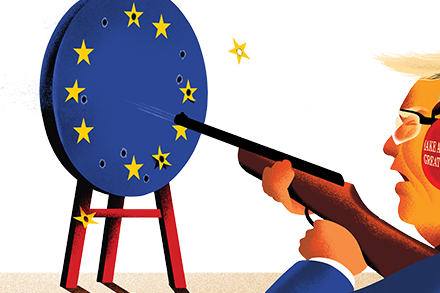
Trump’s war on Europe should not surprise anyone

Has there been a more cataclysmic year for US-Europe relations than 2025? It began with J.D. Vance’s “sermon” to EU leaders at the Munich Security Conference last month, in which he berated Western Europe for its policies on immigration and free speech. This year has also seen the growing threat of NATO falling apart after 76 years of peace in Western Europe, with the White House seemingly tilting toward Russia and Trump demanding that alliance members such as Germany, France, and the U.K. dramatically increase their defense spending. This week, as the Trump administration imposes tariffs on Europe and Europe retaliates, there are even signs of a full-scale trade war.

Europe

Landlord Trump, the tenants’ best bet

Donald Trump is the world’s largest landlord — not in his own capacity, perhaps, but in his role as leader of the most powerful nation on earth. He’s the CEO of America, and his development corporation owns the Western hemisphere. It also owns property in Europe, where the tenants are troublesome and are always behind on their rent. There are just a few other landlords on the planet, notably Vladimir Putin, who isn’t a rival, and Xi Jinping, who is. This might sound like a perspective on world politics for someone who rose to prominence in the cutthroat environs of New York real estate. Yet the truth is that government is always about who’s the landlord and who’s the tenant.

landlord

Why Europe needs to take the Putin threat more seriously

Russia’s war on Ukraine presages a dire future for all of Europe unless Vladimir Putin’s military is decisively defeated. That is the powerful and persuasive argument advanced in Keir Giles’s new book. To appreciate fully the importance of his contentions, you must acknowledge not only Giles’s own status as a supremely well-connected senior fellow at the famed Chatham House think tank in London but even more so the all-star cast of international military luminaries who have publicly endorsed his analysis: the now-retired US generals John Allen and Ben Hodges, UK general David Richards, Australian general Mick Ryan, plus former Estonian president Toomas Hendrik Ilves. Giles’s assertions thus should be taken with the utmost seriousness.

Giles