Europe

European nations are reasserting themselves

From our UK edition

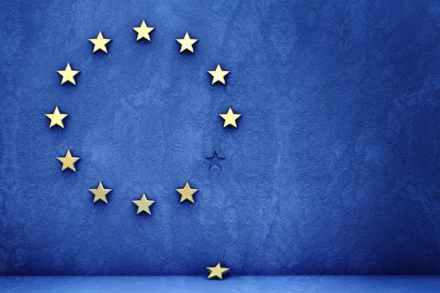
All but the most hardened Remainer will admit that the EU’s vaccine rollout has been poor. Up against the UK’s handling of the same feat — and in the face of the European Union’s aggressive response to Britain’s success — many are declaring Brexit a triumph. But the EU’s vaccine debacle demonstrates something more profound and worthy of deeper examination — the continuing importance of the nation state. As Europe’s vaccine rollout has demonstrated, nation state can often do things faster and better in a crisis than a multi-national entity like the EU Commission. Some will say this proves the nation state should be the highest form of governance, and that multi-national entities are doomed to fail.

Now FBPE try to cancel Lionel Barber

From our UK edition

It has not been a great nine weeks for the European Union. Readers both inside and outside the supranational bloc will have been horrified at the dithering, disinformation and mixed messages of the commission and its national leaders, now considering an export ban to stop vaccine orders to the UK being honoured. The French position on the Oxford jab for instance has gone from banning it, to allowing it for just those under the age of 65, to allowing it for all, to banning it and now allowing it only for those over 55. Polling now shows 61 per cent of people in that country think the AstraZeneca vaccine is unsafe.  It all seems to have been rather too much for some of Britain's most prominent remainers.

The census is the latest Brexit battleground

From our UK edition

The end of the Brexit wars have left some Remainers feeling redundant. A few are now turning their attention to a new target: the census. The small group of voters who are reluctant to accept the result of the referendum are responding to the question asking 'How would you describe your national identity?', not with 'British', or 'English' but, with the answer, 'European'. As a Remainer, this strikes me as somewhat embarrassing. For a start, of course, 'European' is not a nationality. But that small point aside, how is this going to convince Brexit voters that their votes were a mistake?

The EU-AstraZeneca row: a complete timeline

From our UK edition

Oh dear. This morning Sweden has become the latest European country to suspend use of the AstraZeneca-Oxford University vaccine. It follows reports that some people have suffered blood clots after being given the jab despite AstraZeneca's data showing there have only been 37 such reports among the 17 million people across Europe who have been given the vaccine. Yet while some European health ministries across the continent are raising concerns about its effectiveness, others are lambasting AstraZeneca for failing to deliver enough jabs. French Europe minister Clement Beaune appeared on Radio Classique this morning and raised the prospect of the EU actually suing the company over breach of contract.

The mask scandal threatening to destroy Merkel’s legacy

From our UK edition

In Germany, masks have been one of the least controversial elements of this pandemic. Most people have accepted that they have to be worn in the supermarket or on public transportation. But now these items of PPE are at the centre of a full-throttle political scandal that risks badly damaging Angela Merkel’s Christian Democrats in this important election year. The Christian Democrats Georg Nüßlein and Nikolas Löbel are accused of profiting from government deals to purchase face masks. Löbel is alleged to have received £200,000 in payments as part of a state purchase of masks, while Nüßlein is accused of making £500,000 through a consultancy firm.

Barnier and France fear Brexit Britain’s next moves

From our UK edition

Michel Barnier – still officially the EU’s Brexit taskforce leader – gives few interviews. As a Savoyard and keen mountaineer, as he habitually reminds us, he is a cautious man who advances step by step with the long climb firmly in his sights. So it was something of a surprise to see him appear on 16 February before the French Senate Brexit follow-on committee (renamed ‘groupe de suivi de la nouvelle relation euro-britannique’). It is a sign of the importance of how Brexit will play out for the French that the Senate has formed a very senior 20-strong commission to monitor and react to Brexit implementation and next stage negotiations. Of course Barnier and France have an interest in Brexit being implemented as they see fit.

Welcome to Trump’s second term

From our UK edition

President Biden’s emphatic assertion that 'America is back' at the Munich Security Conference last month was met with a lukewarm reaction from European leaders. 'Europe has moved', William Galston explained in a Wall Street Journal column pointing to a recent survey by the European Council on Foreign Relations that revealed a persistent distrust of the United States among Europeans and a resistance to taking the US side in America’s competition with China. Yet there is another side to the story. America is not really back. True, president Biden was quick to rejoin the Paris Climate Accord and to extend warm and fuzzy feelings toward our traditional allies.

The EU needs to stop punishing Britain for Brexit

From our UK edition

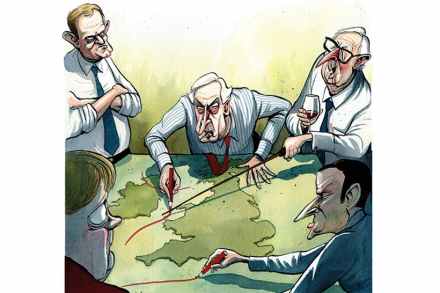
There have always been those on the European side who believe that for the EU project to succeed, Brexit must fail and must be seen to fail. So it is a problem that the first major act of Brexit Britain — going its own way to obtain and approve vaccines — appears to have been a success. For this reason, EU leaders must cast doubt on the achievement. As I say in the magazine this week, look at how Clément Beaune, Macron’s Europe Minister, went out of his way to tweet out his criticisms of the UK approach. (To be fair, there is a Brexiteer version of this hostile sentiment. You can find those on the Tory backbenches who think that Britain’s success requires the EU’s failure.

Why Eastern Europe is looking to Russia and China for vaccines

From our UK edition

With Central and Eastern European countries still gripped by Covid-19, the EU’s slow vaccine rollout has offered little solace in the region. The light at the end of the tunnel seems far away, leading many to wonder whether the answer to vaccine shortages lies not in Brussels, but to the East. Interest in Russian and Chinese vaccines is certainly fast becoming a diplomatic issue for the region. Czech Prime Minister Andrej Babiš recently caused a stir with two international visits. The first was to his Visegrád Four ally Hungary, the second to non-EU Serbia, far and away mainland Europe’s vaccine leader: Babiš suggested both trips were made with the intention of working out what these countries’ vaccine programmes got right.

Central Europe’s vaccine scepticism problem

From our UK edition

Countries around the world are in a race against time to vaccinate their populations against Covid-19. But there is one particular region which appears to have a growing problem with vaccine scepticism: Central and Eastern Europe. As a British expat living in the Czech Republic, I have noticed the lack of eagerness with which many Czechs discuss the vaccine rollout. This may in part be due to the country’s floundering and much-criticised vaccination programme. But it is noticeable that anti-vaccine sentiment is more common – and gets much more attention – here than in the UK. Ex-President Václav Klaus recently told a large anti-lockdown rally in Prague that vaccines are not the solution to the virus.

Vaccine wars: the global battle for a precious resource

From our UK edition

Armed guards are patrolling the perimeter fence of a sleek factory. Software experts are fending off hackers. Border officials are checking trucks and ferries, not for weapons or illegal immigrants, but for a mysterious biochemical soup, while spies and spin doctors are feeding social media with scare stories flaming one national champion or another. Welcome to the first great geopolitical battle of the 21st century. It may sound like something ripped from the pages of a dystopian sci-fi novel, but in truth we’re seeing the opening salvos in the vaccine wars. Rather than co-operating with one another to roll out a global vaccination campaign to rid the world of Covid-19, the major powers of the world are instead descending into a fierce, increasingly nationalistic competition.

When migrants come, their culture does too

The challenge of integrating immigrants from the non-western world is not new to Europe. But a large influx of new migrants over the last decade, and a significant increase in harassment and sexual assault against women across multiple European countries, make it one that Europe can no longer avoid addressing. This story has its origins in the decades of economic recovery after World War Two, when many European countries faced a growing worker shortage for industry work. ‘Guest worker’ programs were created, notably in Germany, on the assumption that such workers would return home. But many workers preferred to stay in Europe and pursued family reunification. Jobs and welfare entitlements made Germany preferable to Turkey, France preferable to Algeria.

migrants

Is Joe Biden’s administration fit for the 2020s?

From our UK edition

Joe Biden’s Cabinet nominees have been warmly received by the massed ranks of anti-Trumpists in Washington. But the warmth stateside is nothing compared with the rave notices the incoming administration is receiving in much of Europe. There is particular delight in the UK, where the special Boris-Donald relationship evaporated within seconds of Biden’s election victory. The enthusiasm derives partly from a sense that, as some have put it, the adults are back in the room. The image of Trump as ‘toddler-in-chief’ was projected on to his whole volatile administration. Now the line-up announced by the incoming President looks and sounds serious, sober and a lot more like US administrations are supposed to be.

The EU has botched its vaccination programme

From our UK edition

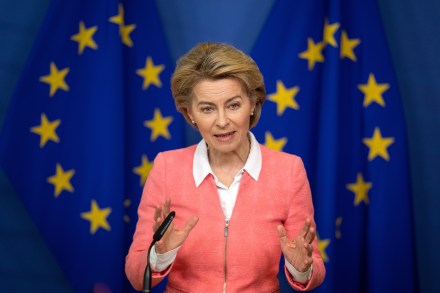
It was the most excruciating moment of Ursula von der Leyen’s short tenure as President of the European Commission. On Friday morning she hastily put together a press conference to counter the growing media storm across Europe over the EU’s handling of vaccine procurement. She doubled down on ‘solidarity’, announcing that the Commission had managed to secure more doses of the BioNTech/Pfizer vaccine, but also that the EU would stick absolutely to buying together. ‘We have all agreed, legally binding, that there will be no parallel negotiations, no parallel contracts,’ she insisted testily. ‘We’re all working together.’ At the same moment, however, her former colleagues in Berlin, where she was never popular, were busily undermining her.

The EU must ditch its deal with China after the arrests in Hong Kong

From our UK edition

Earlier this morning, 53 democrats from Hong Kong were arrested. Their crime? Trying to win last September’s elections. As absurd as it sounds, the new reality in Hong Kong is that it is now effectively a criminal offence, under the National Security Law, for the opposition to have the audacity to try and boost its representation in parliament. 'The operation today targets the active elements who are suspected to be involved in the crime of overthrowing, or interfering (with)...the Hong Kong government’s legal execution of duties,' said John Lee, Hong Kong’s security minister. But, as he later suggested, in reality this meant that those who were arrested were simply trying to win a majority of seats in Hong Kong's legislature.

Why Britain chose Brexit

From our UK edition

None of us will easily forget the emotional response to the Leave vote in 2016, the national and international lamentation and the angry reproaches and insults, heaped on the majority: they were ignorant losers, white, old, xenophobic and stupid, ‘gammon’ who would be better dead or disfranchised. But leave aside the arrogance and snobbery; more fundamental was the basic ignorance of Europe shown by these zealous Europhiles. They mistook Brexit for a British, or English, aberration. In fact, it was the manifestation of a pan-European disillusionment with the ‘European project’. Popular support for that project peaked 40 years ago, and has been in decline ever since. The French only just voted for the Maastricht Treaty even in 1992, the heyday of integration.

The next American empire

Americans have never been sure of their standing in the world, and the world has never been sure of Americans’ standing. In their first century as a nation, Americans believed that their principles made their civilization not just different but also better than Europe’s. Meanwhile, the intellectual and political leaders of Europe were unconvinced that America was a civilization at all. In their second century as a nation, other, older civilizations were obliged to admit that Americans were not just different: they were better at modern life. The Americans achieved this recognition first by the force of their industrial and military power, and then by the flattery that other civilizations could become equally forceful and seductive by adopting the American way of life.

empire

Homes, sweet homes

The moment lockdown restrictions eased, my wife Anna booked up trips to Europe, to visit houses and villages I thought I’d never see again, such were the initial predictions about the zombie apocalypse. I’d not been to Barenton, Normandy, for example, since last autumn, but that hadn’t stopped the plumber and the builder from sending me regular bills. It is in this decaying granite villa, stretching over four floors, that the accumulated junk from the Herefordshire Balkans has been shoved — thousands of books, crates of manuscripts and letters, the children’s toys, even the children. Oscar, the middle son, spent time here, depleting the cellar after he broke up with a girlfriend. He ran back to England terrified when a mouse leapt out of an oven glove.

homes

Europe’s cities are becoming a refuge for Islamist extremists

From our UK edition

Britain’s terror threat level has been upgraded to ‘severe’ this week, following jihadist attacks in both France and Austria. Raising a terror alert is not enough though to stop more attacks. The government’s security and bureaucratic response to terror is always playing catch-up and constantly on the defensive. And unless we take the time to understand the enemy, we cannot force it into retreat and defeat. We must first of all be honest. Our country and compatriots depend on us getting this right. The threat we currently face is not about racism – which is why Christian Nigerians or Hindu Indians do not become terrorists in the West.

The myth of the ‘stolen country’

From our UK edition

Last month, in the middle of the Covid panic, a group of first-year university students at the University of Connecticut were welcomed to their campus via a series of online ‘events’. At one event, students were directed to download an app for their phones. The app allowed students to input their home address, and it would piously inform them from which group of Native Americans their home had been ‘stolen’. ​We all know the interpretation of history on which this app is based. The United States was founded by a monumental act of genocide, accompanied by larceny on the grandest scale. Animated by racism and a sense of civilisational superiority, Columbus and his ilk sailed to the New World.