Europe

Why the US bombers left RAF Fairford in a rush

The hasty withdrawal by the United States of its 12 B-1 Bombers from Royal Air Force base Fairford, without explanation by the Pentagon, has fueled much speculation. The most obvious conclusion is that there is an ongoing security threat to the airbase in Gloucestershire, even after the foiling of last week’s attack, if that is what it was. The lesson for the UK from the sudden departure of the US bombers should be clear: we are now primarily responsible for own defense and security The US, while initially pleased with what they said was a good British reaction to that incident on September 27, seemed as bemused as many others as to why five men, who were initially arrested on suspicion of terror offenses, were subsequently released on bail.

Time is up for Friedrich Merz

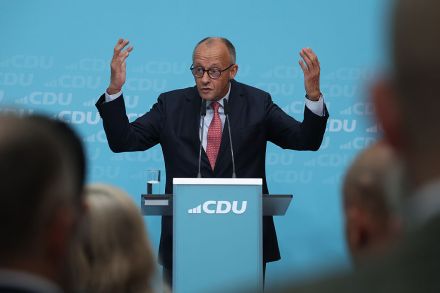
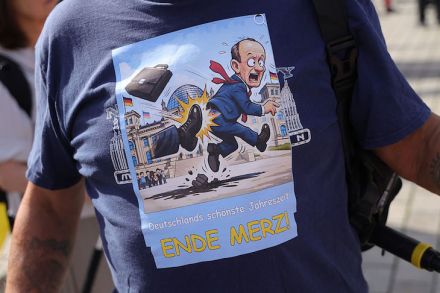
Friedrich Merz is the most tragic chancellor in the young history of the reunified Germany. It is time for him to step down. This was made very clear, when he faced the cameras after yet another election that was lost by his party, the CDU. After losing Saxony-Anhalt and then Mecklenburg-Vorpommern to the far-right Alternative for Germany (AfD) – while Berlin fell to the socialist far-left Die Linke – everyone here in Germany expected a speech with consequences. Would he declare the “Brandmauer” – the firewall, that would prevent the CDU from ever even getting majorities on bills through in parliament with the AfD – to be over? Would he step down and make way for a new chancellor? Painstakingly, nothing of the two happened: Friedrich Merz stated simply that he will stay.

Another AfD win could mean the end for Germany’s embattled chancellor

Just two weeks after the Alternative for Germany's (AfD) victory in the state of Saxony-Anhalt, two more state elections are taking place in Germany this Sunday. Friedrich Merz's government, already under pressure, is in for more bad news. Mecklenburg-Vorpommern and Berlin are both heading to the polls this weekend. The former could see yet another win for the AfD, though it remains a head-to-head race between the anti-immigration party and the Social Democrats (SPD). In Berlin, polls suggest that a total of four parties are in the running for the most votes on Sunday, with the socialist Left (Die Linke) leading the Christian Democrats (CDU), AfD and the Greens.

Germany

Why would Canada want to hitch itself to the EU?

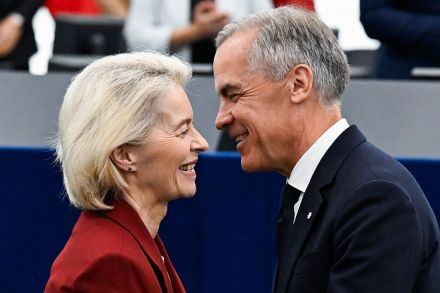
“Canada has what the world wants,” Mark Carney likes to tell people. But what does Canada want? The European Union, apparently. The bloc’s President, Ursula von der Leyen, has announced that Canada would become its first “associate member.” This is happening, she said, because “above all... Europe and Canada believe in democracy.” Really? The EU spent years trying to block Brexit. And in 2015, when Greece voted to reject the conditions on EU loans, Brussels replied with even more stringent conditions. “There can be no democratic choice against the European treaties,” von der Leyen’s predecessor said at the time.

Canada EU

The triumph of Giorgia Meloni

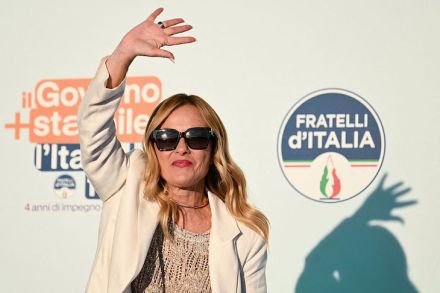
Giorgia Meloni’s right-wing government this weekend became the longest surviving Italian government since the fall of fascism in 1945. It is a remarkable achievement for a woman who identifies as a conservative, but who has been relentlessly branded as “the heir to Mussolini” and a far-right threat to democracy because she was once a post-fascist. Regardless, Italy’s first female prime minister has become the standard bearer of the European right as the people of Europe continue to pivot right. Elections next year look likely to bring the right to power in both France and Spain.

How the AfD made history by winning in Saxony-Anhalt

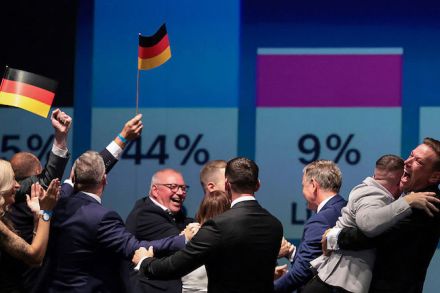
The Alternative for Germany (AfD) is on the verge of leading a state government for the first time in history. According to the preliminary results announced on Monday morning, the AfD achieved 43.8 percent in the state election of Saxony-Anhalt, more than doubling their voter share compared to the previous election in the state in 2021. The AfD achieved 43.8 percent in the state election of Saxony-Anhalt, more than doubling their voter share Meanwhile, the Christian Democratic Union (CDU), the party of chancellor Friedrich Merz, lost 20 percent and fell to 17.2. The election result from Sunday is not only damaging to the CDU, but to all historically established parties in Germany. They might not be able to prevent the AfD from governing for the first time.

Does Poland have an image problem?

What if the hiring of a PR expert became a PR disaster? That’s precisely what has happened in Poland. On 29 July, when Prime Minister Donald Tusk appointed Barbara Mróz-Gorgoń, a professor of marketing, as the government’s new plenipotentiary for promoting the Polish brand, this was thought to be a shrewd hire that would bolster the country’s image on the world stage. Then someone read one of her reports. Poland has managed to develop from a bankrupt communist state into one of the most successful economies in Europe The Poles’ Self-Portrait, published last year by a think tank chaired by Mróz-Gorgoń, was supposed to give a thumbnail sketch of the Polish national character.

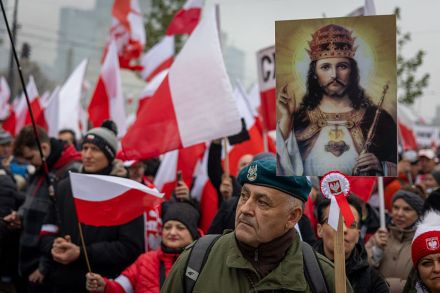
Poland

Macron won’t stop at a social media ban for children

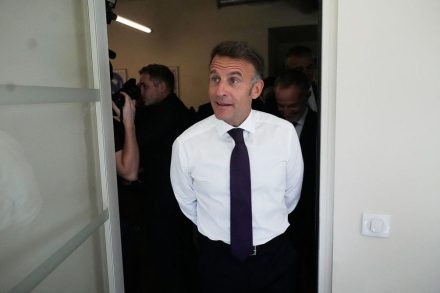
France has become the first European Union country to ban social media access for under 15s. The National Assembly passed a Bill Tuesday evening that will prevent children using platforms such as TikTok and Snapchat. The Bill also bans the use of cell phones in high schools. In a message on X, a jubilant President Emmanuel Macron hailed the legislation and expressed his gratitude to MPs, who approved it by 279 votes to 81. “It’s up to the Constitutional Council to rule, then on to action to make this measure concrete and protect our children online,” he said. Macron would like the legislation to take effect from September, the start of the new school year, but first the Bill will be examined by the Constitutional Council, the highest constitutional authority in the Republic.

social media ban

Why Elbridge Colby’s NATO warning shots will backfire

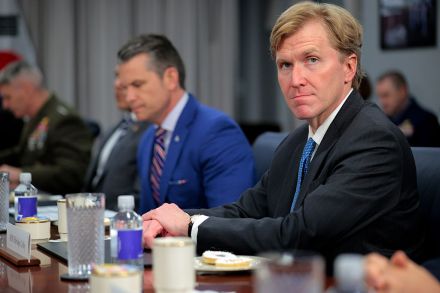
It is hardly news that US relations with the rest of NATO (“rNATO” hereafter) are at an unprecedentedly low ebb. But they took a new and interesting twist last week when the US Under Secretary of War for Policy, Elbridge Colby, issued a curious statement via social media, opining that “middle powers” have no coherent basis for alignment independent of the United States, and that they would therefore be foolish to try. The “middle powers” in question here are erstwhile US allies with enough of their own wealth and technological capacity to pursue meaningful sovereign capabilities, but not enough to independently rival systemic great powers such as the United States (the likes of Germany, Japan, Britain, Canada, Australia and so forth). Colby is a serious strategic mind.

Colby

Europe’s centrists are falling one by one

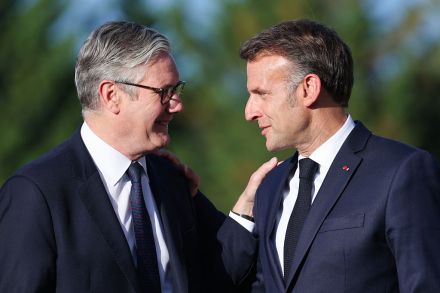
Few in France will have been as devastated by their team’s defeat in last night’s World Cup semi-final as Emmanuel Macron. The president put on a brave face, tweeting his congratulations to Spain and thanking the French team "for carrying our colors with commitment." But how Macron must have dreamed of a French World Cup triumph in Sunday’s final. He would have been in New Jersey – as he was in Moscow in 2018 when the Bleus won the World Cup –dancing a jig as his bête noire, Donald Trump, presented the trophy to his boys. Macron's presidency is ending with a whimper In a sense the French football team are a metaphor for Macron’s presidency.

Macron Starmer

Britain is the weak man of Europe on border control

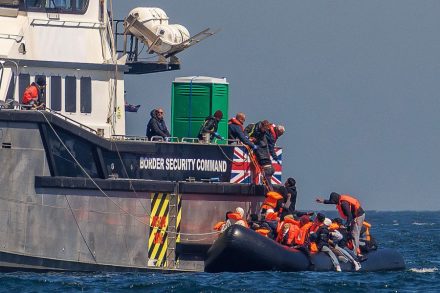
Britain and France have rewritten the "one in, one out" migrant deal nearly a year after it came into effect. The treaty, described as "groundbreaking" by both countries last summer, has struggled to stem the numbers of migrants heading from France to England in small boats. It soon became apparent that the deal contained a loophole that enabled a handful of deported migrants to return to Britain in the back of a lorry. Britain's Home Secretary Shabana Mahmood has agreed with her French counterpart, Laurent Nuñez, to close this loophole by tweaking the treaty to stipulate that its terms apply to any returning migrant regardless of whether they enter a second time by boat or by vehicle.

‘Make Germany normal again’: an interview with Germany’s exiled spy chief

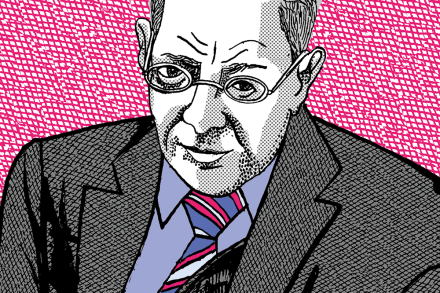
Hans-Georg Maassen is an unlikely dissident. In his trademark three-piece suits and small glasses, he looks more like a law professor. Indeed, that is what he studied, earning a doctorate on the legal status of asylum seekers in international law. This bourgeois exterior is the perfect cover for a man who was Germany’s top spy, charged with protecting the country from the far-right and Islamists. But now he is no longer under the quiet protection of the German state; he is its victim. He is under investigation from the agency he once led, the Federal Office for the Protection of the Constitution (BfV). Like George Smiley, Maassen is a remnant of an older and more powerful country, soldiering on in spite of the decline, trying to preserve what he can.

hans-georg maassen

Keir Starmer’s delusion is becoming tragic

Keir Starmer has entered what might be described as the peak delusion period of what remains of his time in Downing Street. There was fresh evidence of the Prime Minister’s all-consuming divorce from political reality in his latest comments about his fellow Labour politician and political rival Andy Burnham, who is widely predicted to win the Makerfield by-election today, and then go on to launch a leadership challenge to turf the PM out of office. The British PM just doesn’t get it Anyone and everyone knows all this and more, except Starmer apparently, who called Burnham “a great asset” and said he deserved “a big role in government.” What is Starmer smoking? The only big role in government that Burnham wants is Starmer’s job in Number 10.

The Brexit decade: was it worth it?

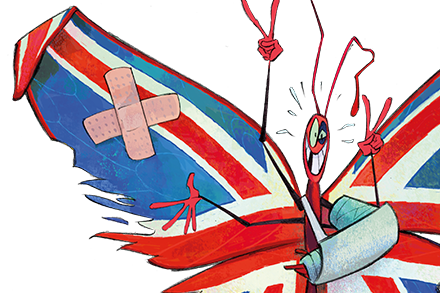
It may not feel or sound like it but Keir Starmer is a born-again Brexiteer. His achievements in office may be nugatory, his search for a legacy tragicomic, but there are countless actions this government boasts of which simply would not have been possible if we had stayed in the EU. Earlier this year, Labour moved to protect our steel industry with a tariff package possible only because we have an independent trade policy. I was delighted this month when the minister in the Lords made it clear this was a Brexit benefit. Those same Brexit freedoms allowed the Chancellor last month to cut tariffs on more than 100 foodstuffs to ease the cost-of-living crisis.

Where to watch the World Cup in DC: Cockburn’s comprehensive guide

The World Cup begins this week, and Americans have been celebrating as only we know how: by fighting Europeans on social media about stadium size and atmosphere, and banning Africans and Middle Easterners from the country. Nonetheless, the next month offers a great opportunity to take advantage of DC’s status as a truly international city, and fraternize with foreigners while watching multimillionaires pass a ball around in 100-degree heat. For today’s special sports edition of Cockburn’s Diary, here’s your correspondent’s guide on where to watch each team in the District. Germany The Brig The Brig describes itself as a “secret beer garden.

Why America is sounding the alarm about Britain and Europe

Back in November, the State Department warned that “mass migration poses an existential threat to western civilization and undermines the stability of key American allies.” In February, in his address to the Munich Security Conference, Secretary of State Marco Rubio expanded on that theme. After the Berlin Wall fell, Rubio noted, many in the West thought “the end of history” had finally arrived. Utopia was nigh. Western nations opened their borders, forsook spending on defense in order to bolster the welfare state and “outsourced” their national sovereignty. This was, Rubio warned, to ignore both human nature as well as the lessons of “over 5,000 years of recorded human history. And it has cost us dearly.

Henry Nowak

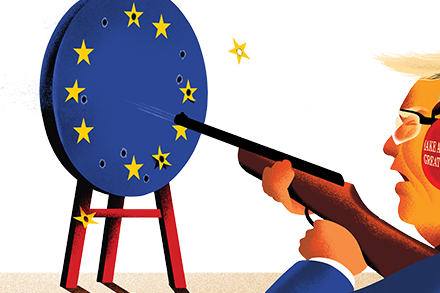
The Spectator’s caught in the EU crosshairs

From our UK edition

Is the flotation of Elon Musk’s SpaceX venture on the US Nasdaq exchange a beacon for the future of earthly capital markets and interplanetary relations, or just bonkers? The answer is it’s both, as well as being a stratospheric ego trip for Musk himself, who according to the prospectus will not only retain 85 per cent of the company’s voting rights but will also be awarded an extra billion shares if it succeeds in establishing ‘a permanent human colony on Mars’. In every sense, like Star Trek’s USS Enterprise, this spaceship is heading where no man has gone before. On the positive side, SpaceX’s Starlink satellite internet constellation, with ten million subscribers, is already profitable.

Politics has robbed Eurovision of its silliness

Here we go again. Every year, with the inevitability of death, taxes and political regicide, the BBC’s Eurovision coverage reminds viewers that most pop music produced in European countries is of a terrible standard, and that our country’s banal offering is never going to inspire any patriotic fervour. This year, British hopes are pinned on an electropop act called Look Mum No Computer, with a truly terrible sub-Depeche Mode song called ‘Eins Zwei Drei’ that contains the lyrics ‘Counting in English doesn’t cut the mustard / So sick of munching roly-poly with custard.’ Don’t call me Cassandra, but I suspect that Look Mum No Computer (real name: Sam Battle) will be receiving rather fewer than drei punkte from many of the international judges.

Trump, Europe and the power of delusions

German Chancellor Friedrich Merz suggests to a classroom full of youngsters that Donald Trump has been “humiliated” by his war in Iran – and the President cancels deployment of the long-range missile systems around which Germany had planned its defense strategy for the coming decades. Spanish Prime Minister Pedro Sánchez observes a strict neutrality on Iran, declaring his country’s bases out of bounds – and Trump urges Spain be kicked out of NATO. British Prime Minister Keir Starmer hesitates to sacrifice his country’s navy in a war on which he wasn’t consulted – and Trump mocks him in public for a week.

europe

The EU can’t save Labour

From our UK edition

Amid the rubble of this government lies a tattered standard – the regimental colours of the current Labour party. The blue and gold of Brussels is now the binding force that holds together the different factions of this government. Keir Starmer and those who wish to replace him are united in their conviction that a refreshed, closer relationship with the EU is central to their destiny and Britain’s. Starmer’s wish to once more hoist the European flag is understandable. He positioned himself to succeed Jeremy Corbyn by becoming the face of Brexit resistance. In the days, not so long ago, when he had a following, it was because his supporters believed he would lead Britain back into the heart of Europe. Now, Starmer wants to play that old tune.