Eu

Horsemeat scandal: four key questions

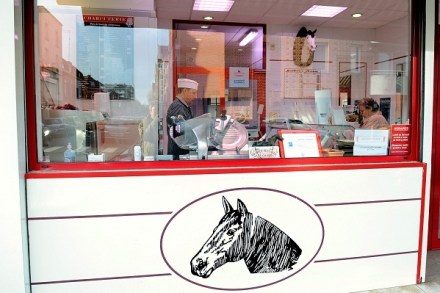
The ongoing horsemeat scandal has opened up a hugely complicated web stretching across the EU, highlighting the difficulty of tracing the origins of the meat on sale in this country. Even now, almost a month after it was announced that horse could be in beef products, no one is entirely sure of how the horses entered the food chain. There are other big questions, too: here are four that need answers: •       The matter of dodgy horse passports – which I wrote about last month – is something that still hasn’t been fully investigated. It has now emerged that up to 7,000 unauthorised passports have been in circulation in the UK

Are the Tories united on Europe? Pull the other one.

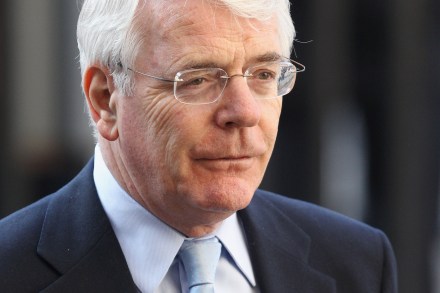
Party unity is one of those things you can measure by the frequency with which the idea is mentioned. The more often it is talked about, the less it exists. When a political party is actually united there’s no need to mention party unity. As Isabel notes, Sir John Major has long, wearying, experience of this. The speech he gave yesterday is full of sound advice. Like many other leading politicians, Sir John seems more impressive – and commands more respect – as the years roll on and the memory of his own time in office fades. At Conservative Home Harry Phibbs responds to Major’s speech with a piece that

Owen Paterson worried by risks of Mexican horsemeat in British food

The horsemeat scandal illustrates just how much of our daily government now takes place in Brussels. Owen Paterson is heading there today, for any real action on this crisis will have to be taken at a European level. One of those involved in the government’s response to this crisis tells me the problem is that once products are inside the European single market they are very few checks on them. This figure called it, ‘a faith based system that isn’t working’. This is particularly alarming because the horsemeat that is turning up in British food could not be from here or even Romania but the US via Mexico. In 2007,

Victorious PM paints himself as Camileo the EU heretic

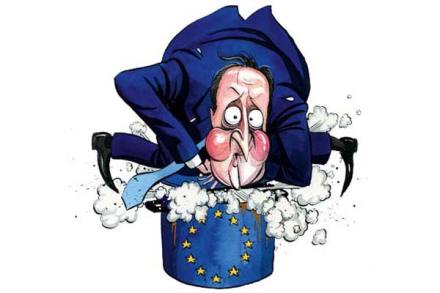
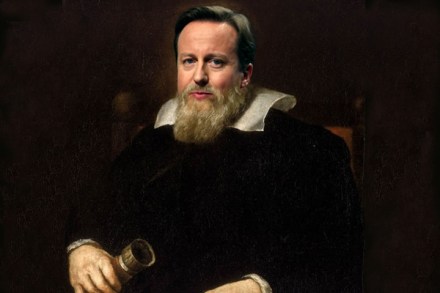
In his victory address after the successful EU Budget deal this afternoon, David Cameron sought to paint himself once again as a Galileo-style EU heretic who spoke truth to power. This was all about what Cameron himself had achieved: his press conference statement was full of first person references to what he had ‘slashed’ and ‘achieved’. At one point he even said ‘at last someone has come along’ to sort the EU’s ‘credit card’, again clearly referring to himself. This echoes the Prime Minister’s Europe speech last month where he talked about Europe’s ‘experience of heretics who turned out to have a point’. Today he was Camileo, the heretic who

EU budget victory: What does Cameron do next?

The Haribo they were eating all night clearly worked: European leaders have just agreed on the first budget cut since the EU’s formation. All credit to David Cameron for getting more than even he’d imagined was possible. But what does the Prime Minister do next? Well, he could do what he did after his historic EU speech, which is to make a rather paltry attempt at capitalising on the excellent mood in the Conservative party by organising an afternoon Commons debate with William Hague congratulating his leader on being so eurosceptic and poking fun at Labour. Apart from that debate, which barely made an impression within the parliamentary estate, let

Historic EU Budget cut on the cards for Cameron

EU leaders have just left their negotiations over the EU budget for a two hour break and so far it’s looking very, very positive for the Prime Minister. Perhaps David Cameron should pick a bracing walk rather than a car into every summit from now on because in the early hours of this morning, EU president Herman Van Rompuy tabled a package that would answer Cameron’s demands for a reduction in spending. This €34.4 billion cut for the spending limits in the multi annual financial framework billion would be the first cut in the budget in the EU’s history. As I said yesterday, the PM was in a tight spot,

Cameron in tight spot as he refuses to budge on EU Budget

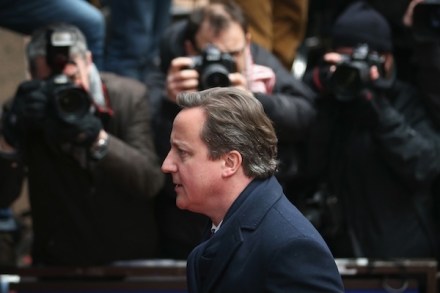
David Cameron caused a stir today by walking, yes, walking, into the meeting of European leaders in Brussels to discussed the multiannual financial framework. Other leaders arrived in their cars. Perhaps he was trying to make a point about the EU’s excesses as he seeks a reduction in the spending plans currently on the table, but in case they didn’t get the hint, he gave this broadcast clip on arrival, saying: ‘Frankly the European Union should not be immune from the sorts of pressures that we’ve had to reduce spending, find efficiencies and make sure that we spend money wisely that we’re all having to do right across Europe. Now

Bus bomb: It Was Hezbollah

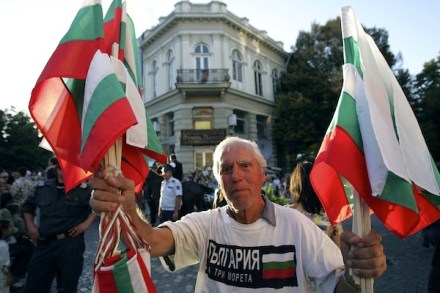
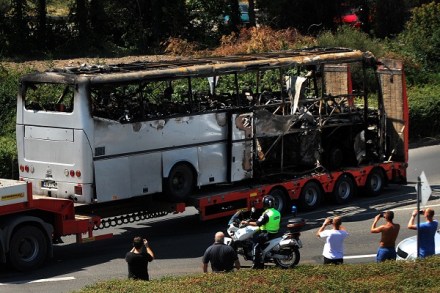
The report of the Bulgarian authorities into the bus-bombing which killed a local bus driver and five Israeli tourists in Burgas last summer has confirmed what so many of us suspected: it was Hezbollah. Commenting on the release of the report, and the identity of the bombers, Interior Minister Tscetan Tsvetanov has said: ‘We have established that the two were members of the militant wing of Hezbollah… There is data showing the financing and connection between Hezbollah and the two suspects.’ Now that it has been confirmed that it was Hezbollah that carried out this suicide bombing against a target in the EU, the EU cannot possibly persist in its

How the terms of debate on Europe changed

The website of the new Centre for British Influence through Europe reveals just how far on the back foot the pro-Europeans are. Its introductory article states: ‘It is also wrong that the other extreme think that they own the European flag in their belief that the only future is full on in.’ This is a major concession by the pro-European forces. It is strikingly different from the Britain in Europe message that this country must join the single currency and be at the heart of Europe. Now pretty much everyone accepts that Britain isn’t going to join the Euro and isn’t going to pursue ever closer union with the rest

Briefing: Immigration from Bulgaria and Romania

What’s changing? Bulgaria and Romania joined the European Union on 1 January 2007. This gave their citizens the freedom to travel unrestricted within the EU, but countries were allowed to impose transitional controls on their freedom to work for up to seven years. In 2004, when eight other east European countries (the ‘A8’) joined the EU, the Labour government decided not to impose such restrictions, but this time they did. Those controls must be lifted by 1 January 2014. What are the transitional controls? At the moment, Bulgarian and Romanian citizens can only come to work in the UK if they have a permit and: they work in the agriculture

Europe Minister won’t give renegotiation specifics

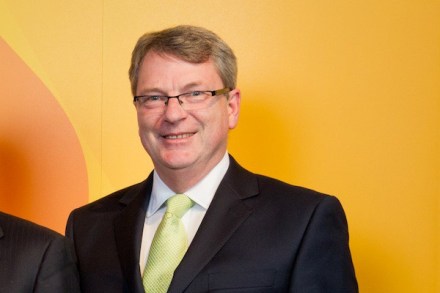
There’s ‘no secret plot to get Britain out of the EU’ declared David Lidington on the Sunday Politics. In an interview with Andrew Neil, the Europe Minister was determinedly vague on the issue of what powers the next Conservative manifesto will seek a mandate to repatriate. But he made clear that the free movement of people is not going to be part of the renegotiation nor will Britain seek the right to strike its own trade deals with other countries. Having given the speech, David Cameron and his team don’t want to give a running commentary on what they might or might not seek to change about Britain’s terms of

The view from Davos: Boris Johnson’s economic adviser on infrastructure

As the speaker for yesterday’s Davos British business leaders’ lunch, Boris Johnson had the audience in his hand in his usual colourful way. I grabbed his very new Chief Economic Adviser, Dr Gerard Lyons, former Chief Economist at Standard Chartered, on the way out. How did he think we are doing economically? He told me the last big economic gathering was the IMF last October in Tokyo.  There, he said, the mood about the global economy was pessimistic, but now, three months later, the mood had improved, if only slightly.  There was more confidence about China and the US but still a lot of caution about Europe. Many continental economies, he

The EU must change | 26 January 2013

I have been out of the country for a couple of weeks and away from the sweet furore of the internet. I’ll be posting in the coming days on some of the bigger things which have gone on while I have been away. In the meantime, readers who are interested can read here a piece of mine published last week in Die Welt. Written before David Cameron’s recent pronouncements, it is an attempt to explain the legitimate reasons for British EU-scepticism to a German audience.

The view from Davos: Cameron’s mad to talk about leaving the EU

‘Cameron’s speech on Europe is badly timed; we must stop this endless European bickering when facing such huge worldwide political challenges’.  That’s the view of Neil Selby, the London-based Director of Executive Education for the Cheung Kong Graduate School of Business but who at the moment is, like me, here in Davos. ‘Let’s think instead of the links we can make with East Asia’, he tells me. It’s very disconcerting: while in Britain most columnists and commentators seem to be congratulating Cameron on his big Europe speech, here at Davos there’s no enthusiasm. Most of the people around me think the emphasis was all wrong. At a lunch on East

Every tabloid’s worst nightmare

What would George Orwell write about today? asked the Guardian. Here’s our nomination: an EU report that recommends giving the EU more powers to sack hacks, regulate the press and dole out subsidies to ‘good’ journalists, a pan-European press and failing newspapers. The report is called ‘A free and pluralistic media to sustain European democracy’. Be very afraid. Its preamble cites the misconduct of certain British journalists, before the report recommends a set of EU-sanctioned media regulations. All EU countries should have ‘independent media councils’ set up to investigate complaints, it says, and these media councils should police newspapers to make sure they have strict codes of conduct, prominently displayed

Cameron & co relieved by Merkel reaction to speech

Angela Merkel’s statement yesterday was a big fillip to David Cameron’s European strategy as it suggested renegotiation was possible. One senior government source called it ‘as good as we could have hoped for’. I understand that Merkel and her officials have indicated to the Cameron circle that they want Britain to stay in the EU and are prepared to consider Britain’s concerns. But Merkel does not wish to look like she is interfering in British domestic politics; she doesn’t want to appear to be endorsing the Cameron approach. Secondly, she does not yet know how much room for manoeuvre she has. If after this autumn’s federal election, she is Chancellor of

The View from 22: Get out of jail free and Cameron’s EU speech

How broken is the British criminal justice system? In this week’s View from 22 podcast, Fraser Nelson and Rory Geoghegan, research fellow at Policy Exchange, explain the rehabilitation game and the cover up masterminded by our political class to hide the truth about how we dole out justice. Why is the government so keen on using electronic tagging? And does it work? Why are they deliberately fudging statistics to hide the real picture of reoffending? We also examine what an actual bobby on the beat thinks about the current policy of more cuts and more tagging? We’re also delighted to be joined by the New Statesman’s political editor Rafael Behr, who went head to head

David Cameron’s Europe speech: The Spectator’s verdict

Just for Coffee House readers, here is a sneak preview of the leading article from this week’s Spectator. Download our iPad and iPhone app to read the rest of the magazine first thing tomorrow.  It was almost worth the wait. The substance of David Cameron’s speech on Europe was disclosed in this magazine a fortnight ago, but his delivery was excellent. He offered a clear-headed and almost touchingly optimistic vision of the type of union that the British public would find acceptable: one based on free trade, not bureaucratic diktat. One where power can flow back to countries, not be leached from them. And one founded on genuine popular consent,

Cameron’s EU referendum pledge makes winning the Battle for Britain more difficult

At the risk of seeming parochial, I’d suggest that David Cameron’s long-awaited Europe speech and his endorsement of an In or Out referendum has implications and consequences for another referendum campaign closer to home. I suspect he has bought himself some time on the Europe question but this comes at a price. He has made winning the Battle for Britain – to be decided in 2014 – more difficult. The SNP should be very pleased today. Cameron has demolished a couple of core Unionist arguments. He can no longer credibly point to the unknown uncertainties of Scottish independence. Not when he has embraced, even made a point of celebrating, uncertainty

Breaking: Cameron postpones Europe speech

David Cameron has postponed his speech on the European Union because of the hostage situation in Algeria where a standoff has been taking place in a gas plant in the Sahara Desert. There are conflicting reports, but it seems about 300 Algerian and 40 international hostages were taken and several have been killed in a rescue attempt. The PM has suggested that worse news will follow saying:- ‘We should be prepared for the possibility of further bad news in this very dangerous fluid situation.’ No10 said earlier that Cameron had not been informed about the Algerian rescue attempt before it began and has told his Algerian counterpart that he wishes