Eu

Steerpike: The Lib Dems’ free school fight, Dignitas on Scotland, and more

Some politicians don’t read their own manifestos. And some don’t even read the names of their own parties. When it comes to academy schools, the Lib Dems are struggling to comprehend ‘liberal’ and ‘democratic’. A Suffolk school earmarked for closure was rescued by campaigning parents who invited a commercial operator — International English Schools UK — to take over its administration. Rather than celebrate, Nick Clegg was hopping mad. He apparently regards the profit-making IES as blasphemers against his ideology. A few months ago IES leafleted homes in Twickenham and Teddington offering ‘a new choice of education from September 2014 when IES welcomes the first pupils to a brand new

Conservatives to take Labour and Lib Dem MPs with them to EU renegotiation talks

Tories preparing the ground for David Cameron’s renegotiation of Britain’s relationship with Europe are to take MPs from other parties with them as they visit European cities, Coffee House has learned. The Fresh Start Project, made up of Conservative MPs campaigning for reform of the European Union, has already visited Prague, Warsaw and Berlin to hold preliminary meetings setting out the need for change. Its next round of visits will include members of the All Party Parliamentary Group for European Reform, which is co-chaired by Fresh Start’s Andrea Leadsom and Labour’s Thomas Docherty. The Conservative MPs organising the visits think including other parties will help them secure more meetings and

Andrew Mitchell, friend of the civil service

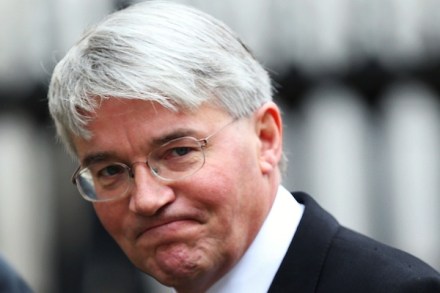
Tensions between some ministers and the civil service are at boiling point, with vicious briefings taking place on both sides. Seemingly keen to keep the pen-pushers sweet, former Chief Whip Andrew Mitchell lashed out last week at colleagues who have been winding up Sir Humphrey: ‘This behind-the-hand rubbishing of public servants is extremely unattractive.’ Spoken like a man who has certainly never been rude himself. A ‘former minister’ also told Sue Cameron in the Telegraph: ‘This is not good management and it’s not good politics, either. If it’s a choice between politicians and civil servants, there’s no doubt that the public will side with the civil servants.’ One wonders if

Solar panels are just another example of Brussels’ wrong priorities

Over the years, Brussels has become adept at dishing out heavy-handed and often disproportionate pan-EU ‘solutions’ to problems that are very often not problems for the majority of Member States. It’s at it again, this time on a proposal that would decimate the solar power industry in Britain. This country and many of its European neighbours rely on the low cost of imports to keep the solar power sector afloat. But the European Commission is pushing ahead with a plan to slap punitive duties on the import of Chinese solar panels. This is despite a grand total of just 4 out of 27 member states voting for the tariffs and

Imperial Athens and imperial Brussels

Last week Matthew Parris argued that Ukip was ‘extremist’ because its supporters thought of the EU’s ‘methods, despotism and oppression of them and their daily lives as barely distinguishable from those of the Soviet Union’. All right, if Mr Parris insists; but not all ‘despots’ are like Stalin. We entered the EU voluntarily, but as this column noted a few weeks ago, Athens quickly turned a voluntary agreement among Greeks in 478 BC to keep the Persians at bay into something like a tyranny under Athenian control. In 429 BC Pericles acknowledged this, arguing that Athens had no option but to continue down that path ‘because of the danger from

Why William Hague’s ‘red card’ plan won’t work

Alas, now we know William Hague has joined the list – and it’s a long list – of British government ministers who do not understand how the European Union works. His idea that national parliaments should demand a ‘red card’ system so they can block unwanted EU legislation is muddled in several ways. First is that, if national parliaments are where EU laws should be vetoed, where does that leave the prime ministers who make up the European Council?  Prime ministers – and foreign ministers, and agricultural ministers, and the rest — go to Brussels and put their vote or their veto (when they’ve got one) on the table when

William Hague’s EU red card plan could reassure renegotiation sceptics

The Conservatives know that the best way of detracting from the binary In/Out? debate about Europe in the Westminster bubble is to jolly well get on with making the case for reform in Europe. It is vital that ministers give the impression that there are changes that other European leaders would quite happily sign up to, rather than an impossible shopping list. William Hague’s speech to the Konigswinter Conference in Germany today was part of that attempt. The idea he floated – of giving national parliaments a ‘red card’ to veto unwanted EU legislation – is something ministers and Tory MPs paving the way for a renegotiation have been discussing

We are all citizens of Europe now, and the benefits row is just the beginning

Yes, that law case the European Commission is taking against the UK is mission creep, or ‘a blatant land grab’ as Iain Duncan Smith has it. The eurocrats are trying to extend EU control over the benefits systems of member states, and they are going to the European Court of Justice to do it. But what the commission is after is more than just that. Jonathan Todd, a European Commission spokesman, spelled it out at yesterday’s midday briefing in one line, and in his perfectly English voice: ‘UK nationals automatically have the right to reside in the UK. EU nationals do not have that automatic right.’ That is what is

Letters | 30 May 2013

HS2 v broadband Sir: Rory Sutherland (The Wiki Man, 25 May) is rightly sceptical of HS2, but in limiting his remarks only to the transport of people, he is still too kind. Why spend 20 years building Victorian technology when the infrastructure of the future will be a broadband network of far greater capacity than exists now? The internet has revolutionised the distribution of most services and the production of some products. New technologies like 3D printing are on the cusp of transforming the location of industry and the distribution of manufactures, which could benefit depressed areas far more than HS2. These technologies require the downloading of vast amounts of data

European Commission makes the case for curtailing its own power

If anyone pushing for reform of Britain’s relationship with Europe was hunting for an example of why there needs to be a renegotiation, they would have struggled to find a more perfect one than that served up by the European Commission. The Commission is taking the UK to the European Court of Justice, claiming its tests for EU nationals applying for benefits break EU law. Announcing that he will ‘not cave in’ to Brussels must have been one of the more satisfying moments of Iain Duncan Smith’s career. What must have been even more satisfying to listen to was the exchange between Peter Lilley and rights adviser Adam Weiss on

Why Ukip is a party of extremists

Last Saturday I wrote for my newspaper a column whose drift was that it was time for the sane majority of the Conservative party to repel those elements on the Tory right who plainly wish the Prime Minister and the coalition ill, and who would never be satisfied with his stance on Europe, however much he tried to adjust it to please them. I dealt at some length with Ukip, explaining why I and many like me would never support a Conservative candidate who made any kind of a deal with these people. The same went (I said) for the party nationally: ‘I will never support a Conservative party that

Meet the greatest threat to our countryside: sheep

The section of the A83 that runs between Loch Long and Loch Fyne in western Scotland is known as the Rest and Be Thankful. It would be better described as the Get the Hell out of Here. For this, as far as I can tell, is the British trunk road most afflicted by landslips. The soil on the brae above the road is highly unstable. There have been six major slips since 2007, which have shut the road for a total of 34 days. The cost of these closures is estimated at about £290,000 a year. It’s a minor miracle that no one has yet been killed. The Scottish government

Will the EU’s rescinding of the Syrian arms embargo have any impact?

The EU has said it will not renew an arms embargo on Syria which ends this Saturday. That should pave the way for countries wanting to arm the rebels, something both Britain and France have been saying they will consider. It is a tired truism, but nonetheless one still worth restating, that not all the Syrian rebels are jihadists. This is precisely what has motivated Britain and France to explore ways of working with the rebels, although there are currently no plans to supply them with arms. But arming the rebels would be a mistake. It is clear Assad must go and that a future Syrian state will need to

The EU’s cut-out-and-keep economic timetable

This morning two European Commission technocrats and a spokesman held an off-the-record press briefing to explain the EU’s economic ‘governance.’ (Governance is the word eurocrats use instead of the more precise word ‘government’, because that word panics the Anglo-Saxons.) They gave it an hour. That’s called optimism, but an hour is about the maximum level anyone in the press corps is going to give on this one, so an hour it was. Why an explanation had to be off the record I have no idea, but, okay, my lips are zipped. If you want to know how the economic government of the EU is going – and you ought to,

UKIP, Pierre Poujade and a political class that’s seen to be “out-of-touch”.

Parliament is a “brothel”. The state is an enterprise of “thieves” engaged in a conspiracy against “the good little people” and the “humble housewife”. Time, then, for a party that will stand up for “the little man, the downtrodden, the trashed, the ripped off, the humiliated”. Not, as you might suspect, the most recent UKIP manifesto but, rather, the sentiments expressed by Pierre Poujade during the run-in to the 1954 elections to the French National Assembly. Poujade’s party, the Union to Defend Shopkeepers and Artisans,  shocked France’s political elite by winning 2.5 million votes and sending 55 deputies to Paris. Charles de Gaulle sniffed that “In my day, grocers voted for

EU shopping list tips from Ben Goldsmith, Bill Cash, Nancy Dell’Olio and Matthew Elliott

Ben Goldsmith, Partner at WHEB Partners and signatory to Business for Britain In the private sector, every business must provide regular and accurate accounts. Yet when you try to look into the European Union’s income and expenditure there is just obscurity, masking a black hole of inefficiency and waste. The EU’s finances are a mess – the Court of Auditors has refused to sign off the EU’s accounts for eighteen years successively. The costs of EU membership to the UK are high – around £8.9 billion in 2010/11, with the threat of increases to come.  The EU is haemorrhaging cash and making the private sector pay for its financial recklessness, not

Long life: While I won’t vote for the EU withdrawal, part of me hopes the quitters will win

I sometimes think that, by the time I die, my entire life will have been blighted by sterile, unresolved arguments about Europe. I have to admit that the foundation of the European Coal and Steel Community in 1951 made little impression on me at the time; but I was only 11 years old, Britain wasn’t involved in it, and I had no idea in any case what it was all about. It was, of course, the precursor to the European Economic Community, created in 1957 by the Treaty of Rome; but by then I was 17 and thought it sounded a very good idea, for its main purpose appeared to

What does Cameron actually want back from Brussels?

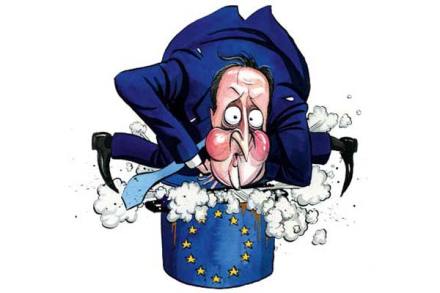
If you ask what’s the problem with David Cameron’s European strategy, a cacophony of voices strike up. But it seems to me that most of their complaints are tactical when the fundamental problem is strategic: what does Cameron actually want back from Brussels? Some of those involved in preparation for the renegotiation tell me that this is the wrong question to ask, that what Cameron is seeking is a systemic change in the way the European Union works. But I’m still unclear on what their strategy for achieving this is. One insider tells me that inside Number 10 they’re ‘terrified of detail’. One can see why. Nearly all Tory MPs can

The secret of David Cameron’s Europe strategy: he doesn’t have one

Shortly before the Conservative party conference last year, the head of the Fresh Start Group of Eurosceptic Conservative MPs went in to see the Prime Minister in Downing Street. The group had heard that David Cameron might make his big Europe speech at the gathering and its head, Andrea Leadsom, wanted to set out what to ask for in any renegotiation. When Leadsom returned from the meeting, her colleagues were desperate to know what the PM had said: which powers did he most want returned from the EU? What would be the centrepiece of his great diplomatic effort? All Leadsom could do was repeat what Cameron had told her: ‘I

Lord Lawson’s exit

Lord Lawson’s announcement that he intends to vote for Britain to leave the European Union has been interpreted by some as reinforcing demands that David Cameron holds his referendum this year or next, rather than 2017. But it does no such thing. Follow Lawson’s arguments and the logical conclusion is that the best chance of securing a British exit from the EU is for a vote to be held as planned, in four years’ time. As the Prime Minister has said in a letter to MPs, he is powerless to bring in a vote while in coalition because the Liberal Democrats are so vehemently against it. Nick Clegg’s commitment to