Allie Renison

Yes, the Paris climate deal was toothless. But it’s the EU we need to worry about

From our UK edition

Reading the Sunday newspapers, you could be forgiven for thinking an earth-shattering agreement was reached in Paris - one which outdid even the Kyoto Protocol in the way of binding agreement across the world on climate action. The deal was heavy on political will and ambition (or at least expressions thereof) but as many experts are now queuing up to say, offered little in the form of hard targets and binding commitments around reducing greenhouse gas emissions. This is of course a pragmatic approach to doing policy at the global level, particularly given the extreme variation in capacity and priorities between countries operating at vastly different levels of development. If the EU had had its way however, all of targets laid down in Paris would have been legally binding.
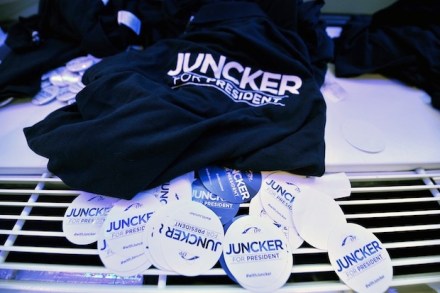
The genius of Jean-Claude Juncker

From our UK edition

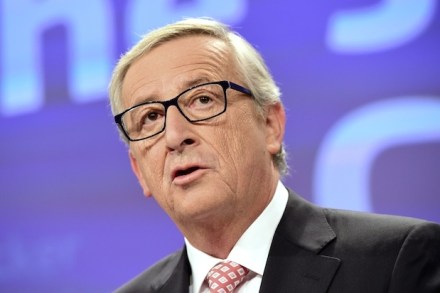
For all of the protestations about Jean Claude Juncker’s unsuitability for what is, ultimately, the EU’s top job (sorry, Angela Merkel), the unveiling of his new Commission yesterday has confirmed his reputation as a master of compromise and consensus. The City's expectations that the UK would be given a standalone financial services brief were so low that it by and large opposed the job's split from the Internal Market Portfolio. The shock in Brussels when it was announced that Lord Hill would be given this responsibility reverberated all the way to London. Dealing with financial services isn't the total of Lord Hill's duties, either. He will also have to deliver Juncker’s grand aim of creating a ‘Capital Markets Union’.

There is a silver lining to Juncker’s appointment

From our UK edition

David Cameron has been trying to look on the bright side after failing to stop Jean-Claude Juncker becoming president of the European Commission. And while that might look like the Prime Minister trying to spin something out of an abject failure, there really is a silver lining to this appointment for Britain, even though you have to look quite hard for it. The Commission president is indeed important, particularly given his role in determining the EU executive’s policy agenda – in practice, no policy can be proposed without his agreement. He also has control over the assigning of Commission portfolios, an argument perhaps against the Prime Minister’s decision to fight Juncker until the bitter end.

Eurosceptics have lost a valuable general – Bob Crow

From our UK edition

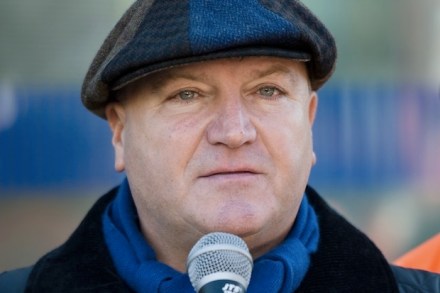
When Nigel Farage had the temerity to nod at Bob Crow's euroscepticism while paying his respects to the late RMT leader, some were quick to accuse him of cheap political point-scoring. I suspect that many of them hardly knew Crow because he never missed an opportunity to slam the EU for being 'a regional engine of corporate globalisation'. And eurosceptics of all political persuasions have reason to be disheartened by the loss of a voice like his to their cause. Bob Crow wasn't a eurosceptic by convenience nor did he do it simply to pander to rising populist anti-EU sentiment. For years he regularly led union members in protests against EU directives enforcing competition on Europe's railways, most recently in October.

What the US really thinks about Europe (and why it might help push reform)

From our UK edition

Whether it wants to or not, Washington has a role to play in the UK's EU debate. Eurosceptics and Europhiles constantly wrangle over what the US position is on Brexit, splitting hairs interpreting State Department officials' carefully worded remarks in order to claim victory for their side. The latest episode in this running saga sees the sceptics feeling vindicated by Washington's exasperation with the EU. Assistant Secretary of State (for European Affairs no less) Victoria Nuland appears to have landed herself in some rather hot water - both diplomatic and political. In a reportedly leaked phone call to the US ambassador to Ukraine, Nuland is heard unceremoniously blasting the EU and pushing the UN to take over in mediating the escalating crisis in Kiev.

Lib Dem conference 2013: Tories are still the only party committed to a straight EU referendum

From our UK edition

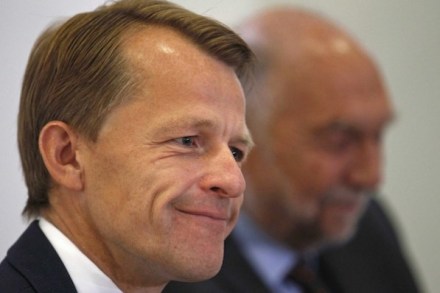
Is it really worth getting excited about David Laws' suggestion that the Lib Dems could put an In/Out referendum pledge in their 2015 manifesto? It's not the first time, after all, and anyone who follows these things closely will know that below the excited headlines, there is always a more complex reality. When you burrow into what Laws is really proposing, you realise that it could prove a thorny issue in coalition negotiations in 2015 as it contrasts sharply with David Cameron's own pledge. Speaking at the start of the Lib Dems' Glasgow conference, Laws effectively recommitted the party to its 2010 promise, saying they would back an In/Out referendum if there were a 'material change' to Britain's EU relationship.

Balance of Competences Review is not a full assessment of Britain’s EU relationship

From our UK edition

The much-ballyhooed Balance of Competences Review has just published its first set of reports and the lines have already been drawn between the In-at-all-costs camp and the Out-no-matter-whats. The former, jubilant at conclusions drawn by civil servants that EU competences across a number areas are just right, see fit to run around shouting 'I told you so' from the rafters. More hardened sceptics wearily remind them of their conviction from the outset that this was always going to be a technocratic sham of an exercise. The reports are of course crowd-sourced, a collation of evidence. The conclusions, less so. One such conclusion counters the submissions criticising European red tape by maintaining that the process of regulation for SME's is being 'reversed at EU level'.

Solar panels are just another example of Brussels’ wrong priorities

From our UK edition

Over the years, Brussels has become adept at dishing out heavy-handed and often disproportionate pan-EU ‘solutions’ to problems that are very often not problems for the majority of Member States. It’s at it again, this time on a proposal that would decimate the solar power industry in Britain. This country and many of its European neighbours rely on the low cost of imports to keep the solar power sector afloat. But the European Commission is pushing ahead with a plan to slap punitive duties on the import of Chinese solar panels. This is despite a grand total of just 4 out of 27 member states voting for the tariffs and is proof-positive of the case for serious change to the way Brussels does business - and the way we do business with Brussels.