Eu

The other union

From our UK edition

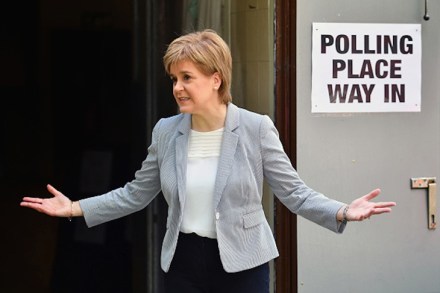
The election campaign is becoming increasingly dominated by a small party whose raison d’être is to preach independence from membership of a union it claims is hindering national ambition. But the party is not Ukip, which had been expected to play a big role in this election. It is the Scottish National Party, which seems ever more likely to hold the balance of power after 7 May and is determined to use it ruthlessly to its own advantage and to the furtherance of its sole objective: the dissolution of the United Kingdom. Nicola Sturgeon has been the only party leader talking about the virtues of national self-government, and she has met with reasonable success. No one else seems to be trying it. Nigel Farage is fighting the campaign as if it were a by-election in South Thanet.

Philip Hammond signals extra help for the Mediterranean crisis

From our UK edition

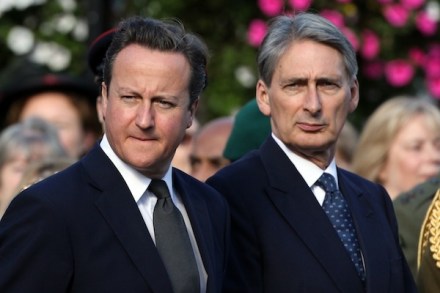
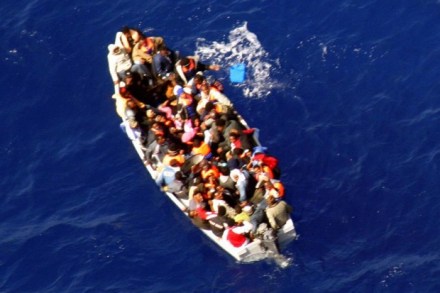
Philip Hammond was noticeably keen this afternoon to show the government isn't standing idly by while migrants drown in the Mediterranean - especially as the refugee crisis is the global story of the moment; the pictures and reports severe enough to have momentarily knocked the election campaign off a number of front pages. Appearing on today's Daily Politics debate on international affairs, the Foreign Secretary stressed the need for a 'more formidable operation on the sea', and said that David Cameron would head to Brussels on Thursday to call for an 'enhanced operation' to prevent any further crises. Mr Hammond said: 'Of course we’ve got to support search and rescue operations in the Mediterranean. Nobody wants to see people drowning in the Mediterranean.

Don’t get angry at Katie Hopkins if you don’t support policies that could save migrants

From our UK edition

The latest issue of The Spectator carries an interesting piece by James Bartholomew on ‘virtue signalling’, the bane of social media and political debate; that is, people expressing how ruddy good they are by telling the world how much they hate bad things like Ukip and the Daily Mail. He writes: ‘It’s noticeable how often virtue signalling consists of saying you hate things. It is camouflage. The emphasis on hate distracts from the fact you are really saying how good you are. If you were frank and said, ‘I care about the environment more than most people do’ or ‘I care about the poor more than others’, your vanity and self-aggrandisement would be obvious, as it is with Whole Foods. Anger and outrage disguise your boastfulness.

The EU’s asylum policy is to blame for the tragedy unfolding in the Mediterranean

From our UK edition

As the leading article in The Spectator this week pointed out, thousands of people are fleeing war and anarchy in Africa and setting sail across the Mediterranean bound for Europe. The latest tragedy comes today, after a boat carrying between 500 and 700 migrants from Libya capsized. So far, only 28 people have been rescued. Coaxed by traffickers who demand huge sums, refugees have been piling into rickety boats which often disintegrate en route. Aid groups, human rights activists, the pope and the EU itself all say the EU-funded rescue operation Triton is inadequate. Well, they're right in a way, but they're also missing the point. The real culprit isn't Triton but the EU's tragic asylum and immigration policy.

Did the £20 million Norwegian’s pay row make BG cheaper for Shell?

From our UK edition

Helge Lund was widely expected to go into domestic politics when he ended his successful tenure as head of Statoil, the Norwegian state oil and gas company. Instead, he was hired to run BG Group, the troubled former exploration arm of British Gas, but on a promise of such ludicrously rich terms — up to ten times his Statoil salary — that shareholders, the media and Vince Cable howled in protest. An embarrassed BG board had to scale back the offer, though it remained pretty fat and as I wrote at the time, ‘no mention of Lund, however good he turns out to be, will ever omit a jibe at his pay’.

Why is Labour making merit out of not backing an EU referendum?

From our UK edition

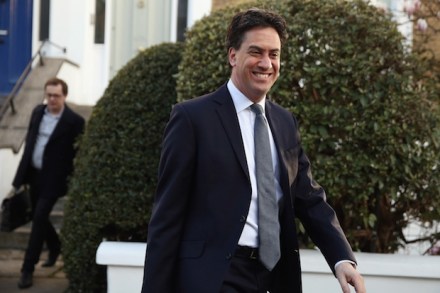
Fair play to Ed Miliband for launching Labour’s business manifesto today in Bloomberg, not perhaps the party’s natural stamping ground, at least not since the prawn cocktail initiative in 1997. And it was gutsy of it too to take out a full page advertisement in the FT – they don’t come cheap - to broadcast the party’s opposition to an EU referendum. 'The biggest risk to British business is the threat of an EU exit. Labour will put the national interest first. We will deliver reform, not exit', it says. Granted most British businesses, especially big ones and foreign-based ones, don’t want out of the EU.

Spectator letters: John Major on James Goldsmith

From our UK edition

The Goldsmith effect Sir: Much as I admire filial loyalty, I cannot allow Zac Goldsmith’s article about his father to go uncorrected (‘My dad saved the pound’, 28 February). Sir James Goldsmith was a formidable campaigner against the European Union and the euro currency, but at no point did he alter government policy. Zac Goldsmith suggests that I did not offer a referendum on membership of the euro currency out of conviction. This is wrong. I believed that any decision to abandon sterling — which I myself did not favour — was so fundamental that it would need national endorsement. On constitutional grounds some Cabinet members dissented, but many will confirm that I was seeking agreement for such a policy long before the Referendum party was founded.

Here’s what a real reform of business rates would look like

From our UK edition

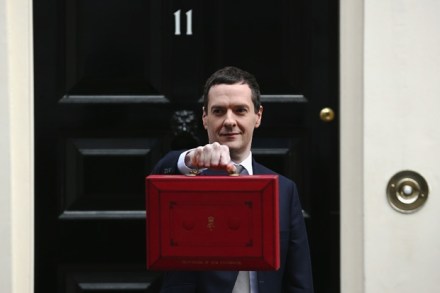
Of all the measures talked up ahead of the Budget, the reannouncement of a ‘radical’ review of the business rates was the least concrete in content but the most important in potential impact on the domestic economy, and especially on business investment. This column has banged on for years about the iniquity of a system that imposes the highest local taxes on businesses of any EU country, based on pre-crash rental assessments and bearing no relation to the value of diminishing local authority services. It’s a system that, on top of other economic woes, has brought devastation to town centres — and gets away with all this because it has no democratic accountability, since businesses have no votes.

Wanted: a party leader willing to talk about defence

From our UK edition

[audioplayer src="http://rss.acast.com/viewfrom22/the-death-of-childhood/media.mp3" title="James Forsyth and John Bew discuss the lack of foreign policy in the election campaign" startat=928] Listen [/audioplayer]In the 1984 US presidential election, Ronald Reagan came up with an effective way of embarrassing his rival Walter Mondale over defence. ‘There’s a bear in the woods,’ ran his television advert, showing a grizzly bear wandering through a forest. ‘For some people, the bear is easy to see. Others don’t see it all.’ During the British general election campaign, the Russian bear isn’t making any attempt to hide — it is standing on its hind legs and pawing at the trees with its claws.

The Great European Disaster on BBC4 reviewed: propaganda worthy of Leni Riefenstahl

From our UK edition

My favourite bit of The Great European Disaster (BBC4, Sunday) was the lingering shot that showed golden heads of corn stirring gently in the breeze. It was captioned ‘Europe’. I cannot even begin to describe what a powerful effect this had on my subconscious. It was worthy of Leni Riefenstahl. Indeed, when I experimentally turned off the colour, it was Leni Riefenstahl. ‘Bloody hell!’ I thought to myself. ‘Suddenly it all makes sense.’ But my journey of discovery and enlightenment was only just beginning. I haven’t yet told you what the Ukrainian peasant said.

It’s Nato that’s empire-building, not Putin

From our UK edition

[audioplayer src="http://rss.acast.com/viewfrom22/putin-s-empire-building/media.mp3" title="Peter Hitchens and Ben Judah debate Putin's empire building" startat=33] Listen [/audioplayer]Just for once, let us try this argument with an open mind, employing arithmetic and geography and going easy on the adjectives. Two great land powers face each other. One of these powers, Russia, has given up control over 700,000 square miles of valuable territory. The other, the European Union, has gained control over 400,000 of those square miles. Which of these powers is expanding? There remain 300,000 neutral square miles between the two, mostly in Ukraine. From Moscow’s point of view, this is already a grievous, irretrievable loss.

Who paid for that?

From our UK edition

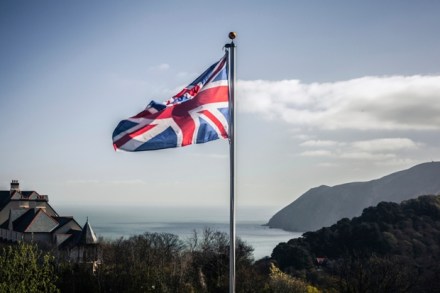
One of the things that even its critics, such as myself, have to concede that the European Union has been good at is making clear what it has funded. By contrast, in this country there’s little to tell you that the taxpayer has paid for something. But this is changing. The government will tomorrow, as I mention in the Mail on Sunday, announce that all publicly funded infrastructure projects will now be branded with a Union flag logo and the message ‘Funded by the UK Government.’ This will apply right across the UK and should provide some clarity as to who is paying for what; using this branding will be a condition of winning government contracts.

Spectator letters: Why rural churches are so important, and the best use for them

From our UK edition

The presence of a church Sir: The challenge for the Church of England and the wider community is to ensure that our village churches are a blessing and not a burden (‘It takes a village’, 21 February). The Church of England has approximately 16,000 churches, three-quarters of which are listed by English Heritage. Most of these church buildings are in rural areas. There are around 2,000 rural churches with weekly attendance lower than ten. It can be a significant responsibility for those small congregations to look after that church, and one has to recognise that this is a burden that falls on thriving parishes.

Paul Mason’s diary: My Greek TV drama

From our UK edition

It’ll be a Skype interview, says the producer from Greek television, and not live. In TV-speak that usually means not urgent and not important, but I’ve become vaguely interesting to Greeks because of the ‘Moscovici draft’ — a doomed attempt to resolve the crisis, leaked to me amid denials of its existence. The interview goes on a bit and the tone is deferential. At the appointed time, I fire up Greek television to see how many clips they’ve used. Instead of me, a panel of five bearded men in an expansive studio are conducting an earnest preview of my interview.

How Cameron’s jobs miracle ate his immigration target

From our UK edition

The embarrassing truth is that David Cameron did not think carefully about this pledge to take net immigration into the 'tens of thousands'. The pledge originated in a Thick-of-It style farce: it was an aspiration mentioned by Damian Green, then immigration spokesman, that caught media attention. The Tories didn’t want to make a fuss by disowning it, so this pledge ended up becoming party policy and then government policy. Absurdly so: a country can only control who comes in, not who goes out. So immigration, not ‘net immigration’, should have been the target. And even then, it should have been immigration from outside the EU – which Theresa May has done a reasonable job controlling. But the not-so-embarrassing truth is that this is a problem of success.

Zac Goldsmith: How my dad saved Britain

From our UK edition

In recent weeks Ed Balls has been offering a new reason to vote Labour: it was his party, he says, that saved Britain from joining the euro. Now, the shadow chancellor is free to say what he wants — and in a way, I’m pleased that he feels the need to convey such an impression. But the true story of how Britain was saved from the euro is somewhat different. It all happened nearly a generation ago, between 1995 and 1997, when I was in my very early twenties. It was my father, James Goldsmith, who set out to ensure that Britain would never join the euro without the consent of the people. He dedicated the last years of his life to the cause. My mother campaigned in his constituency for 12 hours every day.

The Greek crisis isn’t over

From our UK edition

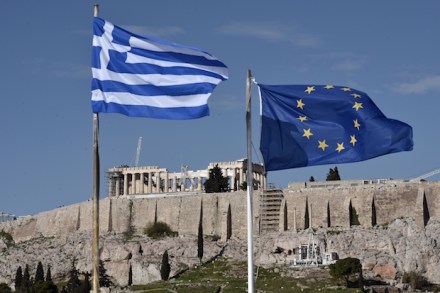
The more you read about the deal between Greece and the Eurozone, the clearer it becomes how temporary a deal it is. First, the Syrzia-led government has to submit on Monday a list of the reforms that it intends to implement over the next four months before the bailout is extended. Then, negotiations will have to start on a third Greek bailout for when this one runs out in the summer. These negotiations will be particularly fraught because of the lack of goodwill on all sides. Last night, Wolfgang Schauble, Germany’s finance minister, declared ‘The Greeks certainly will have a difficult time to explain the deal to their voters.

How Vladimir Putin is waging war on the West – and winning

From our UK edition

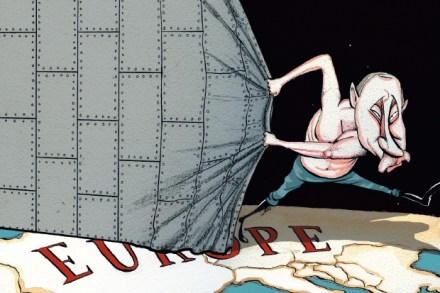
Last month, the speaker of the Russian parliament solemnly instructed his foreign affairs committee to launch a historical investigation: was West Germany’s ‘annexation’ of East Germany really legal? Should it be condemned? Ought it to be reversed? Last week, the Russian foreign minister, speaking at a security conference in Munich, hinted that he might have similar doubts. ‘Germany’s reunification was conducted without any referendum,’ he declared, ominously. At this, the normally staid audience burst out laughing. The Germans in the room found the Russian statements particularly hilarious. Undo German unification? Why, that would require undoing the whole post-Cold War settlement!

Emir Kusturica interview: why Slavoj Žižek is a fraud

From our UK edition

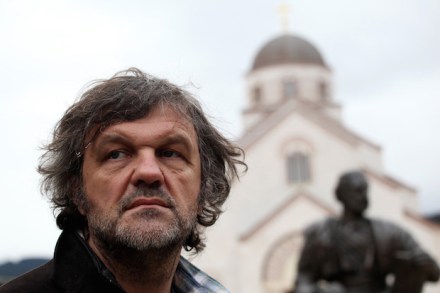
Last month I was invited on a press trip to Serbia. The whole thing sounded great; free accommodation, free food, free travel. I said yes, obviously. But there was a catch; it involved an interview with the film director Emir Kusturica. Now, the first thing you should know about Emir Kusturica is that he’s huge, a proper man-mountain. His hands look like they could do more damage than your average battle tank, and at 6'3", he must be at least a head taller than me. Not that I’m thinking this lucidly when finally the interview moment comes. Before I begin my questions, I’m more than a little scared that, at any moment, he might grab my throat and make himself two heads taller than me.

Bet on a swift Grexit

From our UK edition

'Will Greece exit the eurozone in 2015?’ Paddy Power was pricing ‘yes’ at 3-to-1 on Tuesday, with 5-to-2 on another Greek general election within the year and 6-to-4 on the more cautious ‘Greece to adopt an official currency other than the euro by the end of 2017.’ I’m no betting man — as I reminded myself after backing a parade of point-to-point losers on Sunday — and I defer to our in-house speculator Freddy Gray, who will offer a wider guide to political bets worth having in the forthcoming Spectator Money (7 March).