Eu

The two tightropes that Cameron must walk on Europe

From our UK edition

David Cameron has to walk two tightropes on Europe, and at the same time too. The first is to negotiate a deal with other European leaders that satisfies the bulk of his Euro-sceptic party. If this was not difficult enough, simultaneously Cameron has to show voters that the European question isn’t consuming all of his government’s energies. For despite its importance, it still rankles relatively low on the public’s list of priorities. To address the latter point, I’m told that Cameron will make a major domestic policy announcement in the week of every EU summit in an effort to show that he is not taking his eyes off the home front.
David Cameron’s contradictory EU stance

From our UK edition

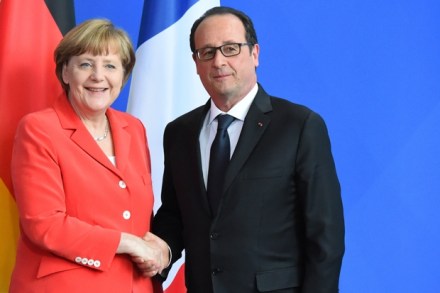
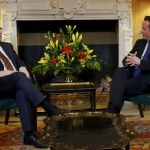
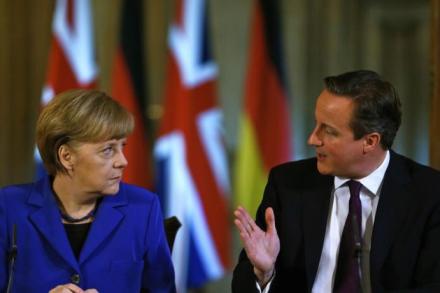
Of all the talks he will have with European leaders about his plans to renegotiate Britain’s relationship with Europe, David Cameron was always likely to enjoy his meeting with Angela Merkel the most. And she doesn’t seem to have disappointed him, saying treaty change was not ‘impossible’ and that ‘we would like to be a part of the process that is going on in Great Britain at the moment and we would like to be a constructive partner in this process’. This is very encouraging for Cameron, though the feeling in Europe generally is still that treaty change is too hard or inconvenient.

Barometer | 28 May 2015

From our UK edition

Steam privatisation Cunard celebrated its 175th birthday by sailing three liners down the Mersey. The formation of the Cunard Line was an early triumph of privatisation. — The Post Office had been operating a monthly service to New York with sailing brigs since 1756. In 1836 a parliamentary committee decided that a steamship service should replace it, and that it would be more efficient for the Admiralty to put it out to tender to private operators. — Samuel Cunard defeated the Great Western Steamship Company and the St George Steam Packet Company by offering a fortnightly service from Liverpool for an annual subsidy of £55,000. The service, which at first only reached Halifax, began in May 1840.

Will Cameron’s renegotiation efforts be boosted by the Out campaign’s troubles?

From our UK edition

David Cameron is in Holland and France today trying to pave the way for the renegotiation of the terms of Britain’s EU membership. Number 10 believe that now the referendum is definitely happening, the bill for it was published today, they can get other countries to engage with Cameron’s concerns. As I say in the column this week, Cameron’s renegotiation strategy has become clearer in recent weeks. Rather than trying to address every concern about EU membership, he is - as one Cabinet Minister told me - going to ‘focus on three or four big things and make a really big push on them.

Tony Blair has long been an irrelevance in the Middle East peace process

From our UK edition

Following months of speculation, Tony Blair has finally announced he is standing down as the Quartet Representative to the Middle East after eight years in the post. It is tempting to ask whether anyone will notice. His time in the job has been marked by a stagnation of the Peace Process, a hardening of the position of increasingly belligerent Israeli governments and a growing distrust among the Palestinians. Tony Blair himself had long become an irrelevance in negotiations. The truth is that Blair was hamstrung from the moment he took the job (immediately after he stood down as Prime Minister in 2007). He was never a 'Peace Envoy', although there was hope in some circles that he would bring the lessons of Northern Ireland to the Israel-Palestine conflict.

Cameron’s EU rollercoaster

From our UK edition

[audioplayer src="http://rss.acast.com/viewfrom22/defeatingisis/media.mp3" title="James Forsyth and Rob Oxley discuss David Cameron's EU negotiations so far" startat=1493] Listen [/audioplayer]We have just had a very insular general election campaign, but the mood at Westminster is now determined by news from foreign capitals. There was a flurry of excitement last Wednesday when the German finance minister, Wolfgang Schaüble, suggested linking the British renegotiation to eurozone reform.

Cameron’s friend in Brussels

From our UK edition

The Spanish, in their local elections, just elected a bunch of radicals who oppose the austerity needed to keep Spain in the euro. Poland on Monday elected a Eurosceptic challenger from the conservative Law and Justice party. And leaks from the Euro-summit suggested that David Cameron will respond to this rare combination of crisis and opportunity by demanding… well, not much in the way of reforms and concessions. Admittedly these leaks may be feints to mislead all sides about London’s negotiating strategy. It’s early days. Nor is Poland yet a reliable ally for Britain in such negotiations: its government will be divided between a Eurosceptic president and a pro-Brussels administration until at least October.

Which behaved worse: callous Thomas Cook or cynical Barclays?

From our UK edition

Which is worse, morally and reputationally — to be Thomas Cook, shamed by its refusal to show proper human concern, for fear of being taken to admit responsibility, over the death of two children by carbon monoxide poisoning from a faulty boiler while on holiday in Corfu; or to be Barclays, fined almost $2.4 billion (heading a list of banks fined more than $9 billion between them for similar offences) for conspiring to manipulate the foreign exchange market over a five-year period? Ethicists could agonise over that one for weeks.

Thankfully for Cameron, EU treaty change isn’t a black and white issue

From our UK edition

It seems every week now there is a story about France and/or Germany ruling out EU treaty change and thereby putting pay to David Cameron’s EU reform push before it has even really begun. While this makes for good headlines, the reality is much more nuanced. Take today’s example: A leaked preliminary draft of a Franco-German paper on Eurozone reform reported by Le Monde and picked up by the Guardian, stated that in the short term (the next few years) the countries will focus on working within the EU treaties, which has been seen as a blow to Cameron’s reform push. There are some important points to keep in mind though. Firstly, this is not actually a shift in the Franco-German position.

Why David Cameron should take his time with the EU referendum

From our UK edition

Exhilarating, isn't it? A referendum on Britain's continued membership of the European Union is at hand. For the first time in a generation, there's a real possibility that Britain might leave. With that prospect so tantalisingly close, it's tempting to want to rush ahead. 'Bring it on!' many regular readers will say. Hold on. Let's make sure we maximise our chances of winning. Like it, or not, a great many voters - despite all that Brussels red tape and all those ghastly EU commissioners - have yet to be convinced that we should leave. If you think that winning over fifty percent of the votes is easy, just cast your mind back to election night in your constituency... For almost forty years, we Brits have complained about Europe.

Cameron’s EU charm offensive must seem genuine

From our UK edition

There is so little detail on David Cameron’s talks with Jean-Claude Juncker that it is almost outweighed by the briefing on what the pair ate while at Chequers (a spring salad, followed by pork belly and vegetables and a dessert of lime bavarois). What we were told was that ‘Mr Juncker reiterated that he wanted to find a fair deal for the UK and would seek to help’ and that ‘they talked through the issue at some length in the spirit of finding solutions to these problems. They agreed that more discussion would be needed, including with other leaders, on the best way forward’.

Europe cannot allow an ungoverned space to exist on its doorstep

From our UK edition

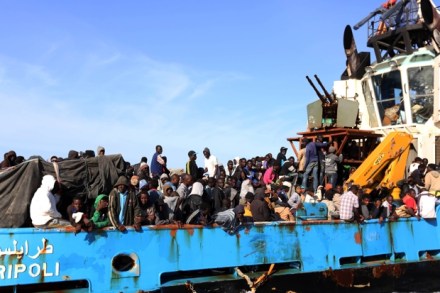
Last month, 700 migrants attempting to sneak into Europe drowned when their rickety vessel capsized in the Mediterranean. This week, the European Union announced a naval initiative to crack down on migrant smugglers. It won’t work. These tragedies are going to recur endlessly, as long as a steady fleet of unsafe boats are able to set sail from Libya. The country has become a political vacuum which no longer deserves to be identified as a sovereign state. The civil war has left no functional state; in many parts, nobody is keeping the electricity running or schools open, let alone policing the coastline to stop illegal migration or the flow of jihadists.

Labour should now define itself as in favour of both a referendum and the EU

From our UK edition

The three main Labour leadership candidates have now all said that they want a referendum on Britain’s relationship with the EU. But the party’s ‘official’ position - that is, the policy it went into the last election with that everyone seems quite keen to disown - is that there should not be a referendum. The party will not have chosen its leader by the time of next week’s Queen’s Speech, even if MPs seem to be making their minds up pretty quickly, and so when the EU referendum bill is published in that speech, the party will need to respond. It would perhaps make sense if that response wasn’t a repeat of the old Miliband policy, given all the candidates likely to succeed him want a referendum.

Germans propose linking the British renegotiation to Eurozone reform

From our UK edition

Wolfgang Schäuble’s decision to link the British renegotiation to changes to the governance of the Eurozone is highly significant. In an interview the German Finance Minister told the Wall Street Journal that he has discussed George Osborne ‘coming to Berlin so that we can think together about how we can combine the British position with the urgent need for a strengthened governance of the eurozone’. Schäuble went on to say that ‘the structure of this currency union will stay fragile as long as its governance isn’t substantially reinforced. Maybe there is a chance to combine both goals’. Schäuble’s comments are the most encouragement that the government has had on the renegotiation front.

You’ll regret not having a Human Rights Act when a left-wing government returns

From our UK edition

In today’s Guardian, Matthew D’Ancona warns that David Cameron may face a successful rebellion from the 'Runnymede Tories' if he tries to repeal the Human Rights Act, led by David Davis. Not only would that be a major blow to his authority, it would make remaining in the EU a less attractive option in the forthcoming referendum. Human Rights experts insist that the two issues are wholly separate, although that’s open to debate. But there’s no doubt they’re politically linked.

Portrait of the week | 14 May 2015

From our UK edition

Home David Cameron, the Prime Minister, soon got used to the surprise of the Conservatives being returned in the general election with a majority of 12. He retained George Osborne as Chancellor of the Exchequer and made him First Secretary of State too. Theresa May, Philip Hammond, Michael Fallon and Iain Duncan Smith also stayed put, but Chris Grayling replaced William Hague, who had left the Commons, as Leader of the House, to be replaced as justice secretary by Michael Gove, who was replaced as chief whip by Mark Harper. Amber Rudd became Energy Secretary. John Whittingdale became Culture Secretary in place of Sajid Javid, who became Business Secretary. Boris Johnson was to attend weekly political cabinets.

How David Cameron will manage his Tory coalition

From our UK edition

Up until Thursday night, everything that David Cameron and George Osborne had done in government had had to be agreed by the Liberal Democrats. Every policy had to go through the ‘Quad’, the coalition government’s decision making body made up of Cameron, Osborne, Clegg and Alexander. That doesn’t have to happen anymore. As one Downing Street figure says: ‘It is all completely different now, we can power forward with what we want to do. There’s no need for everything to be watered down. It’s invigorating’. Not having to manage a coalition, also frees up huge amounts of time for both Cameron and the Number 10 operation. It would be well advised to spend a good chunk of this time, say half, on managing the party.

The people from the sea

From our UK edition

 Lampedusa The young hang about in packs or speed around town, two to a scooter. Old women group together on benches around the town square in front of the church. The men continually greet each other as though they haven’t met for years. The likelihood is small. With fewer than 6,000 inhabitants, and as close to Libya as it is to Italy, Lampedusa is the sort of place from which any ambitious young Italian would spend their life trying to escape. Yet every day hundreds and sometimes thousands of people are risking their lives to get here. ‘Please tell people we have nice beaches,’ one islander pleads.

The Greek crisis is back, and this time it’s more serious than before

From our UK edition

Amidst the hullabaloo of the general election campaign, one thing that has generally gone unnoticed in Britain’s political discourse is the worsening Greek situation. You now have European finance ministers openly talking about the possibility of a Greek default. What has changed is that there is now no goodwill and very little trust between Greece and the rest of the Eurozone. The rest of the Eurozone think that the Greeks are obfuscating and not providing the details needed. While the Syriza-led Greek government feel that the rest of the Eurozone is not providing them with the political cover they need to make a deal. They feel that the Eurozone’s insistence that Athens runs a Budget surplus even before debt repayments have been taken into account is unreasonable.