Eu

Why Obama’s Brexit intervention will matter whether we like it or not

From our UK edition

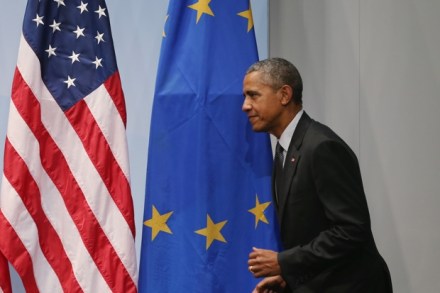
It now looks likely that Barack Obama’s visit to London next week will see the President calling on Britain to stay in the EU. We’re told that Obama will be giving his views as a ‘friend’ and only if he’s asked about Brexit. Nothing sounds more patronising. And as Jacob Rees-Mogg has said, why should we listen to a President who hasn’t been very good? But the truth is that, whether we like it or not, Obama’s intervention could be key. Whatever many think of the President and the collective failures and disappointments of his time in office, Obama is still loved amongst the group of younger voters in Britain who could swing the EU referendum for the remain campaign.

Just join Germany

From our UK edition

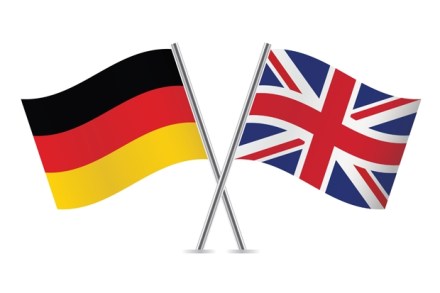
An argument you sometimes hear from those sitting on the Brence (the Brexit fence) is that it’s a pity the EU couldn’t have stayed the same as it was when we first joined it in 1973. Back then, say the Brence-sitters, it was a trading bloc with only nine members, which made sense. Greece wasn’t a member, nor were Spain and Portugal, never mind Lithuania, Latvia and all those other countries ending in vowels. But if we could go back to that better arrangement — play fantasy politics, as it were — would we, with hindsight, want it to include France and Italy, two of the original nine? Their economies are both now looking pretty rackety. In fact, isn’t there only one country in Europe with which we would want to be BFF (Best Friends Forever)?

Could the IMF’s Brexit warning swing it for Remain?

From our UK edition

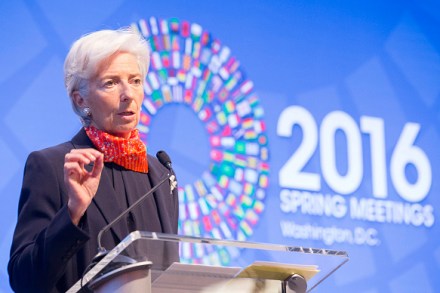
The IMF has published one of the starkest warnings so far against Brexit from an organisation based outside of Britain. The latest set of figures from the International Monetary Fund predict that there will be a 0.3 percentage point dip in Britain’s growth forecast this year, as a result of the referendum. And the IMF warned that if Britain did vote to leave the EU, it could lead to ‘severe regional and global damage’. Both sides have used the statement to exchange in the latest round of tit-for-tat. George Osborne has said ‘for the first time, we’re seeing the direct impact on our economy of the risks of leaving the EU.

Watch: Syed Kamall’s rude gesture towards Belgian MEP caught on camera

From our UK edition

Given that Syed Kamall is backing Brexit, the Conservative MEP has made little secret of his dislike for aspects of the EU Parliament. However, today Kamall appeared to struggle to keep such feelings in check when a Belgian MEP spoke as part of a session of Council and Commission statements on Counterterrorism following the recent terrorist attacks. Clearly unimpressed by Guy Verhofstadt's words, Kamall was caught on camera expressing his displeasure: https://twitter.com/SpiegelPeter/status/719886057744023552 Mr S will leave readers to reach their own conclusion over what Kamall's gesture means.

It’s a Eurosceptic fantasy that the ‘Anglosphere’ wants Brexit

From our UK edition

No one does as much damage to a country as patriots who affect to love it the most. If you doubt me, ask yourself what is missing from the European debate. The virtue-signalling right flap their arms to semaphore their belief in restoring Britain's greatness. Yet they do not answer an obvious question: if leaving the EU is in our interests, why do none of our allies want us to do it? The original opponents of British entry to what was then the Common Market could point to Australia and New Zealand, who hated the idea of Britain turning its back on the EU. Even today, 40 years on, David Davis talks of Brexit as an 'opportunity to renew our strong relationships with Commonwealth and Anglosphere countries.' Yet he cannot point to a single Commonwealth country who agrees with him.

The government can’t be relied on to rear happy farm animals

From our UK edition

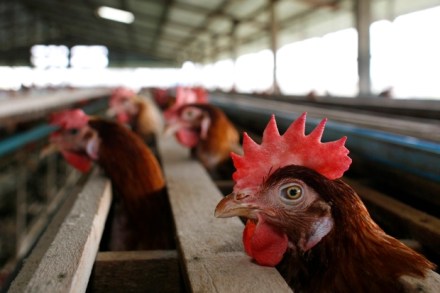
Yesterday, the government abandoned its plans to scrap farm animal welfare codes, but if you think that means the cheap chicken you buy is ethical, you’re a bird brain. The embarrassing u-turn was made after animal rights charities pointed out that asking the industry to come up with its own guidelines wasn’t going to work. The poultry industry is hardly going to introduce new rules that ensure chickens have more space to roam in if it might impact on profits. Pardon the pun, but it’s a bit like asking turkeys to vote for Christmas – they simply won’t. But can you really trust the government to ensure high standards of farm animal welfare? Not really, is the simple answer. At the moment, animal rights are governed by EU laws.

David Cameron defends £9m spend on EU leaflets

From our UK edition

David Cameron has defended the £9m government leaflet promoting the EU as ‘money well spent’ and ‘necessary’, as the Tory party erupts into fury once again. What’s interesting about this new row - over a leaflet sent to all homes which sets out ‘why the Government believes that voting to remain in the European Union is the best decision for the UK’ - is that it has incensed not just those usual suspects who are annoyed that the Remain side already has a natural advantage in the referendum campaign in that it can wheel out the Prime Minister for guaranteed media attention whenever it likes.

Boris Johnson blasts government’s £9m EU leaflets: ‘it’s a complete waste of money’

From our UK edition

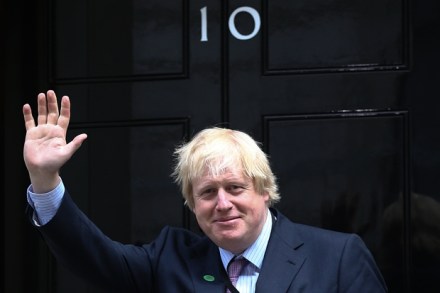
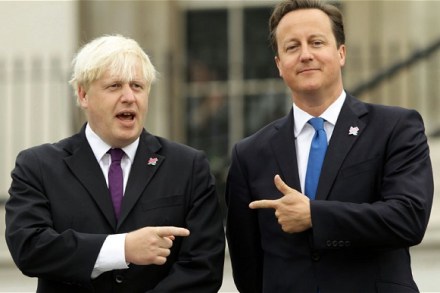
The news today that the government are to spend over £9m of taxpayers' money on leaflets for the pro-EU campaign has gone down like a lead balloon in the Brexit camp. In an interview with ITV News, Boris Johnson has blasted the leaflets as 'a complete waste of money': 'I think it's a complete waste of money. It's crazy to use quite so much taxpayers' money on stuff that is basically intended to scare people and to stampede people in one direction.' https://twitter.com/itvnews/status/717786775523954688 Another nail in the coffin when it comes to Johnson's relationship with the Prime Minister.

Whoever invented referendums needs a kicking

From our UK edition

My favourite quote of the year so far comes from the author Fay Weldon. ‘If this were an all-woman society,’ she said, ‘we wouldn’t have television. We’d just have lots of nice cushions.’ Fay was making the point that it’s men who do all the -inventing and most of the work. She has since profusely apologised for this remark and others made during the same ‘off the cuff’ interview — almost certain proof, then, that what she said is largely true. But only largely, Fay. Without women we might not have discovered either of the unpleasant radioactive elements polonium and radium — both stumbled upon by Marie Curie, who was habituated (unwisely) to carry chunks of them around in her apron pocket.

High life | 31 March 2016

From our UK edition

My old friend and one-time doubles partner Ray Moore has stepped down as chief executive of the Indian Wells Tennis Tournament for telling the truth. As Rod Liddle wrote in these here pages a couple of weeks ago, ‘There is nothing more damaging to a career than telling an unfortunate truth.’ Ray Moore was a very good South African tennis player and is a very nice guy. He once partnered me to a final in a major tournament and we have stayed friends for 40 years and more.

The government would not do more for the steel industry, even if the EU allowed them to

From our UK edition

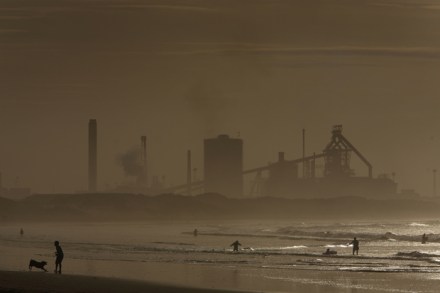
Sajid Javid is the driest and most Thatcherite member of the government. So, it is no surprise that he is — rightly, to my mind — rejecting calls for the nationalisation of the steel industry following Tata’s announcement that it plans to sell its UK steel-making business. But the steel issue has now got caught up in the EU referendum, with the Out side pointing out that EU state aid rules limit what the UK government can actually do to help the steel industry. Now, personally, I doubt that the government would want to do more even if it was allowed to. Yet, some ministers keep suggesting that the government would do more if it could.

Why is Gus O’Donnell misleading the public about the EU rules on Brexit?

From our UK edition

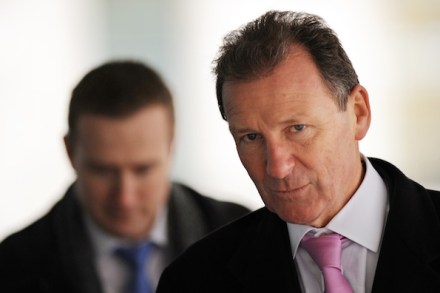
When Sir Gus O’Donnell was head of the civil service, those who worked under him would have prided themselves in the code that he was supposed to uphold: to be impartial, avoid politics and do their best to make sure the public is not misled. This morning, Sir Gus was involved in what can only be described as a systematic attempt to mislead the public about the EU and the terms in which Britain would leave. His point: that it would take more than two years to negotiate the terms of UK’s exit, and this deadline could only be prolonged with hard bargaining from hostile partners. "Obviously at the end of two years anything we haven't negotiated has to be extended by unanimity of a vote excluding us so that's a bit scary.

Are Boris’s admirers prepared to have their hearts broken?

From our UK edition

When I was 18, I had my first tutorial on Anglo-Saxon history. I cannot remember the details but the don talked of the king of Mercia, or some such, marrying his daughter to the son of the king of Northumbria, or somewhere or other, because of the political advantages the union would bring the two crowns. The teenage Cohen listened appalled. 'You mean,' I cried, 'they didn’t love each other?' In a voice so acid, it might have burnt through the hull of a battleship, the don hissed: 'I do not subscribe to the Mills & Boon school of British history.' After that encounter, I stopped subscribing too. Views of the veracity of the man it appears will be our next prime minister fall into two camps.

Vote Leave exec accuses Alan Duncan of asking for a board position before backing Remain

From our UK edition

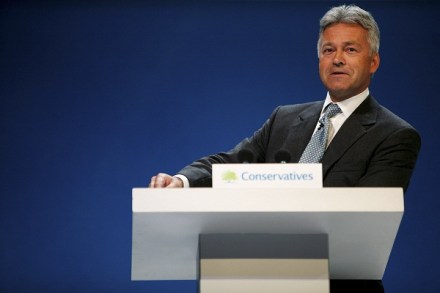
This week Sir Alan Duncan penned a piece for the Telegraph entitled 'why this lifelong Eurosceptic is now voting to stay in'. In this, the Conservative MP explained the reasons he is backing Remain. To show how torn he had been over the decision, Duncan revealed that he had even met with Vote Leave ahead of opting to join the In camp: 'I am one of those who many expected in the referendum campaign to be a fervent advocate of leaving. Until recently I also expected it of myself – even going so far as to speak to the Leave organisers at their HQ.' However, Vote Leave's Matthew Elliott has put forward a different version of events. He claims that Duncan actually went a step further than just visiting their offices.

In defence of Boris Johnson

From our UK edition

It is good that Matthew Parris has taken on Boris. The Mayor has had too easy a press in many quarters. There is a good reason for this: he is one of us. There is a bit of the Bullingdon in Fleet Street: we are often too disinclined to attack our own. Matthew Parris acknowledges this, and the vitriolic nature of his Times column on Saturday is an attempt to redress the balance. But for me, my objection is not that Matthew has gone over the top in his attack on Boris – it is that his line of attack is fundamentally wrong. The same is true of Nick Cohen’s blast yesterday on the same subject. Let’s brush over Matthew’s complaint that a man who once supported Clause 28 has no right to boast on an LGBT ‘out and proud’ video.

Can the ‘leave’ campaign convince British farmers that they’d be better off out?

From our UK edition

As Nigel Farndale wrote in this magazine in February, leaving the EU would have a dramatic effect on British farmers and the agricultural industry. When it comes to British agriculture, the EU very much sets the rules – with regards to both regulations and funding – so a vote for Brexit would mean change, in a big way.   But what makes the EU debate even more interesting when it comes to farming is that the farming minister – George Eustice – has placed himself firmly in the ‘out’ camp. Eustice, after all, was once a Ukip candidate in the European Parliament Elections, and was Campaign Director for the No to the Euro campaign – so perhaps it was unsurprising that he would join the campaign to leave the EU as well.

Viva Obama! Viva Fidel! Viva Jean-Claude Juncker!

From our UK edition

In Cuba, they are shouting: ‘¡Viva Obama! Viva Fidel!’ What a slogan. The FT headline ignorantly described this as a ‘Nixon in China’ moment: implying that Obama had previously been opposed to Castro’s Cuba. The US President is expected to come to Britain next month to order us to stay in the EU. Let us strew his way with palms. Let all of us — workers, peasants and soldiers — shout with one voice ‘¡Viva Obama! Viva Jean-Claude Juncker!’ This is an extract from Charles Moore's Notes. The full article can be found here.

Listen: Justin Webb takes Amber Rudd to task on Today over her ‘plague of frogs’ Brexit claims

From our UK edition

Today Amber Rudd is doing her bit for the In campaign with a speech in which she will warn the nation that UK energy costs could 'rocket' by £500 million a year if Britain were to vote to leave the European Union. The Energy and Climate Change Secretary will also claim that leaving the EU would mean that President Putin could raise the price of Russian gas and in turn cause energy chaos for Britain. To discuss the claims, Rudd -- whose brother Roland is the treasurer of the Britain Stronger in Europe campaign -- appeared on the Today show with Justin Webb. Unfortunately for Rudd, Webb had done his research when it came to her claims. He proceeded to take her to task over  the speech which he pointed out had a 'bit of a plague of frogs feeling to it'.

Letters | 23 March 2016

From our UK edition

PC and abortion Sir: It is heartwarming that Simon Barnes’s son should not suffer the stigma experienced by those with Down’s syndrome in earlier generations (‘In praise of PC’, 19 March). But is it not ironic that in this kinder, more generous and respectful age, over 90 per cent of fetuses diagnosed with Down’s are aborted? Rather than hiding the children away, we now ensure that most of them are not even born. If political correctness had really become sane, surely our kindness, generosity and respect would extend to the womb as well? Matthew Hosier Poole, Dorset Naming conditions Sir: Simon Barnes, makes a couple of assumptions which do not bear scrutiny.

Feminists for Brexit

From our UK edition

For decades — even before it had its name, which sounds thrilling, as words with an X in them tend to — I’ve been a Brexiter. I even mistrusted the Common Market, as we called the mild-mannered Dr Jekyll before it showed us the deformed, power-crazed face of the EU’s Mr Hyde. The adored MP of my childhood, Tony Benn, preached against it in any shape or form. ‘When I saw how the European Union was developing,’ he said, ‘it was very obvious what they had in mind was not democratic. In Britain, you vote for a government so the government has to listen to you, and if you don’t like it you can change it.