Eu

Your scorecard for today's EU referendum vote

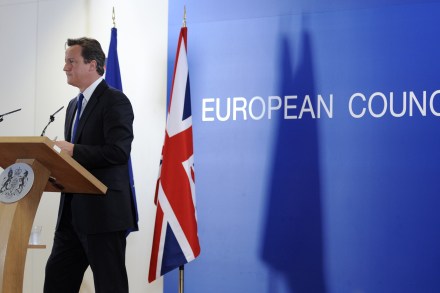
I hope you adjusted your calendars accordingly, CoffeeHousers. The parliamentary debate and vote on an EU referendum starts at 1600 today — and what morbid fun it promises to be too. Fresh from being bawled out by Nicolas Sarkozy at the weekend, David Cameron is returning to London to be bawled out by a significant proportion of his own party. And while the Tory leadership is certain to defeat David Nuttall’s Eurosceptic motion, it will not avoid being wounded in the process. Most of the wounds have already been self-inflicted. By way of a scorecard for the coming bloodsport, I’d recommend that you read the two posts by parliamentary experts
Tory Wars, redux

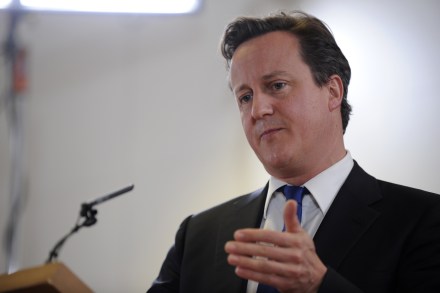
Even after reading Jonathan’s post, I struggle to see the strategy in David Cameron’s position with his party over Europe. The motion is non-binding, and Miliband has three-line-whipped his party to vote against so there was zero chance of the motion passing. It is the result of a petition to parliament, so you can’t write this off as the idea of a few Tory MPs in the tearooms. Cameron should have said: “Sure, guys, have your vote. It’s a backbench motion, so the government won’t take part and as you know I’ve booked a trip abroad next Thursday anyway so I won’t be here. But I was serious when I

Cameron's strategy is better than it looks

The number of Tory MPs set to defy the government in the vote on an EU referndum tomorrow now stands at around 90, and numerous backbenchers – including John Redwood and David Davis – have called on the Prime Minister to drop the three-line whip. Even though he is certain to win the vote, many are already accusing Cameron of “blundering” and mismanaging this affair. But others are now suggesting that Cameron is in fact displaying a great deal of political nous by taking on the hardline Eurosceptics in his party. In the Indepednent, John Rentoul declares that “Cameron is the one who will emerge victorious and strengthened” from tomorrow’s debate:  “He will win

Liddington: EU vote should follow a new treaty

David Liddington, the Europe Minister, has just told the Murnaghan Show that the moment for a referendum on the European Union is once a treaty change has been agreed. Liddington argued that then everyone would know what they were voting on. This is quite a significant shift in the government’s position. Up to now, the position has been that there would only be a referendum if yet more powers were transferred from Westminster to Brussels. Liddington appeared to be saying that a vote would follow any new treaty, even one that brought powers back. This moves the government far closer to a position of renegotiation followed by a referendum. If

More fuel for the EU rebellion

Today’s Daily Express poll will add to the sense of momentum that the Tory rebels are feeling ahead of Monday’s vote. The fact that 81 per cent of Tory voters want their MP to vote for the motion will make it harder for the whips to dissuade those who are inclined to vote for the motion. The poll results also demonstrate that only a small percentage of the public would vote for the country’s current set-up with the European Union if they had the chance. Only 15 per cent would vote to stay in, compared to 28 per cent who would vote to leave, while 47 per cent would plump

Cameron unmoved by the Eustice amendment

Sources in Number 10 tell me that the party leaderships feels it cannot support the Eustice amendment. They stress that it is not Conservative party policy. But I also detect a sense that there is no point even considering backing it as the Lib Dems would never accept renegotiation followed by a referendum being government policy. If Number 10 continues to be inflexible, it will have a sizable rebellion on its hands. Tory MPs — especially those who think they might have a reselection fight on their hands, and that’s a lot of them thanks to the boundary review — want something to take back to their constituencies. A hardening

Cameron needs an amendment – and fast

A third of Tory backbenchers have now signed the EU referendum motion. Worryingly for the whips, this isn’t the limit to this motion’s appeal. There are several Tories who plan to come out for it on Monday and one PPS, Stewart Jackson, has already made clear that he’s prepared to resign over the matter if necessary. Last night, Number 10 sources told me that they would be interested in a compromise amendment. But I think the Cameron operation will have to offer more than they were planning to. What’s needed to head off this rebellion is a commitment to renegotiation at the first available opportunity followed by a referendum on

Cameron starts playing catch-up over the EU referendum vote

Adjust your calendars, CoffeeHousers. The parliamentary vote on an EU referendum is no longer set for next Thursday. As the Mail’s James Chapman revealed this evening, Downing Street has moved it forward to Monday so that David Cameron and William Hague can both attend. They would have been away on government business otherwise. What to make of this hasty measure? I suppose it could feasibly be seen as a scare tactic on the part of No.10: strengthening the current three line whip by making it very clear that Dave Is Watching You. But it’s far more likely that Cameron is appearing in order to set out the sorts of concessions

The government's never-ending European problem

We thought CoffeeHousers might appreciate an advanced viewing of James’ political column from tomorrow’s issue of The Spectator, so here it is: In the hours after the coalition was formed last May, a minister and a group of Tory MPs sat around a table in a parliamentary cafeteria discussing what it all meant. One new MP said to the minister that it was a pity that, in the course of the talks, the Tories had agreed to ‘park Europe for the next five years’. The minister, high on the Panglossian spirit of the early days of the coalition, reassured her that this was for the best. The party could devote

The Greek Crisis in a Single Chart

There are some – especially on the American left – who give the impression of thinking that if only the European Central Bank behaved differently or if only Angela Merkel could be persuaded to do the right thing then somehow there might be a way out of the eurozone crisis. But even allowing for the fact that politics and economics are generally concerned with making the best of less than optimal situations sometimes there really is no way out. Here’s a handy chart that basically explains it all: No-one is “solving” this crisis because there isn’t a solution to it. Since every choice leads to bad places it is sensible,

Europe bubbles to the surface in PMQs

A particularly fractious PMQs today. Ed Miliband started by asking questions about Liam Fox which, frankly, seemed rather out of date given that Fox has already resigned. Cameron swatted them away fairly easy, mocking Miliband with the line “if you’re going to jump on a bandwagon make sure it is still moving”. But when Miliband came back on the economy, Cameron was far less sure footed. The Labour leader had one of those great PMQs facts: despite the government having issued 22 press releases about the regional growth fund in the last 16 months only two firms have received any money for it. A visibly irritated Cameron then said that

A counterweight to France-German power

It was only a matter of time before the Franco-German drive to reshape Europe’s “economic governance” met with a counter-proposal. In international politics, a powerful state or group of states tends to lead others to band together in or order to provide some form of balance. This is now happening in Europe. David Owen and David Marsh are proposing the creation of a “Non-Eurogroup” (NEG), corralling the 10 EU countries outside the Eurozone into a group. Writing for the Financial Times, they argue that such an NEG would bring many benefits. They say: “Setting up the NEG would establish rights and responsibilities for non-eurozone members, ending the long-held European position

Getting over excited

As Peter Oborne observed on Newsnight recently, there is a tendency in the Eurozone to think its problems are political, rather than an economic crisis that cannot be wished away. For example, the Bundestag’s much vaunted approval of an expanded EFSF has done little to alleviate Europe’s weakness. Here’s why: 1) We all knew the vote would pass: the opposition support made sure of that. The key point was that Angela Merkel got an absolute majority. It was a close call, but it always seemed likely that she would gain enough support from the flailing junior coalition party, the FDP, which, given its collapsing poll results, was unlikely to threaten the stability of the coalition for

Cameron's perfect Europe row

The European Commission has just given David Cameron the perfect chance to stand up to Brussels. Its attempt to make Britain pay benefits in full to any citizen of an EU country who pitches up here is, frankly, barking and if successful would totally undermine public support for the free movement of people, as Fraser said last night. But, politically, this row provides Cameron with a real opportunity. By taking the commission on over it, he can reassure his party that he’s still a Eurosceptic while avoiding the more fundamental issues of the euro and Britain’s whole relationship with the EU. Indeed, I’d be very surprised if we didn’t see ministers repeatedly

Tories pray for no more from Europe

Tory strategists had hoped to keep Europe off the agenda at this year’s party conference, but they seem to have failed already. The European Commission’s threat about welfare claims has forced IDS into action. Ben Brogan reports that the work and pensions secretary was nothing short of visceral in his contempt for the “land grab”, which will apparently cost £2.5 billion a year. But, IDS’s rage is quiet compared to John Redwood’s, who asks “Why won’t he [William Hague] get on with renegotiating the UK position [in Europe]?” Next is the EU’s Agency Workers Directive, which comes into force tomorrow. Businesses complain that this will significantly increase their costs and have

The Polish Invasion Was A Good Thing

It seems typical of Labour’s reaction to being removed from office after 13 frustrating years in power that it should have decided to disown one of its braver, better, bolder decisions: the decision to permit unfettered movement from Poland and other EU-accession countries to the United Kingdom. It takes a special kind of malignancy to disown your most benign moment in power. But this is where Labour are; trapped in equal measure by their search for populism and their weakness for authoritarianism. First it was Ed Balls, then it was Yvette Cooper and then Ed Miliband himself. Each apologised for decisions that did their party – and their country –

New blow to European integration

A spectacular row has broken out in Europe. Bulgaria and Romania have been denied access to the Schengen area after Finland and the Netherlands vetoed their inclusion. The Romanians pre-empted the decision over the weekend by banning Dutch flower imports on the grounds that they harboured dangerous bacteria. This decision won’t disrupt the continuity of European life because Bulgaria and Romania already have access to the single market; so, in this case, the Schengen rules would mainly pertain to customs checks rather than freedom of movement. But this is of enormous symbolic importance because it rejects Jean Monnet’s mission of ever closer union. The Dutch and Finnish governments are under

Time to leave the EU?

Today’s Lib Dem attack on their coalition partners comes from Chris Huhne, who rails against a “Tea Party tendency” in Conservatives sceptical of the European Union. His premise is that those who are hostile to the EU are a minority. It’s worth digging a little deeper here, because the opposite is true. If you believe that Britain has benefited from EU membership, you’re in a smallish minority – 35 per cent to be precise. Huhne seems genuinely unaware of the depth of feeling out there. CoffeeHousers may be familiar with opinion polls commissioned by eurosceptic groups. But – as we say in the leading article of this week’s Spectator – the

Bumper turnout for Tory Euro-sceptic meeting

I hear that 124 Tory MPs attended the inaugural meeting of the Tory ginger group pushing for renegotiation of Britain’s relationship with Europe. Those present included at least one minister — Theresa Villiers, several PPS and a few whips who were keeping a beady eye on proceeding. George Eustice, the convener of the group, told the room that he wanted the group to work with the government rather than against it and that he wanted front-benchers to feel comfortable attending the meetings. The group intends to put out a series of proposals as to which powers should be repatriated before issuing a white paper on how the government should renegotiate

Hague says he's been held back on Europe by the Lib Dems

William Hague’s comments in an interview with The Times that the Liberal Democrats are restraining the Tories on Europe will increase the grumbling among Tory backbenchers about the power of the junior coalition partner. Hague tells the paper that ‘A point of difference in our manifesto was the aim to repatriate some powers. Clearly that’s something I’m in favour of, but that’s the area we had to compromise on in return for other compromises.’ (In many ways this is a statement of the obvious. But in the current uncertain European environment, his remarks are news). In an attempt to reassure euro-sceptics, Foreign Secretary stresses that the Conservative party ‘would like