Eu

Europe, the times they are a-changin’

From our UK edition

Before writing my column for The Spectator this week I asked one of the most clued-up Eurosceptics on the centre right what opt-outs Britain should push for in any negotiation over an EU treaty change. His answer, to my surprise, was "forget that, we should just leave". This answer took me aback because this person had been the embodiment of the view that the European Union could be reformed from within. But people are dropping this view at a rapid rate for reasons that Matthew Parris explained with his typical eloquence in The Times (£) yesterday. I wrote in The Spectator this week that two Cabinet ministers now favour leaving the EU only to learn soon afterwards that the real number is three. Iain Martin writes that half of all Tory MPs now favour leaving.

Will Britain leave the EU in 2025?

From our UK edition

Britain is going to stay in the EU for the next ten years at least. Of that I'm sure. But after that, when David Cameron's retired, William Hague has taken to writing books, George Osborne's had his chance and the 2010 intake run the party, the Tories are going to be more openly hostile to the EU. Labour will too; it has a larger reservoir of pro-EU sentiment among its ranks, but one that is shallower than it was. Focusing on the Tories, it is worth noting that nearly all of the names being bandied about as future Tory leaders have a visceral dislike of the EU. By and large they will, by then reflect popular opinion (if they don't already): as veteran EU watcher Charles Grant notes, there is a limit to how long an elite can cross the population.

The gulf between public opinion and Westminster opinion on Europe

From our UK edition

It's Europe Day today, where the flag of the EU will be flown by 26 of its 27 member states. David Cameron is refusing to join in* — and rightly. Why celebrate an institution to which the British public is hostile? I've always found it strange that Euroscepticism is caricatured as a fringe, minority position when the polling evidence is so overwhelming. The European Commission anxiously monitors this, conducting identical polling in all member states — the largest poll in the world. The results are never publicised in Britain because they make clear the depth of public hostility. We have dug a few out, from the Eurobarometer data archives, and print them below.

Much ado about Brussels, bailouts and budgets

From our UK edition

The news that the European Union has decreed that its Budget be increased by 4.9 percent in 2012 ties a knot in the stomach, as I ponder an Easter weekend spent in Margate rather than Majorca due to austerity. As Tim Montgomerie notes, the government is taking this opportunity to assert its euroscepticism. Stern communiqués are being worded; stark warnings are being issued. Behind the scenes, the government has joined with the Dutch, its closest ally on the Continent, to confront the avaricious Commission. Patrick Wintour reports that the French will also oppose the proposed Budget, and the Austrians, Danes, Swedes, Finns and Belgians are expected to lend their weight to the cause.

Allied military intervention in Libya has commenced

From our UK edition

Reports are coming in that French jets have fired the first shots in the UN-supported intervention in Libya. The coming conflict will determine, in the short term, whether the Gaddafi regime is toppled and, in the longer term, whether the international community rediscovers its appetite for intervention which had been so diminished by the controversies over Iraq and the difficulties of the Afghan mission. That there is intervention at all in Libya is down in no small part to David Cameron and William Hague. Hague played a key role in ensuring that Arab countries were prepared to commit to putting planes in the air in this operation, something that was crucial to moving the vacillating Obama off the fence.

Cameron’s persistent leadership on Libya was key to tonight’s resolution

From our UK edition

David Cameron deserves huge credit for tonight’s Security Council vote. He has kept plugging away for a no fly zone and has succeeded in moving the Obama administration’s position. Cameron’s decision to have Britain table with the French and the Lebanese a Security Council resolution without the support of the Americans or even having talked to the president was a bold move that has turned out to be a game changer. The Prime Minister has proved himself an effective and courageous actor on the world stage. The question now is how quickly and effectively military force can be deployed and how Gaddafi is to be ousted. It, obviously, would have been better if the no fly zone had been imposed when the rebels had the military momentum.

Downing Street’s bureaucratic burden

From our UK edition

Do head over to ConservativeHome, where Tim Montgomerie has put together a comprehensive guide to the revamped Downing Street operation. I won't spoil its considerable insights here, except to highlight this: "An analysis of papers sent to Downing Street and the Cabinet Office has revealed that just 40% are directly related to the Coalition's programme. Roughly 30% come from the Whitehall bureaucracy and another 30% from the EU." James makes the point in his latest politics column that Tory ministers are becoming more and more Eurosceptic as they face the EU in government. That pile of European directives in the in-tray must just be getting too much.

The EU should impose sanctions on Gaddafi’s Libya

From our UK edition

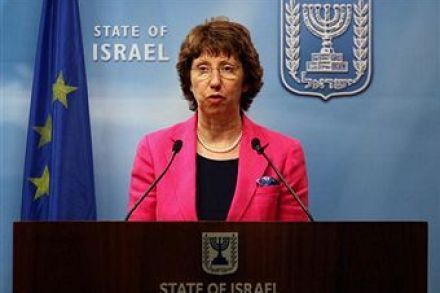
The EU spends €460 million a year in operational costs alone on its new foreign policy department, the External Action Service, headed up by Catherine Ashton. This body - created by the Lisbon Treaty - was Europe’s ‘great white hope’ for the global stage, finally allowing it to speak with one voice and therefore giving it leverage where it previously had none.   It hasn’t quite worked out that way. Caught between Cairo and Tripoli, the EU has received yet another reminder that its bureaucracies and institutions cannot magically replace 27 individual foreign policies, as EU leaders continue their bickering over what to do.   The EU’s response to the turbulence in Libya has been fragmented at best, and contradictory at worst.

China eclipses the Japanese economic miracle

From our UK edition

Official figures suggest that China has replaced Japan as the world’s second largest economy, after an estimated 10 percent growth rate left China with an economy worth close to $5.8trillion at the end of quarter four 2010. Japanese growth hovered around the 3 percent mark in 2010 with a total GDP value of $5.47 trillion. Analysts have told the BBC that it is ‘realistic’ that China will overhaul the US’ economy in about a decade, which, as Pete has demonstrated, does not look too outrageous a suggestion.  All of this puts me in mind of the European Union. The CIA World Factbook records that the EU leads the globe in GDP (purchasing power parity): with an estimated value of $14,890,000,000,000, against the US’ $14,720,000,000,000.

Irish to block EU integration

From our UK edition

In continental lore, it is Britain that is often seen as the greatest impediment to EU integration. The government's EU Bill initially caused horror in the rest of Europe. Would Britain have to vote for each treaty change, even those needed to enlarge the Union? Before the text of the bill became clear, every self-respecting eurocrat spat the name 'Britain' over their lait russe. Even now, they are not best pleased. But in future it may not be Britain, but Ireland that will block any further EU integration. For Ireland is turning a lot more eurosceptic. The role of the euro in Ireland's decline remains a subject of debate. In eurosceptic circles, there is wilful ignorance of the role played by Ireland's politicians. Much better, it seems, to blame the euro alone.

What to do about Belarus, Europe’s last dictatorship?

From our UK edition

For a while it looked like the West had the upper hand. Belarus' Aleksandr Lukashenko, Europe's last dictator, seemed to be moving away from Russia and closer to the West. A succession of European ministers went to see him and returned to develop packages of support and assistance with his country. In that new "Great Game" played out on Europe's periphery it looked like Vladimir Putin's winning streak was finally coming to en end, after partial success in Georgia and outright victory in Ukraine. Or so European leaders hoped. But any hope of changing Belarus' position has now been dashed with the violent crackdown in Minsk against pro-democracy activists following December's presidential elections.

A preview of the rebellions to come

From our UK edition

Today’s papers are full of the Tory right asserting itself. In the Mail On Sunday, Mark Pritchard—secretary of the 1922 committee—demands that the Prime Minister and his allies come clean about any plans to create a long-term political alliance between the Tories and the Lib Dems. In The Sunday Telegraph, there’s a report that Tory rebels will vote with Labour to try and defeat the coalition’s European Union Bill. I suspect that these stories presage one of the major themes of the year, an increasingly assertive right of the Tory parliamentary party. For too long, Cameron has neglected his own MPs both politically and personally. The result is a willingness to cause trouble for the government.

Europe keeps vexing the coalition

From our UK edition

That the Conservatives and the Lib Dems disagree fundamentally on Europe is a well-known fact. But how much they disagree is rarely put on display as clearly as in today’s European Voice. Andrew Duff, Liberal Democrat MEP and president of the Union of European Federalists, argues that the coalition’s European Union bill – David Lidington’s masterpiece – amounts to “legal pedantry” and will make the UK an “untrustworthy negotiating partner, particularly in matters of treaty amendment, which is such an important driver of European integration.” 'At home, referenda will unleash the forces of populist nationalism. Facile coalitions of nay-sayers will form to block Britain's progress in Europe.

A “two stone” solution to the Euro crisis will unbalance the coalition

From our UK edition

Whatever the British government wants, moves are now afoot on the Continent to address some of the structural problem with the Euro. They may in the end lead to some form of fiscal federalism. So far they are not supported by Angela Merkel, the key decision-maker, who worries constantly about the court in Karlsruhe, which has set clear limits on further European integration. But they are said to be supported, at least in part, by Finance Minister Wolfgang Shauble. Writing in the Financial Times, Frank-Walter Steinmeier and Peer Steinbrück argue that the EU needs "a more radical, targeted effort to end the current uncertainty, and provide stronger support for the future of Europe’s common institutions.

Brit-free EU diplomacy takes shape

From our UK edition

After months of behind-the-scenes work, the shape of the European External Action Service - the EU’s diplomatic corps - is now coming into view. The Bruxelles2 blog has obtained a version of its structure with some of the key names penciled in. You can find it here.      The top three jobs in the EU’s diplomatic headquarters will go to a Frenchman, a Pole and a German. The only senior UK official, besides Catherine Ashton (and her personal aides) is long-serving diplomat and geo-strategist Robert Cooper. But his name, rather mysteriously, is followed by a question mark. Of the EU “ambassadors” that have been appointed until now, there is one one Brit, ex-Ambassador Ros Marsden, who is now the EU envoy in Sudan.

A more German Europe?

From our UK edition

Timothy Garton Ash asked an important question in the Guardian recenty - is Europe becoming more German? Or, to put it more accurately, does the EU have to become more German to survive? "If the eurozone falls apart, it will be because Germany did not do enough to save it. If the eurozone is saved, it will be thanks to Germany. This is the greatest challenge to German statecraft since the country was peacefully united 20 years ago." "Yet here is another horn of Germany's dilemma. For half a century, German politicians have repeated, like a mantra, Thomas Mann's call for "a European Germany, not a German Europe".

Ireland’s crisis is the fault of Fianna Fáil, not just the euro

From our UK edition

In all likelihood, George Osborne will rise this afternoon to groans if not jeers. Britain looks set to lend Ireland £7bn as part of multilateral and bilateral bailouts. Many, particularly the Eurosceptic right, question our involvement, given our straitened financial circumstances and the apparent fact that Britain is sustaining the eurozone’s monetary and debt union, and will have to borrow to do so.     George Osborne has been adamant throughout: Ireland is too important to Britain’s recovery to risk collapse – British and Irish banks are closely linked, debts and borrowing are often co-dependent, trade is very profitable. That the bailout should strengthen the euro is a natural consequence of Ireland being a member of the euro.

The death knell for the Euro?

From our UK edition

Are we witnessing the start of a very long death scene for the Euro? Asked if the Euro will survive, William Hague replied simply: “who knows?”. The new president, Herman Von Rompuy, has said that the Euro faces an “existential test”. We are looking at the very real prospect of the Euro’s collapse. And that “if we don't survive with the eurozone, we will not survive with the European Union”. This would, by necessity, require a new treaty - and give Britain an unprecedented opportunity to renegotiate its membership on terms the public regard as acceptable. In my News of the World column today, I say (£) that this presents Cameron with what would be the greatest foreign policy opportunity of his premiership.

Irish Austerity Diet Revealed: Cheese

From our UK edition

Somehow, I don't think this kind of government assistance is going to be enough to soothe Irish woes: The Government is to distribute some 53 tonnes of free cheese to people in need in the run up to Christmas. Minister for Agriculture Brendan Smith announced the EU-funded scheme today following talks with a number of charitable organisations. He said the cheese will be available free of charge for distribution to those most in need. It will be available from November 15th “in time for Christmas”. The State has been given more than €818,000 from the EU budget to purchase the cheese and the Irish Dairy Board has been awarded the tender to supply it. More than €750,000 will be spent on the Christmas scheme.

Cameron’s provocative language over Gaza serves to obscure the issue

From our UK edition

And there's me thinking that David Cameron's overtures to Turkey were newsworthy enough, when he drops this into his speech in Ankara: "Let me also be clear that the situation in Gaza has to change. Humanitarian goods and people must flow in both directions. Gaza cannot and must not be allowed to remain a prison camp. But as, hopefully, we move in the coming weeks to direct talks between Israel and the Palestinians so it's Turkey that can make the case for peace and Turkey that can help to press the parties to come together, and point the way to a just and viable solution." In a wider sense, this is indicative of the West's firmer attitude towards Israel in the wake of the flotilla incident.