Essay

Murderous impulses: The Possession, by Annie Ernaux, reviewed

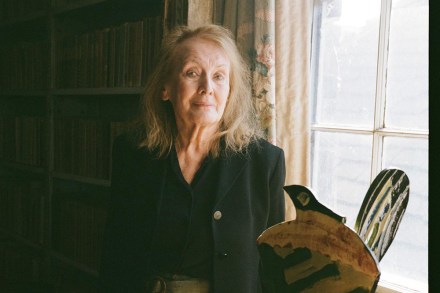
‘The first thing I did after waking up was grab his cock – stiff with sleep – and hold still, as if hanging on to a branch.’ The opening of Annie Ernaux’s essay might suggest that the ‘possession’ of the title is of a husband’s penis. But after our nameless protagonist leaves ‘W’, her husband of 18 years, it is with his new woman that she becomes obsessed – possessed with a ‘primordial savagery’. She is maraboutée, or bewitched. Ernaux writes not in the heat of desire but in retrospect. The translation by Anna Moschovakis is chicly austere. Like concrete poetry, small paragraphs sit adrift on the page; the text is as unmoored as our protagonist.
The benign republic of Julian Barnes

Not long into this essay I found myself wondering if it would have been published if the author were not Julian Barnes. I also wondered: would I have guessed the author’s identity if it had been withheld from me? Actually, it’s really five little essays, whose subjects are ‘Memories’, ‘Words’, ‘Politics’, ‘Books’, and ‘Age and Time’.

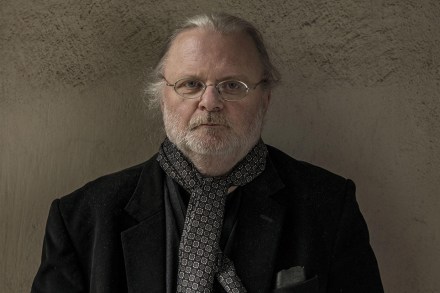
Why did Jon Fosse win the Nobel Prize for literature? It’s baffling.

The Nobel Prize for Literature this year was awarded to the Norwegian novelist and playwright Jon Fosse (pictured). He has long been admired by anyone in the literary world keen to advertise their seriousness. The Canadian critic Randy Boyagoda, writing of Fosse’s Septology in the New York Times, said that he’d ‘come into awe and reverence myself for idiosyncratic forms of immense metaphysical fortitude’. The technique is to bury statements of mystic vision or horror in piles of mostly tiny and uninteresting events Fosse is published in Britain by Fitzcarraldo Editions, that elegant firm bringing all sorts of high-minded writers to our attention in matchy-matchy formats.

Sounds investment

You may have noticed that BBC iPlayer (for radio programmes) has been replaced this week with the new BBC Sounds platform. Instead of simply finding your favourite programmes on playback, BBC Sounds will offer you the chance to personalise your listening, discover programmes recommended ‘just for you’, catch up with the latest podcasts. On Monday, James Purnell, director of radio and education at the BBC, talked up the new venture with Martha Kearney on the Today programme. ‘All of BBC audio will be at your fingertips,’ he promised. ‘We will do the hard work of getting the right programmes to you at the right time.’ ‘Won’t this involve taking money away from existing budgets?

Keir Starmer’s essay is a cliché-ridden disaster

Many years ago, a tabloid newspaper played an unkind prank on the author of a very long and much talked-about literary novel. They sent a reporter to various bookshops to place a slip of paper into copies of the book 50 pages or so from the end. The slip said that if you phoned a particular phone number, the newspaper would pay you a fiver. Gleefully, some weeks later, they reported that nobody had telephoned to collect their prize – from which they deduced that despite its sales figures, practically nobody was actually reading the book to the end. About halfway through reading Keir Starmer’s new pamphlet for the Fabian Society – The Road Ahead – I wondered idly whether a similar prank had been played.

No success like failure

From our US edition

It is a standard narrative in all showbiz reporting — and one that arts hacks seem to be duty bound to abide by. It is the fairy tale of ‘Making It’: the story of a star whose career took time to get off the ground but, thanks to perseverance and self-belief, went stratospheric. It goes like this: ‘I was a nobody, and I was turned down from everything. And I nearly didn’t go to that final audition, but whaddya know? I turned up and... Shazam! Oscars raining down and a mini-series on Netflix.’ There is an encyclopedia of stars who toughed it out before making it big.

failure

Victorian novels to enjoy in lockdown

It’s the perfect opportunity to crack open those classics of 19th-century fiction you’ve always been meaning to read, and I am here to offer some recommendations. But there’s an immediate problem. Do I gesture towards the blindingly obvious? Or do I recommend a variety of obscure and arcane titles? The former strategy is liable only to insult your intelligence — of course you already know Jane Austen and Charles Dickens are worth reading — whereas the latter runs the risk of merely putting you off and making me seem pretentious. There is, though, a third way. What did the Victorians themselves reckon were the great authors of their age? The answer, above all others, is Sir Walter Scott. I know nobody now reads him, but in the 19th century everybody did.

Short stories to enjoy in lockdown

In these circumstances there’s a temptation to reach for the longest novel imaginable. If you’re not going to read Proust now, as the days stretch ahead and the horizons shrink to an hour’s walk a day, when is it going to happen? But it seems much more likely that reading is going to contract, and the most you’ll realistically manage is a short story a day. Fortunately, some of the greatest literature of the last couple of centuries has come in the shape of the short story. Here are nine long-standing favourites of mine that manage to repay repeated re-reading — the definition of a classic. Kafka’s The Metamorphosis is one of those classics that most people think they know but which infallibly surprises.

Split decision | 5 October 2017

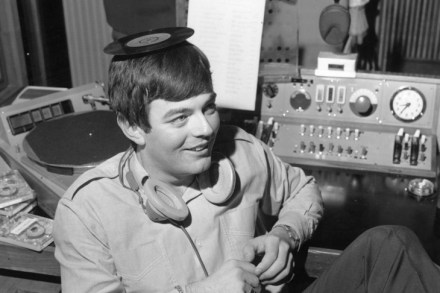
Think back to that morning in September 1967 when the Light Programme was split in two, Tony Blackburn launching Radio 1 with a jaunty new jingle announcing it was all ‘Just for Fun’ while staid old Radio 2 went on with the Breakfast Show and told its listeners to ‘Wake Up Easy’. What is so surprising is just how radical the changes at the BBC were. On that unsuspecting morning, as the Pope urged for peace in Vietnam and a cannabis farm was discovered in Bristol, the Beeb’s radio output was completely overhauled.

Home and away | 17 March 2016

Four programmes, four very different kinds of radio, from a classically made drama to weird sonic ramblings, via the best kind of all: first-person narrative, straight to mike. On Syrian Voices this week on Radio 4 (produced by David Prest), Lyse Doucet has been talking to Syrians whose lives have been utterly changed by the war, now passing its five-year mark. On Monday we heard from Sam, a 22-year-old student who lives in the government-controlled area of Daraa and studies English literature at the university. It was here that the uprising began after some students scrawled graffiti on a wall, ‘It’s your turn next, doctor’, calling for their country to be the next in the Arab world to overthrow its government.

Lessons in the surreal

The new season of the Serial podcast (produced by the same team who make This American Life) was launched last month, releasing one episode a week as the investigative reporter Sarah Koenig looks this time into the strange story of Bowe Bergdahl. He’s the US army soldier who walked out on his platoon in 2009 while stationed on a remote outpost in Afghanistan, close to the Pakistani border. Unsurprisingly, he was captured by the Taliban and held captive for five years before being released, in a prisoner exchange with those held in Guantanamo Bay.

Good cop, bad cop

One of the most shocking items of recent news has been the bald statistic that the number of people shot by law enforcement officers in the United States last year was 1,136. Not died by gangland shooting, domestic violence or terrorist attack. But killed by those who are meant to be preventing such deaths. Many of them are black or Hispanic. As if on cue, the World Service this week launched a documentary series to find out why this is happening. What are the deep structural issues that give rise to such inequalities of experience and opportunity in the (supposed) Land of the Free?

Was this Christian pioneer of radio evangelism a fraud?

She was the sequinned star of the airwaves back in the 1920s, the first preacher to realise the potential of the wireless, long before Billy Graham and co. But who now has heard of Aimee Semple McPherson, the radio evangelist? Born in 1890 and raised on a farm in Canada, she was converted as a teenager by a Pentecostal preacher whom she married and joined on his missionary travels. When he died she took up preaching herself, moving to Hollywood and becoming enormously popular as a great healer of the sick and saviour of souls, dressed up for the part in a long white figure-hugging gown adorned with a huge glittering cross. Naomi Grimley told her story for the World Service’s The Documentary.

BBC radio gets Easter right

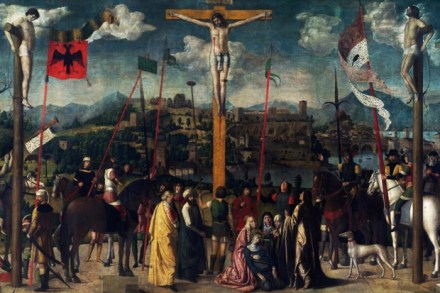
Given the decline of Christian belief in the UK, it’s surprising to discover there’s quite so much about the Easter story on the airwaves this week. You might have assumed that no space would have been found in the schedules for a retelling of the central but yet most difficult Christian narrative. Christmas is easy to sell and to dwell on, with its baby, its joyous arrival, its exotic gifts, but Easter? Who hasn’t as a child in a Christian household bewailed the gloom and doom of Good Friday? Who hasn’t at some point given up on attempting to understand the great paradox of the Passion as it takes us from the triumphant glory of Palm Sunday when Jesus entered Jerusalem to the horrific events of Good Friday fewer than seven days later?

Michael Craig-Martin pokes a giant yellow pitchfork at the ordinary

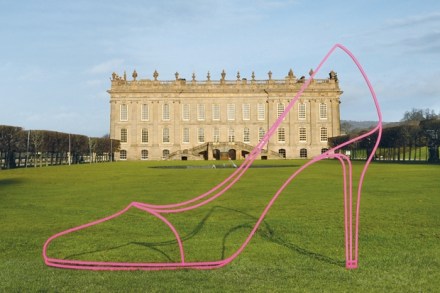
Visitors to Chatsworth House this spring might wonder if they have stumbled through the looking-glass. The estate’s rolling parkland has been invaded by an army of vibrantly coloured, outsized garden tools, whose outlines seem to hover, mirage-like, over the landscape. These painted-steel 2D ‘sculptures of drawings’ are the brainchildren of the conceptual artist Michael Craig-Martin. Craig-Martin finds poetry in the everyday and here he has taken 12 commonplace objects — a wheelbarrow; a spade; a lightbulb — and transformed them into something extraordinary. He also believes that context is everything when it comes to art and the works have been carefully positioned.

Radio that makes you feel the wind on your cheek

After a walk in Richmond Park beset by rush-hour traffic, the Heathrow flight path and a strange swarm of flying ants (strange because so early in the year), it was unsettling to come back in and switch on and listen to Kirsty Gunn’s spring walk for this week’s The Essay on Radio 3 (which I heard as a preview but you can now catch on iPlayer). Gunn lives in Sutherland in the far north of Scotland close to the River Brora, and has a view from her back windows that stretches for 500 square miles with no other house or sign of human life in sight. ‘There’s nothing out there,’ Gunn told us, ‘except space and emptiness, light and land — and the weather.