Erdogan

Putin and Erdogan are playing with fire in the Balkans and the Caucasus

From our UK edition

There are 34 disputed territories in and around Europe. In some cases, two or more nations claim the same patch of land. In others, separatist governments demand their own sovereignty. Many of these disputes have a quaint, eccentric interest: Italy and France struggling over the summit of Mont Blanc; or Britain, Ireland, Denmark and Iceland arguing over the barren islet of Rockall. But a few of them – such as Cyprus, Kosovo, Nagorno-Karabakh and Transnistria – provide more urgent political challenges. As Hannah Lucinda Smith argues, these places are Petri dishes – experiments in populism, nationalism and covert conflict that are being repeated across the continent. Her book Hinterlands explores several of these blind spots in most people’s mental map of Europe.
Why Trump and Israel differ on Turkey’s involvement in Gaza

As the Gaza ceasefire struggles into its second month, a significant difference between the position of Israel and that of its chief ally, the United States, on the way forward is emerging. This difference reflects broader gaps in perception in Jerusalem and Washington regarding the nature and motivations of the current forces engaged in the Middle East. The subject of that difference is Turkey.  The Turks have expressed a desire to play a role in the “international stabilization force” (ISF), which, according to President Donald Trump’s 20-point plan, is supposed to take over ground security control of Gaza from the IDF (and Hamas) in the framework of the plan’s implementation.

turkey gaza

Owen Matthews, James Heale, Francis Pike, Christian House and Mark Mason

From our UK edition

32 min listen

On this week’s Spectator Out Loud: Owen Matthews argues that Turkish President Erdogan’s position is starting to look shaky (1:19); James Heale examines the new party of the posh: the Lib Dems (7:51); Francis Pike highlights the danger Chinese hypersonic missiles pose to the US navy (13:54); Christian House highlights Norway’s occupation during the Second World War, as he reviews Robert Ferguson’s book Norway’s War (22:01); and, Mark Mason provides his notes on coins (28:18).  Produced and presented by Patrick Gibbons.

Erdogan’s latest power move could backfire

From our UK edition

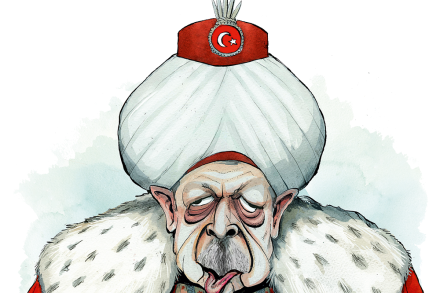
Turkey’s president, Recep Tayyip Erdogan, has never been so weak – nor so strong. At home, he is facing the most potent challenge to his power since an armed coup in 2016, in the form of a serious electoral challenger whom he has just jailed, causing massive protests and unsettling the money markets. Internationally, though, he has never been stronger. Every major power bloc in the world, it seems, needs Turkey’s help, with issues ranging from immigration to peacekeeping and energy supplies. Instead of sinking his main rival’s candidacy, the Turkish president has created a martyr For Europe, Erdogan remains a major gas supplier and an essential bulwark against immigrants from Syria and Afghanistan.

Will Trump join the strongman club?

From our UK edition

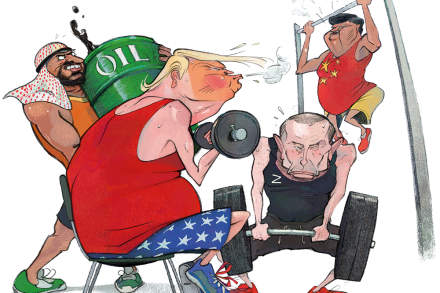
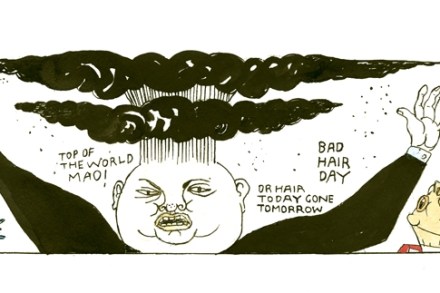
The world’s most exclusive club, of presidents-for-life, is growing. It already includes Putin of Russia, Xi of China, Lukashenko of Belarus, Sisi of Egypt and Kim of North Korea. Then there are the other permanent rulers, MBS of Saudi Arabia and the rest of the Gulf monarchies, not forgetting Khamenei of Iran, and half a dozen African leaders. Now Turkey’s president, Recep Tayyip Erdogan, is trying to join the club. He has engineered trumped-up charges of terrorism and corruption against the man who might beat him in forthcoming elections, Istanbul’s mayor. More importantly, Donald J. Trump openly admires such autocrats and clearly wants to be one himself. This is the age of the strongman – and the world is far more dangerous because of it.

The final countdown: Turkey is on a knife-edge

From our UK edition

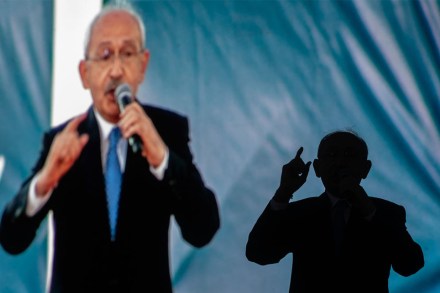
‘Kilicdaroglu’ is a pronunciation nightmare for the non-Turkish. Yet after this Sunday’s presidential elections, international news presenters, who have struggled for 20 years with President Erdogan’s soft ‘g’, might have to work harder to articulate the name of the social democrat leader of opposition. ‘You may call him Mr Kemal [his first name] until he wins,’ I’ve been saying to journalist friends. It’s the kind of simplification that people from complex, non-western countries are self-trained to give so our maddening realities can be better understood: ‘To feel Turkey, imagine the acute polarisation during the Brexit referendum continuing for 20 years. Add to that a far more ruthless Trump with political genius and Islamist aspirations.

Has a Quran-burning protest ended Sweden’s Nato dream?

From our UK edition

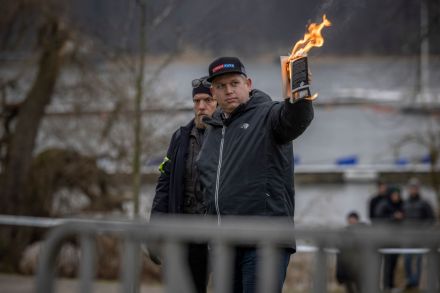
A crowd gathered outside Turkey’s embassy in Stockholm on Saturday afternoon to watch far-right politician Rasmus Paludan burn the Quran. Paludan, who leads the anti-Islam ‘Hard Line’ Danish party, was watched by dozens of photographers, police officers and bemused passers-by. Paludan is no stranger to controversy: he has previously been convicted under racism and defamation law. This latest stunt was called to show his party’s opposition to immigration and, he says, to stand up for free speech. Now, though, the stunt has become a diplomatic crisis for Sweden – and there are fears that its bid to join Nato could go up in smoke.

Erdogan’s plan for war, and peace

From our UK edition

There are ‘global issues that we both have on our plates’, US Secretary of State Anthony Blinken said, mysteriously, when he met with his Turkish counterpart last week. Foreign Minister Mevlut Cavusoglu, standing by Blinken’s side, thought the same. ‘We will focus on areas of partnership in bilateral and regional issues.’ Diplomacy as usual, then. Behind the boring platitudes lies a serious rift between Turkey and the United States. In late December, Syrian and Turkish defence ministers met in Moscow in the first proper meeting between the two governments in a decade. There are plans for another meeting between foreign ministers that could lead to a direct meeting between Turkey's leader Recep Tayyip Erdogan and Syrian president Bashar al-Assad.

Turkey’s dilemma: whose side is Erdogan on?

From our UK edition

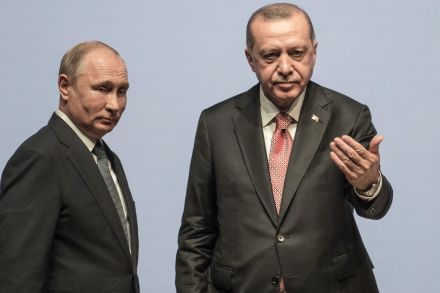
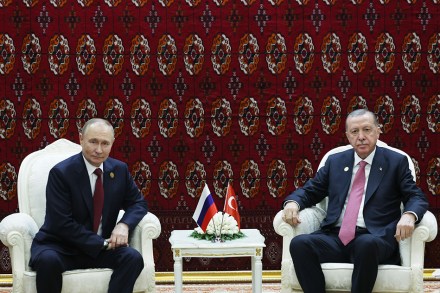
Istanbul Vladimir Putin’s ill-conceived blitzkrieg in Ukraine has failed thanks, first and foremost, to the guts of Ukrainian soldiers and civilians. British and US-supplied anti-tank weapons have played a crucial role, too. But it’s Ukraine’s Turkish--made TB2 Bayraktar drones that have been the war’s most unexpectedly effective weapon. Unexpected not just because of their battlefield killing power but because the father-in-law of the TB2’s inventor and manufacturer is Recep Tayyip Erdogan – the only European leader to have once described himself as a friend of Vladimir Putin. Erdogan, with a foot in the East and West, has emerged as the war’s key power-broker – and his loyalty is being actively courted by both Moscow and Washington.

What Erdogan is thinking about Ukraine

Turkey’s twentieth-century experience was very different from that of most European countries. During World War One, the late Ottoman Empire joined forces with Germany, a decision the sultans not only came to regret but that ultimately led to the fall of their monarchy. The Turkish War of Independence followed, touched off by Mustafa Kemal Atatürk, who transformed the Ottoman Empire into the secular Turkish Republic that still exists today. During World War Two, Turkey remained neutral, because of its previous experiences with joining a German military campaign, but also because it was in dire economic shape. In 1952, Turkey joined NATO, and has since been an ally of the West.

Erdogan’s Covid crisis

From our UK edition

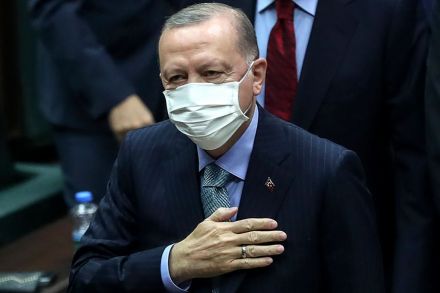
Turkish president Recep Tayyip Erdogan has announced that the country will be heading into its first full lockdown. An early success story, this time last year Turkey was being hailed as a model for its swift actions that ensured the country saw a relatively small death-toll, relative to its size (39,000 people in Turkey have died so far in the course of the pandemic). Now infections are surging: Turkey recorded a total of 61,028 daily cases of Covid-19 and 346 deaths last Tuesday, the highest since the pandemic began. And Erdogan is panicking. There was some hubris in Erdogan’s early declarations of victory against the virus last year.

The empty promise of Turkey’s charm offensive

From our UK edition

On Thursday, Turkey Foreign Minister Mevlüt Çavuşoğlu will land in Brussels to meet with European Union officials to start to ‘build Turkey’s future in Europe’. Next week, Turkey is expected to resume talks with Greece to resolve their maritime disputes after a five-year hiatus. The clash in the eastern Mediterranean between Ankara and Athens has brought the two states to the brink of war and is one of a long list of reasons why Turkey has so far failed to ‘build’ that ‘future in Europe’.

Why Erdogan is relishing making life difficult for Saudi’s crown prince

From our UK edition

Jamal Khashoggi’s murder has been dissected by the world’s press, perhaps none more so than in Turkey, where the journalist met his grisly fate. Fresh information is still being leaked about his final moments inside the Saudi Arabian consulate in Istanbul. In a recording of his murder, Khashoggi can be heard putting up a fight. He orders his killers to release him and warns they’ll be brought to account. But will they? Or are there bigger fish to fry? And what is Erdogan hoping to achieve by making life uncomfortable for Saudi's Crown Prince Mohammed Bin Salman. Khashoggi has been described by some as a Saudi dissident. Turkish media say he saw himself instead as a ‘proud patriot’ who was homesick as a result of his self-imposed exile.

Erdogan’s victory means Turkey’s future is far from certain

From our UK edition

Many people I know woke up yesterday morning with a knot in their stomachs. ‘Another five years,’ I heard one person mutter. They were referring of course to the victory secured by President Erdogan in Turkey. He won nearly 53 per cent of the votes in an election that many had hoped would see him defeated, especially as his regular ‘Ace’ card, the economy, has been rather rocky these past few years. The result showed his main rival wasn’t even close: Muharrem Ince garnered a little shy of 31 per cent in the poll. The 64-year-old president thanked the country for putting their faith in him once again. He told crowds from his HQ in the capital Ankara that ‘the winner of this election is each and every individual’ in Turkey.

What common ground will Theresa May find with President Erdogan?

From our UK edition

When Turkey’s President Erdogan visits Theresa May in Downing Street on Tuesday, he will no doubt be on his best behaviour and control his baser instincts. Otherwise, as he will be met by a Free Turkey Media demonstration organised by English PEN, he could do as he has done earlier – as in Washington and Ecuador – and call on his bodyguards to beat up demonstrators. Of course, if it had been Turkey, they wouldn’t have been allowed to demonstrate, but if they had, they would not only have been beaten up but also incarcerated. Remember the Gezi Park uprising five years ago when over 8,000 were injured, 8 killed and 5,300 were arrested? Since the abortive coup in July 2016, matters have not improved.

President Erdogan’s Syrian dilemma

From our UK edition

Istanbul It is a bad time to have an ally on the fence. With US military action in Syria looking more likely by the minute, and the West’s frosty relations with Russia in danger of deepening into a new Cold War, Washington is eyeing the actions of Turkey’s President Erdogan with concern. Turkey, a NATO member since 1952, the ally with the second biggest army and the only one to share a border with Syria, has spent the past two years cosying up to Russia. Ankara is part of the Astana troika alongside Moscow and Tehran – an initiative that has snatched the peace-broking lead in Syria from the UN and Western-back Geneva talks.

The political similarities between Erdogan and Corbyn

From our UK edition

Jeremy Corbyn’s loyalists might howl at the suggestion that his style is similar to President Erdogan’s. But they would do well to pay heed to the parallels. The Turkish strongman, like the Labour leader, puts great effort into polishing his image as a pluralist and an ally of the minorities. On Friday he sent his customary Passover message to Turkey’s Jewish community, telling them that he regards them as 'an inseparable part' of the country. He did the same for Turkey’s Christians as they celebrated Easter on Saturday, adding that '(our) diversity is our treasure'. A day later, though, Erdogan stood in front of a crowd of his faithful and boomed that Israel is a 'terrorist state'.

Trump and Erdogan: the new populists

From our UK edition

Istanbul The most dramatic part of President Erdogan’s visit to Washington this week was the punch-up between his security guards and Kurdish demonstrators on the lawn outside the Turkish embassy.  The protest was nothing unusual for a president who seems to provoke adoration and disgust in equal measure wherever he goes. Neither was the violent scuffle a surprise; Erdogan's bodyguards did the same last time he was in the States. The news barely touched the Turkish press, and not only because there are few titles left on the news stands which offer opposition to Erdogan. When similar fights break out in the Turkish parliament, as they have done regularly over the past year, such scenes are barely worth writing about.

Portrait of the week | 20 April 2017

From our UK edition

Home Theresa May, the Prime Minister, having repeatedly said that there would be no election until 2020, surprised the nation by suddenly standing at a lectern in Downing Street, while the wind ruffled her hair, and saying that she sought a general election on 8 June. ‘Britain is leaving the EU and there can be no turning back,’ she said. ‘The country is coming together but Westminster is not.’ She said later that she had taken the decision after a walking holiday in Wales, and had spoken to the Queen on Easter Monday.

Turkish democracy has just died; Europe could not have saved it

From our UK edition

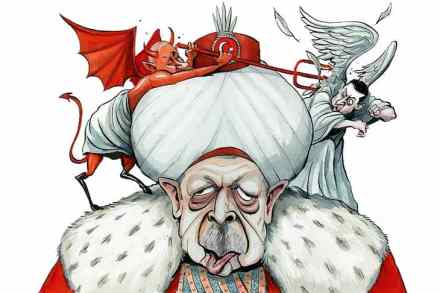
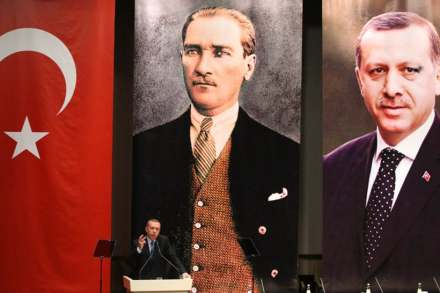
Well farewell then Turkey.  Or at least, farewell the Turkey of Kemal Ataturk.  It’s a shame.  Ataturk-ism nearly made its own centenary. But the nation that he founded, which believed broadly in progressive notions such as a separation of mosque and state, has just been formally snuffed out.  President Erdogan’s success in the referendum to award himself Caliph-like powers for life finally sees the end of Turkey’s secular and democratic experiment. Perhaps the poll which gave him victory was rigged.  Perhaps it wasn’t.  In the same way that perhaps the ‘coup’ last summer was real.  Or perhaps it wasn’t.