Environment

Confronting the climate Jeremiahs

The problem with being a well-known climate skeptic is that whenever there’s a heatwave, you get buttonholed by eco-zealots who think it "proves" they’re right and you’re wrong. The first person to confront me during the current sunny spell was a Guardian journalist at a right-wing conference, which the newspaper had clearly identified as a hotbed of "denialism." It didn’t help that the air conditioning wasn’t working and it was approaching 40°C (104°F) in the main auditorium. "I see you’re sweating profusely," he began, shoving a microphone in my face. "Still think climate change is a hoax?" I had to patiently explain that few people on my side of this debate deny that climate change is real.

climate

Europe has squandered its energy security

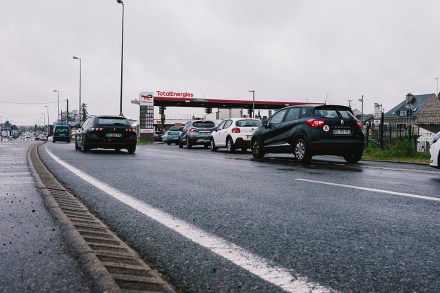
“Europe is desperate for Energy, and yet the United Kingdom refuses to open North Sea Oil, one of the greatest fields in the World.” Donald Trump said this month on Truth Social. It is, to use the President’s phrase, “Tragic!!!” But the necessity of oil hasn’t always been recognized. Back in 2008, while running for the White House, Barack Obama declared that one of the major challenges facing the US is “what we will do about our addiction to foreign oil.” His solution was to switch America to renewables. In that address, known as the “New Energy For America” speech, Obama said, “We simply cannot pretend, as Senator McCain does, that we can drill our way out of this problem.

energy

Do you have the patience to own an EV?

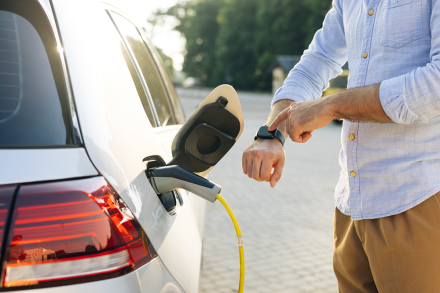
There’s a distinctive glow of virtue that emanates from people recharging their electric cars in public places. I call it the Light of the Charge Brigade. In the run-up to Easter, I spent two hours observing the phenomenon at Fleet Services on the M3. It was mostly men doing the charging. They’ve cracked the EV way of life, and are very pleased with themselves. A sparklingly fulfilled man called Paul was driving from Colchester to Seaton in Devon in his Skoda Enyaq with a carload of friends. He’d planned this stop for a first charge and Pret elevenses. Later he was planning to stop at Montacute House in Somerset for a late lunch and a second charge on one of the National Trust’s chargers.

Trump is right about greenhouse gases

Irresponsible Trump, responsible China: that is the message the BBC's climate editor seemed to be sending us by juxtaposing the news that the President had repealed Barack Obama’s "endangerment finding" and that China’s carbon emissions fell slightly last year. Trump’s critics like to portray him as a rogue figure in a world which is otherwise committed to reaching net-zero greenhouse gas emissions. But is there any truth in that? The endangerment finding does not appear to have had any obvious impact on US emissions The endangerment finding was a piece of legalese issued in a 2009 ruling by the Environmental Protection Agency (EPA).

The inconvenient truth about polar bears

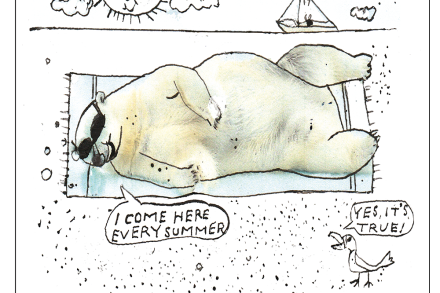
The BBC reported terrible news last week about polar bears: they are thriving. This is very annoying of them as it goes against the interests of environmental activists, polar bears being the very emblem, mascot and clickbait of climate change cataclysm. But the bears’ stubborn refusal to get the memo and starve has become too obvious to ignore. The latest evidence comes from the Barents Sea, and the Norwegian-administered archipelago of Svalbard in particular, where bear numbers have been steadily increasing. Surprisingly, they are also getting fatter, according to measurements taken when bears are caught and weighed. This is despite a decline in sea-ice cover in the area, especially in autumn.

In praise of the climate ‘emergency’

From our UK edition

All this winter, until New Year’s Eve, and for the first time since I started keeping llamas, Vera, Ann and Lynn were happily grazing on grass that was still growing. They were managing without hay. Something seems to be happening to our climate. Global warming alarmism is not for me. I’ve never pitched in, fists flying, to this fray. One would want scientific expertise or new information – and I lack both. I’ve grown to distrust the wildly divergent prophecies of the climate change warriors as much as I distrust their adversaries in the ‘nothing to worry about’ camp.

Letters: Trump’s true heir

From our UK edition

SEN and sensibility Sir: As a former teacher and long-standing chair of governors in a local school, I share Rosie Lewis’s frustration at the parlous situation regarding special educational needs (‘Fare play’, 18 October). I also sit on a weekly area admissions committee and many schools in our area are full, often with long waiting lists. The main reason given why children are denied a place is the number of SEN pupils already in a year group, normally, incredibly, in excess of 30 per cent – sometimes 50 per cent. To admit another pupil with special needs or behavioural issues would be detrimental to the education of children already there. This causes appeals, further discussions and headaches for parents, heads and local education authorities.

Labour’s class war on moorland

From our UK edition

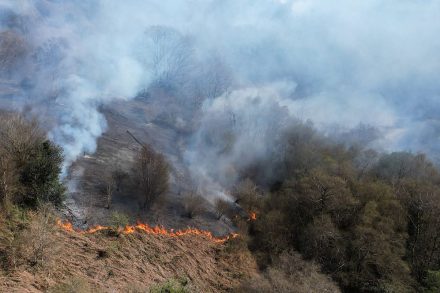
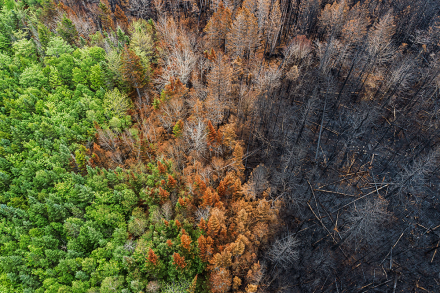
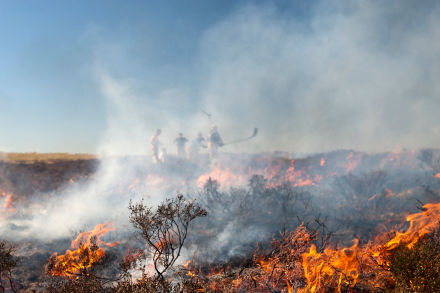
This year has been a bad one for wildfires in Britain. In June, nearly 30,000 acres burned near Carrbridge in the Highlands. In August, a careless camper, I’m told, ignited 5,000 acres in the North York moors, setting off 18 unexploded shells, shrapnel from one of which narrowly missed a gamekeeper. The pollution from wildfires was ten times worse this year than in the wetter weather of last year. Yet Keir Starmer’s government has chosen this autumn to ban the one practice that has been preventing more such dangerous fires: the managed burning of heather on much of England’s moorland. In doing so, it has ridden roughshod over advice from scientists, firefighters, land managers, farmers and environmentalists, ignoring or misrepresenting evidence along the way.

Why I pity the poor eco-zealots

From our UK edition

An email popped into my House of Lords inbox last week from Lt Gen. Richard Nugee with the subject line ‘National Emergency Briefing’. Ooh, I thought. That sounds interesting. Will it be about the pitiful state of our armed forces? The threat of war with Russia? The penetration of Britain’s deep state by the Chinese Communist party? Nothing so sexy, unfortunately. The ‘emergency’ in question is our old friend the climate emergency, with the usual suspects being wheeled out in Westminster Central Hall next month to tell us how little time we have left to avert the looming disaster. This seems a little tin-eared. The past 12 months have witnessed the collapse of the global consensus about climate change.

Newsom won’t create abundance

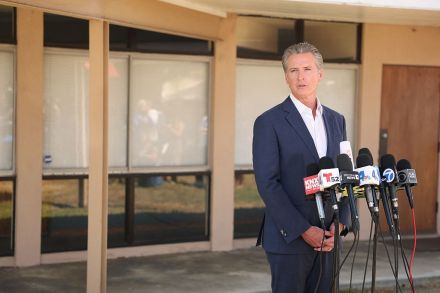
With great fanfare, California Governor Gavin Newsom recently signed “historic” legislative package designed to “advance an abundance agenda.” It’s a nod to the recent (and fashionable) book Abundance by the liberal bloggers Ezra Klein and Derek Thompson, and it’s supposed to reform a state best known for a punitive cost of living and chronic shortages of everything essential – including housing, water, and energy.  Key to Newsom’s new legislation are Assembly Bill 130 and Senate Bill 131, both of which make fundamental changes to how the California Environmental Quality Act (CEQA) is enforced.

Newsom abundance

Don’t politicize the Texas flood

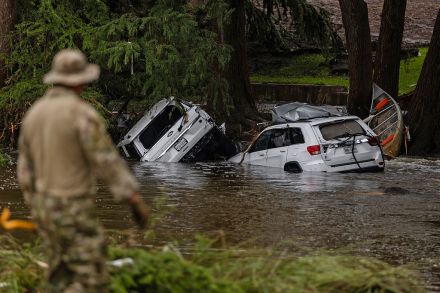
It’s early Monday morning here in Central Texas, and the rain just keeps on falling. Over the wettest weekend any of us can remember, water has saturated the ground and overflowed every culvert. Dozens are dead, an untold number of properties damaged. The drought is over, point taken. We surrender. Now we have to figure out who, if anyone, is at fault.  In the last few days, the blame has flowed faster and thicker than the raging muddy waters of the Guadalupe River. It started almost immediately on Friday morning, with a sickening torrent of anti-Texas vitriol from left-wing social media, the flip side of the horrible “God’s wrath” chatter we heard from the right during the Los Angeles fires.

Texas

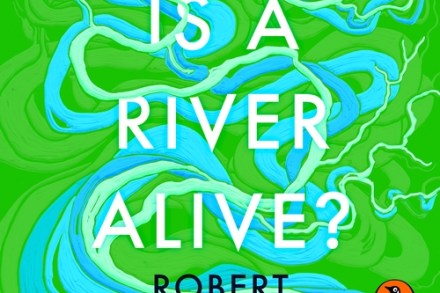
Robert Macfarlane: Is a river alive?

From our UK edition

40 min listen

Sam Leith's guest on this week’s Book Club podcast is Robert Macfarlane. In his new book Is A River Alive? he travels from the cloud forests of Ecuador to the pollution-choked rivers of Chennai and the threatened waterways of eastern Canada. He tells Sam what he learned along the journey – and why we need to reconceptualise our relationship with the natural world.

Eco warriors are driving themselves to extinction

From our UK edition

It wasn’t that long ago when the fashionable gathering place for young couples was a meeting of the National Childbirth Trust. I remember, in the early months of 1995, sitting in our instructor’s front room as she passed around a plastic model of a female pelvis while she asked us: ‘So how do you think the baby gets out?’ Fast-forward three decades and there is a new way for middle-class would-be mothers to spend their evenings: attending sessions of a project entitled ‘Motherhood in a Climate Crisis’ put on by the University of Bristol’s Brigstow Institute. There is no better way to describe it than to quote the academics’ blurb.

The Boden Belt: the Lib Dems are the new party of the posh

From our UK edition

The English social season has begun, kicking off with Gold Cup day. But this year, there is a new common denominator in the seats of southern England where the middle classes congregate: Liberal Democrat MPs. From the Cheltenham Festival in March right the way through to Goodwood in September, it is Ed Davey’s party which represents the constituencies where Britain’s bourgeoisie are most comfortable. Whether it is the Boat Race in April (Richmond) or the Derby in June (Epsom and Ewell), or even Wimbledon and Henley in July, everywhere Pimm’s is served, a Lib Dem is the local MP. They dominate the Boden Belt. And even Tories despair that the Lib Dems are the real ‘party of the posh’. At this week’s spring conference, the party was in an optimistic mood.

The downfall of climate change poster boy Michael Mann

From our UK edition

Even if you’ve never heard of Michael Mann, you will have felt his baleful influence on your energy bills. He is the inventor of the hockey stick chart, which shows a sharp increase in late 20th century global temperatures, like the blade of an ice hockey stick. It put rocket boosters on the climate change scare and was used as an excuse by policymakers to send green taxes, tariffs and regulations soaring. Mann was an obscure academic who had just been given his PhD at the University of Massachusetts when his graph was published in the journal Nature in 1998. Within months – fêted everywhere from the New York Times to the Intergovernmental Panel on Climate Change (IPCC) – he’d become the poster boy for the alleged global warming apocalypse.

The climate has changed on climate change

Like the Marxist dialectic, or the predictions of the Gospels, the green movement has long seen its triumph as preordained. Yet sometimes the inevitable turns out to be not so. Over the past few years green policies — notably the drive for “net zero” — have been failing. Both markets and politicians have seen the light. WhatJoe Biden’s treasury secretary Janet Yellen once called “the greatest business opportunity of the twenty-first century” has revealed itself to be something of a disaster. The new American President is likely to be blamed for the implosion of the green agenda, but its collapse long pre-dates his re-ascension.

How China exploits the West’s climate anxiety

From our UK edition

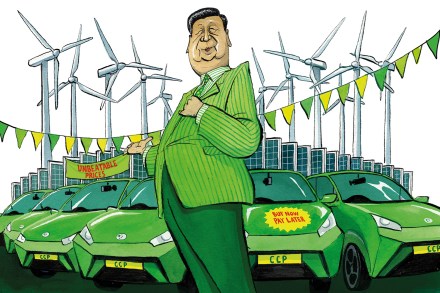
In the fight against climate change, China loves to present itself as the world’s White Knight. Armed with wind turbines and solar panels, EVs and batteries, it will rescue us from oblivion if only we would let it.  There’s no shortage of western politicians, academics and organisations who are happy to go along with the idea that China is an ally in the global green revolution. The argument, broadly put, is that whatever our differences on other things (trifles such as security, economics and human rights), surely we can agree on saving the planet. Rachel Reeves seemed to reach that conclusion when she returned from her visit to Beijing last month.

Is this London’s most anti-car borough?

From our UK edition

In a city at war with the car, there’s plenty of competition. Lambeth has hiked the cost of residents’ parking permits by as much as 400 per cent, Islington has installed wavy kerbs to deter drivers and more than half of Hackney is covered by Low-Traffic Neighbourhoods (LTNs). But Labour-run Hammersmith and Fulham, in west London, must surely have a claim to being London’s most anti-car borough.  Not content with raking in £11.

The real reason you hate vegans

From our UK edition

Just when it seemed as though January in Britain couldn’t get any bleaker, along came ‘Veganuary’. Cue loads of puny, blue-haired wokerati spending this month preaching about how we should give up on two of man’s greatest pleasures – meat and cheese. If you’ve been finding it irritating, you’re not alone. In surveys of public opinion, vegans are hated more than any other group, with the exception of drug addicts. So when a chef tells the newspapers that he’s banned vegans from his restaurant, or a magazine editor jokes that they should be killed, do you feel justified in allowing a smirk of amusement to cross your face? After all, in an era when we are supposed to have obliterated all our prejudices, despising vegans still feels deliciously permissible.

Farmers aren’t miners

From our UK edition

A parallel is being drawn between the Tories and the miners in the 1980s and Labour and the farmers today. On the left, there is an implied element of revenge: you screwed our people, so we’ll screw yours. It is true that the miners’ marches in London 40 years ago had much the same earthy atmosphere of ‘real people’ confronting authority as did the farmers’ rally this week. But in the end the comparison does not work. For the Conservatives, the miners themselves were not the enemy. The problem was the vast cost of uneconomic pits to the taxpayer and the declared determination of the NUM leader, Arthur Scargill, to bring down the government. Mrs Thatcher regarded the working miners, who refused to strike because Scargill would not allow them a strike ballot, as heroes.