England

What it means to be English

From our UK edition

How can you ever put your finger on the comfort, the joy, the absurdity, of being English? Not, perhaps, through some attempt at definition: but in a hundred moments linked by that invisible thread, Englishness. Such a moment occurred for me last Friday. The place was Kidderminster in Worcestershire, the occasion the re-opening of the heritage Severn Valley Railway to Bridgnorth in Shropshire, at the lovely station from which the line, formerly Great Western Railway (GWR) and closed by British Rail in the 1960s, runs. If scripture doesn’t specifically mention steam engines, they are implicit in the psalmist’s rapture Let’s not be sentimental about Kidderminster.

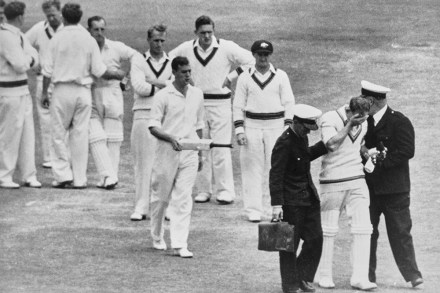
The force of Typhoon Tyson, Sydney, 1954

From our UK edition

Lord Hawke, the grand old man of Yorkshire cricket and stalwart of the MCC, was not one to mince words. A century ago, the administrator rejected calls for the national XI to be led by Jack Hobbs. ‘Pray God no professional shall ever captain England,’ Hawke said. ‘We have always had an amateur skipper and when the day comes when we shall have no more amateurs captaining England it will be a thousand pities.’ It took 27 years. Elizabeth II would be less picky about commoners. She knighted Hobbs in her Coronation honours in 1953, the same year that Len Hutton, England’s first professional captain, led the side to regain the Ashes after 20 years. To defend the urn Down Under, however, as he hoped to do in 1954-55, was a hard task.

Liz Truss calls for a ‘Trump revolution in Britain’

National Harbor, Maryland Former British prime minister Liz Truss began her speech at CPAC today by declaring that America has just entered its golden age with the election of President Trump. Britain, however, is in its dark age, she said: “Let’s be honest, Britain isn't working.” Truss’s concerns for the current state of the UK and Europe mirrored those expressed in Vice President J.D. Vance’s speech in Munich last week. She touched on attacks on free speech in the UK, the rise of Pakistani grooming gangs and the inability of the British government to do anything about the rise in illegal immigration.

The vision behind Woolsery

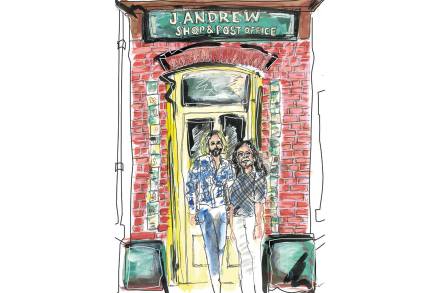
At first glance, it looks like any other sleepy village in southwest England. A medieval church and manor house face a fish ’n’ chip shop and post office across the green. There’s the obligatory pub, the Farmers Arms, where log fires crackle and ale-taps gleam beneath oak-beamed ceilings. Along the narrow lanes, whitewashed cottages peter out into rolling Devonshire hills. In true UK style, the place even has an obscure tongue-twister of a name: Woolfardisworthy. Population 1,123. Look closer, however, and you’ll realize this isn’t your standard British backwater. For every pint of cider being poured in the pub, there’s a craft cocktail infused with foraged botanicals and homemade cordials — think a crabapple cider margarita or a sea buckthorn gin sour.

village

Sven-Goran Eriksson was an England great

From our UK edition

Sven-Goran Eriksson, who has died aged 76, was an unlikely choice for the England job in 2000. He was inexperienced with English football – his only exposure having been as young visiting coach in 1978 when Bobby Robson invited him to sit in the dugout during an Ipswich match. But Sven was a serial winner. He had just won the Italian league, the toughest in the world, with Lazio, the club’s first title in 30 years. Before that, he had won 17 trophies over two decades at clubs in Sweden, Portugal and Italy.  The Football Association had burned through top English managers in the previous decade.

Can Starmer do patriotism?

From our UK edition

13 min listen

It was St George's Day this week, and Labour leader Sir Keir Starmer said he has 'no time' for those who 'flinch' at the St George's flag. But how authentic is his patriotism? Katy Balls speaks to Tom Baldwin, former Labour Party adviser and author of new book England: Seven Myths That Changed a Country – and How to Set Them Straight.Produced by Megan McElroy.

The rise of English wine

Sometimes, I pretend that I worked the wine beat thirty or forty years ago. I picture myself in formal wear, kicking back in gilded settings, sipping perfectly aged first growth, trading bons mots with winemakers. We’d spend hours solemnly considering the slow, steady, seemingly eternal rise of wine culture, and how inevitably it would soften the cruder edges of society. It would be so merry, yet cerebral — but also something we could feel good, even morally superior, about participating in. Instead, I’m in 2024 wearing yoga pants and guzzling mineral water (must hydrate!) by myself holding Zooms with winemakers, sweating over the fact that scientists say climate change imperils up to 73 percent of the world’s current wine-growing regions.

wine

How to celebrate Christmas in London

You just can’t beat London at Christmas. Unless you’re lining up to get into the Tube station (never mind onto a train) at Oxford Circus, in the pissing rain. Then you’re better off in one of those glass igloos in Finland.  When I’m in town for the holidays, I find myself returning to a few old faithfuls, with a few old faithfuls. The Zetter Marylebone Keep this gem up your sleeve for when the crowds become a little too much. A warren of sumptuous suites and a lavish, candlelit parlor awaits at dinky Zetter Marylebone hotel, just a couple of streets back from shopping mecca Selfridges. Divide and conquer last-minute shopping with Mom, then meet here at lunchtime for a swift recovery.

christmas london

In search of deep England

From our UK edition

I am wary of mentioning General de Gaulle in these pages, if for no other reason than remembering Auberon Waugh many years ago arguing against a statue of the leader of the Free French being erected in London. Waugh’s objections were based firstly on the fact that statues only worked with togas because statuary did not favour the trouser leg. His second objection was that this country had fought a long and costly war to get General de Gaulle and his friends out of London. That notwithstanding, I dare to mention de Gaulle here because he has been on my mind. Or at least one aspect of him has been on my mind. That is that glorious appeal he made to ‘La France profonde’. Anyone who has spent time in France – especially rural France – will know exactly what he was talking about.

The royal lust of Hampton Court

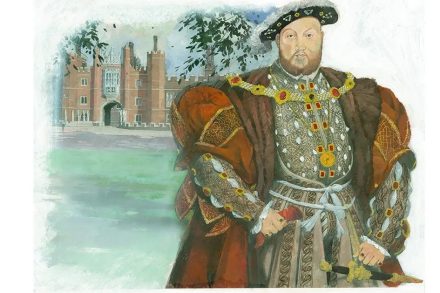
The Dowager Countess of Deloraine, who was governess to the children of George II at Hampton Court and other royal homes, was a notorious bore — so much so that her “every word” made one “sick,” according to the courtier Lord Hervey. When she naively asked him why everyone was avoiding her, he replied with exquisite irony that “envy kept the women at a distance, despair the men.

Hampton

Am I allowed to make fun of women’s football? 

From our UK edition

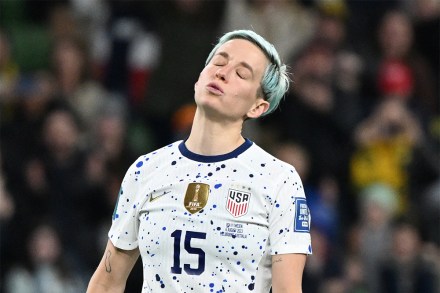
I’m loath to write about the current Fifa World Cup because criticising women’s football is textbook ‘misogyny’ – at least, that’s what Sadiq Khan thinks. The centrepiece of his recent ‘Have a word’ campaign is a video of young men discussing the women’s Euros, with viewers encouraged to press a button saying ‘Maaate’ when a line is crossed. The idea is to nip such behaviour in the bud before it escalates into violence. One particularly noxious youth describes the Euros as a ‘joke’, clearly marking him out as a potential rapist. She made a complete horlicks of her spot-kick, firing the ball over the crossbar But is that really evidence of ‘misogyny’?

How they treat trans children across the pond

England's National Health Service made the major announcement last week that they would limit the prescription of puberty-blocking drugs for transgender children to clinical trials. A report released by the NHS on June 9 states that "there is not enough evidence to support their safety or clinical effectiveness as a routinely available treatment and that they should only be accessed as part of research." The decision is the latest consequence of a multi-year review into how the medical community in England should treat children who suffer from gender dysphoria.

LGBT activists gather outside the Stonewall Inn (Photo by Spencer Platt/Getty Images)

Opening a bottle with: Lime Wood Hotel’s Luke Holder

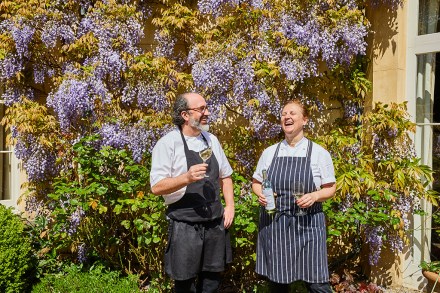
Quizzed on how best to assimilate a new culture, travel writer and celebrity chef Anthony Bourdain once uttered the famous line: “Drink heavily with locals whenever possible.” I never met the man, but still I miss him and his deft writing. The Opening a Bottle series is about getting pickled with people far cooler than I am, in whatever city I’ve washed up in.  It’s my first proper day of spring on home soil, and it’s a blinder. Not a cloud in the sky, and a glorious cool breeze wafting the scent of mown grass across Lime Wood Hotel’s sumptuous gardens. They’re bursting with color, flowers blooming in every direction. White stone walls are awash with lilac wisteria. I’ve driven down to rural Hampshire from London to meet lauded resident chef Luke Holder.

What’s in a name?

Someone, I think it was Martin Amis, once said that you can judge a novelist by how much effort he puts into his characters’ names. If that’s true, a political independent who grew up in the 1990s with the name “Matt Purple” may be a sign of some cosmic writerly laziness. Yes, that is my real name. The one you see in the byline there. I’m always amazed at how many people assume it’s a nom de plume, as though if I could have any last name I wanted I’d choose an Easter color. I actually did write an essay under a pseudonym once: “Matt Thomas,” Thomas being my middle name. Given that it was instantly posted to the top of a prominent website and discussed on a national radio show, I sometimes wonder whether I’m the victim of nomenclature discrimination.

name

The glorious return of the England cricket team

From our UK edition

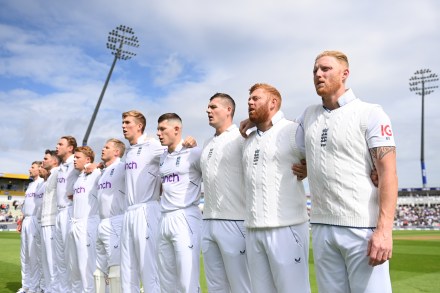
Let civilisation fall apart if it must. I no longer care. The England men’s cricket team is suddenly playing with such swaggering magnificence that everything else – endless culture wars, inflation, even the threat of hypersonically delivered nuclear annihilation from Russia – pales into insignificance. I just want to watch my heroes – Ben Stokes, Joe Root and the rest – play the game I love like deities. If Putin is going to press the big red button then so be it. As the temperature rises to a million degrees celsius here in Putney, I will console myself that at least I witnessed Jonny Bairstow’s transcendentally perfect innings at Trent Bridge earlier this month. We deserve this, don’t we? We England cricket fans who over many decades have suffered so much.

The truth about Three Lions

From our UK edition

During last year’s European Championship, England football fans switched, for some reason, from ‘Three Lions’ to ‘Sweet Caroline’ by Neil Diamond (‘so good, so good, so good’). If anything can make them switch back it’s the Football Association, who this week said they were thinking of dropping the Baddiel and Skinner anthem as England’s official song, because it could be seen as ‘arrogant’. Football fans are like children, and as any parent could have told the F.A., if you want to make sure someone does something then just tell them not to do it. The F.A. quickly had to issue a statement confirming there were no plans to change. David Baddiel himself feels the F.A. have long disliked the song.

Hell is an English train journey

From our UK edition

Delayed, on Southern Rail Home From the Hill is a 1987 documentary by Molly Dineen about Hilary Hook, an elderly colonel who after a life in Kenya and the Far East retires to a nasty flat in England. Poor old Hilary has never had to prepare his own food and now, in his twilight years, he can’t even open a can of soup. He is horrified by Britain, its culture and bad weather. When I first saw Molly’s superb film as a young man it struck a chord. Some 35 years later, on a brief visit to England from Kenya, I can almost hear and feel myself becoming Hook. It’s not so much that neither of us can cook for ourselves. It’s more that under this dome of grey skies and public service announcements, we both miss the gaudy melon flower of home.

The deep conservatism of Agatha Christie

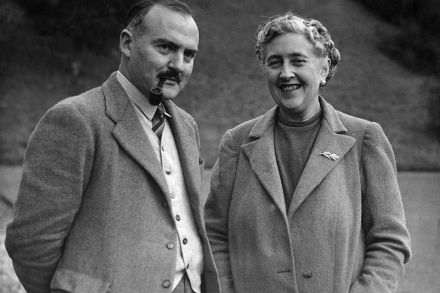
Some fiction, regardless of how intimately tethered to a time and place, is timeless. And the work of Agatha Christie certainly seems that way. Christie's novel Death on the Nile is now receiving renewed cinematic treatment under the expert hand of Kenneth Branagh, with the film scheduled for release on February 11. This follows the success of Branagh’s 2017 adaption of Murder on the Orient Express, which grossed $351 million against a production budget of $55 million. “Rest assured," says Belgian detective Hercule Poirot in Christie’s novel Five Little Pigs. "I am the best!” The same might be said of Christie herself, the world’s all-time bestselling fiction author.

Why England lost the Ashes

From our UK edition

England’s wretched performance in the Ashes – which saw the side lose three tests and so the series to Australia last week – has been more abject than even the most inspired pessimist could have imagined. No sane observer expected England to win against Australia, but to lose the five match series little more than two days into the third test was a pitiful show. Inevitably, even as England continue to play the fourth test this week, there have been calls for a cricketing inquest. The standard of the domestic game, the structure of the English season and England’s pivot towards the one day and T20 formats are all expected to be blamed for the woeful performance.

In defense of the English original sandwich

Hannah Moore’s June Spectator piece on sandwiches made me hungry. Then it made me think. Ms Moore makes a sound distinction between modern Britain’s plastic-boxed, triangular ‘sandwich’ and the custom-made, piled-high, endlessly imitated, seldom-matched product of a good New York or Chicago delicatessen. Why, one wonders, do the Brits put up with it? Landing in countless foreign ports over the years, for business or pleasure, I’ve always wondered, pretty much before wondering about anything else, ‘What’s the food like?’ Almost always, I’ve liked what it was like. In the age of real borders and undiluted ethnicities, food was a powerful expression of locality.

sandwiches