England

Euros 2021: England are easily the most boring side in the tournament

From our UK edition

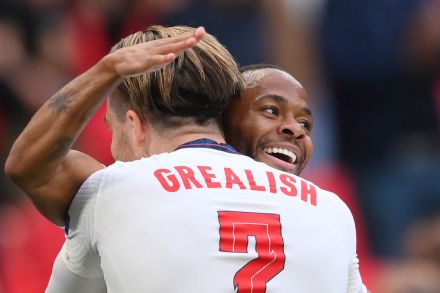
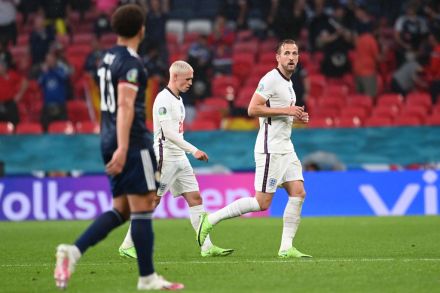
England 0 Scotland 0 Hungary 1 (Fiola) France 1 (Griezmann) It is remarkable how Southgate has sucked the life out of such talented players over the last two or three years The wonderful Hungarians almost took my mind off England’s lamentable performance last night and the usual stupid, self-serving, excuses from Southgate. England are easily the most boring side in this tournament. It is remarkable how Southgate has sucked the life out of such talented players over the last two or three years. Maybe we should hand out MBEs for any England player who can score. Scotland fought well and won every fifty-fifty ball – but then England consider themselves above fifty-fifty balls. Matt Hancock would be a better England manager than Mr Waistcoat.

Are England fans allowed to be proud of the St George’s Cross?

From our UK edition

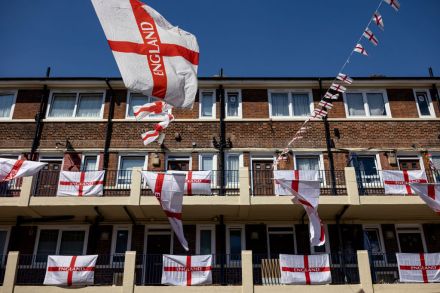
It’s starting to feel like the only flag you can’t fly in England is the England flag. Wave the Pride flag out of your living room window and your neighbours will gush. In fact, flying the Pride flag is practically mandatory in June, Pride month. Every town hall, school, bank and social-media site is draped in the rainbow colours. Such is the omnipresence of the Pride flag that it is actual headline news when someone refuses to wave it. For the second year running, Ockbrook and Borrowash Parish Council in Derbyshire has decided not to fly the Pride colours. The BBC was on this bizarre case pronto. ‘Anger as Pride month flag snubbed by Derbyshire council again’, a headline bellowed. The English flag is a different matter entirely.

Euros 2021: Should we scrap the England team?

From our UK edition

Look back through the archive photos of England’s victory over Germany at the 1966 world cup and you’ll notice something rather strange. The cheering supporters aren’t waving the flag of St George. Instead the jubilant crowds are draped Union Jacks — reflecting the more fluid blend of loyalties of an age when Britain was much more at ease with itself. Now tune into the delayed Euro 2020 matches: you’re unlikely to catch the red white and blue standard of the United Kingdom. During the last England match, there was a lone pair of Rangers fans defiantly waving their Union Jack. These are my people. I'll watch for them during tonight's clash with England, but won't be holding my breath.

On England versus Scotland

From our UK edition

I found this shaggy dog story on the MillwallOnline site, posted by a mate called Life With The Lions. ‘It is just before the start of the Scotland vs England game, at Wembley stadium, in the Euro Championships 2020. Harry Kane goes into the England dressing room to find all his teammates looking a bit glum. “What's up?” he asks Raheem Sterling. Sterling replies, “Well, we're having trouble getting motivated for this game. We know it's important but it's only Scotland. They're rubbish and we can't be arsed.” Kane addresses his fellow teammates. “Well, I reckon I can beat these Jocks, all on my loansome. Why don’t you lads go to the pub and enjoy yourselves?” “If you’re sure, Harry?” asks a surprised Phil Foden.

Euro 2020 and the search for a new Englishness

From our UK edition

A soccer contest is upon us. I know nothing of football as a sport, but even a dunce like me knows that these things are about more than 22 men chasing a ball for 90 minutes. Big sporting events such as Euro 2020 matter, especially for England and Englishness. Any big England game is a rare chance for people to fly the flag and briefly talk about Englishness. But we need to do more than talk about this when the football team is playing. A proper national debate about English identity is overdue and badly needed. New polling from British Future this week showed that only two thirds of BAME people think 'Englishness' is open to them. Worse, 14 per cent of white English people still think only white people can be English.

Judge Ollie Robinson on his cricket skills, not his tweets

From our UK edition

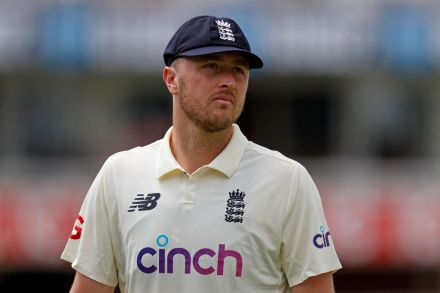
Ollie Robinson, who made his Test debut for England at Lord’s last week against New Zealand, is an outstanding cricketer with both bat and ball. But that ability apparently counts for little. His performance was overshadowed by the discovery of some incendiary, tasteless tweets he had sent almost a decade ago as a teenage professional. An abject apology was not enough to save him. The England Cricket Board promptly banned Robinson from the next Test match, and a full inquiry has been launched into his conduct. Quite rightly, sports minister Oliver Dowden has called the penalty 'over the top'. But that intervention has not helped Robinson. This row marks a depressing moment for English cricket. It also raises a key question: is any player safe?

What the England team doesn’t get about ‘taking the knee’

From our UK edition

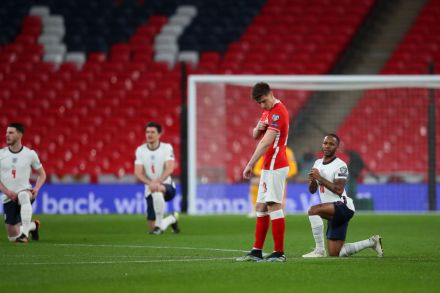
England’s players being booed by their own fans is not a new phenomenon. But for the booing to be about politics rather than obnoxious personalities and tournament underperformance is. The furore over players taking the knee represents a new and exciting stage in the testy relationship between team and fans, in which each can take actions calculated to annoy and upset the other side, while believing themselves to be entirely in the right. The England team – in the words of manager Gareth Southgate – believe they’re just ‘trying to move towards equality and support our own teammates.

An English parliament is a terrible idea

From our UK edition

It’s Saint George’s Day, which means it's that time of year when Unionists must once again don their armour, saddle their horses, and ride out to slay that most terrible of dragons: an English parliament. This proposal rears its head every so often as a possible solution to the increasingly undeniable strain that two decades of devolution has put on the constitution of the United Kingdom. It is in fact one of the surest means of guaranteeing the dissolution of the Union. Unfortunately, the reasons for this are pretty much exactly the same reasons that the creation of the other devolved legislatures was a bad idea. That means that there is some political danger in accepting its logic.

How does ‘taking the knee’ help Qatar’s World Cup slaves?

From our UK edition

What was going through the minds of England players as they took the knee, yet again, prior to their victory over Poland in their 2022 World Cup qualifier at Wembley last week? George Floyd? Racism in sport? Nothing in particular?  We’ll never know. But it seems unlikely they were thinking too hard about the destination where, if their good form holds, they will be representing their country next winter: the tiny gulf state of Qatar. If they had, they might have spared a thought, and perhaps a gesture, for the 6,500 migrant workers estimated to have died since Qatar won the right to host next year’s tournament. The issue of migrant worker deaths in Qatar has been a running sore, which has become inflamed again as the qualifiers have got under way.

In praise of David Lammy, a true Englishman

From our UK edition

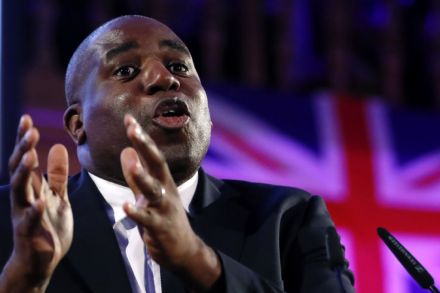
David Lammy, the shadow justice secretary, has been doing his LBC radio phone-in show. If you believe LBC, he has 'schooled' a 'caller' who told him he is not English. If you listen to the exchanges in question, you’ll realise he did something much more impressive, and important than that. The clip, which is all over social media, is here: https://www.youtube.com/watch?v=ssLC4U7u9t8 The short summary is that 'Jean' tells Lammy he cannot be English because of his Afro-Caribbean heritage. Lammy, who was born in London, politely examines her arguments and disagrees. There is no shouting and no fighting – that suggestion has been added by LBC to stir up anger and get some clicks.

The 80-minute nationalism of Wales vs England

From our UK edition

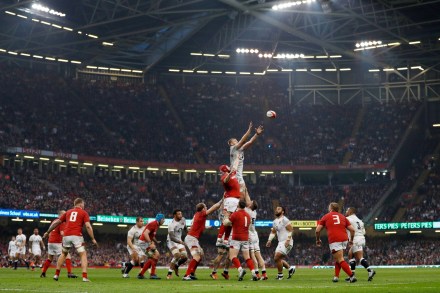
Every year, one match during the Six Nations – either in the heart of Cardiff or the depths of West London – sets the heart rate of Welsh rugby fans to dangerous levels. When Wales face England this weekend there is no doubt that millions west of Offa’s Dyke will be captivated by one of the oldest rivalries in sport. England versus Wales is a battle steeped in rugby history. In modern times it has produced moments etched in Welsh rugby folklore: Scott Gibbs’ blistering try in 1999 that robbed England of a Grand Slam at Wembley; Gavin Henson’s long-range kick in Cardiff six years later, which raised the curtain for a new era of the sport in Wales; and a nail-biting win at Twickenham during the World Cup in 2015.

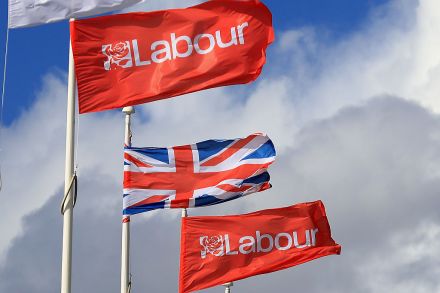
Why are some Labour supporters embarrassed by the Union Jack?

From our UK edition

How does Labour plan to win back the Red Wall? A leaked internal Labour strategy document gives one answer: it says the party must make 'use of the flag'. This sounds like a sensible way to woo those voters put off by Jeremy Corbyn. But the deranged backlash from some Labour activists suggests that not everyone agrees. It also shows why the party is doomed to fail in its bit to change its image for the better. Labour activists took to social media yesterday to decry Keir Starmer on the strategy, asking why the Labour leader is risking alienating so many of his party’s core support.

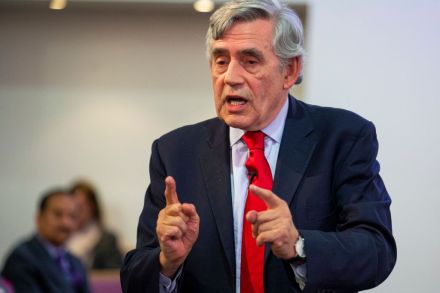
Gordon Brown’s plan to save the Union won’t wash

From our UK edition

Back in 2006, when he was close to executing his masterplan to chase Tony Blair out of Downing Street, Gordon Brown sought to address something that worried many voters: his Scottishness. 'My wife is from Middle England, so I can relate to it,' he pronounced, as if Middle England were a town somewhere off the M40. In fact, though Sarah Brown was born in Buckinghamshire, she spent most of her early childhood in Tanzania and her family moved to North London when she was seven. By mistaking a term denoting the provincial English psyche for a geographical area, Brown merely demonstrated that he was indeed all at sea.

How we became a nation of choirs and carollers

From our UK edition

Between the ages of 15 and 17 I had a secret. Every Monday night I’d gulp down dinner before rushing out to the scrubby patch of ground just past the playing fields, where a car would be waiting. Hours later — long after the ceremonial nightly locking of the boarding house — I’d sneak back, knocking softly on a window to be let in. I’d love to say that it was alcohol or drugs that lured me out. It wasn’t even boys — or, at least, not like that. My weekly assignation was with Joseph and Johann, Henry, Ben and Ralph. My addiction? Choral music.

Backsliding on a lockdown end-date has begun already

From our UK edition

Will England’s lockdown end on 2 December? Even before this morning’s media round there was good reason to suspect it might not. The first national lockdown - we were originally told - would be for three weeks, with the explicit aim of building more capacity in the National Health Service. But the goalposts shifted and three weeks turned into more than three months: despite daily Covid deaths peaking in April, pubs and restaurants didn’t reopen until early July. Weeks later gyms and other leisure sectors followed, and public transport guidance changed to encourage employees back to their offices.

Sunday shows round-up: new lockdown ‘could be extended’

From our UK edition

Michael Gove - New lockdown 'could be extended' Yesterday Boris Johnson announced that England would be entering another lockdown as of this Thursday, which will last for, at the very least, the entirety of November. Sophy Ridge's first guest of the day was the Cabinet Office Minister Michael Gove, who told her that the envisioned end-date of Wednesday 2nd December was subject to change if the rates of Covid infection could not be reduced: https://twitter.com/RidgeOnSunday/status/1322825323625484288?ref_src=twsrc%5Etfw SR: If the data on the whole is not looking as you are hoping, then the national lockdown could be extended? MG: We will always take a decision in the national interest, based on evidence... SR: Is that 'yes'? MG: Yes.

Why I’m moving to England

From our UK edition

Gstaad It is not exactly a stop all the clocks occasion, let alone cut off the telephone, but I’ve finally come to a decision. My looking-at-cows time is over. I am going to leave good old Helvetia and find somewhere nice in the green and ‘unpleasant land’ I read about in Charles Moore’s Notes last week. (Corinne Fowler, what a halfwit; now, according to her, the British countryside is racist.) Easier said than done. The reason I want to move is that I’ve had it. For the first time in my life I’m bored with my surroundings. Sixty-two years is a long time, but then Gstaad isn’t the charming little alpine village it once was.

Is Sturgeon right to brag about Scotland’s coronavirus response?

From our UK edition

What political opportunities Covid-19 has presented for Nicola Sturgeon. Day after day in recent weeks she has appeared at her press conference, presenting a picture of a Scotland where the disease has been all but eliminated – placed in contrast with England where, she says, the government is merely trying to contain the disease, and not very well at that. It is an image which, naturally, aides the cause of Scottish independence. To remind us of the game she is playing, she has several times pointedly raised, or failed to rule out, the threat of imposing quarantine on visitors from England. But is the image of a Covid death-free Scotland fair? Interesting analysis by Sam Taylor lays bare the accuracy of Sturgeon’s – and other nationalists’ – claims.

Why does England have the worst excess deaths in Europe?

From our UK edition

On 12 May, the government stopped publishing international comparisons of its Covid-19 death toll in the daily press briefings. The argument was that the data wasn’t helpful, and perhaps even misleading: the way calculations were carried out varied country-by-country, with each nation on a different timescale when experiencing the peak of infections and death. There would be a time for international comparisons, but that time wasn’t now. Today, the ONS picks up where the press briefings left off, comparing excess mortality rates throughout Europe. The data is not specifically calculating Covid-19 deaths, but rather all causes of mortality on a five-year average.