Energy

How China exploits the West’s climate anxiety

From our UK edition

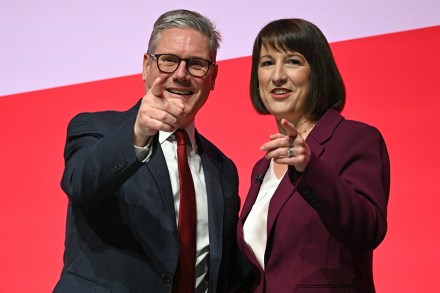
In the fight against climate change, China loves to present itself as the world’s White Knight. Armed with wind turbines and solar panels, EVs and batteries, it will rescue us from oblivion if only we would let it.  There’s no shortage of western politicians, academics and organisations who are happy to go along with the idea that China is an ally in the global green revolution. The argument, broadly put, is that whatever our differences on other things (trifles such as security, economics and human rights), surely we can agree on saving the planet. Rachel Reeves seemed to reach that conclusion when she returned from her visit to Beijing last month.

Big Wind is in big trouble

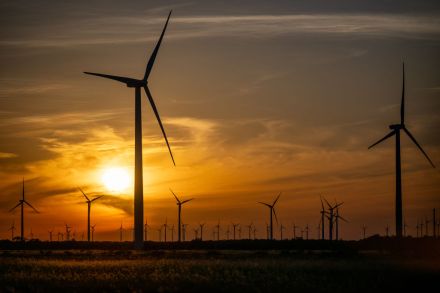
Barack Obama famously said, “Elections have consequences.” For proof of that, look no further than the carnage hitting Big Wind. A few days ago, Jason Grumet, the head of the American Clean Power Association (annual revenue: $62.3 million), told Heatmap News that “probably more than half” of all new wind projects under development in the US could be killed due to President Trump’s executive order requiring a “comprehensive assessment” of federal permitting. Heatmap explained that Trump’s policies pose “a potential existential threat to the industry’s future. Just don’t expect everyone to say it out loud.

wind

Unmade in Britain: we’re becoming a zero-industrial society

From our UK edition

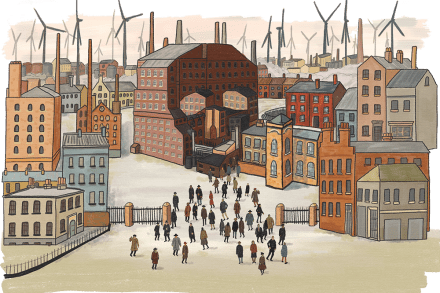
The French sociologist Alain Touraine coined the term ‘post-industrial society’ in 1969. By the 1980s it had become shorthand for the kind of services-based, individualistic economies most major developed nations had created. Today, the UK is moving its economy beyond that. We are creating what might be called a ‘zero-industrial society’. Climate change targets, soaring energy prices and rising taxes on employment are killing off Britain’s small and vibrant industrial base. Last week, Ineos closed its ethanol plant in Grangemouth, Scotland, with its chairman Sir Jim Ratcliffe warning of ‘the extinction of our major industries’. The previous month, Airbus announced it was cutting 500 jobs.

Energy prices are shattering Britain’s remaining potteries

From our UK edition

The ceramics industry of Stoke-on-Trent is one of the great survivors of the Victorian era. At its height, some 70,000 people were employed by the likes of Wedgwood and Spode to work in the potteries. Despite the Clean Air Act of 1956 – which banned coal-fired kilns – the deindustrialisation of the 1980s and the struggle to compete against the rise of cheaply made Chinese goods, the industry lives on and still employs around 7,000 people, manufacturing everything from teapots to tiles for the London Underground. In 2022, some companies saw their six-month energy bills rise tenfold Stoke can at times seem like it’s living in the ruins of its past – but while the ceramics sector is no longer a large industry, it is still hugely important to the city.

What Trump’s executive orders will do

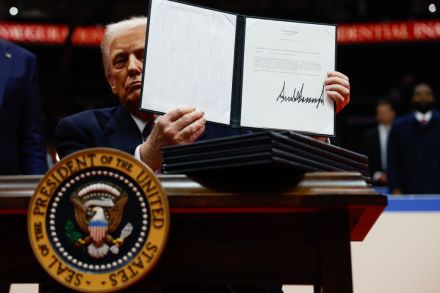
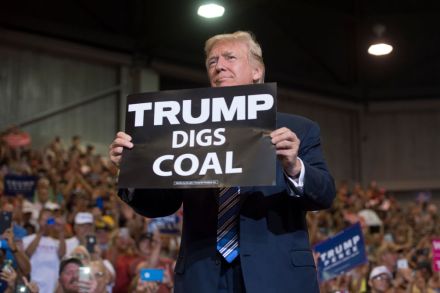
The newly sworn-in President Trump had a busy inaugural day. Between swearing into office and waving a saber around while dancing to “YMCA” at an inaugural ball, he also signed several executive orders and proclamations. After signing his cabinet and other nominations, President Trump’s first order of business was to proclaim that all flags should be flown at full staff for this and all future inauguration days. Following the inaugural parade, President Trump signed a bevy of additional executive documents as thousands of his supporters cheered.

Which are our most popular museums?

From our UK edition

Volt-face Luton’s Vauxhall plant is to close, partly because of the zero emission vehicle (ZEV) mandate which obliges manufacturers to sell increasing proportions of electric vehicles. Remarkably, the history of the electric car can be traced back half a century earlier than the combustion engine. There are several possible claims as to who built the first road-going electric-powered vehicle, but one is a Scottish inventor, Robert Davidson, who produced one in the 1830s, about the same time as Thomas Davenport in Vermont. By the end of the 19th century electric cars were competing with petrol cars, but died out for the reasons the industry is struggling today: it was hard to recharge them and they couldn’t travel far on a charge.

Labour’s confidence tricks

From our UK edition

There is nothing new, nor necessarily fatal, about making a poor start in government. Margaret Thatcher had a torrid first couple of years in office, set back by galloping inflation and mass unemployment, before she found her direction. Those who assume that Keir Starmer is doomed to be a one-term prime minister thanks to his plunging popularity are speaking too soon. The resignation of Louise Haigh over a historic fraud conviction will swiftly pass. The mini-scandal of freebies accepted by government ministers, which kept Fleet Street occupied over the summer, has already been largely forgotten.

Is Trump an energy humanist?

From our UK edition

27 min listen

Freddy speaks to Robert Bryce – author of an authoritative susbstack on energy – about Trump's energy plans for his second term. The President elect's Cabinet picks have been raising eyebrows, including the appointment of Chris Wright as Secretary of Energy. He is an 'unapologetic energy humanist' according to Robert and this is a statement of intent when it comes to energy production and driving energy costs down. But what exactly is an energy humanist? And will Chris Wright be able to 'drill baby drill'? Freddy and Robert discuss.

Three great minds explore the enigmas of the universe

From our UK edition

It sounds like a Tom Stoppard play. A big-shot philosopher meets a big-shot boffin by way of a big-shot writer to descant on the biggest of big-shot debates – what The Rigor of Angels’s subtitle calls ‘the Ultimate Nature of Reality’.True, William Egginton can’t match Stoppard for punchy one-liners, nor for puns and pratfalls and persiflage. But while his book is as demanding a read as anything published this year, it still leaves you smiling. Over and over again the author reminds you of the shimmering weirdness beneath the experiential surface of what we are pleased to call the real world. There is no shortage of books that pit one thinker against another to tell the history of an argument.

How Ed Miliband plans to conjure electricity out of nothing

From our UK edition

Electricity is magical stuff. From a couple of tiny holes in a wall comes an apparently endless supply of invisible, weightless, silent ether that turns instantly into light, heat, motion or information at your command. It is a metaphor for the modern economy: we use pure energy to create useful outcomes in the real world. We found out last week that Britain has now for the first time achieved top spot, among 25 nations, in terms of the price we pay for this supernatural ichor, for both domestic and industrial use. This is a disaster. Electricity prices have doubled in Britain since 2019. They are 46 per cent above the International Energy Agency’s median for industrial and 80 per cent above the median for domestic electricity.

Goodbye to Old King Coal

From our UK edition

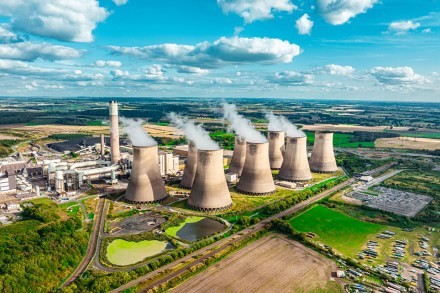
So farewell, Ratcliffe-on-Soar: the UK’s last coal-fired power station shut down on Monday, having burned five million tonnes of coal per year since it opened in 1968. Back then, 80 per cent of national power came from coal, our primary energy source since the 1880s; at the turn of this century there were still 25 coal plants in operation across the country. Now there are none – and 36 per cent of our power in the past year came from wind, solar and hydro with 7 per cent from biomass, compared with 24 per cent from natural gas and just 1 per cent from Ratcliffe’s coal. That’s a remarkable transition – but far from proof that we’ll have sufficient clean energy to keep the mid-century lights on.

Don’t look back in anger… it’s just how ticket sales work

From our UK edition

We expect Ryanair tickets to cost more on holiday Saturdays than term-time Tuesdays and Uber fares to surge in the rush hour. When bidders drive an Old Master painting into the millions, we praise the skill of the auctioneer. And of course dynamic prices can go down as well as up. These are market mechanisms to match supply and demand, recognising that some buyers will pay more than others for desirable scarce goods. So why the hoo-hah about ticket prices for Oasis’s reunion tour, which doubled as supply dwindled for those towards the end of the online queue? Labour ministers, Brussels bureaucrats and US justice officials have all declared that the Ticketmaster sales platform needs looking into, while commentators agree that any such offer should at least be fully transparent.

Portrait of the week: UK cancels Israel exports, Grenfell fire report released and AfD victory in Germany

From our UK edition

Home The government cancelled 30 out of 350 export licences for arms to Israel on items that it said could be used by Israel for ‘offensive purposes’ in Gaza. Israel Katz, the Israeli foreign minister, said: ‘A step like the one taken by the UK now sends a very problematic message to the Hamas terrorist organisation and its backers in Iran.’ Nine offshore wind farm contracts were awarded by the government; last year there were no bidders. The previous government had increased the maximum guaranteed price from £44 to £73 per MWh. The headquarters of GB Energy, a new UK government-backed energy company, will be in Aberdeen.

Is the energy price cap hike bad news for Labour?

From our UK edition

17 min listen

Ofgem, the energy regulator, has announced that the price cap will rise by 10% in October. Is this bad news for Labour, or will they be successful in framing it as part of their economic inheritance from the Conservatives? And could this strengthen opposition to the proposed change to winter fuel allowance? Patrick Gibbons speaks to James Heale and John McTernan, former political secretary to Tony Blair.  Produced by Patrick Gibbons and Cindy Yu.

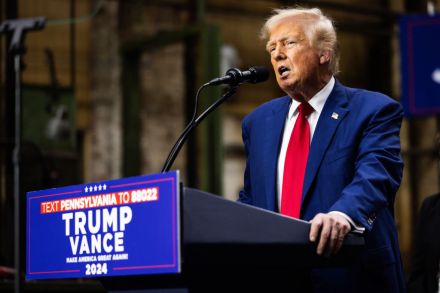
Trump and Vance tour swing states to dim DNC limelight

While the DNC is in full swing in Chicago, Donald Trump and J.D. Vance are spending the week traveling to battleground states as part of their campaign’s way of counterprogramming. Trump’s schedule is packed this week, with more events than he’s done in several weeks. Today, Trump made an appearance in Howell, Michigan, to “deliver a strong message on law and order, making it clear that crime, violence and hate of any form will have zero place in our country when he is back in the White House,” according to Trump campaign spokesperson Karoline Leavitt. Trump came under fire from Democrats for choosing Howell, part of Livingston County, which was rocked by white supremacist demonstrations last month with some chanting “Heil Hitler” and has links with the KKK.

dnc trump vance

A thriving City will test Labour’s tolerance

From our UK edition

The City is having a busier year than pessimistic observers – including me – might have expected. The biggest deal on the block, the £39 billion bid by Australian giant BHP Billiton for its London-listed South African mining rival Anglo American, has fallen away. But plenty of bankers’ and advisers’ fees have already been clocked up on both sides and BHP may now pursue global domination of the copper market by stalking other London-listed miners such as Antofagasta of Chile. Meanwhile, the £3.

Labour’s energy plan doesn’t add up

From our UK edition

So, we have a little more flesh on the bones of Labour’s energy policy, with the party giving more details of Great British Energy, the state-owned company it wants to set up to invest in wind and solar energy. But there are still gaping holes in Labour’s promise to decarbonise the electricity grid by 2030 – and save consumers money in the process. First to note is that Labour seems drastically to have toned down the claims as to how much its energy policies will supposedly save consumers. Until today it was claiming that it would save us ‘up to £1,400’ a year.

How net zero will divide Labour and the Tories

From our UK edition

This morning, Ofgem announced another reduction in the energy price cap from July. The new cap on the unit price of energy should see costs fall by another 7 per cent, taking £122 off the average household bill. And it didn’t take long for both the Tories and Labour to try to swing the news in their electoral favour. Only two days into an election campaign, the government will want to claim credit for today’s news: an opportunity to remind voters what successive Conservative prime ministers did to protect people from higher energy costs (of course, the Energy Price Guarantee was a large part of the reason markets rebelled against Liz Truss’s mini-Budget, but that’s another story) and to flag that energy costs are now falling.

The need for greed

From our UK edition

I suspect I’ve had a lot more fun writing about the annual Sunday Times Rich List over the years than many of its denizens have had clambering into it and staying there behind their high-tech security gates and their phalanx of tax advisers. The 2024 roll call includes some great British wealth-creation stories – led by the industrialist Sir Jim Ratcliffe, the inventor Sir James Dyson and the Far Eastern trading Swire dynasty. But if the completed jigsaw of 300 names makes any sort of picture, it is of a vast treasure hoard from elsewhere, and in some cases from nowhere, that has found a relatively safe vault in the UK. That’s not a bad thing in itself as an advert for our quality of life and rule of law.

Labour and Unite go to war over oil

From our UK edition

There is nothing new about battles between the unions and a Labour government. But could a Starmer government be upset by a growing union rebellion from an unexpected quarter? In a move which has been remarkably underreported in England, the union Unite has launched a campaign against Labour’s policy of refusing licences for new oil and gas extraction in the North Sea. The campaign, called ‘No ban without a plan’, demands that Labour suspends the policy. If successful, it means a future Labour government would continue, like the Conservatives, to grant new licences, until it has come up with a plan to create at least 35,000 new ‘energy transition jobs’ in Scotland – equivalent to the current roles held by oil workers.