Energy

How Pret ate itself

From our UK edition

How bad would it be if Royal Mail’s parent company, International Distributions Services (IDS), were to be taken over by the Czech billionaire Daniel Kretinsky? Our historic postal service is heavily lossmaking, struggling to maintain its universal delivery obligation and at war with its unions: a foreign owner would surely take an axe to it. Kretinsky, who owns almost 28 per cent of stockmarket-listed IDS, has gone back on an assurance that he would not try to take the company private and has tabled a £3.1 billion offer – above the group’s current market value but well below what other shareholders think it is worth. He won’t win with this first gambit but he’s likely to be back with a higher one.

Is the West ready to face the challenges of advancing technology?

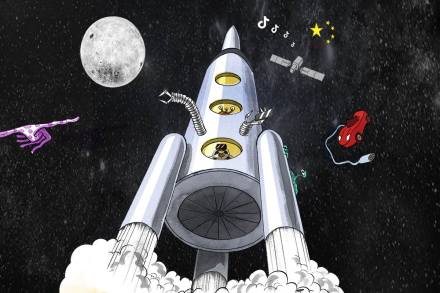
The theme of this month’s edition is technology. The advancement of space exploration, defense technologies, artificial intelligence and the like should excite us. Yet the geopolitical issues they present are great and Western governments seem ill-prepared to grapple with them. Watch any congressional hearing where a crusty congressman tries to keep pace with Silicon Valley’s top autists if you need further evidence — and read Spencer A. Klavan’s analysis of the high-skill but low-status rejects uniting into a formidable social class on p.12. The Silent Generation and boomers simply cannot keep up. The Space Race is back on, as tycoons seek to cash in on the final frontier.

space technology

Mike Lynch has little chance of escaping US jail

From our UK edition

As I’ve said before, I hold no brief for Dr Mike Lynch, the founder of the Cambridge-based software firm Autonomy, who faces US fraud charges over the $11 billion takeover of his company by Hewlett-Packard (HP) in 2011. But I watched with foreboding as US marshals bagged Lynch under the lopsided 2003 US-UK extradition treaty and flew him to California – after the then home secretary Priti Patel declined to halt the process – and a judge there changed his pre-agreed bail conditions to place him under armed house arrest. Now, having comprehensively lost the argument that as a UK citizen running a UK company he should have been tried in British courts, Lynch is pleading ‘not guilty’ to a San Francisco jury.

The farce of Drax’s wood pellets

From our UK edition

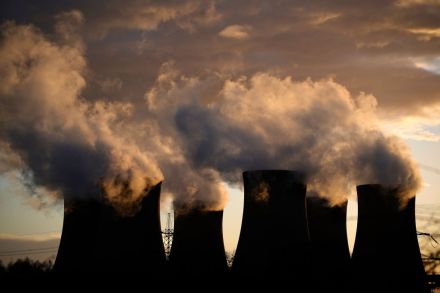
When is the government going to stop pretending that chopping down trees in North American forests and shipping them across the Atlantic to burn them in UK power stations is a zero-carbon form of energy? The environmental-friendliness of Drax power station in North Yorkshire has been called into question yet again this week after BBC Panaroma investigation reported that some of the woodchips being burned there have allegedly been sourced from established ‘old growth’ forests in Canada rather than recent plantations. Drax has not commented on those specific allegations, but the investigation has thrown the issue back into the spotlight.

Bombed-out bank shares are a failure of modern capitalism

From our UK edition

When I read news of a fresh strategic plan for Barclays, I seem to hear a ghostly rustling from the corner cupboard in the living room. Could it be a forlorn protest from the dusty bundle of share certificates that are the last vestiges of my late father’s lifelong service to Barclays from junior clerk to deputy chairman? They were a modest farewell reward – 40 years ago, in the era before mega-bonuses for senior executives – that might once have been swapped for a country cottage but today would barely yield enough to pay for his upcoming centenary dinner. Even the Qatari sheikhs have sold down their Barclays holdings in despair.

How actually to compete with China

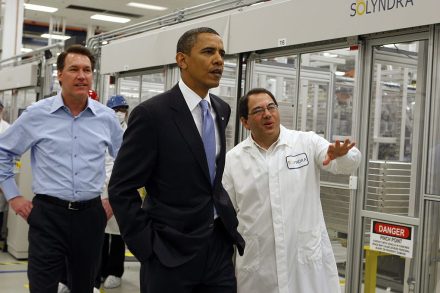
Fifteen years ago, the federal government poured $535 million into a California-based solar module innovator, Solyndra. That’s a lot of money. In today’s money, it would be enough to cover the payrolls of the Red Sox and Dodgers combined. In 2009? It was enough for Solyndra to go bust in fewer than two years — making the company one of America’s biggest public funding debacles. Solyndra’s failure remains both a political talking point and area of introspection — especially as the US increasingly wakes up to the stakes of today’s industrial competition with China.

solyndra

Will Rachel Reeves scrap the private equity tax break?

From our UK edition

I’ve been reading – so you don’t have to – speeches recently addressed to a hot-ticket gathering of business leaders at the Oval cricket ground by Sir Keir Starmer and shadow chancellor Rachel Reeves. The nub is a promise to hold corporation tax at the current rate of 25 per cent for the duration of the next parliament, combined with a warning that ‘levelling up of workers’ rights’ will cause companies’ labour costs to rise. Then there’s all the usual guff you’d expect from a government-in-waiting about infrastructure and skills; plus an unusually warm tone towards the financial services sector, including a pledge not to reinstate the EU-inspired cap on bankers’ bonuses that was abolished by Kwasi Kwarteng.

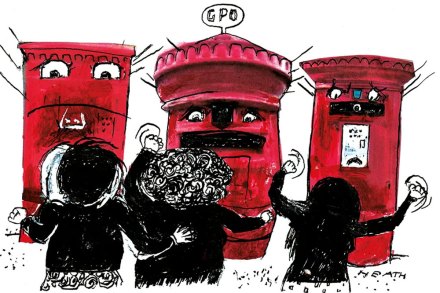
Can anyone save the Post Office? 

From our UK edition

Angry farmers offer a theme for the week – starting with the French at close quarters. Leaving the Eurotunnel at Calais en route to a wedding in the Alps, my car party encounters agricultural rage in the form of convoys of stationary trucks at all the port’s major exit points, as tractors blockade the autoroutes and police do nothing to shift them. Echoing recent protests in Germany, Poland and Romania, French farmers want better price protection, cheaper diesel, more import barriers, more aid from Brussels and less green regulation. We’re lucky not to be sprayed with manure, as was happening elsewhere. The protests have support from the powerful CGT union on the left and Marine Le Pen on the right, the latter calling the Emmanuel Macron regime ‘the farmers’ worst enemies’.

The stupidity of Biden’s liquefied natural gas export pause

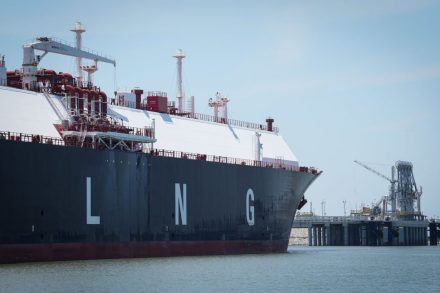
Last week's White House announcement that it was pausing new permits for exports of liquefied natural gas, or LNG, is a desperate move by a desperate president. Its principal beneficiaries are likely to be Vladimir Putin and Hamas-harboring Qatar, rather than Joe Biden’s faltering re-election campaign. The president’s political calculation is overt. “We will heed the calls of young people and frontline communities who are using who are using their voices to demand action,” Biden says. “The pause on new LNG approvals sees the climate crisis for what it is: the existential threat of our time.”  From a national security perspective, the pause is extraordinarily damaging.

liquefied natural gas

Where are the smart investments under a Starmer government?

From our UK edition

I worry that my Burlington Bertie life in London’s West End offers a misleading picture of the real economy. Yes, boutiques and brasseries are busy, but what’s it like in outer boroughs and distant provinces? To take a single morning’s headlines, on the plus side there’s upbeat trading news from ABF, the grocery and Primark discount clothing retailer, which reaches consumers everywhere; and a prediction that energy prices will fall 16 per cent by April. On the negative, warnings that ‘more than 47,000 companies are on the brink of collapse’ (from insolvency specialists Begbies Traynor); and that world trade faces a second wave of Red Sea disruption even if Houthi attacks stop (from the shipping giant Hapag-Lloyd).

Fujitsu should pay for the Post Office scandal

From our UK edition

Let’s talk about Fujitsu. In particular, let’s ask why the Japanese multinational IT supplier has not been taken to court, or heavily fined, or barred from bidding for new public-sector contracts, for the faults of its Horizon sub-post-office system and the mishandling of pleas for help from hundreds of innocent sub-postmasters who were wrongfully convicted. Public reaction to the ITV drama Mr Bates vs the Post Office has provoked the former Post Office chief Paula Vennells to hand back her CBE, but whatever she did wrong, she wasn’t the root cause of the scandal. So let’s take a closer look at the maker of the kit that failed. Fujitsu built Japan’s first computers in the mid-1950s.

How many criminal convictions are overturned? 

From our UK edition

Power play The former energy minister Chris Skidmore resigned in protest at a bill to issue more licences for oil and gas extraction in the North Sea. What are other countries doing? – US oil production hit a record 13.3m barrels a day last month, up from 10.8m five years ago. – Qatar is investing $150 billion toincrease oil production by 50% to 5m barrels per day by 2027. – Brazil plans to increase oil production from 3.1m barrels per day in 2022 to5.4m barrels per day by 2029. – Canada increased oil production by 375,000 barrels per day between 2021 and last year. Judgment call The Criminal Cases Review Commission (CCRC) has called the Post Office scandal the ‘most widespread miscarriage of justice in UK history’.

Was COP28 any more than hot air?

From our UK edition

What position should the distant observer take on the COP28 conference in Dubai? That the sight of 70,000 delegates flying into a desert oil state from around the world to discuss human impacts on climate change is beyond satire and that its proceedings are never likely to rise above Greta Thunberg’s encapsulation of all such jamborees as ‘blah blah blah’? Or that the climate problem is now so obvious and urgent that all efforts towards global action, however small, should be uncynically applauded? I leave that choice on the table.

What’s the point of a degree?

From our UK edition

‘Place nose on dot.’ That’s what my screen is telling me to do as the first step in a ‘liveness’ test I must complete to be accepted as a signatory on a club bank account. But if I align the image of my face with the dot, nothing happens. If I press my nose to the screen, I go cross-eyed. And if the test’s purpose is to make sure I’m not dead, it would be simpler to ask me to shout at it.

WeWork and FTX tell us visionary hype is always dangerous

From our UK edition

In the New York trial of Sam Bankman-Fried, founder of the collapsed FTX crypto exchange, there was never a moment when he looked like talking his way to freedom: he was found guilty on seven charges of fraud and conspiracy and now awaits what’s likely to be a very long sentence. Justice has been swift and sure, barring an extraordinary reversal on appeal. But what should worry thoughtful observers is the fact that during the period of the trial, from 3 October to 2 November, the price of bitcoin rose from £22,700 to £28,700. Perhaps investors saw the crypto currency as a safe haven after Hamas’s attack on Israel. Perhaps they just jumped on an irrational uptrend.

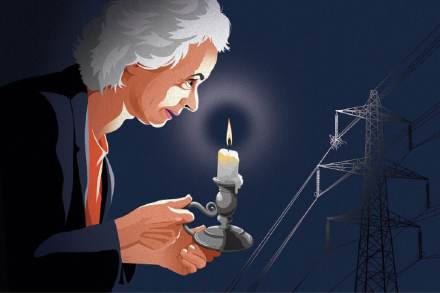
Meet Meredith Angwin, the grandmother changing the energy industry

Along a twist in the Connecticut River within an old-style colonial Vermont home lives Meredith Angwin, the Jewish grandmother who saw what almost no one else did: the coming downfall of the American electrical system. Three years ago, Angwin self-published Shorting the Grid: The Hidden Fragility of Our Electric Grid, the first-ever explanation for laymen of America’s labyrinthine, abstruse power markets. Her diagnosis was simple and troubling: when America moved away from the monopoly utility system in the Nineties toward restructured electricity markets, all players were divested from the responsibility of keeping the lights on.

Angwin
coal

Why ‘dirty’ coal is vital to a ‘clean’ green future

The Central and Western regions of Pennsylvania are known for their majestic, untamed landscapes. Seen from on high, you’d think the forested wilderness here was yet untouched. Though that’s far from the truth, the area has, for the past few decades, for better and worse, been largely forgotten — except by the people who live, work and play among the lands and waters scarred and poisoned by abandoned deep-coal mines and unreclaimed strip mines. The Allegheny section of the Appalachian Mountain range resembles an accordion poised in compact, scrunched-up, ready-to-perform mode.

The attack on Israel must lead to an uptick in inflation

From our UK edition

A 10 per cent increase in oil prices translates to a 0.15 per cent loss of global GDP and a rise of 0.4 per cent in global inflation, says Gita Gopinath, deputy managing director of the IMF. Before Hamas launched its assault on Israel on 7 October, the Brent Crude barrel price had already moved 20 per cent above its summer level of $75 and pundits were predicting $100, based on prospects of tighter supply from Saudi Arabia and Russia. Natural gas prices have also risen sharply with winter approaching – and no one knows how escalation of the latest Middle East conflict might affect other energy flows and supply chains.

Metro’s story tells us markets are still fearful of a banking crash

From our UK edition

Market sentiment around the possibility of failures in the banking world remains as febrile as ever. Or so we might judge from coverage of Metro Bank – which reports suggested might have been edging towards collapse before finding a new owner over the weekend. Metro was the brashest of the ‘challenger banks’ that sprouted after the 2008 financial crisis and the only one that aimed to build an all-new network of 200 branches. Its American founder, Vernon Hill – whose other interests included a chain of Burger King outlets – declared an urge to ‘make banking fun’ when the first Metro opened in Holborn in 2010, offering free lollipops and dog biscuits. For some observers, it looked too gimmicky to survive. To have done so, having attracted 2.

The forecast Andrew Bailey actually got right

From our UK edition

When inflation was at 5.5 per cent and rising in January 2022, the BBC’s Faisal Islam adopted a look of amazement when he asked the governor of the Bank of England, Andrew Bailey: ‘So you’re trying to get inside people’s heads and ask them not to ask for too high pay rises?’ ‘Broadly, yes,’ Bailey stepped into the trap, ‘It’s painful, but we need to see that in order to get through this problem more quickly.’ The governor was slated for insensitivity, critics making much of his own half-million package. That 38-second clip did more to make his out-of-touch reputation than any of his other stumbles. But he wasn’t wrong.