The horror that emerges from the columns of Domesday Book
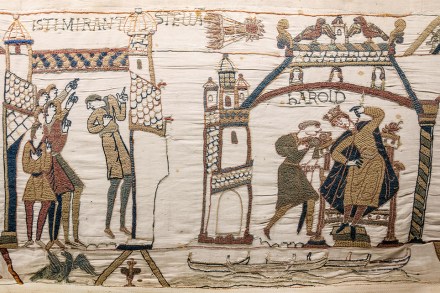
The opening of the British Museum’s The Bayeux Tapestry exhibition is not far off now. In early July, a bright yellow truck transported the tapestry from France via Eurostar, arriving in London under cover of darkness. With George Osborne, chair of the museum, posing as the symbol of a new entente cordiale, the display is being hailed both as a diplomatic triumph and as the blockbuster exhibition of a lifetime. Soon many thousands will have the opportunity to experience what Max Adams in his new book describes as this ‘dazzling, cinematic, embroidered strip cartoon’. Speculation that the tapestry (actually an embroidery on linen) is missing a final scene is probably correct.