Education

Steven Van Zandt: Teachers make great audiences, probably because they never get out

I’m at the airport in Salt Lake City, waiting for the snow to stop so we can get up to Vancouver. I’ve been on the road with the Disciples of Soul since a month before Thanksgiving. This tour, the Soulfire Teachers Solidarity Tour, has been going on and off for a year and a half now, and it ends on December 16. The road is a lifestyle I’ve gotten used to. I miss my wife, I miss my dog. But we don’t go out so long, three or four weeks at the most before going back home. It’s not like the old days, the we’d go out for a year, and stay out. It’s much more civilized now. The tour promotes my music-based school curriculum, TeachRock.org.

steven van zandt

Worrying about schools is more than a middle-class obsession

From our UK edition

The yearly scramble for school places is about to start and, as all British parents know, trying to find a school for your children can be an all-consuming business. When searching for a decent state primary for my own children, I was faced with intense competition for places in London along with soaring house prices. So I did what plenty of other middle class parents have done before me and moved out of the capital. For better or worse, my children's education has dictated everything: from where I live to my choice of career. On this week's Spectator podcast, Leah Mclaren takes issue with mothers like me. Isn’t the British obsession with schooling all about status anxiety and paranoia about our children’s life chances, she asks.

Class war

From our UK edition

One thing I love about my adopted country is the widespread cultural contempt for dullness. Unlike North Americans, intelligent British people rarely drone on in a witless or self-aggrandising manner. They deflect, make jokes and generally aim to please. But there is one boring subject no one here ever seems to tire of and that is schooling. ‘So where do your kids go?’ I’ve learned is just as loaded and inescapable a London dinner party question as ‘What do you do?’ or ‘Where are you on Brexit?’ If you choose private, you’d better have a plausible explanation (e.g. ‘We just didn’t want to make our child the social experiment’).

How the Tories’ education shake-up risks alienating Jewish voters

From our UK edition

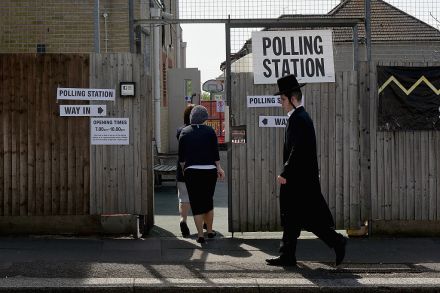
Labour desperately needs to win over Jewish voters if Jeremy Corbyn is to make it to Downing Street. At the snap election, the party was damaged by underperformance in seats with large Jewish populations: Hendon (held by the Tories by a only 1,072 votes) and Finchley (Tory majority 1,657) are two examples. Labour's summer of anti-Semitism has made winning over such voters even trickier. But while the Tories look well placed to keep hold of these seats, they appear to be doing their best to imitate Corbyn and alienate Jewish voters. An increasingly bitter row between the government and orthodox Jewish communities across Britain is to blame for this.

Uncommon knowledge

From our UK edition

So farewell, then, to the Common Entrance Exam, bane of a million schoolchildren’s lives since it was introduced in 1904. Three of the biggest public schools — St Paul’s, Wellington College and Westminster — are giving up the exam. From 2021, they will do the pre-test: verbal and non-verbal reasoning, maths and English, taken at the age of ten and 11. Common Entrance was a more gruelling thing, involving up to 14 exams over three days. It’s under-standable that schools want to ease the strain on over-examined children. But all the same, it’s the latest blow to the Great British Eccentric Exam Question. I still cherish the eccentric questions from my own Westminster entrance exam in 1984:   1.

Don’t tell the parents

From our UK edition

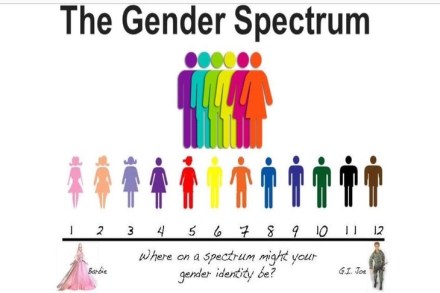
How can we help transgender children? This is a question greatly exercising politicians and many are confused about what to do. In Scotland, children are now expected to ‘demonstrate an understanding of diversity in sexuality and gender identity’. The Scottish government supports a new classroom resource that tells primary school children that they may consider themselves to be a boy, a girl, or neither. ‘You know who you are,’ it explains. What guidance are teachers given? I found out two years ago when I was one of the 3,000 teachers and classroom assistants from across Scotland dispatched for training by LGBT Youth Scotland, a campaign group.

If girls don’t like physics, it’s down to biology

From our UK edition

I was delighted to see Claire Foy win an Emmy award for her portrayal of the Queen in the fine Netflix series The Crown. It may have helped assuage her annoyance at initially being paid £200,000 less than her co-star, Matt Smith, who did a fairly good impersonation of a young, brooding Duke of Edinburgh. Foy had more lines than Smith, is as capable an actor as Smith, was the leading role and, importantly, is at least as fit as Smith. This last point is vital because television often casts people on account of their attractiveness, because viewers like looking at attractive people rather than at hideous fat munters. Whatever, there is still sexism around and Foy’s treatment seems to be a good example of it. I can think of no other reason she was paid less, other than sexism.

The bad boys of Naples

From our UK edition

Goodnight, Caecilius. Goodnight, Metella. Farewell, faithful Cerberus the dog. What a fate. Buried under the ash and rock at Pompeii. ‘Eheu,’ as they say in the Cambridge Latin Course. ‘Oh dear, oh no.’ But what’s this? A boat leaving the Bay of Naples… A young man on board… Coughing black dust, but… alive. Yes, it’s Quintus, sailing to safety and Book Two. Here we will learn about Quintus’s further adventures in Roman Britain, trips to the baths at Aquae Sulis and an audience with good King Cogidubnus. What fun we had with Caecilius and Co. What bread, what circuses. What larks with Grumio and Clemens, the two buffoonish slaves.

Summertime blues

From our UK edition

Every year, like clockwork it comes, the traditional concern that the younger generation don’t do summer jobs like they used to. As the school holidays approach a politician is wheeled out to write a nostalgia piece about part-time jobs, and the ‘essential skills’ these offer. Holiday and Saturday jobs, you see, are the foundations of a successful career, with their promise of resilience-building and priority-juggling. Some statistics will be cited about businesses being desperate for applicants with ‘soft skills’, and on cue, media-friendly CEOs are trotted out to support whichever wayward minister has been handed the keys to the Workshy Teenagers wagon.

Did I destroy my daughter’s prospects?

From our UK edition

Every year, thousands of parents face the situation I did in 2014 when I realised that I could no longer afford to educate my ten-year-old daughter privately. At first, I didn’t panic. After all, I lived near some excellent state schools. After queuing for two hours one cold winter Saturday morning for Open Day, we learned that to gain a place at Holland Park you had to live within yards of it, or win a heavily oversubscribed art scholarship, which my daughter attempted — and failed. I still didn’t worry. Why should I have, when 93 per cent of children under 16 in England are educated in state schools? We queued for one Open Day after another. We tried a couple of church schools, but as non-churchgoers our chances were slim.

A parent’s dilemma

From our UK edition

In my study at home stands a small cork board with the names of eight target schools for my ten-year-old son. The state schools are on the left, the private schools on the right. The decision is due soon and I still have no idea what to do. There aren’t many things that Britain genuinely does better than anyone else in the world, but secondary education is one of them. The discerning Russian plutocrat, who could buy anything anywhere, would have his son in England for his teenage years followed by an American Ivy League university. International league tables rank our private schools top of the world — their quality is world famous. But what’s less well-known is that exam results in the best state schools are now just as good.

School report | 6 September 2018

From our UK edition

    MAKING THE GRADES  When he was education secretary, Michael Gove took it upon himself to reform the GCSE exam system. The A* to G grading system was replaced by a numerical one, with the aim of making it easier to differentiate between the top candidates — A* and A grades were, for example, replaced with three grades: 7, 8 and 9. These new exams were supposed to be harder than the previous ones, with former Harrow headmaster Barnaby Lenon commenting that they ‘contain questions of a level of difficulty that we have not seen since the abolition of O-levels in 1987.’ Despite all of this, GCSE results improved this year. The proportion  of students achieving the pass mark (previously a C, but now a 4) increased by 0.

Editor’s Letter | 6 September 2018

From our UK edition

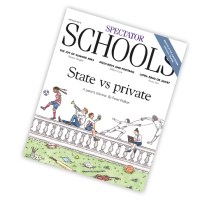
State or private? Years of saving every penny in a bid to scrape together enough to pay the school fees, or months of cramming to get your child a scholarship, a bursary… anything to ease the pain. Is it worth it? Fraser Nelson is going through this process, and writes about his dilemma. Charlotte Metcalf, meanwhile, tells the tale of her bid to find the best possible state school for her daughter, and how she still wonders whether she has doomed her child’s prospects by being unable to afford to go private. Elsewhere in the magazine, classics teacher Emma Park argues that children shouldn’t give up on Latin just yet (even if today’s high-achieving pupils see little point in learning for learning’s sake, rather than for exam-passing).

Revealed: the Scottish uni courses for (feepaying) English students only

From our UK edition

When Alex Salmond stepped down as First Minister, he famously unveiled a commemorative stone engraved with the message ‘The rocks will melt with the sun before I allow tuition fees to be imposed on Scottish students.’ If he wants to see melting, he should go to the UCAS website and look at the courses up for grabs in the clearing system – then change the settings to say you’re Scottish. The courses melt away. (For example, here is the English version of Glasgow University clearing courses: law, history, all sorts of gems. And here is the Scottish version). Why the difference? Because England’s students bring fees. As a direct result opportunities are created for them – even in Scotland.

Vocational schools are not to be sneered at

From our UK edition

When I was 16 I failed all my O-levels, bar a grade C in English Literature, and concluded I wasn’t academically bright. Instead of retaking my O--levels, doing some A-levels and trying to get a place at university, I decided to pursue a career as a tradesman and enrolled on a residential work experience course. It was a bit like a boarding school, except it offered students a technical and vocational education rather than an academic one. It was a miserable period of my life. The stench of failure hung over the institution like a toxic cloud and my fellow students and I were treated as if we were semi-delinquents who might at any moment go off the rails.

Why are 27,000 fewer boys going to university than girls?

From our UK edition

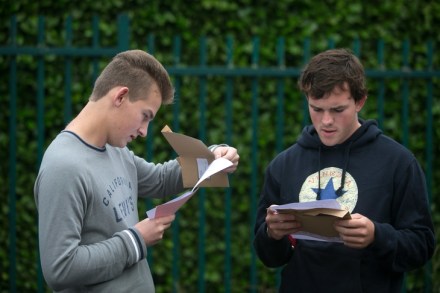
Despite the numerous photos doing the rounds of girls celebrating their exam results today, one of the main headlines from A-Level results day is the news that boys are outperforming girls in the highest grades of A*s and As. This is the second year that boys have done better than the girls (and just by 0.4 percentage points, mind). However, when it comes to the bigger picture things aren’t looking up for boys just yet. The gender gap in academic achievement has only been getting bigger in recent years, though its rate is slowing.

Are grammar schools unfair?

From our UK edition

Those dread words ‘Grammar schools’ are back in the news again. The education secretary, Damian Hinds, has today announced a new fund that will allow established academically selective schools, i.e. the 163 grammars clustered around the country, to found new ‘satellite’ schools. The proposal could increase pupil numbers at grammar schools by 16,000 over the next four years. The news has been met with the typical mixture of surprise and outrage; amidst the tried-and-tested to-and-fro, it is hard to find much reasoned and sustained argument. Everyone, it seems, knows where they – and everyone else – stand. But, dig a little deeper into the issues at stake, and Hinds is found to be asking the nation the two difficult questions it needs to answer.

The Tories will regret backtracking on faith schools

From our UK edition

The archbishop of Liverpool, Malcolm McMahon, got it right: the Government has broken its manifesto promise on church schools – can we just drop the “faith schools” bit? As he said trenchantly: “In their general election manifesto the Conservative Party made a commitment to the Catholic community that the unfair rule effectively stopping the opening of new Catholic free schools would be lifted. Today the Government has broken this promise, dropped the pledge they made to our country’s six million Catholics and ignored the tens of thousands of Catholics who campaigned on this issue.” That’s telling ‘em. It doesn’t help either, that the Education Secretary, Damian Hinds was so weaselly about the Government’s bad faith.

May the marketisation of our schools continue

From our UK edition

Towards the end of 2009, shortly after I announced my intention to set up England’s first free school, I debated with Fiona Millar on Newsnight about the pros and cons of allowing parents to set up schools. Fiona had been having this debate, or ones very like it, for at least 20 years and it soon became apparent that I was outmatched. I felt like an amateur who’d stepped into the ring with Mike Tyson. After five minutes, as I lay bleeding at her feet, she turned to Jeremy Paxman and said: ‘I don’t even know why we’re bothering to have this debate. Toby’s not actually going to do this. Setting up a school is so complicated, it’s not something a group of parents is ever going to manage.