Education

The private school advantage has never been greater than in lockdown

From our UK edition

When Boris Johnson announced the easing of lockdown this week, there was nothing for schools. Pubs, yes. Theme parks, even. But the education of children? There is no great rush for that, it seems. First things first. I have a 14-year-old daughter at a state grammar and like so many parents, I am in despair. The two-metre rule, which had presented such problems for schools, is finally being relaxed. But far from cheering the move as a crucial step towards getting children into the classroom, the teaching unions are still cavilling — advising headteachers to ensure they have contingency plans for bringing only half of pupils back, on a rotating basis. The Prime Minister has said all pupils should return in September.
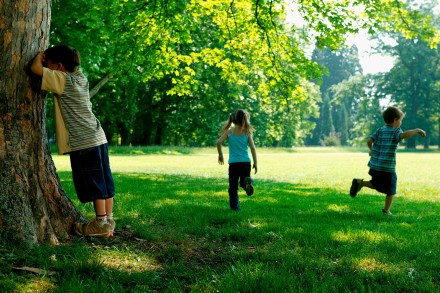
Children should get out more — even if it’s for hide and seek in the park

From our UK edition

We live in an urban world. It’s a statistical fact. The great outdoors for most of us is a thing of the past — a place, like elderly relatives, to be visited infrequently and preferably with gloves. Metro world, by contrast, is safe, insulated, inviting. No getting wet in the rain, no patchy wifi, no mud on our new Nikes. Little wonder that our education system has gone the same way: safe, sedentary, sterile. Patrick Barkham thinks there might be a better way. Give kids more space, he pleads. Free them up from rules and tests. Climbing trees, prodding roadkill, collecting grubs: hell yes, if they want to, why not? The statistics (that boring, schooly word again) suggest he might be on to something. One in eight British youngsters can’t identify an oak leaf.

School’s out: the true cost of classroom closures

From our UK edition

It’s Monday at 9 a.m. and secondary schools in England have just re-opened their gates to students in Years 10 and 12. I have been looking forward to this moment for 13 long weeks, since that frightening afternoon in March when my colleagues and I gathered around a computer in the staff room and saw a healthier-looking Boris Johnson declare he was shutting schools. But today I’m not at the comprehensive in Hackney where I teach economics welcoming back my students with a rousing lesson on the financial devastation caused by the crisis. I’m surplus to requirements and am still marooned at home.

Reopening schools must be our first priority

From our UK edition

It would be a tragedy if one of the legacies of Covid-19 — a disease which hardly affects children physically — was a widening of the already broad gap in educational attainment between rich and poor. But sadly, the damage is already well under way. Back in March, Britain was the European country most keen to keep its schools open in the face of the then-burgeoning number of Covid-19 cases. Now it is the other way around. In Denmark, primary schools have been open for a month. This week, children began to return to class in Germany, France and the Netherlands. Next week, schools will start to reopen in Belgium. Yet in Britain, the earliest date we have been given for reopening schools is 1 June, and then only for some children in primary schools.

These kids just got screwed by lockdown – and no one bothered to tell them

From our UK edition

Here are some numbers that too many people who work in and around politics don’t know. In any given year, around 700,000 young people turn 18 and leave school. A little under half of them go on to higher education (HE). The other half, around 360,000, do something else. Roughly half of these non-HE school leavers would normally get a job. Another 60,000 or so would become apprentices. And quite a lot – more than 100,000 – would go down in the stats as ‘not sustained’ or ‘activity not captured’ meaning that whatever they did, it didn’t last, or that they have dropped out of the view of educational statisticians. In other words, life has not gone well for them.

Coronavirus has made amateur mathematicians of us all

From our UK edition

‘What is the point of learning maths? When do you ever actually need it? How does it ever affect your life?’ That’s the frequent complaint of my school-age children, labouring over their times tables and number bonds. It was my complaint as I struggled to tell median from mean, or sine from cosine. Well. Now we have a nation and a world bewitched and terrified in equal measure by a ground-level demonstration of what an exponential function does. Our entire society is being shaped for a generation by that elegant, predictable, horrifyingly steepening curve. One shred of comfort in this catastrophe is the thought that no journalist will ever again write ‘increasing exponentially’ as a fancy-sounding way of saying ‘increasing a lot’.

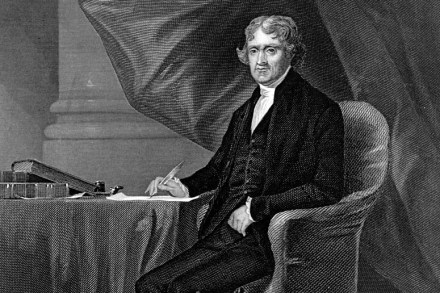
No one in Jefferson’s day suspected the contradiction between commerce and education

Laramie, Wyoming Historians of democracy know that the phenomenon was built upon two principal social structures: bourgeois commerce and popular education. The first developed during the Middle Ages and grew until eventually it replaced war as the means by which states and individuals acquired wealth; the feudal class gave way to the bourgeoisie. The second developed in the late 18th and early 19th centuries in North America, the United States in particular. The two institutions were widely regarded as socially, morally, economically and politically complementary; necessary to the growth of a solid middle class, of capitalism and of republican government.

jefferson education

Want to save public schools? Embrace school choice

Debate over school choice has got ugly. A public school district administrator in Kentucky recently suggested he’d delay students’ graduations if the state legislature passes school choice legislation that would give tax credits to private donors who support voucher programs for kids to attend schools of their choice. The proposed program is similar to one in Florida, and the federal government has reportedly pledged up to $70 million in support to the Bluegrass State if it passes the bill.At the heart of the outraged responses to such programs is the assumption that supporting public school students who want to attend private schools will undermine public education and hurt the kids left behind by transferring funds into private hands.

schools

How Oxbridge PhDs became the preserve of the super-rich

From our UK edition

Oxford and Cambridge have gone to great lengths over the last few years to increase the number of admissions of state-school educated students at undergraduate level – to varying degrees of success. As Robin Harman reported in Spectator Life recently, there’s still a worrying disparity between the number of offers made to disadvantaged pupils and the take-up of those offers, even though the number of offers made has risen steadily.

Harry Potter’s dwindling popularity is a great shame

From our UK edition

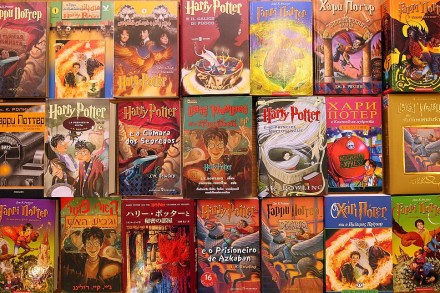
Teenagers are no longer reading Harry Potter books in their legions, it emerged this week, as J.K. Rowling’s series dropped out of the top ten favourite books for secondary school pupils. Instead, teens are reading books aimed at primary school children. This is disquieting news. Of all the books teenagers can access, they should be reading the Harry Potter books. They're not perfect, of course. For one, the storylines are derivate: orphan raised by aunt and uncle encounters a bearded old man, goes on an epic journey with his buddies, undergoes tasks and magic training, and defeats ogres before encountering the dark lord in his lair. Our hero emerges victorious! Star Wars anyone? Lord of the Rings?

Bloomberg’s education policies deserve much more scrutiny

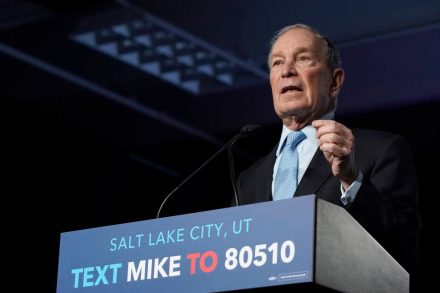
Mayor Mike Bloomberg didn’t fare so well in his debut appearance in Wednesday night’s Democratic debate in Las Vegas. Every other candidate was intent on exposing various sordid parts of his history, including his mistreatment of women and his former comments on banning the redlining that caused the 2008 financial crisis. But I was surprised that other parts of his record didn’t receive any attention—particularly his comments on K-12 education. After all, Bloomberg once said that if he had things his way, he’d 'cut the number of teachers in half', 'double [their] compensation' and 'weed out all the bad ones and just have good teachers'.

education

Letters: Why have the Conservatives decided Chesterfield is a lost cause?

From our UK edition

Given up on Chesterfield? Sir: Matthew Parris makes some interesting and accurate points about growing Tory support in the north and Midlands (‘The Tory push north will end in failure’, 7 December). He did not mention Chesterfield in his article, but it is a good example of what he talks about. It seems to me that the Conservatives have decided Chesterfield is a lost cause, even though it would on the face of it seem promising territory for them. With an average age higher than the national average and no university, it is one of those ‘left behind’ areas with a lot of traditional working-class voters who dislike Corbyn. A good local candidate and some active canvassing could at least have made a dent in Labour support. So what did the Tories do?

What have the Anglo-Saxons ever done for us?

From our UK edition

It has been a while since I’ve considered the vexed question of Byrhtnoth’s ‘ofermod’. More than 30 years, in fact. I remember, as if it were yesterday, my Anglo-Saxon tutorials with dear, lovely, gentle Richard Hamer. And now he is the author of the standard translation being used by my children on their own university English Literature courses. (I suppose the Latin equivalent would be having been taught by the author of Kennedy’s ‘Eating’ Primer.

Must try harder: Labour wants to reverse a decade of progress in education

From our UK edition

If education rather than Brexit or the NHS was the biggest issue in this election campaign, the Tories would be coasting to victory. On Tuesday, the OECD’s Programme for International Student Assessment (Pisa) published its latest rankings, based on tests taken by 15-year-olds in 79 countries, and they show the UK climbing the international league tables. In reading, we’re now 14th (up eight places from 2015); in science, 14th (up a place); and in maths, 18th (up nine places). In other words, British schoolchildren are making huge strides compared to those in other countries. And over a period where money has been pretty tight. Why, then, would you want to overhaul our education system, as the Labour party is proposing to do?

Asians are doing too well – they must be stopped

From our UK edition

Riddle: when is discrimination against a historically disadvantaged racial minority perfectly legal? Answer: when they do too well. The first ruling on the Students for Fair Admissions suit against Harvard University is in. A federal judge in Massachusetts concluded last week that for America’s be-all-and-end-all university to discriminate against Asian applicants in order to serve the all-hallowed goal of ‘diversity’ is constitutional. (Or strictly speaking, if you can follow this logic, the university did not discriminate against Asians by discriminating against them.) The reasoning: ‘Race conscious admissions will always penalise to some extent the groups that are not being advantaged by the process.

Labour should scrap state schools, not private ones

From our UK edition

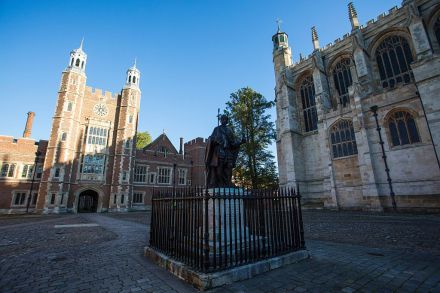
Shadow education secretary Angela Rayner has promised that if Labour wins the next election it will use its first budget to ‘immediately close the tax loopholes used by elite private schools and use that money to improve the lives of all children.’ This slab of red meat went down well with the class warriors at the party’s conference in Brighton, where there were doubtless plenty of teachers in attendance, but it wasn’t enough. Labour conference not only voted to withdraw charitable status from private schools, but to abolish them altogether. This was described, rather euphemistically, as ‘integrating all private schools into the state sector’ by Holly Rigby of the not remotely euphemistic Abolish Eton campaign.

Woke history is making big inroads in America’s high schools

Like growing numbers of public high school students across the country, many California kids are receiving classroom instruction in how race, class, gender, sexuality and citizenship status are tools of oppression, power and privilege. They are taught about colonialism, state violence, racism, intergenerational trauma, heteropatriarchy and the common thread that links them: 'whiteness'. Students are then graded on how well they apply these concepts in writing assignments, performances and community organizing projects. At Santa Monica High School, for example, students organize and carry out 'a systematized campaign' for social justice that can take the form of a protest, a leaflet, a workshop, play or research project.

woke history

General de Gaulle’s advice to the young Queen Elizabeth

From our UK edition

There were so many ear-catching moments in Peter Hennessy’s series for Radio 4, Winds of Change, adapted from his new book by Libby Spurrier and produced by Simon Elmes. Harold Wilson answering a journalist’s question after a sleepless night while awaiting the results of the 1964 election, quizzical, cheeky and so quick off the mark. When asked if he felt like a prime minister, he replied: ‘Quite honestly, I feel like a drink.’ Later he was waylaid at Euston station having just got off the morning train from Liverpool and was still unsure of the result. (Labour won by just four seats after 13 years of Conservative rule.) At 3.50 that afternoon, Wilson, sitting by the phone in Transport House, at last received a message from the Palace.

The rise of the flexi-boarder

From our UK edition

Spend a night at Woldingham School in Surrey — with its wellness room, indoor tennis dome and a menu offering cod steak with prawns and tarragon, all just an hour’s drive from London — and you may feel like you’re on an upmarket mini-break. It’s perhaps no surprise, then, that the number of ‘flexi-boarders’ — pupils who stay the night at school just once or twice a week — has grown three-fold since it was introduced three years ago. ‘It’s the perfect solution for us,’ says Siobhan Burgess, who works for the Cabinet Office and whose 14-year-old daughter boards up to two nights a week at the school to fit around sports matches and activities.

Learning the ropes

From our UK edition

My school owned a boat.  And not some dinghy or fibreglass pleasure craft either:  Jolie Brise — the name was always, of course, pronounced ‘Jolly Breeze’ — is one of the best-known tall ships in the world, three times winner of the Fastnet race, a pilot cutter so famous that she has a pub named after her. (A Wetherspoons, admittedly, but that counts.) It was only after I left that I realised that this was unusual: especially for a former direct grant grammar school in Wiltshire, about as far away from the sea as you can get in England.