Education

Can Gavin Williamson limit the impact of school closures?

From our UK edition

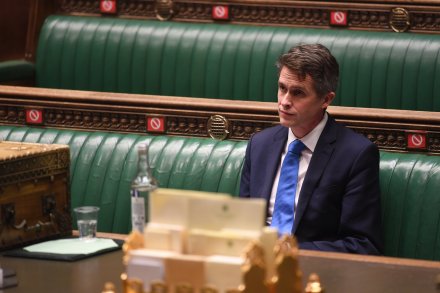
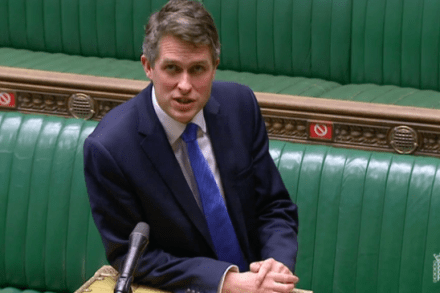
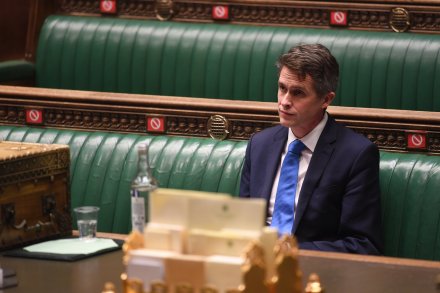
It is much harder being an embattled minister in the socially distanced Commons than in normal times. There is no group of supportive MPs to arrange behind you, no ability to organise sympathetic noises from the backbenches as you give your statement explaining why you've taken a last-minute decision to close all schools when you said you wouldn't and had been threatening councils who were trying to do so just before Christmas with legal action, and why you've spent the past few weeks insisting that exams would go ahead in the summer, only to cancel them this week too. On this charge sheet, Gavin Williamson would have struggled in any Commons setting when he explained why the government had changed its mind at the last minute.

Watch: Gavin Williamson’s schools opening gaffe

From our UK edition

Oh dear. Education Secretary Gavin Williamson has not exactly been at the top of his game in recent weeks. Across the country teachers, children and parents have been thrown into turmoil by the government’s haphazard education plans, which have seen schools open up for a single day, and national exams cancelled, despite the Education Secretary’s insistence they would ‘absolutely’ go ahead. Still, Mr S hoped that Williamson would at least be clear in his mind about getting schools back open once again. Unfortunately, the minister seemed to rather struggle with that message when in Parliament today.

Why Ampleforth should not be closed down

From our UK edition

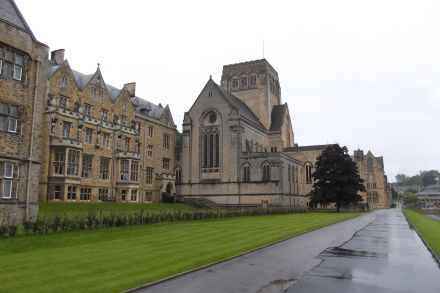
The ‘Problem of Evil’ was one of the more difficult questions asked by the monks at Ampleforth college when I was a pupil there. How, we were asked, does one reconcile the existence of an omnipotent and ever-loving God with the reality of widespread evil in the world we inhabit? What we students hadn’t realised while we were pondering this question was that the monastery had its own way of dealing with the problem of evil. When it came to monks and teachers exploiting the most vulnerable people in their care, the previous course of action at Ampleforth was to quietly ship these child abusers off to a distant parish.

A vaccine won’t heal the scarring of lockdown

From our UK edition

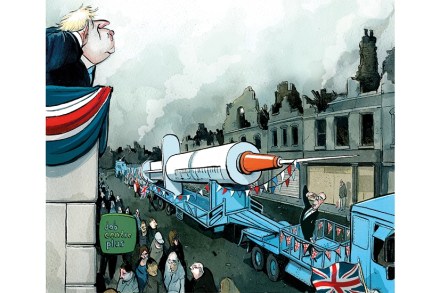
Ever since the pandemic struck, a spectre has haunted Boris Johnson: would Britain ever escape from this? His scientific advisers had given him a terrifying vision. Only 7 per cent of the public had caught Covid in the first wave, they said, meaning 93 per cent were still susceptible. So what was to stop his premiership being a never-ending cycle of lockdowns? Now, he has his answer: not one but three vaccines, two with efficacy rates of 95 per cent. This has transformed his outlook. The war against Covid is not over, but victory looks imminent. The Prime Minister has a weakness for wartime metaphors, but this time they are more appropriate than he might find comfortable. For months, his government has had one overriding priority: defeating the viral enemy, no cost spared.

Bring back small high schools

Batavia, New York I’m scribbling this on the porch as I stare at the chain-sawed remains of our massive and ancient (by American standards, which are the only standards I know) front-yard maple tree, which split in a windstorm and crushed my car. I had hoped to be a good custodian and pass along these sylvan sentinels intact to those who come after, but like America...well, I won’t go for a cheap and inexact analogy. Oh, 2020, you most annus horribilis. But I am an inveterate looker-on-the-bright-side, and among the reasons for hope in this darksome time is the potential for new, or renewed, growth on the branches of the learning tree. (If I may borrow a line from the Jackson 5.

schools

Too much learning is a dangerous thing

From our UK edition

It is often said that the left does not understand human nature. Yet it is difficult to think of anything as antithetical to Homo sapiens as the notion, popularised by free marketeers during the 1980s, that people would willingly evacuate those parts of Britain where ‘market forces’ had decreed that collieries and steelworks were no longer profitable. People did not ‘get on their bikes’ — in Norman Tebbit’s notorious phrase — once industry was shut down; instead they grew resentful at a world they felt had little respect for their lives or communities. We often refer to these people as ‘left behind’ — or as the journalist and author David Goodhart calls them, ‘Somewheres’.

Gavin Williamson escapes a public dressing down from Tory MPs

From our UK edition

Gavin Williamson rather generously did the sketch writers' jobs for them this afternoon when he failed to hand his homework in on time for his first day of term. The Education Secretary gave a statement in the Commons on schools reopening – and ended up being scolded by opposition MPs for sending a very late 'advance' copy of his words, as is custom. The SNP's Carol Monaghan rather acidly remarked that she just about had time to read it before asking her question, while Labour's shadow education secretary Kate Green complained of a 'summer of chaos, incompetence and confusion that has caused enormous stress' to pupils, parents and teachers. Williamson's apology for his late statement had the air of a pupil genuinely sorry he'd been caught out.

The forgotten victims of the deflated A-level grades

From our UK edition

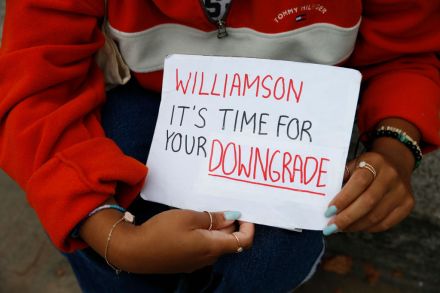
A few weeks ago, I spoke on The Spectator’s podcast about my A-Level results. My story in short: I lost my dream place at UCL to study medicine (my conditional offer was: A*AA) after being downgraded by the algorithm to AABB. As the daughter of a single mother, in a low income household, I’m not exactly the sort of person expected to score top grades (especially not by the now-defunct algorithm). However, with a run of 9s and A*s in my GCSEs, I proved I could beat the odds once, and, had I sat the 2020 exams, I am confident I would have beaten the odds again. But the virus struck – exams were abandoned, and pupils like me never got the chance to prove themselves. You might perhaps think: ‘but didn’t Gavin Williamson U-turn?

The Romans wouldn’t have understood our exam obsession

From our UK edition

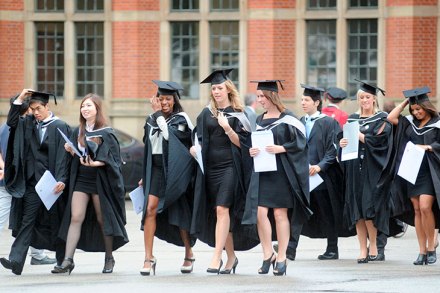
Many commentators have argued that the recent grading controversy indicates just how important public examinations are. Up to a point, Lord Copper. Romans did jobs, not ‘education’. Most who went to school (there was no state provision) probably learnt not much more than the basic three Rs (peasant families — the majority of the population — needed their children to work the land). A freed slave in Petronius’s Satyricon boasts that he knows ‘no geometry or fancy criticism or any such meaningless drivel, but I do know the alphabet and I can work out percentages and measures and currency’; Horace mocked pupils for being asked what is left from 1/12th subtracted from 5/12ths. One option for children was to be sent away as apprentices.

Spare a thought for next year’s A-level students

From our UK edition

Three years ago I was contacted by an official at the Department for Education to see if I was interested in becoming a non-executive director of Ofqual, the exams regulator. There have been times since when I’ve regretted turning down that offer, but this week was not one of them. Ofqual was given the unenviable task of awarding A-level and GCSE grades to students in England who, thanks to the lockdown, had not sat their exams; and it was inevitably criticised by those children and their parents who felt they should have done better, not to mention various enemies of the government who treated Ofqual as a proxy for Gavin Williamson, the Education Secretary.

University challenge: the next education crisis

From our UK edition

On the insistence of university authorities, freshers’ week will be an online affair this year. But if this autumn is not much fun for students, it will be a lot less fun still for university staff whose admissions system has just been thrown into turmoil by the A-level results debacle. While some institutions now face overcrowding, others face financial ruin. When the Education Secretary Gavin Williamson announced on Monday that he was abandoning the algorithm devised by Ofqual to moderate A-level results and would allow candidates to keep the grades estimated by their teachers, students were relieved — many more will, after all, now be able to go to their favoured university. Admissions officers at the top universities were rather less happy.

Ofqual boss’s algorithm malfunction

From our UK edition

Gavin Williamson has taken a lot of stick for the A-level exams debacle, but Mr Steerpike thinks we should perhaps look to Roger Taylor, the chair of Ofqual, who also happens to be head of the Centre for Data Ethics and Innovation. Not many people think that using an algorithm to decide exam results was the best option, but it becomes even more questionable when you realise that Taylor led a study last year, warning of algorithms propensity to ‘make decisions which reinforce pre-existing social inequalities’. The study states: ‘concerns are growing that without proper oversight, algorithms risk entrenching and potentially worsening bias.

The A-level algorithm shattered my university dream

From our UK edition

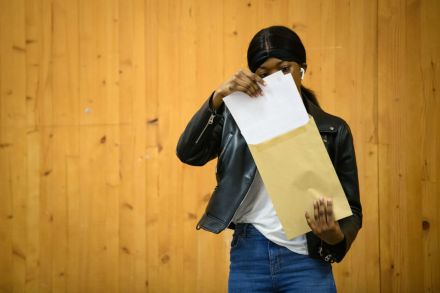
With a B, an E and a U at A-Level, it came as no surprise that yesterday I was rejected by both my first and second choice universities. Had I sat the exams myself, then I would have been more understanding of the outcome: at least I would only have myself to blame. But those grades do not reflect my ability, nor were they predicted by my teacher. Instead, the BEU that greeted me on results day was based on what an algorithm thought I ought to achieve. Last week, I wrote for Coffee House of my concern that students from disadvantaged backgrounds would be disproportionately impacted by the cancellation of exams and introduction of calculated grades, and I’m afraid I was right.I held offers from top Russell Group universities to study Law (Cardiff being my firm choice).

Don’t forget about BTECs during the A-level circus

From our UK edition

The summer ritual of A-level results day is so well known it's easy to forget the thousands of students receiving their BTec National results. That’s the intro to a BBC News item on vocational qualification results issued today. It’s also the story of British culture and economics, told in a single, unwittingly revealing, sentence. Around 250,000 kids will get BTEC results today – that’s almost as many as the 300,000 or so who get A-level results. But of course, media and political attention paid to the latter group is vastly greater than the former. Why?

Inflated exam grades let the government ignore its own failures

From our UK edition

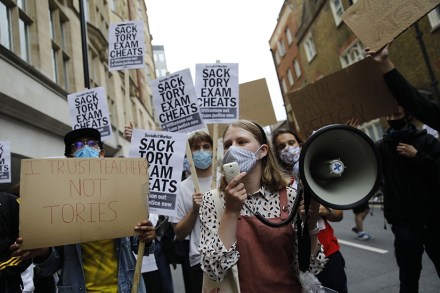
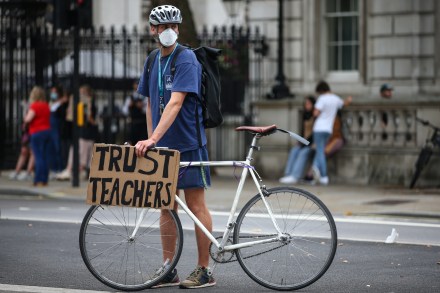
It was obvious that closing schools would hit the poorest hardest, inflicting permanent damage and deepening inequality. While many private schools and the best state schools maintained a full timetable of lessons throughout lockdown, a study by UCL in June found that 2.3 million pupils — one in five of the total — did virtually no schoolwork at all during the weeks of lockdown. The official response has been to turn a blind eye, and imagine that the damage can be covered up by simply awarding decent exam results. This year’s students are right to protest about the injustice of the system. From the moment the decision was taken to cancel exams, rather than carry out exams with social distancing, this year’s mess was guaranteed.

The proof that free speech in universities is in peril

From our UK edition

About 18 months ago, I attended a debate at Policy Exchange, the think tank founded by Nick Boles, Francis Maude and Archie Norman, on whether there was a free speech crisis at British universities. One panellist, Professor Jon Wilson of King’s College London, vigorously denied that any such problem existed. Various people pointed to examples of right-of-centre academics being no-platformed — Charles Murray, Amy Wax, Linda Gottfredson — but that was scarcely conclusive. It was anecdotal evidence, not hard data. The same cannot be said any more. This week, Policy Exchange published a paper by three academics — Remi Adekoya, Eric Kaufmann and Tom Simpson — which proves beyond reasonable doubt that free speech is in trouble in the higher-education sector.

The rise of the Econian

From our UK edition

A study has shown that protestors who took part in Extinction Rebellion’s demonstrations last year were overwhelmingly middle-class, highly educated and southern. Well, there’s a surprise. It turns out some 85 per cent of the London protestors had a degree, a third had a postgraduate qualification and two thirds described themselves as middle-class. Three quarters of those charged with offences lived in the south. And, if the accents I heard from the protestors as I biked through the throng on my way to work were anything to go on, a high percentage were public school--educated, too. I’d never seen so many Econians — the public school boys and girls who rule the wokerati world.

The rise of homeschooling

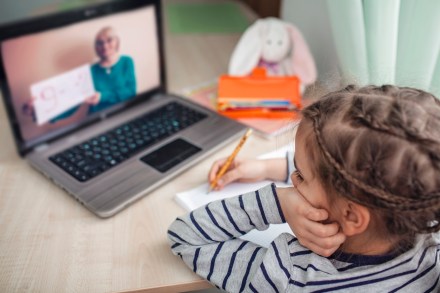
As school districts scramble to plan for the new school year during a global pandemic, many parents are taking matters into their own hands.States around the country, from Virginia to Kansas to Texas, have reported large rates of increased interest from parents in homeschooling their kids this fall. North Carolina’s homeschool application website recently crashed due to overwhelmingly high levels of submission. National and state polls show anywhere between 15 to 40 percent of families expressing a greater likelihood that they will homeschool during the COVID-19 pandemic.

homeschooling

Children of a lesser pod

As New York City schools grapple with how to handle a virus that has an under 1 percent infection rate in children, parenting boards frequented by the educated, monied-but-not-so-monied-as-to-send-their-kids-to-private-school set, are forming ‘pods’. A ‘pod’ will be a small group of children, usually no more than five, who will meet at each other’s homes in lieu of traditional schooling in September. You, and four other families in your same tax bracket, will hire a teacher to educate the five children in the pod. Parenting boards are overwhelmed with requests for these tutors. The families will agree to only interact with each other: an absurd and impossible promise that will surely be broken.

pod

The lost boys: the white working class is being left behind

From our UK edition

You can argue about the merits of pulling down statues, but it’s hard to make the case that mass protests serve no useful purpose. At the very least, they provoke debate and draw attention to uncomfortable topics that it might otherwise be easier to ignore. The recent protests have forced everyone to have difficult discussions about race, class, poverty and attainment. Any serious examination of the statistics shows that we’re pretty far from equal, but what the figures also show is that it’s wrong-headed and damaging to lump very different groups together. In these discussions politicians often lazily assume that all BAME (Black, Asian and Minority Ethnic) people are the same, and that all white groups are equally privileged.