Ed miliband

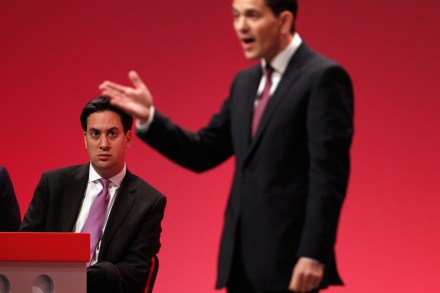
Enter, David Miliband?

‘Every day, in every way, it's getting worse for Ed Miliband.’ That's what I said last Thursday, and it has been more or less borne out since then. Friday, of course, brought that Twitter embarrassment. Saturday, the subsequent headlines, as well as Miliband's unconvincing attempt to push back against them. Sunday featured some of the most vicious attacks on his leadership by Labour MPs so far. And even today we've got the sort of ‘helpful’ advice from a senior Labour figure — in this case, Alan Johnson, suggesting that ‘too often we sound like a debating society rather than a political party’ — that comes across as frustrated criticism.
Ed under siege — and under threat

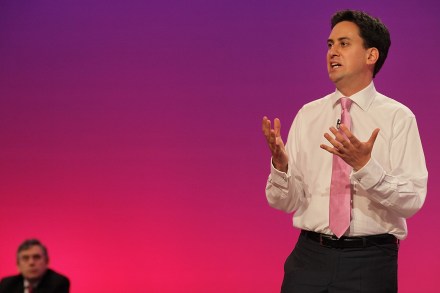
There was a fun game we used to play during Gordon Brown's premiership: counting the number of ‘buck up, or we kick you out’ ultimatums that Labour MPs delivered to their leader. There were, suffice to say, a lot of them. And tallying them up illustrated two things: the constant, sapping pressure that the Brown leadership was under, and Labour's persistent inability to actually finish him off. I mention it now because of this story in today's Mail on Sunday. It collects the increasingly public criticism of Ed Miliband by his own MPs, including Graham Stringer's warning that ‘Ed has got to get a grip and turn it around before the May elections.’ It's not at the level of the Brown Ultimatums yet, but it's certainly remiscent of them.

The Miliband puzzle

So why did Ed Miliband stop his brother being leader of the Labour Party? As each month of his uninspiring leadership passes, it becomes more of a puzzle. In today's Guardian interview, we learn that he can solve a Rubik's Cube in 90 seconds. Perhaps David Miliband took two minutes, leaving Ed to regard him as being intellectually inferior. The rest of the interview shows Ed trying to row back towards positions that David Miliband would have adopted from the offset: trying to claim fiscal responsibility, and credibility. The 'In the black Labour' movement is also an attempt to repair the repetitional damage being wreaked by Balls, whose calls for even more debt still strike the public as implausible.

Miliband comes out swinging

After being mostly absent in an embarrassing week, which culminates in today's Sun headline of 'Block Ed' referring to the Labour leader's Twitter gaffe yesterday, Ed Miliband has emerged with a self-assured interview in the Guardian. In parts, he is even boastful. Miliband declares himself 'someone of real steel and grit' and brags 'I am the guy who took on Murdoch... I am the guy that said the rules of capitalism as played in the last 30 years have got to change'. He claims – contrary to Maurice Glasman's criticism this week – to have 'a very clear plan' about what needs to change in Britain. And what is it exactly?

The scale of Clegg’s Lords challenge

Tucked away on page 15 of today's Times, there's an insightful story about Lords reform (£) by Roland Watson. And it's insightful not just for the new information it contains, but also for the familiar truth it confirms: reforming the House of Lords is going to be one helluva difficult task. You see, while both halves of the coalition committed to a fully- or ‘mainly-elected’ upper chamber in their respective manifestos, only one half of the coalition is particularly eager to force it through now.

Murphy sets Labour’s new strategy a-rolling

A few weeks ago, a shadow minister urging Labour to avoid ‘shallow and temporary’ populism over spending cuts might have seemed like a sally against the party's Ballsist wing. But given that Ed Balls has since said that ‘Labour will give more details of its tough spending decisions [in 2012]’, then Jim Murphy's intervention in the Guardian today is a little less provacative than that. In truth, the shadow defence secretary's words fit perfectly into Labour's plan to sound more fiscally responsible this year. It is, most likely, party policy dressed up as a clarion call. What's striking is that Murphy goes beyond this simple rhetoric, becoming the first shadow minister to give some of those ‘details’ that Balls mentioned.

The coming battle over the ‘undeserving rich’

Who can be toughest on the ‘undeserving rich’ is shaping up to be one of the main political battlegrounds of 2012. David Cameron and Nick Clegg’s comments today on tax avoidance are an attempt to get ahead of this debate.    Clegg, though, is keen to make this issue his own. As I say in the politics column this week, he is planning a big speech later this month on ‘responsible capitalism’. He will use it to argue that there need to be more checks and balances within companies and call for more shareholder power over executive pay. One Cleggite tells me, in reference to the Labour leader’s conference speech trying to sketch out a new capitalism, ‘it is the speech Ed Miliband should have given.

Every day, in every way, it’s getting worse for Ed Miliband

Unless one of Ed Miliband's New Year's resolutions was to ignore absolutely everything going on around him, I expect the Labour leader will be in a particularly glum mood this morning. And it's not just that Maurice Glasman article — which has inspired the headline ‘Miliband's former guru says he has “no strategy”’ on the front of today's Guardian — either. It's the, erm, questionable tweets from one of Miliband's shadow ministerial team. It's the LabourList poll that finds scant support, and much disapproval, for his leadership. It's that John Rentoul column suggesting Yvette Cooper for the throne. It's the Tory minister who said to Iain Martin that ‘Keeping Ed Miliband in his job must be one of our biggest priorities this year.

Lord Glasman’s target is the other Ed

Maurice Glasman’s New Statesman piece on Ed Miliband is causing a bit of a stir. Lord Glasman, an academic who Miliband proposed for a peerage, writes that the Labour leader ‘has not broken through. He has flickered rather than shone, nudged not led.’ But if you read between the lines of Glasman’s article it is clear that he thinks someone is holding Miliband back and he drops very heavy hints as to who that is. For instance, the second sentence reads as follows: ‘Old faces from the Brown era still dominate the shadow cabinet and they seem stuck in defending Labour's record in all the wrong ways - we didn't spend too much money, we'll cut less fast and less far, but we can't tell you how.

Miliband’s New Year message: The same, but different

Well, folks, the 2012 model of Ed Miliband looks and sounds rather like the unfancied 2011 model. Just compare the New Year message that he released today with the one that he issued a year ago; the similarities are plenty. His main argument this year is that the Tories are the party of gloom — resigned to years of stagnancy, unemployment, pestilence, etc — whereas Labour are the party of a bright new future, there to show that ‘optimism can defeat despair’. Or, as he put it at the end of last year, ‘Even in these tough times, we must keep the flame of optimism burning.’ There are some differences, though. Compared with last year, Miliband talks much less about the coalition going ‘too far, too fast’ with deficit reduction.

Your five point guide to Balls’s highly political interview

It's a strange sort of Christmas present; interviews with Ed Miliband and Ed Balls — but that's what the papers have seen fit to deliver us this morning. There's not much political content in the Miliband one, which is more of an At Home With Ed and Justine sort of deal. But Ed Balls's interview with the Independent is a totally different matter. Here are five points distilled from the shadow chancellor's words: 1) We'd cut, I tell ya. Rarely has Balls sounded as much of a deficit hawk as he does here. Sure, he drops in the usual lines about the Tories going ‘too far, too fast’, and Labour providing an ‘alternative’ — but then he blurs his dividing lines far more than usual.

What phase of the coalition are we in now?

It was not so long ago — the run-up to last May's AV referendum, to be exact — that we heard the coalition would be entering a new phase. Gone was the happy synthesis of the Tories and Lib Dems that prevailed after the election, and in its place would be a government that spoke more openly, more angrily about its differences. But even if Phase 2.0 had the appearance of being more fractious, it was actually designed to keep the parties together. The idea was that, by highlighting the essential differences between the two sides, their supporters could more easily be kept on board with the overall project. I mention this, this morning, because it looks as though that strategy is either being ramped-up or taken in a new direction. During Phase 2.

Miliband is trapped in his own foggy argument

With one well-timed jab in PMQs, David Cameron turned much of this week's political debate – in domestic terms, at least – into a debate about Ed Miliband's leadership. And how is Miliband responding? Predictably, for the most part. His celebratory speech in Feltham and Heston this morning reduced down to the claim that the result 'offers a verdict on the Government's failed economic plan'. And his interview in today's FT covers much of the same territory. But the FT interview is also revealing in one particular regard: it demonstrates, once again, how Miliband is caught in a strange, undefinable strategy somewhere between attack and defence. This was, if you remember, a feature of his first speech as Labour leader – and here it crops up again.

A victory for Labour, but not necessarily for Ed Miliband

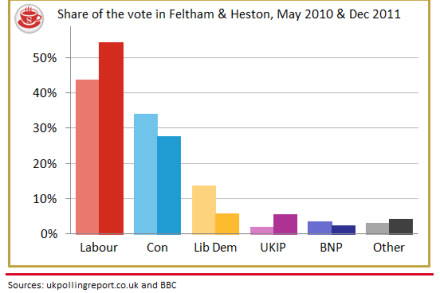
‘This result... is a victory for Labour that shows the progress we are making under Ed Miliband's leadership; a vote of confidence in the way that Labour is changing...’ Or, rather, it isn't. Whatever Labour's winning candidate in Feltham and Heston, Seema Malhotra, says, this byelection result was little more than an unsurprising Labour victory in a Labour area. The opinion polls, as we know, show more comprehensively what people think of the ‘progress’ that Labour is making under Ed Miliband's leadership. And it's far from a vote of confidence. Which isn't to say that Malhotra underperformed in her byelection victory, last night. Not at all. Labour actually increased their share of the vote — from 43.

Who’s right on public v private employment?

If you listened to PMQs yesterday, then you'll have heard two very different accounts of what's happening in the labour market right now. Had Ed Miliband been able to get anyone's attention, they'd have heard him say: 'over the last three months, for every job being created in the private sector, thirteen are being lost in the public sector.' Cameron's response: 'Since the election, in the private sector there have been 581,000 extra jobs. In the public sector, he's right, we have lost 336,000 jobs.' According to the Labour leader's figures, public sector losses are far greater than private sector growth. But according to Cameron's, the private sector is more than filling the gap. Why the difference? It comes down to the timescale you chose.

Miliband’s poll nightmare returns

There has, as we all know, always been a fug of doubt about Ed Miliband's leadership. Even when Labour have been winning by-elections (as they're expected to in Feltham and Heston tomorrow), even when even when they have fluttered ten points above the Tories, the question has always been there: would they be better off without him? After all, in terms of poll numbers, the party has generally exceeded the man. But today that question is wrapped in flashing, coloured lights, with a star on top. It's not just how David Cameron filleted Miliband in PMQs earlier, but more Labour's position in the latest opinion polls. As others have pointed out, every pollster now has the Tories basically level with Labour, or ahead of them.

Miliband crumples to a new low in PMQs

Inept, useless, incompetent, maladroit, hopeless, clumsy, crap. With thesaurus-rifling regularity Ed Miliband comes to PMQs and delivers a performance which is inept, useless, incompetent, maladroit, hopeless, clumsy and crap. The only virtue the Labour leader has is consistency. He’s consistently worse than last week. In theory he should have scored some damage today. Unemployment is soaring. Growth seems grounded. Cabinet ‘partners’ scuffle in public whenever they get the chance, and Nick Clegg changes his mind as often as he changes his socks. And Miliband’s tactics had some merit too. By disinterring the PM’s New Year Statement from January 2011 he was able to open up the Coalition’s wounds and have some seasonal fun at their expense.

Cameron pummels Miliband in PMQs

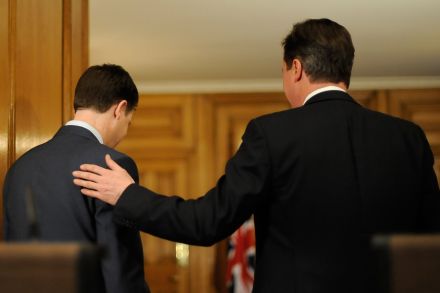
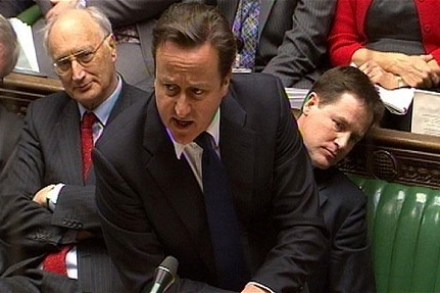
Today, was yet another reminder that David Cameron knows just where to hit Ed Miliband to make it hurt. After a few questions on the economy, Miliband moved to Europe — the coalition’s greatest vulnerability. Miliband joked that it was ‘good to see the deputy Prime Minister back in his place’, before mocking the coalition’s divisions over Europe. Cameron began his reply by saying it was no surprise Tories and Lib Dems don’t agree on Europe before saying that the split on the issue could be exaggerated: ‘it’s not like we’re brothers or anything,’ Cameron said in his most mocking tone. At this line you could see the Labour benches deflate and one of his aides visibly winced.