Ed miliband

Do Cameron and Miliband secretly feel the same way about the EU?

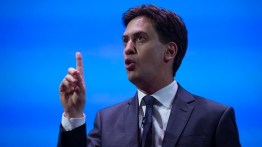
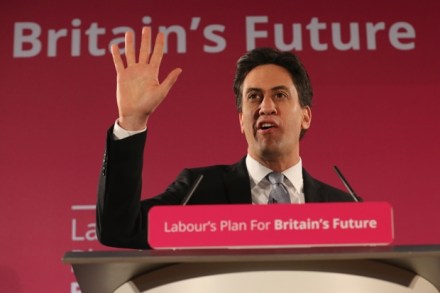
At last, an actual dividing line. Ed has used his first proper speech of the 2015 campaign to declare that his party would never, ever leave the EU: 'We must demand reform from Europe—a European Union that works better for Britain. But make no mistake: exit from the EU would be a dramatic mistake for our country and our economy. So, whatever the politics, I will not join those who cynically offer exit as a realistic plan for our future or the future of Britain’s working families.' That should really help Labour shore up their northern heartlands against increasing working-class Euroscepticism and the rise of Ukip. Mr S suspects the Labour leader's position is closer to Cameron's than either would care to admit this side of May.

Nick Clegg: I have a great fanbase

According to a recent YouGov poll, Nick Clegg has an overall rating of minus 54, making him more popular than the hapless Ed Miliband by just one point. While that wouldn't appear to be much to celebrate, the Deputy Prime Minister seems to actually be in denial about his own standing amongst the British public. In the first ever joint interview he has given with his wife Miriam, Clegg is asked whether his wife’s ‘huge fanbase’ ever causes an issue given that his own reputation has ‘taken a kicking over the past four years’. ‘I also have a great fanbase,’ Clegg replies, looking rather hurt.

Reasons for Ed Miliband to be cheerful (we had to stretch a bit)

Election omens Reasons for Ed Miliband to feel confident in 2015: — Only three parliaments since 1945 have run to their full five-year term. The subsequent general elections, in 1964, 1997 and 2010, all resulted in a change of government. But John Major did hold on in 1992, having gone to the country four years and ten months after the last election. — In four elections since 1945, the three main parties have been led by MPs who represent constituencies in each of the three countries which make Great Britain: 1970, 1979, 1983 and 1987. The Conservatives won them all. This year’s election, assuming no change of party leadership between now and May, will be only the second one since 1945 when all three main party leaders had constituencies in England.

A year ago, I had big plans to unite the right. This year, I’m keeping my ambitions more modest

This time last year, I wrote an article saying my main project in 2014 would be to unite the right. That is, I would start a political movement that would bring together Conservative and Ukip activists in a tactical voting alliance. We would select a few dozen battleground constituencies and campaign for whichever candidate was best placed to win in each seat, whether Ukip or Tory. The name for this movement was to be ‘Country Before Party’. The initial response was encouraging. Hundreds of people emailed me offering their support, including MEPs, members of the House of Lords, ex-MPs, and so on. I set up a website, assembled a steering committee and started drafting detailed plans. I felt like I was really on to something.

What David Cameron must do to win (properly this time)

Almost exactly five years ago, the Conservatives fired the starting gun for a general election — and shot themselves in the foot. ‘We can’t go on like this,’ said the poster, next to a picture of an airbrushed David Cameron. ‘I’ll cut the deficit, not the NHS.’ What on earth did it mean? No one seemed sure. As early as January 2010, it was horribly clear: here was a muddled party, preparing to fight an election campaign with a muddled message. Little wonder it ended in a muddled election result. This time, it should be different. The Tories have a professional, Lynton Crosby, running their campaign. He should be able to point out the basics: a clear message is required, and it needs to be repeated.

A wonderful time was had by all at the Utter Arse of the Year awards

A glittering cast list, delicious food and spectacular entertainment — I just wish you could have been there. But tickets were at a premium for The Spectator’s prestigious Utter Arse of the Year awards ceremony held, as ever, in the council chamber at Tower Hamlets. The meal, prepared by the exciting left-wing lesbian cook Jack Monroe, consisted of her famous kale pesto pasta on a bed of shredded back copies of the Guardian. As we munched away, a troop of locally sourced Bangladeshi mime artists enacted the setting up of an east London caliphate and — to the delight of the audience — silently decapitated several infidels sitting near the stage.

Tony Blair, master of communication, claims his warnings about Labour were ‘misinterpreted’

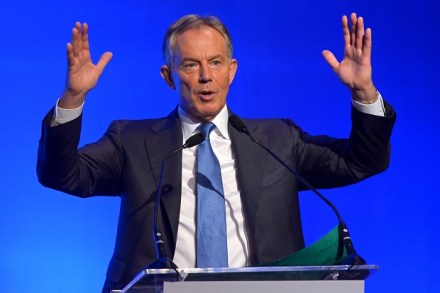
Politicians really are quite unfortunate people, aren’t they? Always being misinterpreted. It’s almost as though they speak another language (some Commons debates suggest they do, anyway) and journalists wilfully translate them wrongly. Today Tony Blair has claimed that his remarks about a lefty Labour party losing to a right-wing party have been ‘misinterpreted’. This is what he told the Economist: - There could be an election ‘in which a traditional left-wing party competes with a traditional right-wing party, with the traditional result’ and when asked if that means a Tory win, ‘Yes, that is what happens’. - ‘I am convinced the Labour Party succeeds best when it is in the centre ground.

The fatal contradiction at the heart of the Tory message: there is no money, except for people we like.

Next year's general election looks like being the most gruesomely entertaining in years. Entertaining because no-one knows what is going to happen; gruesome because of the protagonists and the sorry misfortune that someone has to win it. All we can say for certain is that the Lib Dems will receive a doing. I still don't think that person will be David Cameron. In part for reasons previously detailed here. The single biggest thing preventing a thumping Labour victory is Ed Miliband. This is, it is true, a sturdy peg upon which the Tories may hang their hopes but it still may not prove sturdy enough. Not least because, by the standards they set themselves, this government has failed. It came to power promising to put Britain's finances in order.

PMQs sketch: Three senior politicians are accused of mass murder

Time travel came to PMQs today. The leaders discussed what year it will be in 2020. The answer, naturally, isn’t 2020. Ed Miliband quoted the OBR and claimed that the Coalition plans to shrink the state to the sort of slim-line figure it last sported in the 1930s. Rubbish, said Cameron. His diet will trim the national waistline to the dimensions it enjoyed in the late 1990s. Kenneth Clarke wittily chipped in to remind us that Blair’s government only hit this modest target by adopting the budget limits of the previous Tory administration. In which the chancellor was K Clarke. That was funny. Not much else was. Miliband’s gnashers are currently locked around his favourite soundbite: the ‘1930s vision’ of the Tory party.

It’s beginning to feel a lot like a General Election

David Cameron is talking about the ‘great, black, ominous cloud’ that Labour’s economic plans would put over the British economy. Labour is talking about its immigration policies while trying not to talk about a document that suggests it shouldn’t talk for too long about them. The Lib Dems are complaining that the Tories would damage children’s futures. It’s beginning to feel a lot like a general election, even though we’re still quite a way away from it. This is one of the benefits for political parties of the Fixed-Term Parliaments Act that is sucking all the life out of Parliament itself. They are now permanently on the campaign trail, even when they’re at Prime Minister’s Questions.

Why both the Tories and Labour now want a fight on the economy

Tomorrow, in a sign of how keen the Tories are to keep the political debate focused on it, both David Cameron and George Osborne will give speeches on the economy. Cameron will announce that he is bringing forward a scheme to offer first-time buyers under 40 a 20% discount on 100,000 new home. This scheme had originally been slated for the Tory manifesto but will now be up and running before May. Inside Number 10, they hope that this scheme will help demonstrate that there are tangible benefits for voters to sticking with the Tories and their long term economic plan.   Later on, Osborne will use an address in New York to challenge Ed Miliband on whether Labour would repay any of the national debt.

What we learnt from Miliband’s Big Speech, with no Big Announcement

Ed Miliband’s speech on reducing the deficit has attracted a fair bit of criticism for not telling us very much that’s new. It was supposed to be a Big Speech, and Big Speech normally means Big Announcement, but there wasn’t one. There wasn’t even really any bigger attempt to tell us what Labour would do after the General Election. The Labour leader spent a fair chunk of the question-and-answer session afterwards telling the audience that he had been ‘clear’, which is what politicians end up having to say when they haven’t been clear, often deliberately. But it’s unfair to say that this was a useless speech as it did articulate better than previously the Labour leader’s basic vision for the economy.

Labour now thinks it is safe to reject the Tory narrative on the economy

Labour has returned to a bit more of an even keel in the past few wintry weeks after a torrid autumn. Plotters are resigned to letting Ed Miliband fight the General Election on his terms, and given the closeness of the two parties in the opinion polls, most are concluding that a disorganised Labour party could still throw the General Election away. Of course, everyone’s still anxious, but that’s not limited to Labour. When all MPs in both parties are anxiously looking at the opinion polls every day, it’s clear that no-one’s very confident. Miliband’s team have been trying to reassure nervy MPs by pointing out, quite obviously, that this election isn’t like the others.

What’s behind the Boris Johnson show?

Coming in from the pouring rain, I make my way to the office on the eighth floor of City Hall. With its curving windows, many books and bust of Pericles tucked away in a corner, it reminds me both of a classroom and the cockpit of a spacecraft. Its occupant is waiting for me, looking a little crumpled but less dishevelled than I had expected. He greets me very pleasantly but this is what I’m thinking. Here is the most famous person I have ever interviewed. In his own way, he is almost as iconic as the Queen or Churchill, the nodding dog in those insurance commercials. He is Boris, one of a tiny handful of politicians/celebrities instantly known by their first name.

Interview: Alex Salmond’s game plan for the Commons

Alex Salmond is losing his voice but that’s not going to stop him from talking — I doubt that anything would, or could. I meet him in the Savoy, after The Spectator’s Parliamentarian of the Year Awards (he won top gong) and he orders a hot toddy — setting out the ingredients just in case the Savoy Hotel is too English to know how to make one. No one talking to Scotland’s former first minister today would have any idea that his political dream was clearly rejected by Scottish voters just three months ago. He is relishing the SNP surge and the likelihood of his party holding the balance of power at Westminster next year, which he gleefully describes as ‘the favourite’s bet just now’.

A beautiful speaking voice is a window to the soul

Recent text from a female friend. ‘I’m in love with Neil MacGregor.’ To which I reply, ‘But of course! Up there with the Dean of Westminster and Frank Gardner.’ The same day, walking in Kensington Gardens, another friend admits, ‘I think I’m in love with Neil MacGregor.’ We mourn the fact that MacGregor’s Wikipedia entry tells us he’s ‘listed in the Independent’s 2007 list of most influential gay people’, so the director of the British Museum is, sadly, out of reach to womankind. It’s his beautiful speaking voice that does the trick. I like the way, in his Radio 4 series Germany: Memories of a Nation, MacGregor pronounces ‘Germany’, with a sounded ‘r’.

Miliband chooses the wrong day to have a good PMQs

Ed Miliband has just managed to have a really good PMQs on a day when there is such a big story following the session that it will barely get reported. The Labour leader focused on broken promises, and cleverly managed to force the Prime Minister to talk about immigration by asking about the failure of the net migration target. David Cameron had planned not to talk about immigration at all, but he then found himself doing just that in the Chamber. Then the Labour leader moved on to the promised 'no top-down reorganisation' of the NHS. Then it got personal, with both men scrapping using party mess-ups as their weapons.

Why ‘respect’ is the last thing we should want from politicians

‘Respect!’ cried my husband, drop-kicking a cushion with a picture of the Queen Mother holding a pint of beer on it (a present from Veronica) across the drawing-room. I might as well be married to Russell Brand and be done with it. His little satire was set off by Ed Miliband’s remarks about Emily Thornberry’s notorious Cross of St George tweet. ‘What is going through my mind is respect,’ the Labour leader said. ‘Respect is the basic rule of politics and I’m afraid her tweet conveyed a sense of disrespect.’ This seems to me deranged. If Mr Miliband knew about life ‘down in the street’ he’d realise that ‘respect’ is the gangland correlative of honour.

Matthew Parris: the barbarism of the Twitter mob

Are we heading for a new barbarism? Is this the return of the 18th-century mob? Here are more questions than answers. I ask because when all the fuss about Emily Thornberry and her photo tweet from Rochester has died down, we shall be left with something more disturbing than whatever sin she may or may not have committed. We’ve just seen demonstrated the speed, the destructiveness, the sheer violence of the modern tempest that information technology can create. In the world of opinion, climate change has arrived already. As a workaday columnist, I reflect that I could equally easily write a spirited defence of Ms Thornberry; or a spirited attack; or I could attack Ed Miliband for publicly laying into her; or for privately agreeing with her.

PMQs sketch: In sickness and in health

Health, health, health. Viewers of PMQs must be sick of it by now. Health this, health that. Health, health. On and on. Ad nauseam. Today’s exchanges involved the usual tussle over which Superman can save the NHS. Dave and his virile economy or Ed with his honked out assertions that he’s the patient’s champion? The only place where healthcare isn’t massively overstretched is west Africa. Tory Edward Garnier revealed that a spanking new hospital in Sierra Leone, completed with UK money, and run by Save the Children, is currently treating just five patients. So that’s how you hit waiting time targets. Run the place so badly that everyone runs in the opposite direction. Cameron promised to chivvy this somnolent facility into life.