Ed miliband

Russell Brand says vote (but not for Ed Miliband)

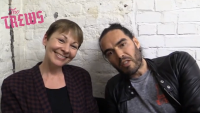
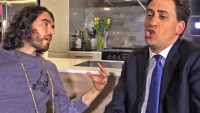
At a recent screening of his new capitalism documentary the Emperor's New Clothes, Russell Brand, the revolutionary who refuses to vote, said he was too angry to say nice things about today's politicians: ‘When I watch it [the Emperor's New Clothes], I sort of think come on Russell people really want to hear you say something about the election like Caroline Lucas is lovely, or Natalie Bennett is lovely, or Tom Watson is lovely or Ed Miliband is really trying his hardest, but when I watch this I think "nooo! Justice!"’ However just a week later and the comedian has changed his tune. After Ed Miliband paid a late-night visit to his home earlier this week, Brand has been inspired to ditch his anti-voting policy for one MP and their constituency.

Campaign kick-off: six days to go

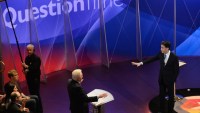
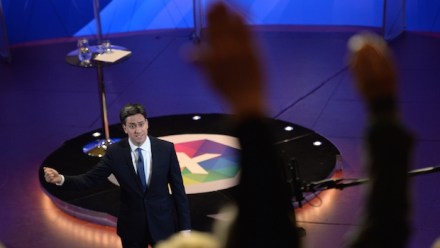
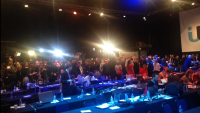
By this time next week, the election will all be over and it will be a question of seats, leaderships and coalitions. With six days of campaigning left, today will be dominated by the fallout from last night’s Question Time special. David Cameron put in a good turn, Ed Miliband did not and Nick Clegg appeared to sail on through without much impact. To help guide you through the melée of stories and spin, here is a summary of today’s main election stories. 1. Miliband's not sorry The special edition of Question Time last night with the three main party leaders was the best television of the campaign. Cameron, Miliband and Clegg were hauled over the coals by an excellent audience in Leeds, who were impressively well informed and took no prisoners.

Diary – 30 April 2015

I have escaped this rather depressing election campaign by retreating to my home in la France profonde — to be precise, in Armagnac, in the heart of Gascony. My only outing, from which I have just returned, was a brief visit to New York, travelling there and back in the giant Airbus 380. The purpose of the trip was to drum up US support for the thinktank I founded in 2009, the Global Warming Policy Foundation, and its campaigning arm, the Global Warming Policy Forum, in the company of our outstanding director, Benny Peiser. Thanks to the wonders of the internet, the GWPF has a global reach, and its international influence is growing.

Barometer | 30 April 2015

One-way stretch A study at Louisville University in Kentucky concluded that collisions are twice as likely in one-way streets as in similar streets with two-way traffic. — The one-way street is an older concept than many might imagine. Pudding Lane, where the Great Fire of London began in 1666, was one of the world’s first one-way streets. An order restricting cart traffic to one-way travel on that and 16 other lanes around Thames Street was issued in 1617. — Data on traffic flow at the time is hard to come by, but the idea was not copied for over 300 years, until Mare Street, Hackney, became a one-way street in 1924. Blavatnik’s billions Ukrainian-born businessman Len Blavatnik was named by the Sunday Times as Britain’s richest man, worth £13.2bn.

The truth about Labour and overspending

Ed Miliband's worst moment in the Question Time debate came when he refused to accept that Labour had spent too much before the crash. The audience reacted with fury: how could he be trusted if he has yet to work out what he did wrong? This is toxic for him because his denial is completely genuine: he has convinced himself that the debt crisis is unconnected to what he got up to when serving in HM Treasury.

Listen: The Spectator’s verdict on the Question Time leaders special

According to the snap poll, David Cameron has won the final TV 'debate' of the short campaign. In this View from 22 podcast special, Fraser Nelson, James Forsyth and I discussed the Question Time special this evening and how each of the party leaders performed. Was the audience more receptive to Ed Miliband or Cameron? Were there any major gaffs? Did Nick Clegg make much of an impact? And will it make any difference to the campaign?

As it happened: Question Time leaders special

Welcome to the Spectator's live coverage of the special edition of Question Time with David Cameron, Ed Miliband and Nick Clegg. We'll be providing live analysis of the final TV programme with each of the party leaders from 8pm. This page will automatically reload.

The cultural significance of Ed Miliband’s mockney accent

I’m mildly posh – nowhere near David Cameron posh, for example, let alone the Olympian heights of Brian Sewell, but I’m unlikely to ever play a football hooligan or an East End gangster in a Guy Ritchie film. And I’m better spoken than I was as a teenager, when I used to affect a slight Mockney accent with a mild Jafaican inflection, as is the case with most Londoners born after about 1976. Not as bad as some of my contemporaries, but enough to sound like a bit of a berk. One day, as our gang was walking down that notoriously deprived inner city street, Holland Park Avenue, I heard an almost comically plumy voice cry out: 'Edward West! You were at my prep school!

A (partial) defence of the spin room

Tonight’s ‘Question Time’-style TV debates will be followed by what has become probably the most hated aspect of this rather uninspiring general election campaign: the spin room. This spectacle of journalists interviewing journalists as they listen to frontbenchers from all the parties parroting lines about how their leader was the best (or, in the Tory case, how well Nicola Sturgeon has been doing) is odd enough inside the room, let alone for those watching at home. The way the politicians spinning talk is even less natural than usual: it’s like a Westminster version of Made In Chelsea, stuffed with people acting at being actors.

Young people want a future, not freebies

Ed Miliband wants the youth vote enough to have spent an evening with Russell Brand earlier this week. My generation could decide the election next Thursday, and politicians seem to think there are two ways to win young voters’ hearts: celebrity endorsement and self-interest. The battle for the youth vote has hinged around promising to save us money. Now they’re done bickering about tuition fees, the party leaders are busy telling students how we would personally benefit from their governments: Labour would ban unpaid internships, the Tories would help us buy our first homes and the Lib Dems would cut our bus fares by two-thirds. But when it comes to young voters, self-interest doesn’t sell: we want a vision for society.

Cameron needs to keep the momentum going in tonight’s Question Time

Tonight’s Question Time is, probably, the most important TV event of the campaign. The fact that it is on BBC1 in prime time means that it is likely to attract a bigger audience than the previous debates. That it is on the BBC also means that any newsworthy moments will be pumped out across the BBC’s entire network from local radio to the world wide web. But what really makes tonight so important is how many undecided voters there still are. Today’s Mail poll has 40% of those going to vote saying that they are either undecided or might yet change their mind. The parties seem to agree that around 1 in 5 voters are genuinely undecided. Which way these voters end up going will determine the result of this election. So, the question is: who can appeal to them tonight?

Question Time: Will Ed Miliband take his lectern with him?

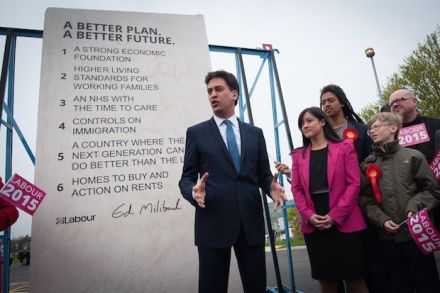
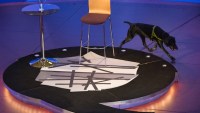
With Ed Miliband's expensive election guru David Axelrod rarely spied at the Labour leader's side, Miliband has found a new pillar of strength to get him through the campaign. Rarely a day goes by without Miliband being pictured next to a lectern: Apparently his party believes that the lectern helps voters imagine him as Prime Minister. So you can imagine Steerpike's concern upon seeing a photo of the set for tonight's Question Time Election Leaders special.

Podcast: the election where everybody loses and Boris’s vision for conservatism

With one week to go, are the Conservatives back on track to being the biggest party? In this week’s View from 22 podcast, Fraser Nelson and James Forsyth discuss the state of the election campaign with one week till polling day and which party has the momentum. Fraser and James have also interviewed Boris Johnson in the magazine this week, who reveals his concerns about inequality — is this the opening salvo for his leadership campaign? Based on Boris’s comments, Tim Montgomerie and Ryan Bourne also debate the future of conservatism and what ideas the next Tory leader might embrace in his or her manifesto. Is finding a different role for the state a core part of this?

Miliband country

Imagine rural England five years into a Labour government led by Ed Miliband, and propped up by the SNP and perhaps also the Greens. If you can’t imagine, let me paint the picture for you using policies from their election manifestos and only a small amount of artistic licence. The biggest house-building programme in history is well under way, with a million new houses mainly being built in rural areas. Several ‘garden cities’ have sprung up in Surrey, Sussex and Kent, though in truth the gardens are the size of postage stamps. No matter, because having a big garden is a liability since right to roam was extended so that ramblers can walk across your lawn. Oh, and if you’re thinking of walking a dog, think again.

Vote Tory | 30 April 2015

Andrew Roberts  Biographer The Cameron ministry of 2010-15 will go down in history as having made Britain as the most successful economy in the developed world, despite it having inherited a near-bankrupt nation from a Labour party that spent money like a drunken sailor on shore leave. Ordinarily that should be enough to have it returned to power with a huge majority, but we live in gnarled, chippy, egalitarian times.

Russell Brand is the future, like it or not

I write at a difficult time. The balls are in the air, but we know not where they will land. Perhaps, by the time you get to read this, more will be clear. Right now, however, we know only that Ed Miliband has been interviewed by Russell Brand. We do not yet know what he said. Or what Brand said. Probably he said more. ‘That was interesting enough, but Russell Brand was a bit restrained’ is something that nobody has said, after any conversation, ever. Most likely he’ll have quite liked Ed Miliband. They’ll have friends in common. Probably even girlfriends, what with them both having such voracious sexual appetites.

The British public is about to make a big mistake

On the weekend of 25 April 2015 I started to believe that the party I supported might not win an impending general election. I’m used to that. But I started to believe, too, that my fellow citizens might be about to make a stupid and unfathomable mistake. I’m not used to that at all. It has come as an awful shock. For the first time in my life I have understood how it must have felt to be a convinced socialist in Britain these past 36 years since 1979: to live in and love a country whose people had got it completely wrong. ‘Well, diddums,’ I can hear left-wing friends reply: ‘Welcome to our world.’ In the general election of 1979, as a parliamentary candidate, I knew the voters would return me and believed they would return a Conservative government led by Margaret Thatcher.

The ‘Milibrand’ interview does nothing but trash Labour’s standing

Ed Miliband’s interview with Russell Brand has been released and it’s rather depressing. Not that Miliband messed up — in fact, he is very on message and sticks to Labour's party lines. It’s simply not very enlightening. Brand comes across as the mad man cornering the boring person in a pub because he thinks he might agree with him. It’s business as usual from Brand, who ranted about the ‘unelected powerful elites that really control things behind the scenes’, the ‘geopolitical influences’ and ‘transnational corporations’.