Economy

Save our railway ticket offices!

From our UK edition

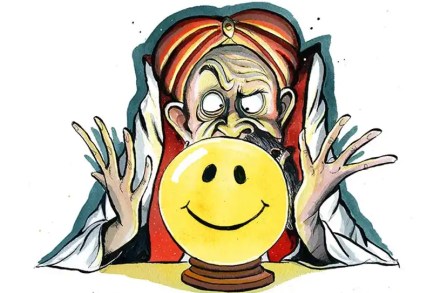
‘Always be cheerful’ – a motto to which I’ll return in the final item – speaks to my natural demeanour. But when asked whether I see grounds for optimism in the UK business scene, I’ve struggled lately to find anything positive in the near-certain advent of a Labour government, the agonisingly slow retreat of inflation and the damage of still-rising interest rates. Nevertheless, let me take a step back. In an ONS survey this month, four times as many respondents (36 per cent) thought their business performance would improve over the next 12 months compared with those who thought it would decline (9 per cent). There were also upticks in expectations for manufacturing output and in consumer confidence.

Biden catches a break on inflation

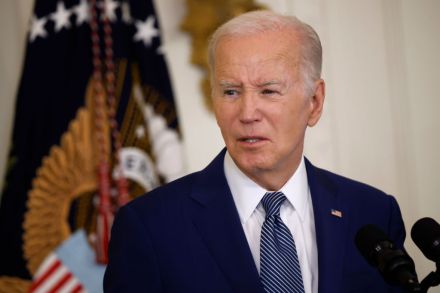
Things are looking up. Today began with some very good economic news in Washington: Labor Department data shows inflation falling to a two-year low. The consumer price index rose 3 percent in the twelve months to June. That is a steep fall from the 9.1 percent price rise in the twelve months to June 2022, and perhaps the clearest sign yet that the US is on course to tame inflation while avoiding a recession — the soft landing that Joe Biden, Jay Powell and every other policymaker in Washington has been praying for.   Core consumer prices increased by 0.2 percent in June, the smallest single-month increase since August 2021 and an indicator that the pressure on prices is easing.

biden inflation

Jonathan Ashworth: ‘We are at risk of a lost generation’

From our UK edition

Jonathan Ashworth has started carrying a card in his shirt pocket. It’s the licence his father was given when he got a job in the 1970s at the Playboy casino in Manchester. ‘It’s silly, really. But it’s just a reminder that my dad was able to start a job as a croupier from a very poor working-class background in Salford and that completely changed his life,’ the shadow work and pensions secretary says when we meet in his Commons office. It was at the casino that his father met Ashworth’s mother – a Playboy bunny girl working as a waitress. ‘Every week, the Playboy bunny girls had to queue up and had to be weighed by the head of the bunny girls. Isn’t that awful?’ Scales aside, Ashworth, 44, says his childhood taught him early on of the importance of employment.

Stop trying to make Bidenomics happen

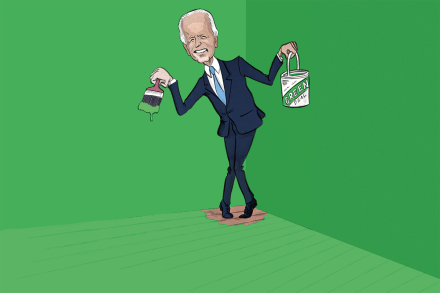
The president is hitting the road this week to kickstart a big push to sell his economic track record. The nation, barely recovered from the excitement of the first “Investing in America” tour earlier this year, will be treated to another few weeks of cabinet members in hardhats talking about green jobs. A memo from White House advisors Anita Dunn and Mike Donilon warns that Biden, cabinet members and other administrators “will continue fanning out across the country to take the case for Bidenomics and the president’s Investing in America agenda directly to the American people.” (Take shelter!) On Wednesday Biden will give what the White House is billing as a “major speech” touting his economic policies.

‘We’ve got to hold our nerve’: Rishi Sunak’s BBC interview

From our UK edition

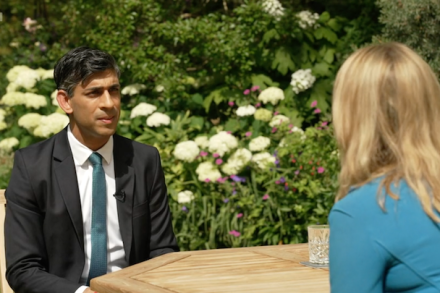
As mortgage rates surge and a new Opinium poll finds Labour’s lead has jumped to 18 points, Rishi Sunak appeared on Laura Kuenssberg’s BBC show to insist that his plan is the right one. The interview was pre-recorded in the Downing Street garden yesterday, with Sunak commenting on the – now failed – attempted coup by Russian mercenary leader Yevgeny Prigozhin and previewing his government’s long-term NHS workforce plan. However, the main portion of the at times, scrappy interview was spent on inflation and the consequences for mortgage holders.

Red Rishi: the Prime Minister’s political makeover

From our UK edition

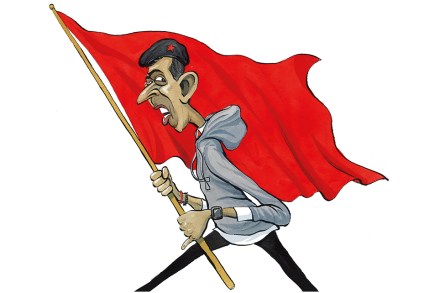
What kind of conservative is Rishi Sunak? This time last year, there was a clear answer: he was a fiscal hawk who was worried about how much the government had to borrow to fund the Covid crisis. As chancellor, he was always fighting with the prime minister over high spending. When Sunak tried to raise the national insurance rate, he did so partly to send his party an important message: the borrowing and spending has to stop. Now Sunak is in No. 10 and Boris Johnson isn’t around to demand more spending. There has been a Budget and a list of priorities – and Sunak’s agenda is starting to emerge. It includes a tax burden not just higher than any time in the 1970s, but any time in postwar history. A record proportion of the workforce are paying the higher rate of tax.

The scourge of London’s ‘American candy’ stores

From our UK edition

Should US regulators ban short-selling of bank stocks? That’s a hot topic as investors refuse to accept reassurance from the Fed chairman Jerome Powell that the recent banking crisis-that-wasn’t is over. Following JPMorgan’s rescue of First Republic, shares in other regional banks such as PacWest in Los Angeles, Western Alliance (Phoenix) and First Horizon (Memphis) have fluctuated wildly and fingers have pointed at short-sellers – who borrow shares they think are about to fall in order to sell, buy back cheaper and pocket a profit. That’s bad, say critics, in the broad sense that it’s a negative form of investment, the reverse of backing companies you believe in; and much worse if sellers spread false rumours to push shares down.

The UK’s treatment of Activision shows it is closed for business

From our UK edition

It was, admittedly, not quite as thrilling as an action sequence from Call of Duty. Even so, the statement put out by Bobby Kotick, chief executive of US video game publisher Activision, following the UK’s bizarre decision to block the company’s acquisition by Microsoft was about as bloodthirsty as any ever put out by a major corporation. The ruling ‘contradicts the ambitions of the UK to become an attractive country to build a technology business,’ he argued. Even worse, ‘it does a disservice to UK citizens, who face increasingly dire economic prospects’, and, to cap it all off, it shows that Britain is ‘closed for business’. Of course, it would be easy to dismiss that as sour grapes from a man who has just seen $70 billion of Microsoft’s money slip through his fingers.

The dollar is here to stay

Reports of the death of the US dollar as the world’s reserve currency are greatly exaggerated. Fortunately for America, while the dollar is by no means unsinkable, it will not be toppled anytime soon. Threats exist, but rather than coming from abroad, to paraphrase Lincoln, they spring up among us. How the US manages its economy will largely be the determinant factor in the dollar’s continued supremacy. Currently, the dollar makes up about 58 percent of foreign currency reserves worldwide, well ahead of its competitors. The next closest currency is the euro at 20 percent, and then the yen and pound sterling, both at about 5 percent — China’s renminbi is at a paltry 3 percent (just ahead of a real powerhouse, the Canadian dollar).

dollar debt

What Miriam Cates gets right – and wrong – about declining fertility

From our UK edition

Fulfil your civic duty. Get married. Have children. That was the message from Miriam Cates, the increasingly prominent Conservative backbencher, to guests at a drink reception earlier this week. In what even her fiercest critics would have to concede was an impressively bold speech, Cates suggested that many of her female constituents want to work less and spend more time with their children. She claimed that politicians belonged to a class that had been protected by marriage and family, insulated from family breakdown to such a degree that they fail to realise how important it is. Few politicians can ride out a Twitterstorm without some sort of retraction, and Cates is no exception.

The £5.4 billion government surplus masks a larger economic issue

From our UK edition

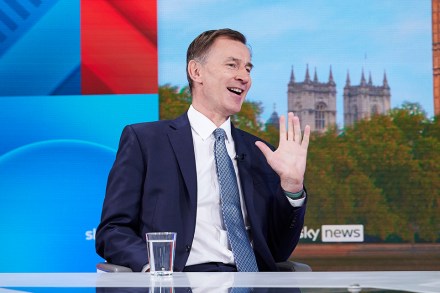
There have been celebrations this morning about a government surplus of £5.4 billion last month, and people are even talking about a ‘windfall’ for Chancellor Jeremy Hunt in next month’s Budget. But all this shows is how conditioned we have become to appalling economic news – and that we will grab at anything which seems to indicate a shaft of light. Nevertheless, any talk of a government ‘surplus’ masks the very real problem the government still has While any surplus is to be welcomed – and last month’s borrowing figures are far better than the Office for Budget Responsibility predicted – we would be in serious trouble if the government had not succeeded in running a surplus last month.

Government borrowing hits £27.4 billion

From our UK edition

Rishi Sunak ruffled his own party’s feathers last week when – in reference to last autumn’s market turmoil – he told an audience in Lancashire: ‘You’re not idiots, you know what’s happened.’ This was quickly interpreted as the Prime Minister branding the MPs and business leaders calling for immediate tax cuts as ‘idiots’, sparking not only backlash but also another round of debates on a topic that has been dividing the Tory party since last summer. Just how quickly and aggressively can the party start to cut the tax burden down from its 72-year high?

Why the Biden stock market is even worse than you think

If you’re the sort who rarely checks your 401K and other investment accounts, you may be blissfully unaware of what a dismal year (plus) its been for the stock market. Many prominent media personalities, particularly ones on CNBC, promised us that Biden would be a boon to the stock market because Trump was too erratic. But while the market started hot in 2021, it's mostly been ice cold ever since, with a few fake rallies thrown in to tease us. How bad has the Biden era been for stocks? Consider some numbers I crunched prior to the market opening on December 12.

Is North London’s housing market recession-proof?

From our UK edition

Of all the suburbs in Britain none has become quite so politicised as North London. This slightly leafy (and lefty) swathe in and around Islington – with Hampstead Heath marking its northern edge and Regent’s Park its southern boundary – is treated by our recent political leaders as a kind of shorthand for, to borrow a phrase from Suella Braverman, the ‘tofu-eating wokerati’. Liz Truss took a dig at her privileged metropolitan enemies who ‘taxi from North London townhouses to the BBC studio’ to criticise her, ignoring the fact that Islington is not all Upper Street boutiques and multi-million pound homes. Islington is one of London’s most deprived boroughs, and more than a third of children in Camden live in low-income families.

Revealed: which industries have lost the most workers this year?

The Great Resignation continues, with a new study revealing that employees in many industries are quitting at higher rates than 2021. Accommodation and food services lost 5.8 percent of its workforce — 773,600 workers — in 2022, an increase of about 128,000 over the same period in 2021. Retail lost 3.82 percent, or about 600,000 workers, though this is 109,000 fewer than the same period in 2021. In third is the entertainment sector at 3.58 percent, accounting for 82,200 jobs, rising 7,000 compared to 2021. These industries happen to be where employees are in closest contact with customers — which would probably cause Cockburn to quit too, given how rude folks can be. Manufacturing and mining, by contrast, saw 2.42 and 2.3 percent respectively.

quitting

House of cards: why are so many property sales collapsing?

From our UK edition

Moving house is said to be one of the most stressful life experiences, right up there with bereavement and divorce. But what about the stress of not moving? Amid the upheavals of the past few months increasing numbers have seen their property ladder dreams collapse around their ears. According to market analyst TwentyCi there has been a ‘sharp increase’ in the number of deals falling through. More than 90,000 agreed sales disintegrated between July and September, an 18 per cent increase on the same period in 2019. Wendy and William Waterton know exactly what it feels like to be on the sharp end of a collapsing sale. In the past two years it has happened to them twice. The couple bought their one-bedroom starter flat in Woolwich, south-east London, for £320,000 in 2017.

Why the Democrats’ ‘election denier’ trope is backfiring

In New Hampshire, the race between Democratic senator Maggie Hassan and retired Army Brigadier General Donald Bolduc is heating up. Politico revealed on Friday that the GOP super PAC Sentinel Action Fund, encouraged by Bolduc’s recent surge in the polls, confirmed a $1 million ad buy for the Republican. Do Democrats still think Bolduc’s defeat is a sure thing? During the primaries, Democrat-aligned groups sure seemed to. They found the idea of a Hassan-Bolduc matchup so appealing that they actually boosted the pro-Trump Bolduc by donating to his campaign. Why did they like him so much more than his opponent Chuck Morse? Well, Bolduc is an "election denier.

stacey abrams

How to spot a looming house price crash

From our UK edition

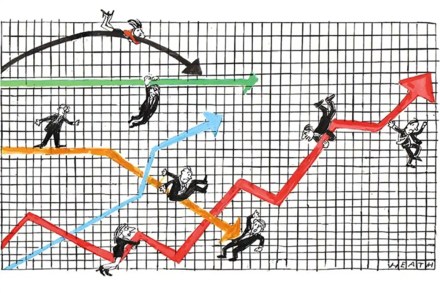
From the man down the pub/on Twitter to major lenders and think-tanks, homebuyers and sellers can barely move for so-called experts dishing out advice on the property market. Rising interest rates and increased mortgage costs have prompted fears of a house price slump, with Capital Economics predicting a 5 per cent drop over the next two years. Credit Suisse is forecasting that prices could fall by as much as 15 per cent if interest rates hit 6 per cent – making it more of crash than slowdown. Buyers don’t want to make a major purchase at the top of the market, and sellers may be hesitant to list if they aren’t going to get what they feel is the best price.

Divided they fall: can the Tories save themselves?

From our UK edition

Seldom has support for a government fallen so far, so fast. Polls show that 24 per cent of the public would vote for the Conservatives if there was an election now, vs 52 per cent for Labour: figures that make 1997 look like a good result for the Tories. This is not just a one-off rogue poll, but the sustained average of six. It reflects what Tory MPs hear from voters appalled at the disgraceful shambles of the past few weeks. It won’t be forgotten in a hurry. This magazine gave its verdict on the Liz Truss agenda in August: ‘To attempt reform without a proper plan is to guarantee failure,’ we argued. She lost no time in proving this point. But others are drawing wider and deeper – and rather dangerous – conclusions.

What makes a ‘crisis’?

From our UK edition

In his picture from 1932, ‘Derrière la gare Saint-Lazare’, Henri Cartier-Bresson caught the moment when a man in a hat launched himself forward from a ladder lying in some water, his leading heel not yet breaking the mirror-like surface, which reflected too a circus poster of a girl leaping. In 1952, when the photographer published his collection Images à la Sauvette, the title chosen for the English edition was The Decisive Moment, a phrase that Cartier-Bresson took from a sentence from Cardinal de Retz (1613-79), a statesman from a banking family: ‘Il n’y a rien dans ce monde qui n’ait un moment décisif’ (‘There is nothing in this world that does not have a decisive moment’).