Economics

Will gas prices determine the election?

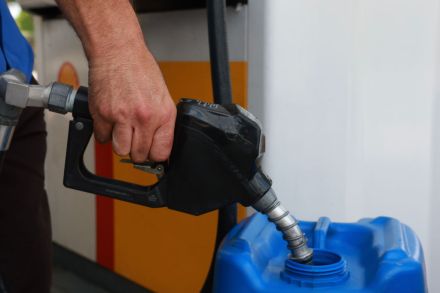
Ideally, responsible citizens would think big when deciding on a presidential candidate. But the election outcome may just be determined by one factor: gas prices.  In a CNN article this week, economist Mark Zandi asserted that gas prices were likely to determine election results. On Tuesday, Biden announced his release of a million barrels of reserve gasoline. Even with the many factors that affect oil prices, it may be possible to predict where prices will be come November and if that can tell us who will win the presidency. Zandi and his colleagues from Moody’s Analytics (Brendan Lacerda and Justin Begley) published a nineteen-page econometric analysis in January.

gas prices

Be more tiger mum!

From our UK edition

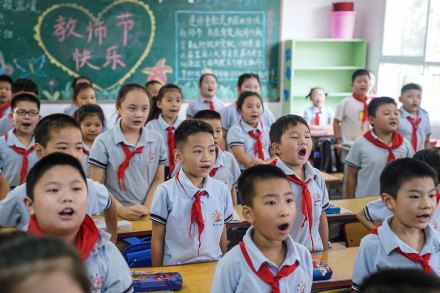
‘What’s it to do with me if your boyfriend wants to break up with you? Or if you cried, or had a fight, these are not things that I as a supervisor care about. I’m not your mother. All I care about is results. Our relationship is just employee-employer.’ In a series of videos posted on Douyin (China’s version of TikTok), Chinese tech executive Qu Jing was a little too candid about her management style. Sharply dressed and with hair cut formidably short, she said she expected her staff to be on call 24 hours a day, including at weekends, even at the cost of their personal relationships. If Qu thought these videos would give her a ‘girlboss’ image, she was wrong. They went viral and she became a national hate figure.

What does Rachel Reeves stand for?

From our UK edition

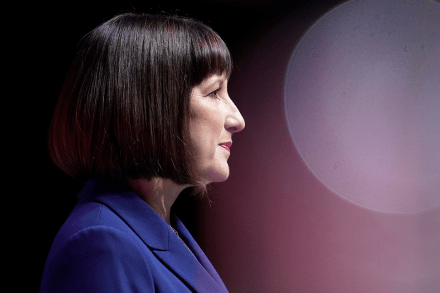
As the world discovered when she was caught lifting other people’s work for her book on women in economics, Rachel Reeves is not the most original of thinkers. But she has political talents. She has cultivated her image as an uninspiring technocrat in order to present herself as someone who will not spring surprises or take risks as chancellor. She thinks the state is inefficient and taxes are too high. She believes in ‘securonomics’, which sounds like a pleasing contrast to years of Tory policies. It is easy to preach fiscal discipline, but in office Labour would find it very difficult to contain spending Polls show that voters now think Labour are more likely to lower taxes than the Conservatives, so Reeves has already achieved something significant.

How AI helps the tech giants

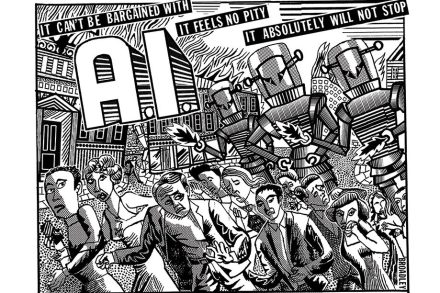
Artificial intelligence (AI) and its related technologies — machine learning and the metaverse — represent a watershed in the evolution of the global economy. Like other such shifts, its emergence is likely to favor certain interests, notably a handful of technology giants, the media and a small cadre of highly skilled programmers. Everyone else faces economic danger, certain to roil domestic and international politics in coming years. Eighty-two percent of millennials fear AI will reduce their earning ability — and they are right to be worried. The first group to lose will be the usual suspects: factory and warehouse workers as well as professionals with largely routinized occupations suited to automation.

ai
BRICS

Nixing BRICS: how to counter the China-led alliance

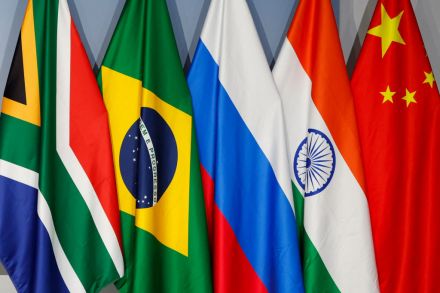
Americans are used to exercising influence through international entities such as NATO, the World Trade Organization or the World Bank. Each of these groups was set up with American leadership or at its instigation; all have been used to advance Washington’s vision of global liberal-democratic capitalism. No comparable international organization or collection of nations has been influential since the Soviet Union’s collapse. That may be changing. The so-called BRICS alliance (its founding countries were Brazil, Russia, India, China and South Africa) recently added new members Iran, Ethiopia, Egypt and the United Arab Emirates.

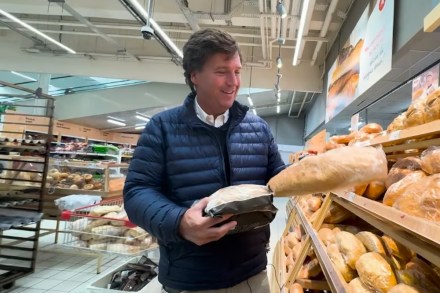
Why Tucker Carlson should have been less excited about his groceries

Tucker Carlson has been radicalized by a Russian supermarket. There’s a sentence you never expected to read. As part of his tour of Moscow, the week before Putin critic Alexei Navalny “died in prison,” the firebrand commentator visited a grocery store and was stunned by the low prices. “That’s when you start to realize,” Carlson marveled: …that ideology maybe doesn’t matter as much as you thought… Corruption… If you take people’s standard of living and you tank it through filth and crime and inflation, and they literally can’t buy the groceries they want, at that point maybe it matters less what you say or whether you’re a good person or a bad person, you’re wrecking people’s lives and their country.

tucker carlson groceries

China is set for a serious economic fall

From our UK edition

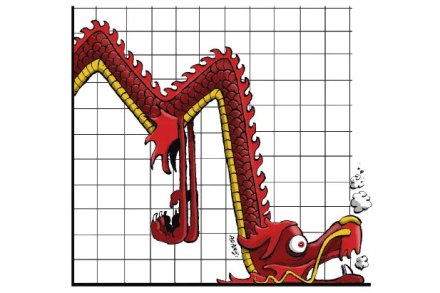
 The future trajectory of the Chinese economy is a subject for doctoral theses rather than casual column items. But the advent of the Year of the Dragon, at last weekend’s Lunar New Year, was greeted with such pessimistic commentaries that the natural contrarian should ask whether the consensualists are getting it wrong: maybe the dragon is merely marking a pause before martialling its mighty resources for the next transglobal burst of fire? The negative narrative goes like this. In spite of deflation in consumer prices, Chinese shoppers are frightened of spending. Despite central bank interventions aimed at boosting asset prices, the property market is crashing after the collapse of the developer Evergrande and the Shanghai stock market has been falling since last April.

How many criminal convictions are overturned? 

From our UK edition

Power play The former energy minister Chris Skidmore resigned in protest at a bill to issue more licences for oil and gas extraction in the North Sea. What are other countries doing? – US oil production hit a record 13.3m barrels a day last month, up from 10.8m five years ago. – Qatar is investing $150 billion toincrease oil production by 50% to 5m barrels per day by 2027. – Brazil plans to increase oil production from 3.1m barrels per day in 2022 to5.4m barrels per day by 2029. – Canada increased oil production by 375,000 barrels per day between 2021 and last year. Judgment call The Criminal Cases Review Commission (CCRC) has called the Post Office scandal the ‘most widespread miscarriage of justice in UK history’.

Milton Friedman – economic visionary or scourge of the world?

From our UK edition

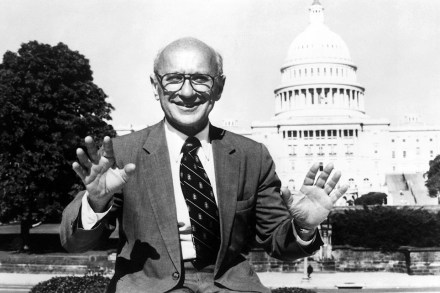
The Keynesian economist Nicholas Kaldor called Milton Friedman one of the two most evil men of the 20th century. (Friedman was in distinguished company.) The ‘scourge’ he inflicted on the world was monetarism, a product of what Kaldor called Friedman’s Big Lie – of which more later. Moral judgments aside, how does Friedman rank in the world of 20th-century economists? By common consent, he stands with Friedrich Hayek and John Maynard Keynes at the apex of his profession. All wrestled with the defining problem of their age: the radical economic and political instability of the 1920s and 1930s. Their responses reflected their national situations.

What was banned this week?

From our UK edition

For the love of dog XL Bully dogs were banned in England from this week, although there is an exemption for animals which are neutered, registered, insured and kept on leads and muzzled in public. Some other things that have been banned this week: – Parking on the pavement in Edinburgh. – Importing disposable vapes in Australia. – Selling new homes with gas boilers in the Australian state of Victoria. – Displaying toys in Californian shops under male and female sections. A gender neutral section must now be included. – English councils trying to charge for disposing of waste from DIY projects. – Withdrawals in dollars from banks in Iraq. – Imports of Russian diamonds to G7 countries.

The gloomy future facing trade unions

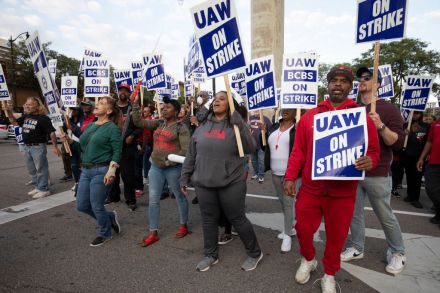
Few developments have more cheered progressive activists than the perceived resurgence of labor unions. This has been sparked by largely symbolic efforts to unionize in places such as Starbucks and Amazon, as well as more sizable wins by the Writers Guild of America and the Screen Actors Guild and United Auto Workers, the country’s most important private labor union. In 2022 strike activity more than doubled from the previous year. Yet ultimately these wins may turn out to be largely Pyrrhic.

unions
capitalism

A vigorous and persuasive defense of capitalism

“Under capitalism,” John Kenneth Galbraith once quipped, “man exploits man. Under communism, it’s just the opposite.” For a left-wing economist such as Galbraith, this was about as close as one might get to exalting capitalism — damning by faint praise. But in The Capitalist Manifesto, a lively, closely argued polemic by the Swedish historian Johan Norberg, we find a much more vigorous and persuasive defense of the most successful economic system the world has ever seen, a mechanism for sowing widespread abundance and lifting billions out of penury. “The argument for capitalism,” Norberg boldly declares in his preface, “is not that capitalists always behave well... but that they often do not behave well unless they have to.

Facing the facts of the West

The century began with a global celebration — the West’s belief in liberal democratic capitalism had battled foes for centuries and emerged victorious. All that remained was for the rest of the globe to melt into the West’s soft and loving embrace. Two decades in, things look much less rosy. China’s rapid rise has not spurred democratization, as many suggested it might; instead it has nourished a massive ideological and political competitor that may supplant the West not only economically but as an arbiter of global culture and behavior. Western decline is not yet inevitable, but Western values will survive and spread only if leaders recognize two clear facts. The first is that the spread of Western values has in large part been due to the dominance of Western power.

west

Has crypto finally had its day?

From our UK edition

If you run an organisation, there are some reporters you definitely don’t want around: Ronan Farrow asking for comment; Madison Marriage or Dan McCrum with a couple of questions; Michael Wolff hanging out on a sofa taking notes. Michael Lewis is not one of those reporters. If he wants to spend time with you, you are about to be lionised as a decent person who sees just a bit more clearly than the fools who run the system of which you are a part, which will make you wildly rich (unless you’re an academic or a public servant) and famous. When Michael Lewis calls, people answer. Lewis raises enough questions for one to finish the book less sure of Bankman-Fried’s guilt than at the start When Zeke Faux calls, they often don’t.

Bernard Looney shows why every board should be braced for scandal

From our UK edition

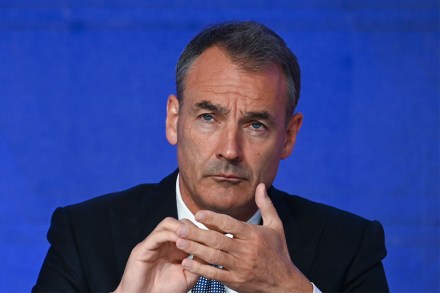
Bernard Looney, the fallen BP chief, always had a certain swagger about him. I’ve no idea whether he was unsafe in taxis, but he was certainly prone to unguarded remarks. ‘Not every barrel of oil in the world will get produced’ was a bold way, back in 2018, to introduce BP shareholders to the idea that the world’s energy giants will one day have to strand remaining carbon assets if they really intend to achieve net-zero targets. ‘This is literally a cash machine’ was not the best way to describe BP’s profit performance in November 2021, when British households were beginning to feel the pain of soaring energy bills.

Where were the longest A&E waits?

From our UK edition

The bare platform A 112-space car park built to serve the railway station in the Cambridgeshire village of Manea was used by just three cars in its first week. — The station, formerly a ghost station with one train a week, has been revived but even so is only served by two trains every hour. — Yet had it not been for the Civil War, it could have been the capital of England. Charles I planned an English Versailles there, surrounded by a great city called Charlemont – all built on land reclaimed from the fens. Thanks to the war, however, nothing ever got built. — The name Charlemont lives on as a cul-de-sac in the village (population 2,000) where you can buy a modest four-bedroom detached house for £400,000.

Will Brits feel richer if inflation halves?

From our UK edition

The government’s objective to ‘halve inflation’ by the end of the year seems to be back on track – for now. Last week’s interest rate hike was delivered with an updated inflation forecast from the Bank of England, showing the rate slowing to 4.7 per cent by the end of the year, just below Rishi Sunak’s target. The better-than-expected fall in the headline rate last month has forecasters thinking things are finally moving in the right direction. As Ross Clark reports on Coffee House, Capital Economics is expecting another major fall in the rate next week – down to 6.9 per cent on the year – when July’s figures are released.

How to increase your home’s value – with a sandwich

From our UK edition

It is a tenet of neo-liberal economics that there is no such thing as a free lunch. This is obvious baloney. There are free lunches everywhere. The problem is that those free lunches are no longer served to people doing useful work. They are instead handed out to the owners of a few favoured asset classes through untaxed gains. We have created far more tax breaks for rent-seeking than for productive work… and then we wonder why Britain has a productivity crisis. Under a future Sutherland regime, there would be no tax paid on beer drunk in a pub I must admit I enjoy a few free lunches myself – literally.

Russia’s complex relationship with the ruble

From our UK edition

The most impressive banknote I have ever seen is the 500 ruble note produced by the Imperial Bank of Russia between 1905 and 1912. About four times the size of a modern £50 note, it is magnificently emblazoned with a portrait of Peter the Great and a profusion of cupids and classical pillars. It looks as high-denomination money should look – luxuriant, confidence-inspiring and valuable. The ruble (from ‘rubit’, to chop) was originally a chopped-off piece of Viking silver ingot Appearances can, of course, be deceptive. My Russian wife’s great-great-grand-father, the owner of the Volga Bread Bank of Saratov, unwisely chose to keep his considerable savings in the form of trunkloads of such 500 ruble notes.

The dollar is here to stay

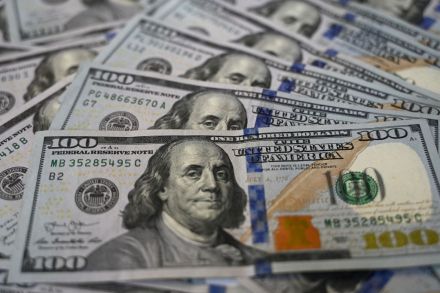
Reports of the death of the US dollar as the world’s reserve currency are greatly exaggerated. Fortunately for America, while the dollar is by no means unsinkable, it will not be toppled anytime soon. Threats exist, but rather than coming from abroad, to paraphrase Lincoln, they spring up among us. How the US manages its economy will largely be the determinant factor in the dollar’s continued supremacy. Currently, the dollar makes up about 58 percent of foreign currency reserves worldwide, well ahead of its competitors. The next closest currency is the euro at 20 percent, and then the yen and pound sterling, both at about 5 percent — China’s renminbi is at a paltry 3 percent (just ahead of a real powerhouse, the Canadian dollar).

dollar debt