Economics

Why can’t the Financial Times correctly name peers?

From our UK edition

The present Lord Howard de Walden’s first name is not Howard. It’s Peter, for the 11th Baron is the film-maker Peter Czernin. In 2004, the barony of Howard de Walden was called out of abeyance in favour of the 9th Baron’s eldest daughter, who married Joseph Czernin. All this spoils it for the Financial Times, which refers to peers according to this pattern: Lord Peter Mandelson. That is not English. Lord Peter Mandelson would be the son of a duke or marquess, like Lord Peter Wimsey, the younger son of the Duke of Denver. My husband has been driven to incoherent rage by wireless announcers talking of Lady Victoria Starmer, the wife of the former PM, and making things worse by referring to her as the First Lady. In America the First Lady is the wife of the head of state.
Warsh Derangement Syndrome will prove very expensive

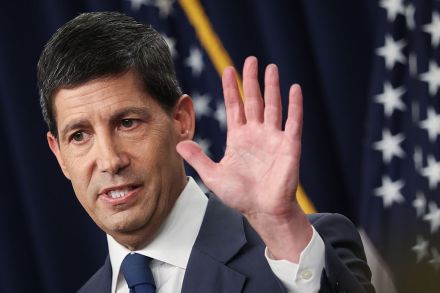
One of the sub-plots of the last twenty years has been the growth of “derangement syndromes.” It started with Bush Derangement Syndrome at the start of the century, morphed into the far more powerful Trump Derangement Syndrome, took a side trip to the other side of the Atlantic with Brexit Derangement Syndrome, and then turned into Tariff Derangement Syndrome. The basic symptoms are always the same. Some fairly minor, and probably not even very radical reforms, get reframed as an existential threat to the economy, democracy and even civilization itself. We are now seeing the latest example. Warsh Derangement Syndrome, named after the new Chairman of the Federal Reserve, Kevin Warsh – and for investors it is likely to prove the most expensive yet.

Kevin Warsh

Does Yogi Bear have a connection to yoga?

‘Well, we all have areas of ignorance,’ said my husband with a little too much relish, I thought. He was responding to my admission that I had reached a ripe old age without realising that the words yoga and yoke had the same origin. Yoke has been used in English for more than 1,000 years and yoga only since about 1785, but it had been in use in Sanskrit since the first millennium bc. The meaning of yoga was held to be either the yoking and reining in of the senses, or the yoking and joining oneself to the Prana (life force), the Om (absolute) and the Universe.

wood yoga

The muddle over vanishingly unlikely

When my husband asked me whether I knew any mathematics at all, I replied by telling him that I had been a properly brought-up girl. The cause of our little wrangle was the phrase vanishingly unlikely. A newspaper article on scams pointed out that ‘only a tiny minority of oil workers are women, meaning it is vanishingly unlikely to meet a real one online’. Another said that ‘Britain is vanishingly unlikely to meet Nato’s target of spending 5 per cent of GDP on national security by 2035.’ In both those examples, vanishingly is used in the sense ‘infinitesimally’. But the meaning properly wanted here is ‘hugely’ or ‘almost infinitely’ unlikely. It is the likelihood that is vanishingly small. The unlikelihood is very great.

The true origins of Manchesterism

From our UK edition

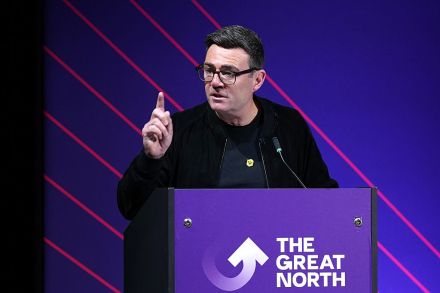
‘If I hear anyone say Manchesterism again, I will…’ said my husband, leaving his thought unfinished, and slipping, rather easily, into the role of Lear in his impotence. I had no intention of explaining to him what Andy Burnham means by Manchesterism. No one knows – perhaps not even he. But the word has been around since 1883, when it was reputed to be a system that ‘enriched the few at the expense of the many’. That had been the charge against its inventors, Richard Cobden and John Bright, whom Disraeli accused in 1846 of being ‘Gentlemen of the Manchester School, who believe they may fight hostile tariffs with free imports’.

What precipitated a worldwide total war in the 1930s?

From our UK edition

More than 80 years after it ended, we are still living through the aftermath of the second world war. When people use the word ‘postwar’ they invariably mean this war and the changes it wrought upon international relations, trade, economics, domestic politics, social values and much more besides. Yet it remains all too easy, certainly in the English-speaking world, to cleave to a rather parochial view of that conflict as something that ended up spreading to lots of exotic places while still ultimately concerning the great battle between good and evil that was the Allies vs the Nazis. Can there be any corner of Hitler’s psyche, any charming detail of the home front in Britain, which remains unprobed in books, TV programmes and museum exhibits?

Will the bond markets undo Burnham?

From our UK edition

13 min listen

Andy Burnham’s campaign for Makerfield is already gathering pace, complete with Oasis soundtrack to a new campaign video. But as Labour’s would-be challenger tries to pitch himself as the man to replace Keir Starmer, questions remain over his economic credibility. Michael Simmons and Tim Shipman join Noa Hoffman to Burnham, the bond markets, and if Starmer can really dig in if Burnham wins the by-election.

Is private equity secretly running your life?

Did you know that a secretive thing called private equity owns almost 10 per cent of the UK economy? Did you know that it controls the jobs of several million people and may well own your local hospital, water supply, children’s school or even your home? No? Here is a book that aims to straighten you out on all that. Private equity is one of those things that you either know about or don’t. If you are in the finance business you know, because it is the story of the past quarter century. If you are not in that world, if leveraged buyouts and limited partners and debt pushdowns are all just so much business-page noise, then you are in the majority. And it turns out that means you may not know who is really running your life.

Why the General Strike of 1926 could never succeed

From our UK edition

Although it may be in bad taste to have a favourite story about the General Strike of May 1926, one served up by David Torrance in his superb The Edge of Revolution is probably unbeatable. He quotes an anecdote told by Walter Citrine, the 39-year-old acting secretary of the TUC, who recalled a man ‘with rather sharp, hawk-like features’ turning up at the Congress’s London headquarters in Eccleston Square, near Victoria Station, and offering, in return for £1,000, to solve the unions’ problems.  He announced: I want 100 trusted men and if you cannot find them, I can. I will arm them, take them along to Downing Street, shoot the members of the cabinet and hold Princess Mary’s children as hostages.

What would Adam Smith make of the AI revolution?

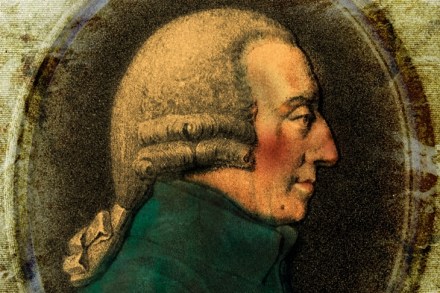
Today marks the 250th anniversary of the publication of The Wealth of Nations: Adam Smith's seminal text in the history of economics. Smith gave his name to the institute that I co-founded, so you might expect me to advocate for reading his most famous text. But you shouldn’t. It’s very long, written in elegant but spacious prose and full to exasperation of examples, observations and terminologies that puzzle a modern reader. Read my Condensed Wealth of Nations instead or wait for my cartoon graphic novel to come out later in the year. Smith would see the scale of government today as the greatest tyranny Nonetheless, modern unreadability doesn’t mean that The Wealth of Nations is unimportant.

Why I can’t resist a red-light district

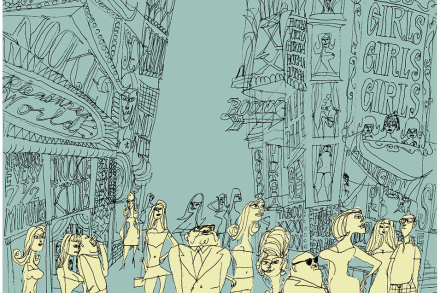
I am writing this on the 17th floor of the Novotel Sukhumvit, on Soi 4, aka “Soi Nana,” in Khlong Toei, Bangkok. For anyone that knows the Big Mango, they’ve already guessed where I am, psychogeographically: from that tell-tale word “Nana.” For those still in the dark, I am on the rude, ribald, rambunctious street that is Soi 4, which is full of tattoo parlors, 7-Elevens, dried-squid-sellers, fake Italian winebars, blaring “British” pubs, slightly dodgy pharmacists, hair salons that do laundry as well – it culminates in Nana Plaza, a multitiered al fresco mall of gaudy and noisy go-go bars that probably constitutes the single largest collection of sex workers on the planet.

Eclipse of the boomers

Shortly after Christmas, the oldest baby boomer will turn 80. The 75 million people born between 1946 and 1964 who have dominated the American political imagination since the Eisenhower administration are starting to fade from the scene. Anyone who has felt oppressed by the baby boom – and this includes virtually every non-senior citizen in the country – will complain that it’s about frickin’ time. If the boomers are only now losing their influence, they long ago lost their marbles. What was the archetypal boomer moment of recent years? Probably Hillary Clinton’s 2016 presidential campaign. But maybe it was the indignant boycott of Spotify by Neil Young and Joni Mitchell over the Covid “misinformation” to which Joe Rogan allegedly gave vent in 2022.

boomers

Andrew Ross Sorkin reconstructs the 1929 crash

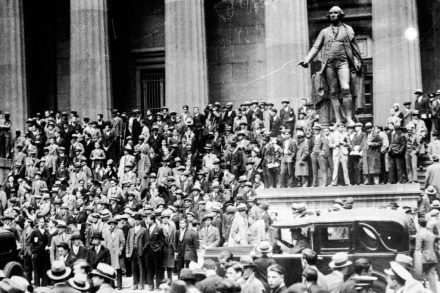
During the great financial panic of 1907, the banker J.P. Morgan locked the titans of the financial world in his lavish private study to determine which banks to rescue and which to let fail. This intervention saved the banking system, restoring public confidence. But trust in Wall Street was shaken to its core. Six years later, Congress passed the Federal Reserve Act, which sought to stabilize the American financial system by establishing a central bank to regulate credit and serve as lender of last resort. By the mid-1920s, the very mechanisms that were designed to promote stability had fueled a surge in stock market speculation.

1929 crash

The October Budget was Reeves’s original sin

From our UK edition

With hindsight, Rachel Reeves’s first Budget in October last year looks even worse than it did at the time. It wasn’t exactly cheered to the rafters then, even by Labour’s own mass of backbenchers, but a year on it has become clear that those early decisions have damaged the country’s economic performance and blighted Reeves’s time in the Treasury. The Chancellor has been somewhat unlucky, to be fair, but she made three crucial errors in the October Budget. First, she did not give herself enough slack if the economy took a turn for the worse. Second, she forgot that economics is not only about numbers but also about mood.

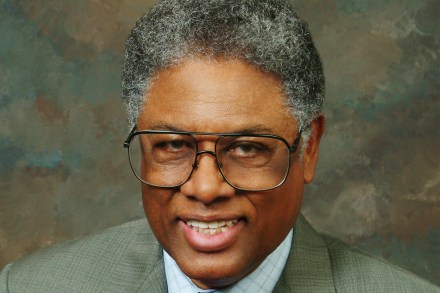
Why Thomas Sowell still matters

New York socialist Zohran Mamdani is hailed as the social media sensation of American politics. He knows how to talk directly to young people, we’re told. Yet an account called “Thomas Sowell Quotes” has almost twice as many followers on X as Mamdani. Sowell turned 95 this year. He is an unlikely influencer and yet hour-long interviews with him, published by Stanford’s Hoover Institution, have been watched millions of times. In his most popular video, Sowell argues for personal responsibility over dependence on the state and is meticulous in his use of empirical evidence. Black men who read newspapers and own library cards have had the same income as their white counterparts since 1969. Married black couples have the same poverty rate as white couples and have done for decades.

thomas sowell

A rare earths deal is China’s gift to Trump

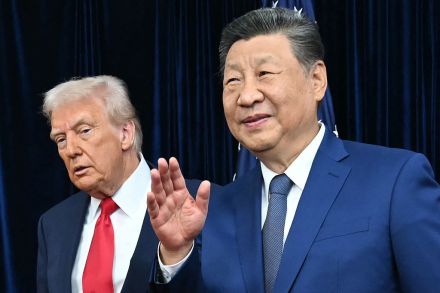
Donald Trump went nuclear. Before his meeting with Chinese leader Xi Jinping at an air base in South Korea, he ordered the Pentagon to test atomic weapons on an “equal basis” with China and Russia. Was Xi impressed? Probably not. While Russia expressed indignation, China did not permit itself to be distracted by Trump’s nuclear shenanigans. Instead, Beijing aimed to obtain economic concessions from a prideful Trump, which it did. From the outset, Xi sought to bring Trump down a peg, declaring that “both sides should consider the bigger picture and focus on the long-term benefits of cooperation, rather than falling into a vicious cycle of mutual retaliation.” Trump seems to have absorbed the lesson.

Javier Milei wins on chainsaw-slashing reforms

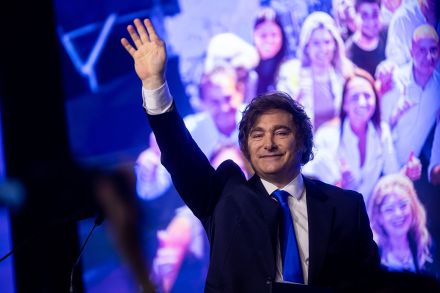
Javier Milei, Argentina’s self styled “anarcho-capitalist” President, defied pessimistic poll predictions on Sunday to win in the midterm elections and save his radical economic reforms. With almost all the votes counted, Milei’s La Libertad Avanza (LLA) party had won nearly 41 percent of the national vote, while the main left-wing Peronist opposition Fuerza Patria party netted just over 31 percent.  Up for grabs in the election were 127 of the 257 seats in the lower house of Congress, and 24 out of 72 seats in the upper house Senate. The LLA won 64 lower house seats and 12 in the Senate, enough for Milei to overcome an opposition veto against his most radical measures.

Why gold is at an all-time high

Gold is in the middle of what looks like an unstoppable bull run. It has already punched through $4,000 an ounce. At the rate the price is rising, it may well go to $5,000 within a few weeks, and perhaps even $6,000 as the next year unfolds. There have been lots of different explanations for this, from the looming collapse of the dollar, to secret Chinese buying, to the conspiracy theories circulating on the wilder fringes of the internet, such a secret plot to re-establish the gold standard, or attempts to replace all the metal that is meant to be stored at Fort Knox, America’s official gold reserve, which apparently went missing decades ago. But the real explanation is very simple: it is the only way to hedge against soaring government debt.

gold

Can stablecoins make America the crypto capital of the world?

“I will make sure the US is the crypto capital of the world,” Donald Trump vowed earlier this year. In July, he signed the Guiding and Establishing National Innovation for US Stablecoins (Genius) Act. The Act creates federal guardrails for dollar-pegged stablecoins and regulates who can issue and redeem them. Concerns from law enforcement are also addressed, by making sure anti-money laundering and consumer regulation applies. But what are stablecoins? They are digital tokens built to stay at a stable price, usually one dollar. They sit on the blockchain – the computer protocol that makes crypto work – but what’s underpinning their value are real-world assets, usually cash or government bonds.

crypto

Progress is destroying the planet: the rants of a self-hating American

From our UK edition

In what may be the only joke in this book – it is hard to tell, because quite often reading it I started to believe the whole thing was an elaborate parody – Samuel Miller McDonald begins his acknowledgements by expressing his ‘infinite thanks’ to his editors (he merits six of them) on the grounds that ‘no work can be good without good editors’. Apparently some works can’t be good even with good editors – unless the author is trying to tell us that his, like his oeuvre, weren’t especially good at all. Progress is a prolix, tendentious book, radiating self-regard, arrogance and flannel.